

 Preview
 Send
Send Share
Share
 Details
 Guide
Guide

 Download
 Similars
 X-Ray
X-Ray Diaporama
 Q&A
Q&A Stats
StatsExquisite Cadaver


 Read More
Get a print-ready file that goes far beyond the web preview. Every digital image we sell comes from a high-resolution master in our stock database — usually 5,000 to 15,000 pixels wide — so you can print large, crop tightly, or reproduce fine detail with confidence.
No file leaves our studio untouched. A digital expert checks the colors against the original painting and corrects them if needed, then improves clarity and detail with professional retouching tools — always staying faithful to the artist's brushwork and style. The result is an image that looks like the painting, not like a filtered scan.
You approve before you're done: our expert sends the image by e-mail within 72 hours for your review. Not satisfied? Ask for improvements or corrections, or request a refund if the quality falls short.
This is the quality relied on by publishers, design studios, galleries and print shops.
Digital Image
Download a high-resolution file for personal display, printing, and creative projects. ( Switch to Print Buy Hand Made Painting)
Included in Every Digital Image Order
Expert Digital Delivery, Guaranteed
When you choose OriginalUniqueArt.com, you're not just getting an image - you're receiving a professionally enhanced digital artwork, crafted with precision and backed by a satisfaction guarantee. Here's everything that comes with your order, automatically:

Fast Email Delivery
Your high-resolution digital image file will be emailed to you within 72 hours of ordering - ready for immediate use.

AI-Enhanced Digital File
Your artwork is professionally optimized using advanced AI tools and manual editing, ensuring maximum detail, clarity, and color accuracy.

Free Lifetime Re-Delivery
Accidentally deleted or lost your file? No worries - we'll resend it to you anytime, free of charge.

No Import Fees - Ever
Enjoy your artwork instantly with zero customs, duties, or delivery fees - digital downloads are always tax-free.

Color Accuracy Guarantee
We ensure your digital image reflects the original colors as closely as possible using professional tools and color management.

100-Day Satisfaction Guarantee
If you're not satisfied with your digital image, we'll revise it or refund 100% within 100 days - no questions asked.

100% Money-Back Guarantee
Not satisfied? Get a full refund within 100 days of receiving your digital file - no questions asked.

Bulk Order Discounts
Buy 3 images, save 10% - Buy 5, save 15% - Buy 10+, save 20%. Great for creative projects, galleries, and agencies.
Exquisite Cadaver: A Surrealist Meditation on Mortality
Salvador Dalí’s “Exquisite Cadaver,” painted in 1935, stands as a haunting testament to the artist's preoccupation with mortality and the subconscious mind—themes central to his entire oeuvre. Captured in a stark black and white photograph, this unsettling image depicts a meticulously rendered skeleton cradling a vibrant crimson ball on its shoulder while positioned beside a skull.
The composition itself is deliberately jarring, designed to provoke contemplation rather than immediate comfort. Two diminutive figures flank the central skeletal form—one situated on the left side of the canvas and another on the right—adding a subtle layer of narrative complexity that hints at an unseen drama unfolding within this desolate landscape.
- Style: Surrealism – Dalí’s signature style embraced illogical juxtapositions, dreamlike imagery, and distortions of reality to explore psychological states.
- Technique: Employing meticulous oil paint application—characteristic of Dalí's precision—the artist achieved remarkable detail in portraying the skeletal structure and ball, contrasting sharply with the muted tones of the surrounding background.
- Historical Context: Created during the height of Surrealist fervor, “Exquisite Cadaver” reflects the movement’s fascination with Freudian psychoanalysis and its desire to liberate art from rational constraints. It aligns perfectly with Dalí's broader exploration of anxieties surrounding death and decay.
Symbolism permeates every element of the painting. The skeleton represents universal mortality, while simultaneously embodying resilience—the ball symbolizes vitality and beauty preserved within the confines of death’s embrace. Its crimson hue amplifies this visual paradox, injecting a splash of color into an otherwise monochrome scene.
The inclusion of the two small figures adds to the painting's enigmatic quality. Their positioning suggests they are witnesses to—perhaps participants in—the unfolding drama, inviting viewers to consider their own role in confronting existential questions. Dalí’s masterful manipulation of form and color compels us to confront uncomfortable truths about life and death, cementing “Exquisite Cadaver” as a cornerstone of Surrealist art.
This striking artwork continues to resonate with audiences today, offering a profound meditation on the human condition and demonstrating Dalí's unparalleled ability to translate psychological anxieties into unforgettable visual experiences. A reproduction would undoubtedly bring an element of intellectual curiosity and artistic contemplation into any interior space.
Questions & Answers
What atmosphere does "Exquisite Cadaver" have?
"Exquisite Cadaver" has a dramatic atmosphere.
How strong is the contrast in "Exquisite Cadaver" by Salvador Dalí?
The light-dark contrast of "Exquisite Cadaver" is recorded as serene. Contrast describes how strongly light and dark areas differ.
What are the date and style of "Exquisite Cadaver" by Salvador Dalí?
"Exquisite Cadaver" was made in 1935, within the Surrealist Painting movement.
Artist Biography
A Life Shaped by Shadows and Dreams
In the sun-drenched town of Figueres, Spain, a child arrived into a world already marked by a profound sense of loss. Nine months before his birth, an older brother, also named Salvador, had passed away, leaving behind a heavy shadow that would later haunt the artist's canvases with themes of duality and replacement. This early trauma, set against the backdrop of a strict father and a nurturing mother, forged a spirit that was simultaneously flamboyant and deeply intros Century-old memories of his brother would resurface decades later in works like Portrait of My Dead Brother.
His path toward the canvas began with formal training at the San Fernando Academy of Fine Arts in Madrid. While he initially drew strength from the traditions of the Renaissance masters and the light of the Impressionists, a restless curiosity drove him toward the edges of the known. A move to Paris in 1926 placed him in the center of a cultural earthquake. There, amidst the rebellious energy of Dadaism, he found the seeds of his own revolution. He did not merely join the Surrealist group; he transformed it through his invention of the paranoiac-critical method, a way to access the irrationality of the subconscious by inducing a state of controlled delirium.
The Language of the Subconscious
To look upon his work is to witness the precise rendering of the impossible. He possessed a technical skill that allowed him to paint dreams with the clarity of a photograph, making the most unsettling visions feel tangibly real. His canvases became populated by a private vocabulary of symbols: ants representing decay, eggs signifying new life, and the famous melting clocks that suggest the instability of time itself. In The Persistence of Memory, completed in 1931, these elements coalesce to explore the fragility of human perception.
His creative reach extended far beyond the limits of oil on canvas. He moved through various mediums with an almost frantic energy, producing:
- Sculptures and objects d'art that brought his dreamscapes into three dimensions
- Film collaborations, including work with figures like Alfred Hitchcock and Walt Disney
- Graphic arts, jewelry design, and even stage sets for ballet
- Illustrations for books and various commercial designs
As his career progressed, he moved toward a style some called "nuclear mysticism," where his interest in science and the Catholic faith began to merge with his earlier surrealist obsessions. This period saw him applying his meticulous draftsmanship to religious themes, as seen in The Sacrament of the Last Supper.
Gala and the Final Act
No account of his life is complete without mentioning Gala. She was much more than his wife; she was his muse, his business manager, and the steadying force behind his eccentric public persona. Their bond, which began in 1929, provided the emotional and structural foundation for his most prolific years. She appeared frequently in his paintings, often cast in roles of religious or maternal importance, such as in The Madonna of Port Lligat.
His later years were marked by a complex relationship with fame and controversy, yet his influence remained undeniable. He had become a cultural icon whose imagery leaked into fashion, advertising, and popular culture. When he passed away in 1989, he left behind a massive body of work that continues to challenge the boundaries between the waking world and the deep, dark recesses of the human mind.
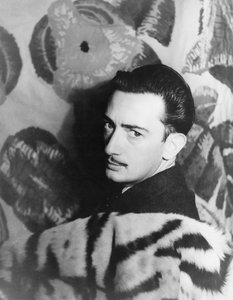
Salvador Dalí
1904 - 1989 , Spain
Quick Facts
- Full Name: Salvador Domingo Felipe Jacinto Dalí i Domènech
- Nationality: Spanish
- Date Of Birth: 1904
- Date Of Death: 1989
- Place Of Birth: Figueres, Spain
- Notable Artworks:
- Persistence of Memory
- Juliet's Tomb
- Mannequin
- Landscape with Flies
- The Angelus of Gala
- Artistic Movement Or Style: Surrealism
- Artists Who Influenced This Artist:
- Cubism
- Dada
- Pablo Picasso
- Artists Or Movements Influenced By This Artist:
- Pop art
- Contemporary artists