() ·

A painting made for you, by hand

Marine

Hand Made Oil Reproduction

Hand-painted oil on canvas in your size and frame, made to order by our artists. ( Switch to Print Switch to Digital Image)

Collectible Description

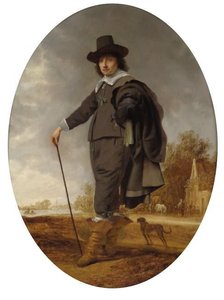
Experience the serene beauty of Salomon van Ruysdael's "Marine" (1650). This Dutch Golden Age masterpiece captures a tranquil river scene with a sailboat, showcasing masterful light and detail.

Artist Biography

Discover Salomon van Ruysdael, a Dutch Golden Age landscape painter known for detailed river scenes & still lifes. Explore his innovative style & legacy!

from ·

Chapter 1

How large should it be?

Slide to change the size; the picture on the left shows the frame at its real width. The proportions of the original are kept.

Standard
custom
CM
INCH

Pick from our preset sizes that match the artwork's original proportions.

width
height

Type the width and the height you need, to fit your frame or your wall. This is hand-painted, so for a size with a different shape the artist can paint a bit more around the picture, or cut a bit — you choose. We send you a digital mockup to approve before the painting starts. The picture shown on this page does not show the real result — only the mockup does.

Chapter 2

How should it arrive?

Choose the edges of the stretched canvas

Choose your frame

Corner sample of the WhiteWrap canvas edge finish, stretched on solid wood bars
White $1
Corner sample of the BlurSideWrap canvas edge finish, stretched on solid wood bars
Blurside $1
Corner sample of the ExtendedWrap canvas edge finish, stretched on solid wood bars
Extended $1
Corner sample of the P118B picture frame: moulded polystyrene, 5 cm wide and 3 cm thick
P118B $10
Corner sample of the P118H picture frame: moulded polystyrene, 5 cm wide and 3 cm thick
P118H $10
Corner sample of the P118W picture frame: moulded polystyrene, 5 cm wide and 3 cm thick
P118W $10
Corner sample of the P438Z picture frame: moulded polystyrene, 5.5 cm wide and 3.5 cm thick
P438Z $10
Corner sample of the P508JH picture frame: moulded polystyrene, 7 cm wide and 3.5 cm thick
P508JH $12
Corner sample of the P508YH picture frame: moulded polystyrene, 7 cm wide and 3.5 cm thick
P508YH $12
Corner sample of the P805H picture frame: moulded polystyrene, 5 cm wide and 3.5 cm thick
P805H $10
Corner sample of the P805Z picture frame: moulded polystyrene, 5 cm wide and 3.5 cm thick
P805Z $10
Corner sample of the P919BZ picture frame: moulded polystyrene, 7 cm wide and 3.5 cm thick
P919BZ $10
Corner sample of the P919G picture frame: moulded polystyrene, 7 cm wide and 3.5 cm thick
P919G $10
Corner sample of the P919XJ picture frame: moulded polystyrene, 7 cm wide and 3.5 cm thick
P919XJ $10
Corner sample of the P959ZH picture frame: moulded polystyrene, 5 cm wide and 3 cm thick
P959ZH $10
Corner sample of the P968JZ picture frame: moulded polystyrene, 6 cm wide and 4 cm thick
P968JZ $12
Corner sample of the W106C picture frame: solid wood, 5 cm wide and 3 cm thick
W106C $8
Corner sample of the W218G picture frame: solid wood, 5 cm wide and 3 cm thick
W218G $10
Corner sample of the W218JH picture frame: solid wood, 5 cm wide and 3 cm thick
W218JH $8
Corner sample of the W218Y picture frame: solid wood, 5 cm wide and 3 cm thick
W218Y $10
Corner sample of the W307PJ picture frame: solid wood, 6 cm wide and 3 cm thick
W307PJ $10
Corner sample of the W316G picture frame: solid wood, 6 cm wide and 3 cm thick
W316G $10
Corner sample of the W316PJ picture frame: solid wood, 6 cm wide and 3 cm thick
W316PJ $8
Corner sample of the W316Y picture frame: solid wood, 6 cm wide and 3 cm thick
W316Y $10
Corner sample of the W398PJ picture frame: solid wood, 5 cm wide and 3 cm thick
W398PJ $8
Corner sample of the W4111J picture frame: solid wood, 6.5 cm wide and 3.5 cm thick
W4111J $10
Corner sample of the W500HY picture frame: solid wood, 7 cm wide and 5 cm thick
W500HY $15
Corner sample of the W500JH picture frame: solid wood, 7 cm wide and 5 cm thick
W500JH $15
Corner sample of the W692G picture frame: solid wood, 8 cm wide and 4 cm thick
W692G $12
Corner sample of the W849H picture frame: solid wood, 5 cm wide and 3 cm thick
W849H $8
Corner sample of the W940BG picture frame: solid wood, 7.5 cm wide and 4.5 cm thick
W940BG $15
Corner sample of the W953PJ picture frame: solid wood, 6 cm wide and 3.5 cm thick
W953PJ $8
Corner sample of the H24-GOLD picture frame: carved wood with gesso, 10 cm wide and 6 cm thick
H24-GOLD $30
Corner sample of the H24-SILVER picture frame: carved wood with gesso, 10 cm wide and 6 cm thick
H24-SILVER $30
Corner sample of the H36-GOLD picture frame: carved wood with gesso, 15 cm wide and 6.5 cm thick
H36-GOLD $45
Corner sample of the H36-SILVER picture frame: carved wood with gesso, 15 cm wide and 6.5 cm thick
H36-SILVER $45
Frame preview
Framed

Moulding: . Overall size with the frame: .

Chapter 3

Who paints it, and should anything change?

Examples of what can be changed: Replace face with customer photo; Add pet (e.g., replace cat with dog); Include hidden message in background; Change background landscape or elements.
After order, OriginalUniqueArt.com team will email client for instructions and provide a mockup preview

Worldwide Delivery () in 3/4 weeks instead of standard 5 weeks. (3 November). No compromise on quality.

Chapter 4

The finishing touches

A nameplate, as in a museum?

Engraved Bronze Plaque Details

This elegant plaque features the artist's name and the title of the artwork, finely engraved for a timeless presentation.

It is made from bronze with a refined, elegant finish. The text is precisely laser-engraved for a sharp and permanent result. Measuring 9x2 cm, the plaque is compact yet easy to read. It's built to be durable and scratch-resistant, offering a professional, museum-quality look. Mounting is simple thanks to the included adhesive backing.

Transparent Acrylic Plaque Details

The plaque includes essential engraved details such as the artist's name, the title of the artwork, the date it was created, the type of media used-like oil on canvas or watercolor-a brief description of the piece, and a QR code that links to the complete artwork information.

It is crafted from clear acrylic, offering a sleek, modern appearance. The text is UV-engraved in black to ensure strong visual contrast. With a size of 10x15 cm, it ensures optimal readability. It comes equipped with two metal hooks for secure wall mounting. The plaque is designed to be weather-resistant, making it suitable for various environments, and it includes interactive features that work seamlessly with smartphone scanning.

Black Acrylic Plaque Details

This elegant plaque includes engraved information such as the artist's name, the title of the artwork, the date it was created, the type of media used (like oil on canvas or watercolor), a short description of the artwork, and a QR code for quick access to more information.

The plaque itself is made from refined black acrylic with a premium finish. The text is laser-engraved in white for high contrast and readability. Its size is 10x15 cm, designed to be easy to read. It comes with two metal hooks for professional mounting. The design is sleek and fits any interior style. It is also weather-resistant and durable, with built-in digital integration for mobile compatibility.

A protective varnish?

When do you need it?

Chapter 5

Your painting, as you ordered it

Marine

Reproduction Medium

Reproduction Size

-

Elite Senior Artist

More detail, finesse, and extra production time

-

Reproduction Frame

-

-

For artworks or reproductions larger than 105 cm (approximately 41 inches) on any side, the frame will be shipped as a kit, disassembled. This method ensures safe delivery and prevents damage during transport.

Professional assembly required - this is not a DIY product.
The kit must be assembled and the canvas stretched by an experienced professional framer, using wood glue (not supplied), a canvas stretching plier and clamps to hold the bars square while the glue dries. Incorrect assembly or uneven canvas tension can permanently damage the artwork and is not covered by our warranty.

  • All solid wood bars are included, precisely cut to size.

  • Assembled with the screws provided, plus wood glue for the corner joints, which is not supplied and must be sourced by your framer.

  • Professional tools are required and not included: a canvas stretching plier (tensioner) and clamps to hold the bars square while the glue dries.

Important:
The corner joints require wood glue, the bars must be held with clamps until the glue is fully dry, and tightening the canvas on the assembled frame requires a canvas stretching plier. None of these are included in the kit. Please arrange an experienced professional framer before ordering this size.

Nameplate

-

-

Protective Varnish

Glossy Varnish (enhances colors, protects against light/moisture)

-

Customize My Artwork

Examples of what can be changed: Replace face with customer photo; Add pet (e.g., replace cat with dog); Include hidden message in background; Change background landscape or elements.

-

Urgent

Worldwide Delivery () in 3/4 weeks instead of standard 5 weeks. (3 November). No compromise on quality.

-

Express Shipping

Worldwide Delivery () in 5 weeks. (10 November).

Included

Total Price

$ 300

Total Price $ 300

Glass option is only available in size under 110 CM

Included with every order

  • Free Worldwide Express Shipping
  • High-Quality Linen Canvas
  • Full Shipping Insurance
  • Customs Tax Refund Guarantee
  • True Color Matching Guarantee
  • 100-Day Return Policy (Defects Only)
  • 100% Money-Back Guarantee
  • Bulk Discount Offer

A Moment Frozen in Time: The Allure of Salomon van Ruysdael's Marine

Salomon van Ruysdael’s “Marine,” painted around 1650, isn’t merely a depiction of a seascape; it’s an invitation to step into a tranquil moment suspended between the vastness of the ocean and the quietude of a coastal town. This remarkable work, currently residing within the hallowed halls of The Metropolitan Museum of Art in New York, exemplifies the pinnacle of Dutch Golden Age painting – a period defined by meticulous detail, atmospheric realism, and an extraordinary ability to capture the subtle nuances of light and shadow. More than just a pretty picture, “Marine” offers a profound glimpse into 17th-century life, maritime practices, and the artist’s masterful command of color and composition.

At first glance, the painting presents a deceptively simple scene: a serene river flowing towards the sea, dotted with small boats engaged in various activities – fishing, transporting goods, or simply enjoying the day. A lone sailboat, its billowing sails catching the wind, cuts through the water, flying the proud banner of the Dutch Republic. However, beneath this apparent simplicity lies a wealth of carefully considered details and symbolic elements. Van Ruysdael wasn’t just painting what he saw; he was crafting an experience, evoking a sense of peace, order, and connection to nature – values deeply ingrained in the ethos of the Dutch Golden Age.

The Art of the Dutch Masters: Technique and Style

Van Ruysdael’s skill lies not only in his ability to render realistic details but also in his masterful use of technique. The painting is executed in oil on wood, a medium that allowed for rich colors and subtle gradations of tone. Notice how the artist employs broken brushstrokes – tiny, individual marks of paint – to create the illusion of shimmering water and billowing clouds. This technique, known as “impasto,” adds texture and depth to the scene, drawing the viewer’s eye into the heart of the composition. The careful layering of colors, particularly in the depiction of the sky and water, creates a remarkable sense of atmospheric perspective – the way that distant objects appear paler and less distinct than those closer to the viewer.

The color palette is restrained yet remarkably effective. Predominantly blues and grays dominate the scene, reflecting the cool tones of the sea and sky. The boats are painted in a range of browns and whites, providing contrast against the darker background. Van Ruysdael’s use of light is particularly noteworthy; it's diffused and gentle, casting long shadows and creating a sense of quiet contemplation. This subtle illumination contributes significantly to the painting’s overall mood – one of serenity and tranquility.

A Window into 17th-Century Life: Historical Context

“Marine” offers a fascinating glimpse into the daily life of coastal communities in the Netherlands during the 17th century. The presence of the “schouw,” a type of shallow-draft sailing vessel used for transporting goods and passengers along inland waterways, is particularly significant. These boats were vital to the Dutch economy, facilitating trade and connecting distant towns and villages. The inclusion of buildings on the distant shoreline – reminiscent of coastal towns – further anchors the scene in its historical context. The painting isn’t simply a landscape; it's a snapshot of a thriving maritime society.

Furthermore, the painting reflects the broader cultural values of the Dutch Golden Age. The emphasis on order, industry, and connection to nature was central to the Dutch worldview. Van Ruysdael’s “Marine” embodies these values, offering a vision of a harmonious relationship between humanity and the natural world. The painting's popularity during its time speaks volumes about this shared cultural appreciation.

Bringing "Marine" Home: Reproduction and Legacy

Today, reproductions of Van Ruysdael’s “Marine” are available through reputable sources like The Metropolitan Museum of Art and other fine art dealers. A high-quality reproduction captures the essence of the original, allowing you to bring this timeless masterpiece into your own home or office. Consider a canvas print for a truly immersive experience, or an acrylic glass print for a sleek, modern look. Whether you choose a traditional oil on wood reproduction or a more contemporary format, owning a piece inspired by “Marine” is a celebration of Dutch Golden Age artistry and a reminder of the enduring power of beauty and tranquility.

Questions & Answers

How well known is "Marine" by Salomon van Ruysdael?

"Marine" by Salomon van Ruysdael has a recognized popularity level. This classification reflects how widely the work is recognized.

Where can I see a preview of "Marine"?

The Preview page of "Marine" lets you preview the artwork before ordering.

How do I discover artworks close to "Marine" by Salomon van Ruysdael?

Works similar to "Marine" are listed on the artwork's Similars page.

More about this painting

Preview AR preview Switch to Print Switch to Digital Image Send
Details Guide Add to favorites Download Similars X-Ray Diaporama Q&A Stats

In numbers

  • 1650the year it was painted
  • 29frames to choose from
  • standard sizes, in its own proportions
  • 5weeks to paint and deliver it
Salomon van Ruysdael

Salomon van Ruysdael

1602 - 1670, Netherlands

Quick facts about Salomon van Ruysdael

  • Full Name: Salomon van Ruysdael
  • Nationality: Dutch
  • Date Of Birth: 1602
  • Date Of Death: 1670
  • Place Of Birth: Naarden, Netherlands
  • Notable Artworks:
    • River landscape
    • Ferry near Gorinchem
    • View of Deventer
  • Artistic Movement Or Style: Dutch Golden Age Landscape Painting
  • Artists Who Influenced This Artist:
    • Jan Porcellis
    • Esaias van de Velde
  • Artists Or Movements Influenced By This Artist: ['Jacob Van Ruisdael']

Artist Biography

The Subtle Master of Dutch Landscape: The Life of Salomon van Ruysdael

In the golden era of the seventeenth-century Netherlands, a period defined by unprecedented prosperity and artistic flourishing, Salomon van Ruysdael emerged as a painter of profound atmospheric sensitivity. Born around 1602 in Naarden, his life was deeply intertwined with the very fabric of the Dutch Golden Age. While history often casts a long shadow over his more famous brother, Jacob van Ruisdael, Salomon carved out a distinct and irreplaceable niche within the canon of landscape painting. His work does not merely depict the land; it captures the breathing essence of the Dutch countryside, where light and water perform a silent, eternal dance across the canvas.

The foundations of his artistry were laid in a household where craftsmanship and precision were paramount. His father, Jacob Jansz de Gooyer, was a skilled woodworker specializing in the intricate ebony frames that housed the era's most precious mirrors and paintings. This early exposure to the meticulous details of framing likely instilled in Salomon a lifelong reverence for texture and structural integrity. Though his formal education was surprisingly broad—encompassing the complexities of Latin and even medicine—his heart remained tethered to the visual world. By joining the prestigious Haarlem Guild of St. Luke in 1623, he entered an elite circle of creators, coming under the direct influence of masters such as Jan Porcellis and Esaias van de Velde. These mentors, champions of atmospheric perspective and observational realism, provided the technical vocabulary that Salomon would later use to compose his serene, water-centric vistas.

A Symphony of Water and Light

Salomon van Ruysdael’s true mastery lies in his ability to render the ephemeral qualities of the Dutch atmosphere. Unlike many of his contemporaries who sought out dramatic, sweeping vistas or turbulent storms, Salomon found his greatest inspiration in the quietude of inland waterways. His compositions often center on the rhythmic flow of rivers and the tranquil expanse of lakes, where the sky and water meet in a seamless transition of muted tones and soft light. In masterpieces such as River View near Deventer, one can observe how he utilizes a delicate palette to evoke the damp, cool air of the Netherlands, inviting the viewer to step into a moment of profound stillness.

His technical prowess is particularly evident in his treatment of marine and riverine subjects. In works like Sailing Vessels on an Inland Body of Water, he demonstrates an unparalleled ability to capture the weight and movement of boats navigating through calm currents. The integration of human elements—such as the subtle presence of fishermen in River with Fishermen—is never intrusive; rather, these figures serve to provide scale and a sense of lived reality to the landscape. Through his brush, the water becomes more than just a surface; it becomes a mirror reflecting the shifting clouds and the soft, diffused light that characterizes the Dutch sky.

Legacy and Artistic Significance

The historical significance of Salomon van Ruysdael resides in his role as a pioneer of the atmospheric landscape. He moved away from the rigid, topographical depictions of earlier eras toward a more emotive, sensory experience of nature. His ability to blend the precision of still-life elements with the vastness of landscape painting created a unique aesthetic that resonated with the Dutch middle class, who sought art that reflected their own peaceful, industrious environment.

Today, his legacy is preserved in some of the world's most esteemed institutions, including the Museo Thyssen-Bornemisza. To study a Van Ruysdael is to undergo a lesson in patience and observation. His work remains a testament to the beauty found in the understated, reminding us that the most profound artistic truths are often found in the quietest reflections of a river or the softest glow of a departing sun. His contribution to the Dutch Golden Age remains an essential chapter in the story of how humanity learned to see the world not just as it is, but as it feels.

Quick Facts

  • Title: Marine
  • Medium: Oil on wood
  • Dimensions: 35 x 43 cm
  • Influences: Jan van Goyen
  • Artistic style: Realism, Landscape
  • Notable elements: River scene, sailboat

Art Quiz

There is only one correct answer for each question.

Question 1:
What is the primary subject depicted in Salomon van Ruysdael’s ‘Marine’?
Question 2:
The painting ‘Marine’ is considered an example of which artistic movement?
Question 3:
What type of vessel is prominently featured in the painting, flying the Dutch flag?
Question 4:
According to the provided text, what is a key characteristic of Salomon van Ruysdael’s style?
Question 5:
In what year was ‘Marine’ painted, according to the information provided?