Preview
 Send
Send Share
Share
 Details
 Guide
Guide

 Download
 Similars
 X-Ray
X-Ray Diaporama
 Stats
StatsThe Nationalization
 Hurufiyya
 1972
1972- Modern
 100.0 x 60.0 cm
 Ibrahimi Collection
 Read More
Giclée / Art Print
Museum-quality giclée or canvas print with fast production and flexible finish options. ( Buy Hand Made Painting Switch to Digital Image)




P118B $10

P118H $10

P118W $10

P438Z $10

P508JH $12

P508YH $12

P805H $10

P805Z $10

P919BZ $10

P919G $10

P919XJ $10

P959ZH $10

P968JZ $12

W106C $8

W218G $10

W218JH $8

W218Y $10

W307PJ $10

W316G $10

W316PJ $8

W316Y $10

W398PJ $8

W4111J $10

W500HY $15

W500JH $15

W692G $12

W849H $8

W940BG $15

W953PJ $8




Pick from our preset sizes that match the artwork's original proportions.

You may enter your own dimensions to fit a specific frame or space. If your selected size does not match the original image's proportions, we will either crop the artwork or extend the image with a mirrored or solid-fill edge. A digital mockup will be sent for your approval before production begins.
Please note that the on-screen preview does not reflect the actual cropping or extension. Only the mockup will accurately show the final composition.
While custom sizes are available, we recommend selecting a dimension from the predefined list to preserve the original proportions.
Worldwide Delivery () in 2 weeks instead of standard 4/5 weeks. (25 September)

Free Worldwide Express Shipping

High-Quality Linen Canvas

Full Shipping Insurance

Customs Tax Refund Guarantee

True Color Matching Guarantee

100-Day Return Policy (Defects Only)

100% Money-Back Guarantee

Bulk Discount Offer
 Glass option is only available in size under 110 CM

The Nationalization
Giclée / Art Print
Reproduction Size
-


Total Price
$ 81
A Visionary Encounter with History
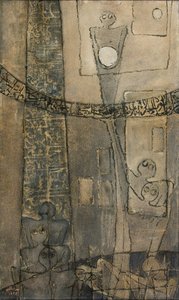
In the evocative masterpiece The Nationalization, the viewer is transported into a profound moment of collective consciousness, captured through the visionary lens of the Iraqi pioneer, Saad Abdel Qader Al-Kaabi. Created in 1972, this large-scale work serves as more than just a painting; it is a window into a pivotal era of social and political transformation. The composition centers on a striking figure, a man whose presence commands the canvas, his hands pressed to his face in an expression that oscillates between awe, grief, and intense contemplation. This central protagonist, adorned with a celestial moon upon his head, acts as a bridge between the earthly struggles of the urban crowd and a higher, perhaps spiritual, destiny. The painting invites us to witness a moment where the personal and the political collide, rendered with a depth that resonates long after the first glance.
The setting is an intricate tapestry of urban life, where the architecture of a city—complete with bridges and the steady, unyielding gaze of a hanging clock—frames a gathering of souls. Al-Kaabi masterfully utilizes the background to create a sense of layered reality; the figures behind the central man are not merely spectators but participants in a shared historical heartbeat. The presence of the clock suggests the inexorable march of time and the weight of the moment, while the bridge symbolizes the transition between old ways and a new, nationalized future. For the collector or interior designer, this piece offers a sophisticated narrative depth, making it an ideal focal point for spaces that value intellectual stimulation and historical gravity.
The Alchemy of Style and Symbolism
Technically, The Nationalization showcases Al-Kaabi’s unique ability to blend the traditions of Hurufiyya—the movement where calligraphy meets modern abstraction—with a poignant figurative realism. The brushwork, though controlled, possesses an emotional fluidity that breathes life into the textures of the urban landscape. There is a rhythmic quality to the way the light interacts with the figures, creating a sense of atmosphere that feels both heavy with history and luminous with hope. The artist uses color not just to define form, but to evoke the psychological state of a nation in flux, utilizing tones that ground the scene in reality while allowing for surrealist elements, such as the lunar symbol, to emerge from the subconscious.
The symbolism within the work is layered and profound. The moon on the man's head serves as a powerful metaphor for enlightenment or perhaps the cyclical nature of power and sovereignty. By placing this celestial icon atop a human figure amidst a mundane urban setting, Al-Kaabi elevates the struggle of the common person to the level of myth. This interplay between the everyday and the extraordinary creates an emotional impact that is both unsettling and deeply moving. For those seeking to adorn a curated collection, this reproduction offers a rare opportunity to possess a piece that speaks of identity, heritage, and the enduring human spirit, making it a timeless addition to any high-end art installation.
Artist Biography
Richard Estes: The Architect of Reflection
Richard Estes, born in Chicago on May 14, 1932, emerged as a pivotal figure in the late 20th-century art world, largely due to his groundbreaking contributions to photorealism. His career, spanning several decades and marked by an unwavering dedication to capturing the essence of urban landscapes, represents a fascinating intersection of observation, technical skill, and artistic vision. Estes’s work isn't merely photographic reproduction; it’s a carefully constructed meditation on light, reflection, and the inherent beauty found within the mundane details of city life. His journey began with a solid foundation in traditional fine arts training at the Art Institute of Chicago, where he immersed himself in the works of masters like Edgar Degas, Edward Hopper, and Thomas Eakins – artists who meticulously rendered reality with an acute eye for detail and atmosphere. This early exposure to realism profoundly influenced his later approach, shaping his understanding of composition, value, and color.Early Years and Transition to Photography
Estes’s formative years were spent in Chicago, a city that would become the primary subject of much of his work. After graduating from the Art Institute, he embarked on a career as a graphic artist for various magazines and advertising agencies in New York City and Spain. This period proved crucial, providing him with invaluable experience in visual communication and honing his skills in working with projectors – a technique he would later master to create his signature photorealistic paintings. It was during this time that Estes began experimenting with photographic images as the basis for his art, initially drawn to the precision and clarity of photographs. He found himself increasingly captivated by the way photography could capture fleeting moments and reveal hidden details within familiar environments. This shift marked a deliberate departure from traditional painting methods, embracing a new approach rooted in observation and reproduction. His move to Spain further broadened his artistic horizons, exposing him to different cultural perspectives and influencing his aesthetic sensibilities.The Rise of Photorealism
Estes’s work gained significant recognition as one of the founding figures of the international photorealist movement in the late 1960s. Artists like John Baeder, Chuck Close, Robert Cottingham, and Audrey Flack were all exploring similar themes – the intersection of photography and painting – and Estes's meticulous attention to detail and his innovative use of projection techniques quickly established him as a leading voice within this burgeoning movement. His paintings typically depict reflective surfaces—telephone booths, storefront windows, mirrored walls—transforming ordinary urban scenes into shimmering, almost surreal compositions. The key to Estes’s success lies not in simply copying photographs but in translating them onto canvas with an extraordinary level of skill and artistry. He meticulously adjusted colors, values, and textures to create paintings that possess a remarkable sense of depth and realism, while simultaneously retaining a distinctly painted quality. Graham Thompson aptly describes his work as “one demonstration of the way photography became assimilated into the art world,” highlighting Estes’s pivotal role in this transformative shift within the art landscape.Technique and Style
Estes's technique is characterized by its painstaking precision and a remarkable understanding of light and reflection. He typically worked from black-and-white photographs, carefully selecting images that possessed strong compositional elements and interesting patterns of light and shadow. The use of the projector was central to his process; he would project the photograph onto the canvas, tracing the outlines with charcoal and then meticulously building up layers of paint to recreate the image with astonishing accuracy. He wasn’t interested in creating mere copies but rather in capturing the *essence* of the scene – its mood, atmosphere, and underlying structure. His paintings are often described as “architectural,” reflecting his deep appreciation for the geometry and spatial relationships within urban environments. The use of subtle gradations of color and texture creates a sense of depth and realism that is both captivating and unsettling.Legacy and Influence
Richard Estes’s impact on contemporary art extends far beyond his contributions to photorealism. His work has influenced generations of artists, demonstrating the power of observation and the potential for painting to engage with photographic imagery in innovative ways. His meticulous approach to detail and his masterful manipulation of light and reflection continue to inspire artists today. While he largely avoided explicit statements about his artistic intentions, Estes’s paintings speak volumes about the changing relationship between art and photography, and the evolving role of the artist as a visual interpreter of the modern world. He passed away in 2014, leaving behind a substantial body of work that remains both technically impressive and aesthetically compelling—a testament to his dedication, skill, and artistic vision. His paintings are now held in prestigious collections worldwide, ensuring that his legacy as one of the most important artists of the late 20th century will endure for years to come.
saad abdel qader al-kaabi
1932 - 2014 , Iraq
Quick Facts
- Artistic Movement Or Style: Photorealism
- Artists Or Movements Influenced By This Artist:
- John Baeder
- Chuck Close
- Gerhard Richter
- Artists Who Influenced This Artist:
- Edgar Degas
- Edward Hopper
- Thomas Eakins
- Date Of Birth: May 14, 1932
- Date Of Death: 2014
- Full Name: Richard Estes
- Nationality: American
- Notable Artworks: ['Telephone Booths']
- Place Of Birth: Chicago, USA
Related Articles
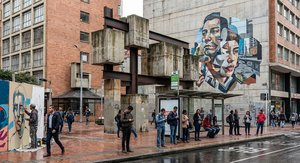
Concrete Narratives: Exploring Urban Life in Modern & Contemporary Art
Explore the evolution of cityscape painting with OriginalUniqueArt. Discover key artists from Realism to contemporary movements & invest in timeless urban visions. Expert guidance, museum-quality reproductions.

Martin Johnson Heade: Luminism, American Identity & the Poetic Still Life
Explore the captivating world of Martin Johnson Heade, a master of Luminism. Discover his serene landscapes, vibrant still lifes & profound connection to American identity. Learn about his techniques and legacy.

Concrete Visions: Exploring the Urban Landscape in Painting – From Realism to Contemporary Art
Explore the evolution of cityscape painting from Realism to contemporary art with OriginalUniqueArt. Discover key artists & invest in timeless urban visions. Expert guidance, museum-quality reproductions.

Joseph Stella: Modernism's Dynamic Vision of Industry, Urban Life & the American Spirit
Explore the captivating world of Joseph Stella, a pioneer of American Modernism. Discover his iconic depictions of industry, urban life & the Brooklyn Bridge. Expert analysis for art collectors.
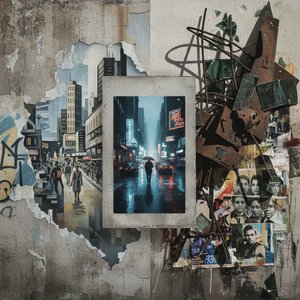
Concrete Visions: Exploring Representations of Urban Life in Modern & Contemporary Art
Explore the evolution of cityscape painting from Realism to contemporary art. Discover key artists & invest in timeless urban visions with OriginalUniqueArt's expert guidance and museum-quality reproductions.