

 Preview
 Send
Send Share
Share
 Details
 Guide
Guide

 Download
 Similars
 X-Ray
X-Ray Diaporama
 Stats
StatsRuton Robot


 Read More
The artwork displayed on this page is protected by copyright law, which means we cannot legally create or sell an identical reproduction. This protection is enforced under international agreements such as the Berne Convention and by national laws, including those outlined by the U.S. Copyright Law - Title 17.
As a respectful and legal alternative, we offer custom, hand-painted artworks inspired by the original. Our skilled and professional artists carefully study the original's style, mood, and artistic essence to create a new, unique piece that evokes the same feeling - while remaining an original creation in its own right.
This method fully complies with copyright regulations because it does not involve copying or duplicating the protected artwork. Instead, it is a creative reinterpretation - a new painting that is influenced by the original but not identical to it.
Hand Made Oil Reproduction
Hand-painted oil on canvas in your size and frame, made to order by our artists. ( Switch to Print Switch to Digital Image)




































Pick from our preset sizes that match the artwork's original proportions.

Type the width and the height you need, to fit your frame or your wall. This is hand-painted, so for a size with a different shape the artist can paint a bit more around the picture, or cut a bit — you choose. We send you a digital mockup to approve before the painting starts. The picture shown on this page does not show the real result — only the mockup does.
After order, OriginalUniqueArt.com team will email client for instructions and provide a mockup preview
Worldwide Delivery () in 3/4 weeks instead of standard 5 weeks. (22 October). No compromise on quality.

Free Worldwide Express Shipping

High-Quality Linen Canvas

Full Shipping Insurance

Customs Tax Refund Guarantee

True Color Matching Guarantee

100-Day Return Policy (Defects Only)

100% Money-Back Guarantee

Bulk Discount Offer
 Glass option is only available in size under 110 CM

Ruton Robot
Reproduction Medium
Reproduction Size
-


Total Price
$ 300
Artist Biography
The Dawn of Robotic Art: Ruton Robot’s Pioneering Lamp
Ruton Robot, a name synonymous with the nascent field of robotic art, emerged from Finland in 1960, crafting an instantly recognizable and profoundly influential piece – his iconic lamp. More than just a lighting fixture, the Ruton Robot represents a pivotal moment in automation history, demonstrating early experimentation with self-operating mechanisms and sparking imaginations about the potential of machines as artistic creators. Born in Finland, (though precise birth details remain elusive), Robot’s journey began not with grand ambitions but with a simple desire to explore the possibilities of combining mechanics and aesthetics. The lamp itself is a testament to this exploration: a chrome-plated automaton that slowly rotates its head and arm, mimicking a human gesture – a subtle dance of movement designed to captivate and intrigue. The use of plastic as the primary material was remarkably innovative for the time, offering both affordability and a lightweight construction suitable for intricate mechanical systems.A Finnish Roots in Mechanical Ingenuity
Robot’s early life appears largely undocumented, shrouded in the quiet simplicity of rural Finland. However, anecdotal evidence suggests a deep-seated fascination with mechanics and engineering from a young age. His work wasn't driven by commercial aspirations initially; rather, it stemmed from a genuine curiosity about how things worked and a desire to bring those workings to life. This inherent mechanical aptitude, combined with a burgeoning interest in design, laid the foundation for his unique artistic vision. The Finnish landscape itself – characterized by its vast forests, intricate waterways, and a tradition of craftsmanship – undoubtedly influenced his aesthetic sensibilities, fostering an appreciation for both natural forms and precise construction. The post-war era in Finland was one of rebuilding and innovation, and Robot’s work can be seen as reflecting this spirit of progress and experimentation.Influences and Early Development
While often considered a singular creation, the Ruton Robot wasn't born in isolation. Robot’s work drew inspiration from several sources. The burgeoning field of automation, fueled by advancements in transistor technology and early computer science, provided a technological backdrop for his explorations. Furthermore, he was influenced by the mid-century modern design movement, characterized by its emphasis on functionality, simplicity, and geometric forms – qualities that are clearly evident in the lamp’s sleek lines and polished chrome finish. The work of early industrial designers like Dieter Rams also subtly informed Robot's approach to integrating mechanical components with an aesthetically pleasing form. Crucially, Robot was experimenting with a then-novel technique of using miniature motors and gears to create controlled movement – a process that required considerable skill and patience.The Lamp’s Enduring Legacy
Despite its relatively modest production run (only a handful of lamps were ever created), the Ruton Robot quickly gained recognition as a landmark achievement in robotic art. Its unique blend of mechanical ingenuity, sculptural form, and subtle animation captivated critics and collectors alike. The lamp became an icon of the 1960s, representing the optimistic vision of a future where machines could augment human creativity. It’s often cited as one of the earliest examples of “kinetic sculpture,” predating many later developments in robotic art by decades. Today, the Ruton Robot is housed in the OriginalUniqueArt collection and remains a celebrated example of early automation and a testament to Robot's pioneering spirit. Its influence can be seen in subsequent generations of robotic artists who have built upon his foundational work.A Continuing Mystery
Ruton Robot’s life after the creation of the lamp remains somewhat enigmatic. He largely retreated from public attention, dedicating himself to further mechanical experimentation and design projects, though details about these endeavors are scarce. He continued to live in Finland until his death, a quiet figure who left behind a remarkable legacy. The Ruton Robot stands as a powerful reminder that art can be found not just in traditional mediums but also in the intricate workings of machines – a testament to the enduring power of human curiosity and innovation.
Ruton Robot
1960 - , Finland
Quick Facts
- Full Name: Ruton Robot
- Nationality: Finnish
- Date Of Birth: 1960
- Place Of Birth: Finland
- Notable Artworks: ['Ruton Robot']
- Artistic Movement Or Style: Robotic art, Automaton
Related Articles

Angelo Chiacchio: A Mid-Century American Illustration Master & the Rise of Commercial Art
Explore the captivating world of Angelo Chiacchio, a master of mid-century American illustration. Discover his evolution, signature style, and lasting impact on commercial art & design. Learn about his legacy at the Museum of American Illustration.
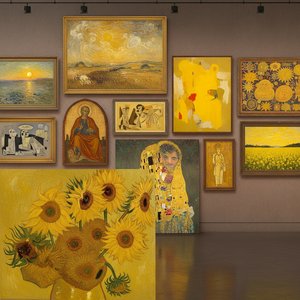
Golden Hues: 10 Masterpieces Dominated by Chrome Yellow | OriginalUniqueArt
Immerse yourself in golden light! Explore 10 famous paintings dominated by 'Chrome Yellow', from Van Gogh’s Sunflowers to Monet's Haystacks. Discover the stories behind these iconic Impressionist & Post-Impressionist masterpieces and find museum-quality art reproductions at OriginalUniqueArt.com.

The Retro Remix: Decoding the Power of Historical Illustration in Modern Visual Identity
Discover how historical illustration fuels today's boldest design trends. From Victorian drama to mid-century cool, explore the 'Retro Remix' shaping modern visual impact. Elevate your space with high-impact, hand-painted art from OriginalUniqueArt.com—where history meets pop culture.
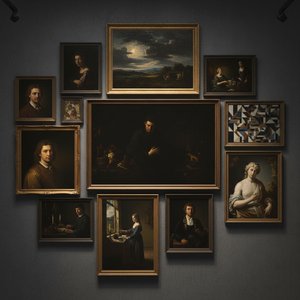
Lamp Black & Masterpieces: 10 Paintings That Define Shadow & Light |
Delve into the captivating world of 'Lamp Black' tones with 10 iconic paintings by masters like Rembrandt & Caravaggio. Explore Baroque chiaroscuro, dramatic lighting & shadow in art history. Find museum-quality reproductions at
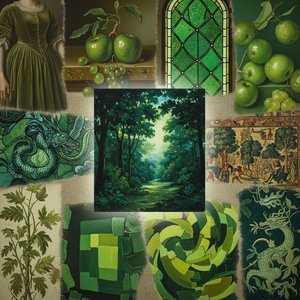
Chrome Green Masterpieces: 10 Famous Paintings & Their Alluring Hues |
Explore 10 famous paintings where 'Chrome Green' reigns supreme! Discover Monet, Manet & Van Gogh’s masterpieces. Learn the stories behind these iconic artworks and find museum-quality art reproductions for your home at .
