Preview
 Send
Send Share
Share
 Details
 Guide
Guide

 Download
 Similars
 X-Ray
X-Ray Diaporama
 Q&A
Q&A Stats
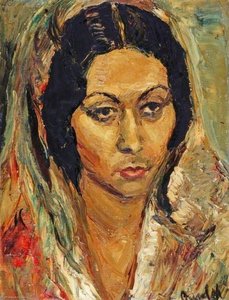
StatsSelf Portrait

- 35.0 x 25.0 cm


 Read More
The artwork displayed on this page is protected by copyright law, which means we cannot legally create or sell an identical reproduction. This protection is enforced under international agreements such as the Berne Convention and by national laws, including those outlined by the U.S. Copyright Law - Title 17.
This method fully complies with copyright regulations because it does not involve copying or duplicating the protected artwork. Instead, it is a creative reinterpretation - a new painting that is influenced by the original but not identical to it.
Giclée / Art Print
Museum-quality giclée or canvas print with fast production and flexible finish options. ( Buy Hand Made Painting Switch to Digital Image)




































Pick from our preset sizes that match the artwork's original proportions.

Type the width and the height you need, to fit your frame or your wall. A print can only be cut, never made bigger than the picture, so a size with a different shape loses a part of the image. We send you a digital mockup to approve before we print anything. The picture shown on this page does not show the real cut — only the mockup does.
Worldwide Delivery () in 2 weeks instead of standard 4/5 weeks. (5 November)

Free Worldwide Express Shipping

High-Quality Linen Canvas

Full Shipping Insurance

Customs Tax Refund Guarantee

True Color Matching Guarantee

100-Day Return Policy (Defects Only)

100% Money-Back Guarantee

Bulk Discount Offer
 Glass option is only available in size under 110 CM

Self Portrait
Giclée / Art Print
Reproduction Size
-


Total Price
$ 81
About the Artist and Painting
Ronald Ossory Dunlop was a talented artist known for his ability to capture the essence of his subjects. In this Self Portrait, he presents himself with a beard and mustache, wearing glasses and smoking a pipe. The level of detail in the painting is impressive, with the subject's facial features and clothing meticulously rendered. The inclusion of a tie adds an element of formality to the scene, making the portrait even more intriguing.The Self Portrait by Ronald Ossory Dunlop can be compared to other notable self-portraits, such as the Self Portrait Sketch by Stanley Spencer, which is also part of the collection at the Middlesbrough Institute of Modern Art. Both paintings demonstrate the artists' ability to convey their personalities and styles through their work. For more information on these artworks, visit /art/list/?Filter=AQS7XV-Ronald-Ossory-Dunlop-Self-Portrait and /art/list/?Filter=AQRKGJ-Stanley-Spencer-Self-Portrait-Sketch.
Importance of the Painting
The Self Portrait by Ronald Ossory Dunlop is a significant work that highlights the artist's skill and attention to detail. It is an excellent example of a self-portrait, which is a genre of painting that allows artists to express themselves and showcase their personalities. This painting, along with others like L’avant-dernière by Marielle Sarah Warin, demonstrates the importance of oil on canvas as a medium for artistic expression. To learn more about these artworks and other notable paintings, visit https://OriginalUniqueArt.com.- The painting is a great example of oil on canvas artwork.
- The level of detail in the painting is impressive, with the subject's facial features and clothing meticulously rendered.
- The inclusion of a tie adds an element of formality to the scene, making the portrait even more intriguing.
In conclusion, the Self Portrait by Ronald Ossory Dunlop is a captivating painting that showcases the artist's skill and attention to detail. Its significance lies in its ability to convey the artist's personality and style, making it an excellent example of a self-portrait. For more information on this artwork and other notable paintings, visit /en/art/show/art-aqs7xv-en/
Questions & Answers
Can I examine "Self Portrait" in more detail?
"Self Portrait" can be examined layer by layer on the artwork's X-Ray page, a viewer inspired by a conservator's light bench with eleven optical readings of the image.
Can "Self Portrait" by Ronald Ossory Dunlop, held at the Middlesbrough Institute of Modern Art, be legally reproduced?
The original "Self Portrait" is at the Middlesbrough Institute of Modern Art, and the work is still protected by copyright.
What color saturation does "Self Portrait" by Ronald Ossory Dunlop have?
"Self Portrait" by Ronald Ossory Dunlop is recorded with a subtle color saturation.
Artist Biography
Ronald Ossory Dunlop: A Life in Paint
Early Life and Education
- Born: Dublin, Ireland, June 28, 1894.
- Dunlop came from a Scottish-Irish Quaker family with artistic inclinations; his mother was a watercolour painter.
- His early life was steeped in the atmosphere of the Irish Literary Renaissance, as his father was close friends with prominent figures like W.B. Yeats and George Russell (Æ).
- The family moved to New York in 1899, then London in 1902, maintaining a strong connection to Dublin through annual visits.
- He studied at Manchester School of Art, Wimbledon College of Art, and Paris, gaining a diverse artistic foundation.
Artistic Development & Influences
- Dunlop’s early career involved time in an advertising agency before dedicating himself fully to painting.
- Influences: The artistic and literary environment of his upbringing, particularly the mystical and spiritualist currents surrounding figures like Yeats and Russell, profoundly shaped his aesthetic sensibility.
- He associated with a group of young artists exhibiting at the Hurricane Lamp Gallery in Chelsea, contributing to the development of ‘Emotionism’.
- His style evolved towards a painterly exuberance, characterized by bold brushwork and vibrant color palettes. He became known as an 'alla prima' painter – working directly onto the canvas in a single session.
The Emotionist Group & Artistic Philosophy
- In 1923, Dunlop founded the Emotionist Group, advocating for art as an expression of inner essence and emotional experience.
- He penned a manifesto for the group, stating “Art is the expression of the essence of life,” reflecting their belief in subjective interpretation and artistic freedom.
- Dunlop joined The London Group in 1931, further solidifying his position within the avant-garde art scene.
Exhibition & Recognition
- Dunlop was a prolific exhibitor, showcasing his work at prestigious venues including the Royal Academy, New English Art Club, Leicester Galleries, and the Royal Hibernian Academy.
- His first one-man show took place in 1928 at the Redfern Gallery in London.
- Major Achievement: Elected a full member of the Royal Academy in 1950, marking the pinnacle of his professional recognition.
- His work is held in numerous public collections, including the Tate Gallery, Crawford Gallery (Cork), Cheltenham Art Gallery & Museum, and the National Portrait Gallery (London).
Themes & Style
- Dunlop’s oeuvre encompasses landscapes, seascapes, figure studies, portraits, and still life.
- He frequently depicted scenes of the English countryside, particularly around Barnham, West Sussex, where he lived later in life.
- Style: Characterized by a vibrant palette, energetic brushwork, and an emphasis on capturing atmosphere and emotional resonance. His work often possesses a sense of immediacy and spontaneity.
Later Life & Legacy
- Dunlop spent much of his life in England, eventually settling in Barnham, West Sussex.
- He continued to paint and exhibit until his death on May 18, 1973.
- Historical Significance: Dunlop’s work represents a bridge between traditional painting techniques and the expressive freedom of modernism. His vibrant style and dedication to capturing emotional truth continue to resonate with audiences today. However, his popularity has also led to numerous forgeries appearing on the market.

Ronald Ossory Dunlop
1894 - 1973 , Ireland
Quick Facts
- Name: Ronald Ossory Dunlop
- Movement: Emotionism, British Impressionism
- Birth Date: 1894-06-28
- Death Date: 1973-05-18
- Birth Place: Dublin, Ireland
- Nationality: Irish
- Date Of Birth: 1894
- Date Of Death: 1973
- Influenced By: W. B. Yeats, James Stephens, George Russell
- Notable Works:
- Self Portrait
- Walberswick
- Mrs R. O. Dunlop
- Snow at Stratford on Avon
- St Tropez, South of France
- The Thames at Sunbury
- Place Of Birth: Dublin, Ireland