Preview
 Send
Send Share
Share
 Details
 Guide
Guide

 Download
 Similars
 X-Ray
X-Ray Diaporama
 Stats
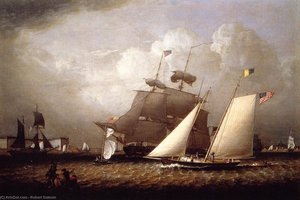
StatsView of Venice


 Read More
Giclée / Art Print
Museum-quality giclée or canvas print with fast production and flexible finish options. ( Buy Hand Made Painting Switch to Digital Image)




P118B $10

P118H $10

P118W $10

P438Z $10

P508JH $12

P508YH $12

P805H $10

P805Z $10

P919BZ $10

P919G $10

P919XJ $10

P959ZH $10

P968JZ $12

W106C $8

W218G $10

W218JH $8

W218Y $10

W307PJ $10

W316G $10

W316PJ $8

W316Y $10

W398PJ $8

W4111J $10

W500HY $15

W500JH $15

W692G $12

W849H $8

W940BG $15

W953PJ $8




Pick from our preset sizes that match the artwork's original proportions.

Type the width and the height you need, to fit your frame or your wall. A print can only be cut, never made bigger than the picture, so a size with a different shape loses a part of the image. We send you a digital mockup to approve before we print anything. The picture shown on this page does not show the real cut — only the mockup does.
Worldwide Delivery () in 2 weeks instead of standard 4/5 weeks. (24 October)

Free Worldwide Express Shipping

High-Quality Linen Canvas

Full Shipping Insurance

Customs Tax Refund Guarantee

True Color Matching Guarantee

100-Day Return Policy (Defects Only)

100% Money-Back Guarantee

Bulk Discount Offer
 Glass option is only available in size under 110 CM

View of Venice
Giclée / Art Print
Reproduction Size
-


Total Price
$ 81
Robert W. Salmon’s Venetian Reverie: A Window into Luminist Landscape
Robert W. Salmon's “View of Venice,” painted in 1845, stands as a testament to the burgeoning Luminist movement and its fascination with capturing fleeting moments of natural beauty—a remarkable achievement considering it was created during a period marked by significant artistic experimentation. This serene depiction transports viewers back to mid-Victorian Italy, offering more than just a picturesque panorama; it embodies an ethos of quiet contemplation and meticulous observation that distinguishes Salmon’s oeuvre from the grand narratives favored by many of his contemporaries.A Synthesis of Influences: Artistic Roots
Salmon's artistic journey began in Whitehaven, Cumbria, where he absorbed the formative influence of the surrounding maritime landscape—a tradition upheld by Dutch marine painters of the seventeenth century who championed atmospheric perspective and tonal gradation to convey realism. Furthermore, Salmon’s training extended beyond the seas, delving into the stylistic explorations of Italian vedute artists like Canaletto and Bernardo Bellotto, masters of capturing urban vistas with astonishing accuracy. However, perhaps most crucially, he embraced the tenets of Claude Lorrain, whose idealized landscapes prioritized sublime grandeur and spiritual resonance—a deliberate choice that would profoundly shape Salmon’s artistic vision.Technical Brilliance: Luminist Precision
Salmon's masterful technique exemplifies the Luminist style. He employed a restrained palette dominated by muted blues and greens, skillfully blending pigments to achieve subtle gradations of tone that convincingly simulate the diffused light characteristic of Venetian canals at dusk. The artist meticulously rendered details—the reflections shimmering on the water’s surface, the textures of weathered buildings—demonstrating an unwavering commitment to capturing the essence of his subject matter with painstaking precision. Unlike Impressionists who sought to depict immediate sensory experience, Salmon prioritized conveying a mood of tranquility and contemplation through carefully calibrated observation and tonal harmony.Venetian Life Illuminated: Contextual Significance
“View of Venice” wasn’t merely a visual record; it served as a conduit for understanding the cultural landscape of its time. Painted during a period of considerable artistic innovation, Salmon's work aligns with broader trends toward realism and psychological depth within British art. The bustling harbor scene—complete with boats laden with cargo and figures engaged in daily activities—offers glimpses into the economic vitality of Liverpool and Venice alike. Moreover, the inclusion of Santa Maria della Salute basilica reinforces the spiritual dimension of Venetian life, reflecting the piety prevalent during the Victorian era.Emotional Resonance: A Moment Frozen in Time
Ultimately, Salmon’s “View of Venice” transcends its technical merits to evoke a powerful emotional response. The painting's stillness invites viewers to pause and appreciate the beauty of the natural world—a sentiment echoed by Luminist painters across Europe. There is an undeniable serenity conveyed through the muted colors and soft brushstrokes, capturing not just what was seen but also how it felt: a quiet reverence for the grandeur and complexity of Venetian life. It remains a captivating reminder that art can transport us beyond time and place, fostering contemplation and inspiring appreciation for enduring artistic ideals.Questions & Answers
Is "View of Venice" by Robert W. Salmon kept in the artist's home country?
No - the artwork is kept abroad. The birth country of Robert W. Salmon is United Kingdom, and the museum holding the original of "View of Venice" is in Spain.
Can "View of Venice" by Robert W. Salmon, held at the Thyssen-Bornemisza Museum, be legally reproduced?
"View of Venice" by Robert W. Salmon, held at the Thyssen-Bornemisza Museum, is in the public domain - its copyright has expired. This status determines whether reproductions of the image may be made.
Where do the visitors of "View of Venice" by Robert W. Salmon come from?
Statistics about "View of Venice" by Robert W. Salmon are on the artwork's Stats page: monthly visits of the artwork, visits of the artist's works, and country and language breakdowns of recent visitors.
Artist Biography
Early Life and Artistic Training
- Origins: Salmon was born Robert Salomon to Francis Salomon, a jeweler. Whitehaven's bustling port provided an early influence on his artistic development.
- Early Influences: His training is not extensively documented but it’s believed he studied Dutch marine painters of the 17th century, Italian vedute artists, and Claude Lorrain.
- Early Works: His earliest known works, “Two Armed Merchantmen Leaving Whitehaven Harbor” (1800) and “The ‘Estridge’ off Dover,” demonstrate his early skill in capturing maritime scenes.
- Royal Academy Debut: Salmon first exhibited at the Royal Academy in 1802, marking a significant step in his career.
Career Development and Style
- Move to Liverpool (1806): Salmon settled in Liverpool and changed his name to Salmon. This period saw him produce numerous marine paintings now housed in the National Maritime Museum in London.
- Ship Portraits: His ship portraits reveal a deep familiarity with sailing ships and their mechanics, often depicting the same vessel from multiple angles on a single canvas.
- Popularity & Collectors: Salmon's work gained popularity among prominent Bostonians like Samuel Cabot, Robert Bennett Forbes, and John Newmarch Cushing, indicating his growing recognition in America.
- Luminism Pioneer: He is considered a key figure in the development of American Luminism, influencing artists like William Bradford and Fitz Henry Lane. His emphasis on light and atmosphere created serene and tranquil scenes.
Notable Works and Artistic Significance
- Key Paintings: Some of Salmon's most recognized works include "The Brig 'Ariel'," "Sailing Ship 'Trelawney'," and “View of Liverpool from Cheshire.” These paintings exemplify his skill in capturing the beauty and complexity of sailing vessels.
- Boston Harbor Series: He produced a significant body of work depicting Boston Harbor, showcasing maritime life and historical Boston. “Boston Harbor from Castle Island (Ship Charlotte)” is a notable example.
- Influence on American Art: Salmon's style profoundly influenced subsequent generations of American seascape painters, contributing to the development of Luminism as an important artistic movement.
Legacy and Recognition
- Museum Holdings: Salmon’s works are held in prestigious institutions including the U.S. Naval Academy, Museum of Fine Arts, Boston, and the National Maritime Museum, Greenwich.
- Lasting Impact: His paintings continue to inspire artists today, serving as a testament to his skill and artistry.
- Father of American Luminism: Salmon’s legacy is firmly established as a pioneer of American Luminism, leaving an indelible mark on the art world.

Robert W. Salmon
1775 - 1845 , United Kingdom
Quick Facts
- Artistic Movement Or Style: American Luminism
- Artists Or Movements Influenced By This Artist:
- William Bradford
- Fitz Henry Lane
- Artists Who Influenced This Artist:
- Dutch marine painters
- Italian vedute artists
- Claude Lorrain
- Date Of Birth: 1775
- Date Of Death: 1845
- Full Name: Robert W. Salmon
- Nationality: British
- Notable Artworks:
- Sailing Ship 'Trelawney'
- Boston Harbor from Castle Island
- A Frigate of the Baltic Fleet
- Place Of Birth: Whitehaven, United Kingdom
Related Articles
Golden Light & Rich Color: The Timeless Magic of Venetian Renaissance Art
Explore the luminous beauty of Venetian Renaissance art. Discover how masters like Titian used colorito and golden light to redefine painting through texture, emotion, and atmospheric brilliance in a masterclass of historical artistry.
Venetian Renaissance: The Golden Age of Color, Light, and Luminous Artistry
Embark on a journey through the Venetian Renaissance. Discover how masters like Giorgione and Titian revolutionized art through luminous color and light. Explore the profound legacy of the Venetian School and its enduring influence on the world of fine art.
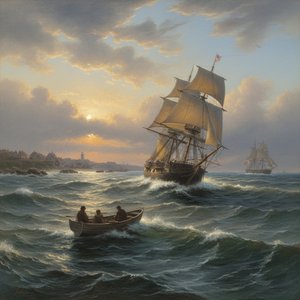
Robert W. Salmon: Navigating the Currents of Maritime Painting & American Realism
Explore the captivating maritime paintings of Robert W. Salmon, a pioneer of American Luminism. Discover his Boston Harbor scenes, legacy, and collecting guide at OriginalUniqueArt.

Giovanni Antonio Canal (Canaletto): A Venetian Master of Light, Space & Societal Observation
Explore the life & art of Giovanni Antonio Canal (Canaletto), a Venetian master renowned for his breathtaking cityscapes. Discover his techniques, legacy, and captivating depictions of 18th-century Venice & London.

Jacopo Tintoretto's Masterpieces: 25 Paintings That Define Venetian Drama | OriginalUniqueArt
Explore 25 breathtaking masterpieces by Jacopo Tintoretto, the Venetian master of drama and light. Discover the stories behind iconic Renaissance paintings & find museum-quality art reproductions to elevate your home decor on OriginalUniqueArt.com.