
 Preview
 Send
Send Share
Share
 Details
 Guide
Guide

 Download
 Similars
 X-Ray
X-Ray Diaporama
 Stats
StatsLandscape Mural
 Oil On Canvas
- WallArt
- Hudson River School
 1852
1852 279.0 x 215.0 cm
 Taft Museum of Art
 Read More
Hand Made Oil Reproduction
Hand-painted oil on canvas in your size and frame, made to order by our artists. ( Switch to Print Switch to Digital Image)




P118B $10

P118H $10

P118W $10

P438Z $10

P508JH $12

P508YH $12

P805H $10

P805Z $10

P919BZ $10

P919G $10

P919XJ $10

P959ZH $10

P968JZ $12

W106C $8

W218G $10

W218JH $8

W218Y $10

W307PJ $10

W316G $10

W316PJ $8

W316Y $10

W398PJ $8

W4111J $10

W500HY $15

W500JH $15

W692G $12

W849H $8

W940BG $15

W953PJ $8




Pick from our preset sizes that match the artwork's original proportions.

Type the width and the height you need, to fit your frame or your wall. This is hand-painted, so for a size with a different shape the artist can paint a bit more around the picture, or cut a bit — you choose. We send you a digital mockup to approve before the painting starts. The picture shown on this page does not show the real result — only the mockup does.
After order, OriginalUniqueArt.com team will email client for instructions and provide a mockup preview
Worldwide Delivery () in 3/4 weeks instead of standard 5 weeks. (22 October). No compromise on quality.

Free Worldwide Express Shipping

High-Quality Linen Canvas

Full Shipping Insurance

Customs Tax Refund Guarantee

True Color Matching Guarantee

100-Day Return Policy (Defects Only)

100% Money-Back Guarantee

Bulk Discount Offer
 Glass option is only available in size under 110 CM

Landscape Mural
Reproduction Medium
Reproduction Size
-


Total Price
$ 300
Robert Seldon Duncanson’s “Landscape Mural”: A Window into the Soul of America
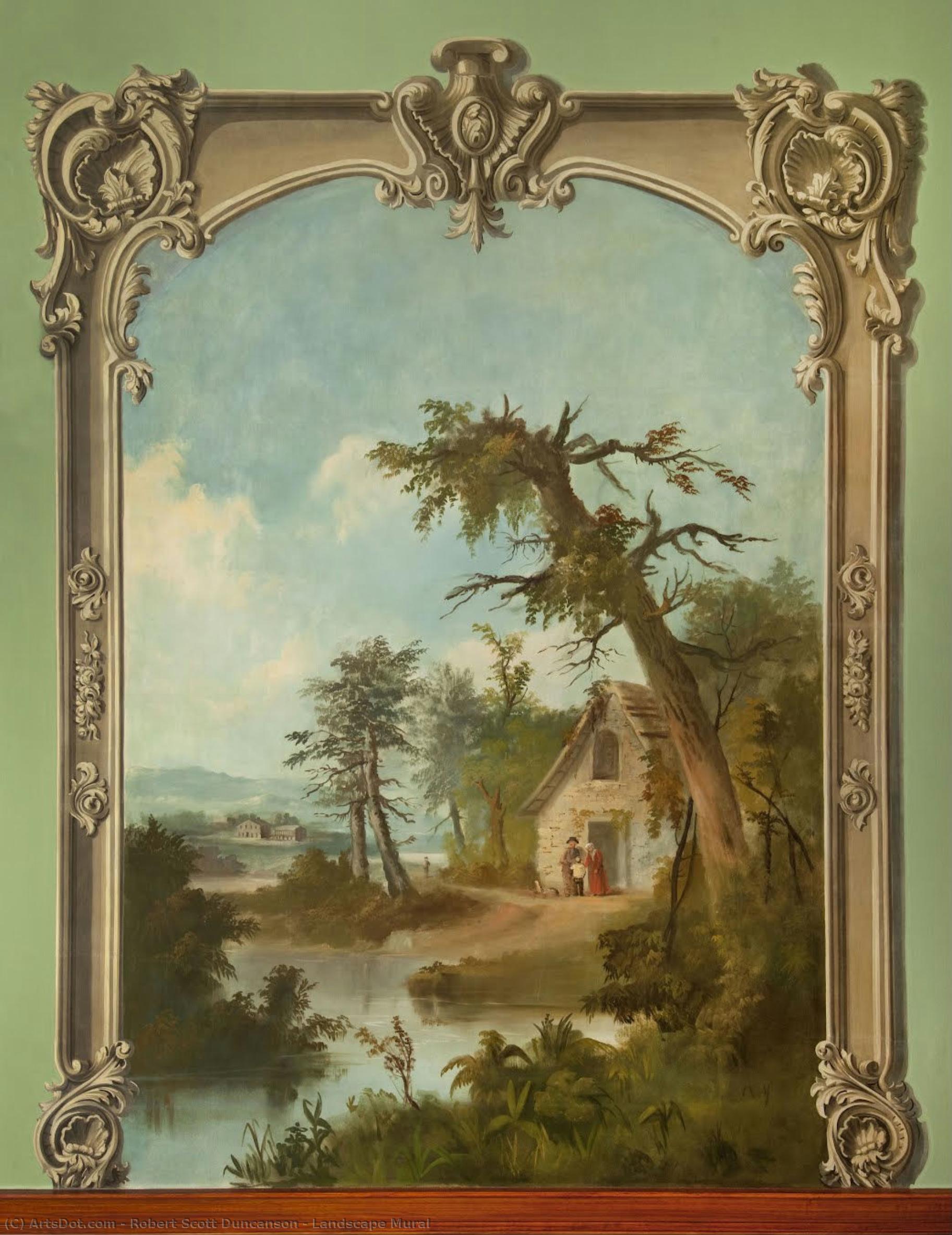
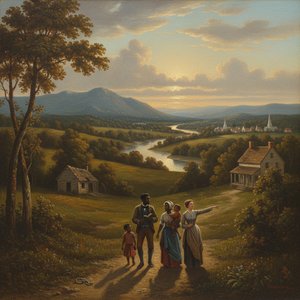
Robert Seldon Duncanson's "Landscape Mural," painted in 1852, isn’t merely a depiction of a rural scene; it’s a profound meditation on nature, spirituality, and the burgeoning identity of America itself. Created during a period of immense social and political upheaval – the years leading up to the Civil War – this monumental work offers a glimpse into Duncanson's artistic vision and his deeply felt connection to the land. Measuring an impressive 110 1/8 x 78 7/8 inches, the mural dominates its setting, drawing the viewer into a meticulously rendered world of rolling hills, a meandering river, and a distant farmhouse bathed in the golden light of late afternoon. It’s a scene both familiar and subtly unsettling, imbued with an atmosphere that speaks to the complexities of the era.
Duncanson, a pioneering African American artist, navigated a challenging landscape of racial prejudice while establishing himself as one of the foremost landscape painters of his time. His work often grappled with themes of identity, spirituality, and the relationship between humanity and nature – subjects that resonated deeply within the context of his lived experience. The mural’s composition—a carefully balanced interplay of light and shadow, foreground and background—reflects Duncanson's meticulous approach to art, honed through years of apprenticeship in carpentry and house painting before he fully embraced his artistic calling. The use of atmospheric perspective, a technique borrowed from European masters like the Hudson River School, creates a sense of depth and distance, inviting the viewer to lose themselves within the painted landscape.
Hudson River School Aesthetics: Romanticism Rooted in Observation
“Landscape Mural” firmly places itself within the tradition of the Hudson River School, a movement of American artists who sought to capture the beauty and grandeur of the American wilderness. Inspired by European Romanticism—with its emphasis on emotion, imagination, and the sublime—the Hudson River School painters rejected the rigid academic styles of the past in favor of direct observation and a celebration of nature’s power. Duncanson's work embodies this spirit perfectly, eschewing idealized representations for a more nuanced and evocative portrayal of the Ohio Valley landscape.
The painting’s palette is rich and earthy—dominated by greens, browns, and ochres—creating a sense of warmth and tranquility. However, subtle hints of melancholy permeate the scene, particularly in the muted tones of the distant farmhouse and the slightly overcast sky. This duality reflects the complex realities of 19th-century America – a nation grappling with issues of slavery, economic inequality, and westward expansion. The artist’s careful attention to detail—the texture of the bark on the trees, the ripples in the water, the subtle gradations of light—demonstrates his deep understanding of nature and his commitment to capturing its essence with remarkable accuracy.
Symbolism and Narrative: A Silent Story
While ostensibly a landscape painting, “Landscape Mural” is rich in symbolic meaning. The lone figure standing near the tree – often interpreted as representing humanity’s relationship with nature—suggests both reverence and a sense of vulnerability. The river, flowing steadily towards the horizon, can be seen as a metaphor for the passage of time and the relentless march of progress. The distant farmhouse represents the promise of home and stability, yet it also evokes a feeling of isolation and loneliness.
Some art historians have suggested that Duncanson subtly incorporated racial metaphors into his work, using the landscape to explore themes of identity and belonging. The painting’s quiet dignity and contemplative mood invite viewers to reflect on their own place within the larger context of American history and culture. The mural's enduring appeal lies in its ability to evoke a sense of nostalgia for a bygone era while simultaneously prompting us to consider the challenges and complexities of our present.
A Legacy of Artistic Vision: Reproduction and Appreciation
Today, “Landscape Mural” stands as a testament to Robert Seldon Duncanson’s artistic genius and his significant contribution to American art history. High-quality reproductions capture the painting's luminous quality and intricate detail, allowing viewers to appreciate its beauty and complexity from afar. Whether displayed in a private home or a public institution, this remarkable work continues to inspire and captivate audiences with its evocative imagery and profound message. Consider commissioning a hand-painted reproduction to bring this timeless masterpiece into your own space – a tangible reminder of Duncanson’s artistic vision and the enduring power of nature.
Questions & Answers
Can I preview "Landscape Mural" by Robert Seldon Duncanson before ordering?
The Preview page of "Landscape Mural" lets you preview the artwork before ordering.
What is "Landscape Mural" made with, and in which style?
In "Landscape Mural", the oil on canvas technique meets the Hudson River School movement.
Where does "Landscape Mural" fall in Robert Seldon Duncanson's career?
"Landscape Mural" represents the Mature Period of Robert Seldon Duncanson.
Artist Biography
A Pioneer of the American Landscape
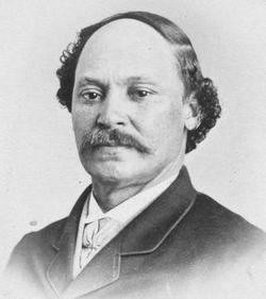
Robert Seldon Duncanson, a name that resonates with both artistic brilliance and historical significance, emerged as a pivotal figure in 19th-century American art. Born around 1821 in Fayetteville, New York, to parents of European and African descent—his father, John Dean Duncanson, a free Black tradesman who instilled the values of diligence and learning—Duncanson navigated a world fraught with racial prejudice while simultaneously achieving international acclaim as a landscape painter. His journey was one of self-education, unwavering dedication, and a profound connection to the natural world, ultimately establishing him as the first African American artist to gain widespread recognition on both sides of the Atlantic. The family’s relocation to Monroe, Michigan, saw young Robert apprenticed in carpentry and painting, revealing an early aptitude for art that would soon define his life's path.From Portraiture to Panoramic Vistas
Duncanson’s artistic development began with portraiture, a practical means of establishing himself as a professional artist. However, the burgeoning cultural scene of Cincinnati, Ohio—a city known as the “Athens of the West”—beckoned him in 1840, offering opportunities for growth and exposure that were unavailable elsewhere. Largely self-taught, Duncanson honed his skills through diligent study of prints and engravings, sketching directly from nature, and meticulously copying the works of established masters. This rigorous approach allowed him to develop a keen eye for detail and a remarkable technical proficiency despite lacking formal training. It was in Cincinnati that he began his transition towards landscape painting, drawn by the romantic ideals and sublime beauty of the American wilderness. The influence of the Hudson River School became increasingly apparent in his work, particularly the evocative compositions of Thomas Cole, whose dramatic depictions of nature resonated deeply with Duncanson’s own artistic sensibilities. He wasn't merely replicating scenes; he was interpreting them through a uniquely personal lens, imbuing his canvases with a sense of tranquility and spiritual connection.A European Sojourn and International Recognition
A turning point in Duncanson’s career arrived in 1853-1854 with an extended tour of Europe. This journey provided him with invaluable exposure to the works of European masters, broadening his artistic horizons and refining his technique. He studied the Old Masters, absorbing their approaches to light, color, and composition, which he then integrated into his own distinctive style. Upon his return, Duncanson’s work demonstrated a newfound sophistication and maturity, attracting attention not only in America but also in England, Scotland, and Canada. Exhibitions followed, solidifying his reputation as an artist of considerable talent and vision. He became a key figure in developing the Ohio River Valley landscape tradition, capturing the serene beauty of the region with remarkable skill. His paintings weren’t simply representations of place; they were expressions of mood, atmosphere, and the sublime power of nature.Legacy and Historical Significance
Robert Seldon Duncanson's legacy extends far beyond his artistic achievements. He broke down barriers for African American artists during a period marked by pervasive racial discrimination, serving as an inspiration for future generations. His success challenged prevailing societal norms and demonstrated the power of art to transcend prejudice. While art historians continue to debate the extent to which his race influenced his artistic expression—some suggesting subtle symbolic representations of racial themes within his landscapes—there is no denying that Duncanson’s life story is a testament to resilience, talent, and the enduring human spirit. For many years, his work was unjustly overlooked, but recent scholarship and exhibitions have brought renewed attention to his contributions to American art history.A Lasting Impression
Duncanson's paintings offer more than just aesthetic pleasure; they invite contemplation on themes of nature, spirituality, and the human condition. His masterful use of color, meticulous detail, and evocative compositions create a sense of immersion, drawing viewers into the tranquil beauty of his landscapes. He died unexpectedly in 1872 while preparing for an exhibition in Detroit, possibly due to lead poisoning from the paints he used. Today, Robert Seldon Duncanson stands as a pioneering figure—a testament to the power of art to overcome adversity and leave an indelible mark on the world. His serene vistas continue to captivate audiences, reminding us of the enduring beauty of nature and the remarkable talent of an artist who dared to dream beyond the limitations imposed upon him by his time.- Major Themes: Landscape painting, Romanticism, Hudson River School influence, spiritual connection with nature.
- Notable Works: “Landscape with Sheep,” “Roses Still Life,” and numerous depictions of the Ohio River Valley.
Robert Seldon Duncanson
1821 - 1872 , United States of America
Quick Facts
- Full Name: Robert Seldon Duncanson
- Nationality: American
- Date Of Birth: 1821
- Date Of Death: 1872
- Place Of Birth: Fayetteville, United States of America
- Notable Artworks:
- Landscape with Sheep
- Roses Still Life
- Artistic Movement Or Style: Hudson River School
- Artists Who Influenced This Artist: ['Thomas Cole']
- Artists Or Movements Influenced By This Artist: ['Ohio River Valley tradition']
Related Articles

Hudson River School: 10 Masterpieces That Capture America's Wild Beauty | OriginalUniqueArt
Journey through America's breathtaking landscapes with our guide to the Top 10 Hudson River School masterpieces. Explore Thomas Cole, Frederic Church & more! Find museum-quality art reproductions and elevate your home decor at OriginalUniqueArt.com.
Capturing the American Spirit: A Journey Through Iconic Landscapes and the Legacy of the Hudson River School
Explore the profound beauty of American art history. From the Hudson River School to iconic landscapes, discover a curated journey through the masterpieces that defined a nation's spirit and the enduring legacy of American Romanticism.

The Sublime Landscape: Exploring the Hudson River School Movement
Explore the captivating world of the Hudson River School! Discover the history, artists, and defining characteristics of this iconic American art movement. Learn about Romanticism's influence & find inspiration for your collection.
Robert Spencer: Luminism, Narrative & the American Landscape Tradition
Explore the captivating world of Luminism & the Hudson River School with our expert analysis. Discover the history, artists, and enduring beauty of 19th-century American landscape painting. Find museum-quality reproductions at OriginalUniqueArt.
Robert Seldon Duncanson: Landscape, Abolitionism & Shaping American Identity
Discover Robert Seldon Duncanson, the first internationally acclaimed African American landscape artist. Explore his connection to the Hudson River School, abolitionism, and enduring legacy through serene vistas & powerful symbolism.


