- Home

- Print on canvas
- robert brough
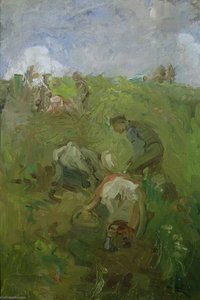
- Dolce pomum

 Buy Painting
 Send
Send Share
Share
 Details

 Download
 Similars
 X-Ray
X-Ray Diaporama
Dolce pomum

 Read More
Giclée / Art Print
Museum-quality giclée or canvas print with fast production and flexible finish options.




































Pick from our preset sizes that match the artwork's original proportions.

You may enter your own dimensions to fit a specific frame or space. If your selected size does not match the original image's proportions, we will either crop the artwork or extend the image with a mirrored or solid-fill edge. A digital mockup will be sent for your approval before production begins.
Please note that the on-screen preview does not reflect the actual cropping or extension. Only the mockup will accurately show the final composition.
While custom sizes are available, we recommend selecting a dimension from the predefined list to preserve the original proportions.
Worldwide Delivery () in 2 weeks instead of standard 4/5 weeks. (17 July)

Free Worldwide Express Shipping

High-Quality Linen Canvas

Full Shipping Insurance

Customs Tax Refund Guarantee

True Color Matching Guarantee

60-Day Return Policy (Defects Only)

100% Money-Back Guarantee

Bulk Discount Offer
 Glass option is only available in size under 110 CM

Dolce pomum
Giclée / Art Print
Reproduction Size
-


Total Price
-
Artist Biography
Robert Brough: A Visionary Scot Caught Between Tradition and Modernity
Robert Brough (1872-1905) remains a figure of quiet fascination within Scottish art history, an artist whose distinctive style—characterized by luminous color palettes and emotionally charged compositions—captured the spirit of Victorian Aberdeen with remarkable sensitivity. Though overshadowed by his contemporaries, Brough’s oeuvre possesses a singular beauty that continues to resonate with collectors and scholars alike.Early Life and Influences
Born in Aberdeen, Robert Brough descended from a family steeped in artistic tradition. His father was a solicitor, but Robert himself possessed an undeniable passion for painting from a young age. Recognizing his talent, his parents encouraged him to pursue formal training at the Glasgow School of Art, where he studied under Henry Raeburn—the celebrated Scottish portraitist whose masterful depictions of rural life and dignified subjects profoundly impacted Brough’s artistic sensibilities. This formative encounter with Raeburn instilled in him a commitment to capturing authentic emotion and conveying nuanced psychological portraits. Furthermore, Brough absorbed influences from Impressionism and Symbolism, particularly the Parisian avant-garde, broadening his artistic horizons beyond the confines of Scottish academic painting.Developing His Style: Color and Emotion
Brough’s distinctive style emerged as he honed his craft in Aberdeen, where he established himself as a respected portrait painter and illustrator. Unlike many artists of his time who adhered rigidly to conventional techniques, Brough experimented boldly with color—often employing vibrant hues alongside muted tones—to express inner feelings and convey atmospheric moods. His canvases pulsated with life, infused with an almost palpable sense of movement and emotion. He eschewed meticulous detail in favor of capturing the essence of his subjects, prioritizing expressive brushstrokes and luminous glazing to achieve a captivating visual effect. This approach aligns closely with Impressionist principles, yet Brough’s compositions retain a uniquely Scottish character—a subtle blend of Romantic idealism and Victorian realism.Notable Works: Fantaisie en Folie and Beyond
Among Brough's most celebrated paintings is “Fantaisie en Folie” (“Fantasy in Madness”), an arresting depiction of a young woman gazing out from a window, bathed in ethereal light. The painting exemplifies Brough’s masterful command of color and technique—a luminous wash of blues and greens punctuated by flashes of gold—creating an atmosphere of dreamy contemplation. Critics lauded its psychological depth and expressive power, recognizing it as a testament to Brough's ability to convey complex emotions through visual imagery. Beyond “Fantaisie en Folie,” Brough produced numerous portraits of Aberdeen notables, capturing their personalities with sensitivity and insight. He also undertook commissions for decorative murals and illustrations, demonstrating his versatility as an artist.Legacy and Historical Significance
Robert Brough’s artistic legacy extends beyond the individual canvases he created. His work represents a crucial link between Scottish Romanticism and Impressionistic Modernism—a bridge spanning stylistic boundaries while upholding humanist values. He stands apart from many of his peers for his unwavering devotion to capturing the inner life of his subjects, prioritizing emotional resonance over mere visual accuracy. Although Brough’s output was relatively modest compared to some other Victorian artists, “Fantaisie en Folie” and his portraits continue to captivate audiences today, serving as enduring reminders of a Scottish artist who dared to embrace innovation within the framework of tradition—a visionary Scot whose art speaks volumes about the complexities of human experience.
robert brough
1872 - 1905
Quick Facts
- Artistic Movement Or Style: Victorian Art
- Artists Or Movements Influenced By This Artist: ['French Art']
- Artists Who Influenced This Artist: ['Henry Raeburn']
- Date Of Birth: 1872
- Date Of Death: 1905
- Full Name: Robert Brough
- Nationality: Scottish
- Notable Artworks: ['Fantaisie en Folie']
- Place Of Birth: Aberdeen, Scotland