Menu
Text size

() ·

A painting made for you, by hand

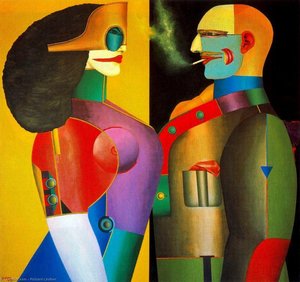
The Meeting

Hand Made Oil Reproduction

Hand-painted oil on canvas in your size and frame, made to order by our artists. ( Switch to Print Switch to Digital Image)

Collectible Description

Explore Richard Lindner's 'The Meeting,' a captivating oil painting blending Pop Art & Expressionism. Discover stylized figures, rich symbolism, and a dynamic social scene – perfect for art lovers and collectors!

Artist Biography

Explore the unique urban eroticism of Richard Lindner's robot-like figures & 60s/70s art. A German-American painter known for his powerful, symbolic imagery – a visual journey.

from ·

Chapter 1

How large should it be?

Slide to change the size; the picture on the left shows the frame at its real width. The proportions of the original are kept.

Standard
custom
CM
INCH

Pick from our preset sizes that match the artwork's original proportions.

width
height

Type the width and the height you need, to fit your frame or your wall. This is hand-painted, so for a size with a different shape the artist can paint a bit more around the picture, or cut a bit — you choose. We send you a digital mockup to approve before the painting starts. The picture shown on this page does not show the real result — only the mockup does.

Chapter 2

How should it arrive?

Choose the edges of the stretched canvas

Choose your frame

Corner sample of the WhiteWrap canvas edge finish, stretched on solid wood bars
White $1
Corner sample of the BlurSideWrap canvas edge finish, stretched on solid wood bars
Blurside $1
Corner sample of the ExtendedWrap canvas edge finish, stretched on solid wood bars
Extended $1
Corner sample of the P118B picture frame: moulded polystyrene, 5 cm wide and 3 cm thick
P118B $10
Corner sample of the P118H picture frame: moulded polystyrene, 5 cm wide and 3 cm thick
P118H $10
Corner sample of the P118W picture frame: moulded polystyrene, 5 cm wide and 3 cm thick
P118W $10
Corner sample of the P438Z picture frame: moulded polystyrene, 5.5 cm wide and 3.5 cm thick
P438Z $10
Corner sample of the P508JH picture frame: moulded polystyrene, 7 cm wide and 3.5 cm thick
P508JH $12
Corner sample of the P508YH picture frame: moulded polystyrene, 7 cm wide and 3.5 cm thick
P508YH $12
Corner sample of the P805H picture frame: moulded polystyrene, 5 cm wide and 3.5 cm thick
P805H $10
Corner sample of the P805Z picture frame: moulded polystyrene, 5 cm wide and 3.5 cm thick
P805Z $10
Corner sample of the P919BZ picture frame: moulded polystyrene, 7 cm wide and 3.5 cm thick
P919BZ $10
Corner sample of the P919G picture frame: moulded polystyrene, 7 cm wide and 3.5 cm thick
P919G $10
Corner sample of the P919XJ picture frame: moulded polystyrene, 7 cm wide and 3.5 cm thick
P919XJ $10
Corner sample of the P959ZH picture frame: moulded polystyrene, 5 cm wide and 3 cm thick
P959ZH $10
Corner sample of the P968JZ picture frame: moulded polystyrene, 6 cm wide and 4 cm thick
P968JZ $12
Corner sample of the W106C picture frame: solid wood, 5 cm wide and 3 cm thick
W106C $8
Corner sample of the W218G picture frame: solid wood, 5 cm wide and 3 cm thick
W218G $10
Corner sample of the W218JH picture frame: solid wood, 5 cm wide and 3 cm thick
W218JH $8
Corner sample of the W218Y picture frame: solid wood, 5 cm wide and 3 cm thick
W218Y $10
Corner sample of the W307PJ picture frame: solid wood, 6 cm wide and 3 cm thick
W307PJ $10
Corner sample of the W316G picture frame: solid wood, 6 cm wide and 3 cm thick
W316G $10
Corner sample of the W316PJ picture frame: solid wood, 6 cm wide and 3 cm thick
W316PJ $8
Corner sample of the W316Y picture frame: solid wood, 6 cm wide and 3 cm thick
W316Y $10
Corner sample of the W398PJ picture frame: solid wood, 5 cm wide and 3 cm thick
W398PJ $8
Corner sample of the W4111J picture frame: solid wood, 6.5 cm wide and 3.5 cm thick
W4111J $10
Corner sample of the W500HY picture frame: solid wood, 7 cm wide and 5 cm thick
W500HY $15
Corner sample of the W500JH picture frame: solid wood, 7 cm wide and 5 cm thick
W500JH $15
Corner sample of the W692G picture frame: solid wood, 8 cm wide and 4 cm thick
W692G $12
Corner sample of the W849H picture frame: solid wood, 5 cm wide and 3 cm thick
W849H $8
Corner sample of the W940BG picture frame: solid wood, 7.5 cm wide and 4.5 cm thick
W940BG $15
Corner sample of the W953PJ picture frame: solid wood, 6 cm wide and 3.5 cm thick
W953PJ $8
Corner sample of the H24-GOLD picture frame: carved wood with gesso, 10 cm wide and 6 cm thick
H24-GOLD $30
Corner sample of the H24-SILVER picture frame: carved wood with gesso, 10 cm wide and 6 cm thick
H24-SILVER $30
Corner sample of the H36-GOLD picture frame: carved wood with gesso, 15 cm wide and 6.5 cm thick
H36-GOLD $45
Corner sample of the H36-SILVER picture frame: carved wood with gesso, 15 cm wide and 6.5 cm thick
H36-SILVER $45
Frame preview
Framed

Moulding: . Overall size with the frame: .

Chapter 3

Who paints it, and should anything change?

Examples of what can be changed: Replace face with customer photo; Add pet (e.g., replace cat with dog); Include hidden message in background; Change background landscape or elements.
After order, OriginalUniqueArt.com team will email client for instructions and provide a mockup preview

Worldwide Delivery () in 3/4 weeks instead of standard 5 weeks. (31 October). No compromise on quality.

Chapter 4

The finishing touches

A nameplate, as in a museum?

Engraved Bronze Plaque Details

This elegant plaque features the artist's name and the title of the artwork, finely engraved for a timeless presentation.

It is made from bronze with a refined, elegant finish. The text is precisely laser-engraved for a sharp and permanent result. Measuring 9x2 cm, the plaque is compact yet easy to read. It's built to be durable and scratch-resistant, offering a professional, museum-quality look. Mounting is simple thanks to the included adhesive backing.

Transparent Acrylic Plaque Details

The plaque includes essential engraved details such as the artist's name, the title of the artwork, the date it was created, the type of media used-like oil on canvas or watercolor-a brief description of the piece, and a QR code that links to the complete artwork information.

It is crafted from clear acrylic, offering a sleek, modern appearance. The text is UV-engraved in black to ensure strong visual contrast. With a size of 10x15 cm, it ensures optimal readability. It comes equipped with two metal hooks for secure wall mounting. The plaque is designed to be weather-resistant, making it suitable for various environments, and it includes interactive features that work seamlessly with smartphone scanning.

Black Acrylic Plaque Details

This elegant plaque includes engraved information such as the artist's name, the title of the artwork, the date it was created, the type of media used (like oil on canvas or watercolor), a short description of the artwork, and a QR code for quick access to more information.

The plaque itself is made from refined black acrylic with a premium finish. The text is laser-engraved in white for high contrast and readability. Its size is 10x15 cm, designed to be easy to read. It comes with two metal hooks for professional mounting. The design is sleek and fits any interior style. It is also weather-resistant and durable, with built-in digital integration for mobile compatibility.

A protective varnish?

When do you need it?

Chapter 5

Your painting, as you ordered it

The Meeting

Reproduction Medium

Reproduction Size

-

Elite Senior Artist

More detail, finesse, and extra production time

-

Reproduction Frame

-

-

For artworks or reproductions larger than 105 cm (approximately 41 inches) on any side, the frame will be shipped as a kit, disassembled. This method ensures safe delivery and prevents damage during transport.

Professional assembly required - this is not a DIY product.
The kit must be assembled and the canvas stretched by an experienced professional framer, using wood glue (not supplied), a canvas stretching plier and clamps to hold the bars square while the glue dries. Incorrect assembly or uneven canvas tension can permanently damage the artwork and is not covered by our warranty.

  • All solid wood bars are included, precisely cut to size.

  • Assembled with the screws provided, plus wood glue for the corner joints, which is not supplied and must be sourced by your framer.

  • Professional tools are required and not included: a canvas stretching plier (tensioner) and clamps to hold the bars square while the glue dries.

Important:
The corner joints require wood glue, the bars must be held with clamps until the glue is fully dry, and tightening the canvas on the assembled frame requires a canvas stretching plier. None of these are included in the kit. Please arrange an experienced professional framer before ordering this size.

Nameplate

-

-

Protective Varnish

Glossy Varnish (enhances colors, protects against light/moisture)

-

Customize My Artwork

Examples of what can be changed: Replace face with customer photo; Add pet (e.g., replace cat with dog); Include hidden message in background; Change background landscape or elements.

-

Urgent

Worldwide Delivery () in 3/4 weeks instead of standard 5 weeks. (31 October). No compromise on quality.

-

Express Shipping

Worldwide Delivery () in 5 weeks. (7 November).

Included

Total Price

$ 475

Total Price $ 475

Glass option is only available in size under 110 CM

Included with every order

  • Free Worldwide Express Shipping
  • High-Quality Linen Canvas
  • Full Shipping Insurance
  • Customs Tax Refund Guarantee
  • True Color Matching Guarantee
  • 100-Day Return Policy (Defects Only)
  • 100% Money-Back Guarantee
  • Bulk Discount Offer

A Gathering Steeped in Modernity: Unveiling Richard Lindner’s “The Meeting”

Richard Lindner's "The Meeting" is not merely a depiction of social interaction; it’s an immersion into a world poised between reality and dream, a vibrant tableau that captures the anxieties and fascinations of mid-20th century modernity. The canvas teems with nine figures arranged in a deliberate semi-circle, their individual styles and expressions hinting at complex narratives woven within this intimate yet strangely detached gathering. Lindner doesn’t offer a straightforward scene; instead, he presents a carefully constructed stage where identity, social roles, and perhaps even a touch of the surreal collide. The inclusion of a regal cat in the foreground is particularly striking – an enigmatic presence that adds layers of symbolism, suggesting themes of authority, independence, or a subtle undercurrent of mysticism. It’s a scene that invites prolonged contemplation, prompting viewers to decipher the relationships and unspoken stories held within this dynamic composition.

Bold Strokes and Expressive Forms: A Masterclass in Style

Lindner's artistic voice is immediately recognizable in “The Meeting” through his bold, expressive style. He eschews traditional realism for a more emotionally charged approach, employing exaggerated forms, vibrant colors, and stylized features that echo the influences of both modernism and expressionism. Strong outlines define each figure, lending them a graphic quality while simultaneously emphasizing their individuality. The color palette—a rich interplay of reds, blues, blacks, and earthy tones—is far from arbitrary; it’s carefully orchestrated to enhance visual dynamism and underscore the unique personality of each participant in this gathering. The technique suggests a masterful handling of oil or acrylic paints on canvas, resulting in a smooth yet textured finish that accentuates both the stylized aesthetic and the depth within the scene. It's a style that feels simultaneously familiar and unsettling, drawing the viewer into its captivating world.

Echoes of an Era: Historical Context and Artistic Significance

Created during a period of significant social and cultural upheaval, “The Meeting” reflects the anxieties and energies of the mid-20th century. Lindner, having experienced displacement as a German artist fleeing Europe before World War II, brought a unique perspective to his work. His art blends European modernist traditions with American pop sensibilities, creating a visual language that is both contemporary and timeless. The painting’s stylistic choices—the bold colors, simplified shapes, and expressive forms—align it with movements like expressionism and early pop art, yet Lindner's distinct voice prevents easy categorization. His work often explored themes of alienation and the complexities of modern life, and “The Meeting” serves as a powerful example of his ability to capture these sentiments on canvas. The painting’s presence in prominent collections, including that of the Museum of Modern Art in New York, underscores its enduring artistic significance.

Decoding the Symbols: Emotional Resonance and Interpretation

Beyond its aesthetic qualities, “The Meeting” resonates with a profound emotional depth. The stylized figures and vibrant palette evoke a spectrum of responses – from quiet contemplation to a sense of underlying tension. The exaggerated forms and contrasting colors amplify the expressive impact, inviting viewers to interpret the relationships and narratives at play. Is this a scene of camaraderie or veiled conflict? Are these individuals connected by shared purpose or simply existing in proximity? The regal cat, with its air of aloof authority, adds another layer of intrigue – perhaps representing an unseen power dynamic or a symbol of independence within the group. Ultimately, “The Meeting” is not about providing answers; it’s about prompting questions and inviting viewers to engage with the artwork on a personal level. It's a piece that promises to elevate any interior space, sparking conversation and inspiring contemplation for years to come.

Questions & Answers

Where does "The Meeting" sit within Richard Lindner's body of work?

"The Meeting" belongs to Richard Lindner's Expressionist Pop Art work, whose recorded themes include modernism, expressionism, pop art blend, post-war social commentary, identity exploration, lindner’s signature stylized figures style, urban life, media influence themes.

What does "The Meeting" by Richard Lindner depict, and in what mood?

"The Meeting" shows social gathering, stylized figures, vibrant colors, symbolism, mid-century modern, theatrical, psychological depth, and its recorded mood is dramatic.

Are the colors of "The Meeting" by Richard Lindner saturated or muted?

The colors of "The Meeting" by Richard Lindner have a clear color presence saturation. Saturation describes how vivid or muted the colors are.

More about this painting

Preview AR preview Switch to Print Switch to Digital Image Send
Details Guide Add to favorites Download Similars X-Ray Diaporama Q&A Stats

In numbers

  • 29frames to choose from
  • standard sizes, in its own proportions
  • 5weeks to paint and deliver it

About the original

Richard Lindner

Richard Lindner

1901 - 1978, Germany

Quick facts about Richard Lindner

  • Full Name: Richard Lindner
  • Nationality: German-American
  • Date Of Birth: 1901
  • Date Of Death: 1978
  • Place Of Birth: Hamburg, Germany
  • Notable Artworks:
    • Marilyn Was Here
    • The Meeting
    • Louis ii
  • Artistic Movement Or Style: Urban eroticism, Pop Art, Cyberpunk
  • Artists Who Influenced This Artist:
    • Hansen Prinzhorn
    • Neue Sachlichkeit
  • Artists Or Movements Influenced By This Artist: ['American Pop Art']

Artist Biography

The Architect of Urban Eroticism

Richard Lindner, born in Hamburg, Germany, in 1901, remains one of the most singular and arresting figures in twentieth-century art. A German-American painter whose vision pulsed with a restless, mechanical energy, his work offers an unsettling yet captivating blend of urban eroticism and stylized form. His artistic journey was shaped by a profound duality, rooted in European traditions yet profoundly transformed by the vibrant, often contradictory landscape of New York City. Lindner did not merely paint scenes; he constructed psychological landscapes where the boundaries between human flesh and industrial precision seemed to dissolve, creating a visual language that continues to provoke and fascinate contemporary viewers.

The foundations of his aesthetic were laid in the disciplined environments of Germany. Following his family's move to Nuremberg, Lindner received a rigorous education at the Kunstgewerbeschule, where he honed his skills in design and craftsmanship. This early training in structure and form would later manifest in the almost architectural precision of his figures. His subsequent studies at the Kunstakademie in Munich exposed him to the Neue Sachlichkeit movement, a style defined by its stark realism and critical engagement with the social realities of the era. While Lindner eventually moved toward a more stylized, surrealist-inflected approach, the underlying tension between objective reality and symbolic distortion remained a permanent fixture of his creative psyche.

A Journey Through Displacement and Discovery

Lindner’s life was marked by the seismic shifts of mid-century history. His move to Berlin in 1927 placed him at the heart of a burgeoning avant-garde, but the rising tide of Nazism forced a pivotal exodus. Fleeing to Paris in 1933, Lindner entered a period of profound observation. Working as a commercial artist provided him with a unique vantage point, allowing him to absorb the diverse influences of the Parisian art scene while maintaining a professional connection to the aesthetics of mass media and advertising. This intersection of high art and commercial graphic design would become a cornerstone of his later mature style.

The eventual transition to the United States marked the true metamorphosis of his artistic voice. Immersed in the overwhelming scale and frenetic pace of New York City, Lindner found the perfect canvas for his explorations of modern alienation and desire. The city’s neon lights, crowded streets, and cinematic atmosphere provided the raw material for a new kind of figurative painting. His work began to evolve into the iconic imagery for which he is most celebrated: figures that appear both intensely human and strangely robotic, navigating spaces that feel simultaneously intimate and profoundly impersonal.

Symbolism, Form, and Lasting Legacy

The mature works of Richard Lindner are characterized by a striking, almost sculptural approach to the human figure. His subjects often possess a smooth, mannequin-like quality, with limbs and torsos rendered in bold, simplified shapes that suggest both strength and vulnerability. This mechanical eroticism serves as a powerful commentary on gender roles and the impact of mass culture on individual identity. Through his use of exaggerated proportions and flattened perspectives, Lindner explored the tension between the biological and the artificial, creating a world where the human form is both celebrated and commodified.

Lindner’s achievements lie in his ability to synthesize disparate influences into a cohesive, unmistakable vision. His significance extends beyond mere stylistic innovation; he captured the psychological zeitgeist of an era defined by rapid urbanization and the rise of consumer culture. His legacy is found in:

  • The fusion of graphic design and fine art: Utilizing the bold lines and saturated colors of advertising to elevate figurative painting.
  • Exploration of gender dynamics: Using stylized, often hyper-feminized or masculinized figures to critique social constructs.
  • Urban psychological mapping: Creating much more than landscapes, he painted the emotional atmosphere of the modern metropolis.
  • The intersection of the organic and the industrial: Developing a unique vocabulary of "robot-like" figures that reflect the technological age.

Today, Richard Lindner is remembered as a visionary who dared to look at the modern world through a lens of beautiful distortion. His paintings remain vital, serving as hauntingly beautiful windows into the complexities of desire, identity, and the enduring spirit of the urban experience.

Quick Facts

  • Subject or theme: Social gathering
  • Artist: Richard Lindner
  • Movement: Modernism, Expressionism
  • Location: MoMA, New York
  • Influences: Pop Art

Art Quiz

There is only one correct answer for each question.

Question 1:
Who is the artist of "The Meeting"?
Question 2:
What artistic movements heavily influence Richard Lindner's style in "The Meeting"?
Question 3:
What is a notable element within the composition of "The Meeting"?
Question 4:
What is a symbolic element present in "The Meeting"?
Question 5:
In what year was Richard Lindner born?