

 Preview
 Send
Send Share
Share
 Details
 Guide
Guide

 Download
 Similars
 X-Ray
X-Ray Diaporama
 Stats
StatsThe Quartette
 1910
1910 129.0 x 182.0 cm
 Grundy Art Gallery
 Read More
Giclée / Art Print
Museum-quality giclée or canvas print with fast production and flexible finish options. ( Buy Hand Made Painting Switch to Digital Image)




































Pick from our preset sizes that match the artwork's original proportions.

Type the width and the height you need, to fit your frame or your wall. A print can only be cut, never made bigger than the picture, so a size with a different shape loses a part of the image. We send you a digital mockup to approve before we print anything. The picture shown on this page does not show the real cut — only the mockup does.
Worldwide Delivery () in 2 weeks instead of standard 4/5 weeks. (23 October)

Free Worldwide Express Shipping

High-Quality Linen Canvas

Full Shipping Insurance

Customs Tax Refund Guarantee

True Color Matching Guarantee

100-Day Return Policy (Defects Only)

100% Money-Back Guarantee

Bulk Discount Offer
 Glass option is only available in size under 110 CM

The Quartette
Giclée / Art Print
Reproduction Size
-


Total Price
$ 81
A Captivating Scene
The scene depicted in The Quartette is one of intimacy and camaraderie. The four men are seated around a table, surrounded by their instruments, including cellos and violins. A vase on the table adds to the ambiance of the setting, creating a sense of warmth and comfort. The black and white color palette used in the painting gives it a timeless feel, allowing the viewer to focus on the emotions and interactions between the musicians. Key Elements of the painting include the use of light and shadow to create depth and dimension, as well as the expressive faces of the musicians. The way they are completely absorbed in their music is palpable, making the scene feel incredibly realistic.Similar Works
Other paintings that showcase musical scenes include Cretan Musicians by Frederick John Pym Gore, available on OriginalUniqueArt.com, and In the Land of Ecstasy by Ethel Walker, which can be found at OriginalUniqueArt.com. These paintings, like The Quartette, capture the essence of music and its ability to bring people together.Conclusion
The Quartette by Richard Jack is a stunning example of musical camaraderie, showcasing the beauty of shared passion and creativity. As seen on OriginalUniqueArt.com, this painting is a must-see for music lovers and art enthusiasts alike. With its captivating scene, beautiful use of light and shadow, and expressive faces, The Quartette is a true masterpiece that continues to inspire and delight audiences today.- View more artworks by Richard Jack on OriginalUniqueArt.com
- Learn about other artists, such as Eddie Otchere, on OriginalUniqueArt.com
Questions & Answers
What is the creation date of "The Quartette" by Richard Jack?
The creation of "The Quartette" by Richard Jack is dated 1910.
Does the copyright of "The Quartette" by Richard Jack allow reproductions?
The copyright status of "The Quartette" by Richard Jack is clear: the work is in the public domain - its copyright has expired. Its presence at the Grundy Art Gallery does not change that status.
Where can I buy a hand-painted reproduction of "The Quartette" by Richard Jack?
You can order a hand-painted reproduction of "The Quartette" by Richard Jack directly on its Hand-Painted Reproduction page: a hand-painted oil reproduction on linen canvas, made to order.
Artist Biography
A Legacy of Light and Valor: The Life of Richard Jack
The story of Richard Jack RA is one of profound artistic evolution, tracing a path from the academic rigor of nineteenth-century England to the visceral, mud-stained realities of the Great War. Born in Sunderland, United Kingdom, in 1866, Jack possessed an innate sensitivity to light and form that would eventually define his place in the annals of British Impressionism. His early education at the York School of Art provided a sturdy foundation, but it was his ascent to the Royal College of Art in 1886 that truly ignited his potential. Through a prestigious national scholarship, Jack entered an elite circle of talent, eventually earning a gold medal and a traveling scholarship that would lead him to the legendary Académie Julian in Paris. It was within this vibrant, sun-drenched atmosphere of French Impressionism that Jack’s brushwork began to soften, absorbing the fleeting nuances of atmosphere and color that would become hallmarks of his mature style.
Upon returning to London at the dawn of the twentieth century, Jack demonstrated a remarkable versatility that bridged the gap between fine art and commercial mastery. Before he was celebrated for grand canvases, he was a skilled black-and-white illustrator, lending his meticulous eye to renowned publications such as The Idler and Cassell’s Magazine. This period of intense observation allowed him to refine a technique characterized by incredible tonal subtlety and a command over detail—skills that would later serve him in the most harrowing of circumstances. His growing international reputation was solidified through prestigious accolades, including a silver medal at the 1900 Paris International Exhibition and the Carnegie Medal in Pittsburgh in 1914, marking him as an artist of significant global standing.
The Witness to History: Canada’s First War Artist
While his early career was defined by the pursuit of aesthetic beauty, the onset of World War I demanded a different kind of courage from Jack. In a pivotal moment that would alter the course of art history, he accepted a commission from Lord Beaverbrook to serve as Canada's first official war artist. This was no mere assignment of documentation; it was an immersion into the very heart of conflict. Moving away from the tranquil landscapes and poised portraits of his earlier years, Jack confronted the grim, transformative power of industrial warfare. His work during this period serves as a haunting visual record of the Canadian experience on the front lines.
The masterpieces born from this era remain some of the most significant pieces in the Canadian war canon:
- The Second Battle of Ypres: A powerful, evocative depiction of the grueling conditions and the sheer endurance of Canadian soldiers during one of the conflict's most harrowing sieges.
- The Taking of Vimy Ridge: A monumental tribute to the decisive victory at Easter Monday 1917, capturing both the strategic triumph and the heavy human cost of the battle.
These works, now preserved within the Canadian War Museum in Ottawa, transcend simple reportage. Through his Impressionist lens, Jack infused these scenes with a sense of movement and atmosphere that captures the psychological weight of the trenches. He did not merely paint soldiers; he painted the very air of the battlefield—the smoke, the grit, and the somber dignity of those caught in the storm of war. His ability to blend the delicate light of his training with the brutal reality of combat ensured that his legacy would be one of both artistic brilliance and historical necessity.
An Enduring Artistic Impression
The significance of Richard Jack lies in his unique ability to navigate disparate worlds: the refined salons of Paris, the bustling editorial offices of London, and the desolate landscapes of the Western Front. He was an artist who could capture the quiet grace of a portrait with the same intensity as the chaotic energy of a battlefield. His life, spanning from 1866 to 1952, mirrored a period of immense global transition, and his art acted as a bridge between the romanticism of the nineteenth century and the stark realism of the twentieth. Today, we remember him not only as a master of light and color but as a vital chronicler of human resilience, leaving behind a body of work that continues to resonate with profound emotional and historical depth.
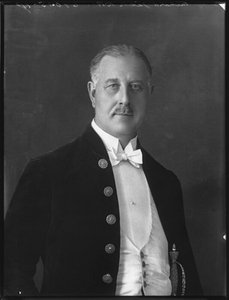
Richard Jack
1866 - 1952 , United Kingdom
Quick Facts
- Full Name: Richard Jack RA
- Nationality: British
- Date Of Birth: 1866
- Date Of Death: 1952
- Place Of Birth: Sunderland, United Kingdom
- Notable Artworks:
- The Second Battle of Ypres
- Taking of Vimy Ridge
- Artistic Movement Or Style: Impressionism


