Preview
 Send
Send Share
Share
 Details
 Guide
Guide

 Download
 Similars
 X-Ray
X-Ray Diaporama
 Q&A
Q&A Stats
StatsChabot Valley

 Read More
The artwork displayed on this page is protected by copyright law, which means we cannot legally create or sell an identical reproduction. This protection is enforced under international agreements such as the Berne Convention and by national laws, including those outlined by the U.S. Copyright Law - Title 17.
This method fully complies with copyright regulations because it does not involve copying or duplicating the protected artwork. Instead, it is a creative reinterpretation - a new painting that is influenced by the original but not identical to it.
Giclée / Art Print
Museum-quality giclée or canvas print with fast production and flexible finish options. ( Buy Hand Made Painting Switch to Digital Image)




































Pick from our preset sizes that match the artwork's original proportions.

Type the width and the height you need, to fit your frame or your wall. A print can only be cut, never made bigger than the picture, so a size with a different shape loses a part of the image. We send you a digital mockup to approve before we print anything. The picture shown on this page does not show the real cut — only the mockup does.
Worldwide Delivery () in 2 weeks instead of standard 4/5 weeks. (5 November)

Free Worldwide Express Shipping

High-Quality Linen Canvas

Full Shipping Insurance

Customs Tax Refund Guarantee

True Color Matching Guarantee

100-Day Return Policy (Defects Only)

100% Money-Back Guarantee

Bulk Discount Offer
 Glass option is only available in size under 110 CM

Chabot Valley
Giclée / Art Print
Reproduction Size
-


Total Price
$ 81
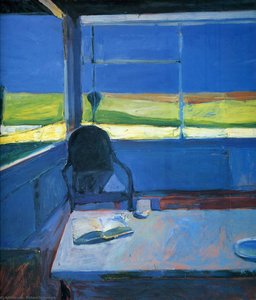
Chabot Valley: A Lyrical Landscape by Richard Diebenkorn
- Artist: Richard Diebenkorn
- Year: 1955
- Medium: Oil on Canvas
“Chabot Valley” is a captivating oil painting by Richard Diebenkorn, exemplifying his signature style within the Bay Area Figurative Movement. This artwork presents a semi-abstracted landscape scene, capturing the essence of California’s beauty with a dynamic and expressive approach. It's more than just a depiction of a valley; it's an exploration of color, form, and feeling.
Composition and Technique: A Fragmented Vision
Diebenkorn abandons traditional perspective in "Chabot Valley," creating a composition that feels both familiar and disorienting. Shapes are flattened and layered, overlapping to generate visual complexity rather than spatial realism. The eye is drawn across the canvas by bold brushstrokes and unexpected juxtapositions of color. A striking dark vertical element—likely representing a telephone pole—dominates the right side, acting as an anchor amidst the fragmented landscape. Houses cluster in the mid-ground, fields stretch towards a horizon suggested rather than defined, and a broad band of red commands attention in the foreground. This deliberate lack of conventional perspective contributes to the painting’s energetic and somewhat chaotic feel.
Color and Emotion: An Expressive Palette
The color palette is arguably the most striking aspect of "Chabot Valley." Diebenkorn employs a rich range of blues, greens, reds, yellows, and purples, applied in distinct strokes rather than blended smoothly. This technique creates a palpable texture and emphasizes the painting’s expressive quality. The contrast between cool tones (in the sky and houses) and warmer hues (in the fields and foreground) generates visual tension and adds depth to the composition. The colors aren't merely descriptive; they convey emotion, contributing to the overall sense of dynamism and energy that permeates the work. It’s a landscape not just seen but *felt*.
Historical Context and Diebenkorn's Evolution
“Chabot Valley” was created during a pivotal period in Richard Diebenkorn’s career, following World War II and influenced by the shift of artistic focus from Paris to America. While initially inspired by Edward Hopper, Diebenkorn moved towards Abstract Expressionism before developing his unique style that blended figuration with abstraction. This painting reflects this evolution, demonstrating a move away from strict representation toward capturing the essence of a place through color and form. The influence of aerial views, which fascinated him after a cross-country flight in 1951, is evident in the flattened perspective and patchwork quality of the landscape. Diebenkorn’s work during this period helped define the Bay Area Figurative Movement, a group of artists who rejected both Abstract Expressionism's complete abstraction and traditional representational art.
Symbolic Resonance: Capturing a Feeling
“Chabot Valley” doesn’t tell a specific story; instead, it aims to evoke a feeling or impression. The fragmented composition and expressive color palette suggest dynamism, energy, and perhaps even emotional intensity. It's an invitation for the viewer to engage with the landscape on a visceral level, interpreting its meaning through their own experiences and emotions. The painting’s enduring appeal lies in its ability to transcend mere representation, offering a glimpse into Diebenkorn’s unique vision of California’s beauty.
Questions & Answers
Toward which tone does "Chabot Valley" lean?
The dominant hue of "Chabot Valley" by Richard Diebenkorn is warm sunset tones. The hue is the underlying tone of the palette.
What level of contrast does "Chabot Valley" by Richard Diebenkorn show?
The light-dark contrast of "Chabot Valley" is recorded as bold. Contrast describes how strongly light and dark areas differ.
Can I watch "Chabot Valley" as a full-screen slideshow?
The diaporama of "Chabot Valley" can be watched on the artwork's Diaporama page.
Artist Biography
Early Life and Artistic Foundations
Richard Diebenkorn, born in Portland, Oregon, in 1922, embarked on a journey that would establish him as one of the most significant American painters of the postwar era. His family’s relocation to San Francisco when he was just two years old proved formative, imbuing his artistic sensibility with the light and atmosphere of California—a landscape that would become inextricably linked to his work. Even in childhood, a profound inclination towards drawing manifested itself, signaling an early dedication to visual expression. This innate passion led him to Stanford University in 1940, where he encountered pivotal mentors like Victor Arnautoff, who instilled a rigorous classical discipline with oil paint, and Daniel Mendelowitz, who shared his admiration for the evocative realism of Edward Hopper. Hopper’s influence is readily apparent in Diebenkorn's early paintings, characterized by a quiet introspection and a masterful handling of light and shadow. These formative years laid the groundwork for a career defined by both technical skill and emotional depth.Navigating Abstraction and Figuration
The landscape of American art underwent a dramatic shift in the wake of World War II, with the center of artistic innovation moving from Paris to New York. Diebenkorn keenly felt this change, enrolling at the California School of Fine Arts (now the San Francisco Art Institute) and embracing abstract expressionism as his primary mode of self-expression. He found inspiration in the work of artists like Clyfford Still, Arshile Gorky, Hassel Smith, and Willem de Kooning, absorbing their bold experimentation with form and color. However, Diebenkorn was not content to simply follow established trends. Alongside Elmer Bischoff, Henry Villierme, David Park, and James Weeks, he became a leading figure in the Bay Area Figurative Movement—a conscious return to representational painting after the dominance of abstract expressionism. This transition wasn’t abrupt; it was a gradual process of reintroducing recognizable forms into his work, blending abstraction's emotional intensity with figuration’s narrative potential. He sought to bridge the gap between inner experience and external reality, creating paintings that were both deeply personal and universally resonant.The Ocean Park Series: A Defining Achievement
In 1967, Diebenkorn embarked on a series of paintings that would come to define his career—the *Ocean Park* series. Named after the Santa Monica neighborhood where he lived and worked, these geometric, lyrical abstract paintings represent a culmination of his artistic explorations. Unlike the gestural spontaneity of abstract expressionism or the direct representation of Bay Area Figurative work, the *Ocean Park* paintings are characterized by a carefully considered composition, subtle color palettes, and a sense of serene order. These weren’t depictions of Ocean Park itself, but rather distillations of its light, space, and atmosphere—evocations of place through abstract form. He explored printmaking alongside his painting, beginning with drypoint in 1961 at UCLA, and forging a long-lasting collaboration with Kathan Brown at Crown Point Press from 1965 to 1992, producing numerous prints that further expanded his artistic vocabulary. The *Ocean Park* series garnered widespread critical acclaim, establishing Diebenkorn as a major force in contemporary art.Legacy and Lasting Influence
Richard Diebenkorn’s influence on postwar American art is undeniable. His ability to synthesize abstract expressionism, lyrical abstraction, and figurative painting created a unique artistic voice that resonated with artists for generations. A significant retrospective at the Pasadena Art Museum in 1960—later shown at the California Palace of the Legion of Honor in San Francisco—cemented his reputation as a leading figure in the art world. He didn’t adhere to any single dogma, instead forging his own path by embracing experimentation and following his artistic intuition. His work continues to inspire artists and collectors alike, celebrated for its beauty, complexity, and emotional depth. Diebenkorn's passing in 1993 marked the end of a remarkable career, but his legacy lives on through the enduring power of his paintings—a testament to his innovative spirit and unwavering commitment to artistic vision. His work remains a poignant reminder of the transformative potential of art.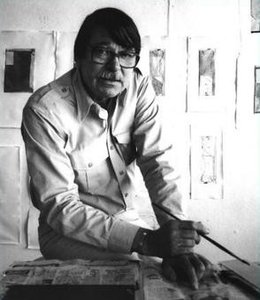
Richard Diebenkorn
1922 - 1993 , United States of America
Quick Facts
- Full Name: Richard Diebenkorn
- Nationality: American
- Date Of Birth: 1922
- Date Of Death: 1993
- Place Of Birth: Portland, United States of America
- Notable Artworks:
- A Day at the Races
- Ocean Park No. 32
- Chabot Valley
- Artistic Movement Or Style:
- Abstract Expressionism
- Bay Area Figurative
- Lyrical Abstraction
- Artists Who Influenced This Artist:
- Edward Hopper
- Clyfford Still
- Arshile Gorky
- Artists Or Movements Influenced By This Artist: ['Postwar American art']
Related Articles

Mastering Abstraction: The 25 Most Iconic Works by Wassily Kandinsky
Explore 25 iconic Kandinsky masterpieces and the birth of abstraction. Discover the full collection online at OriginalUniqueArt.com.

Beyond Representation: Exploring the Emotional Landscape of Abstract Expressionism
Explore the profound emotional world of Abstract Expressionism with OriginalUniqueArt. Discover key artists like Pollock & Rothko, learn about collecting, and find museum-quality reproductions to inspire your space.
Richard Diebenkorn: A Poetics of Space & Form – Navigating Abstraction in California Modernism
Explore the evolution of Richard Diebenkorn's iconic art – from abstract expressionism to his celebrated Ocean Park series. Discover insights for collectors & enthusiasts.
The Soul of Color: A Journey into the Emotional Resonance of Lyrical Abstraction
Embark on a cultural journey through Lyrical Abstraction. Explore how masters like Kandinsky used color and motion to translate emotion into visual poetry. Discover the profound beauty of abstract expressionism and learn to curate emotional resonance in your own art collection.

Abstract Expressionism's 10 Defining Masterpieces |
Explore 10 defining Abstract Expressionism masterpieces by Pollock, Rothko & de Kooning. Discover the stories behind these iconic paintings and find museum-quality art reproductions to elevate your home decor on .