Preview
 Send
Send Share
Share
 Details
 Guide
Guide

 Download
 Similars
 X-Ray
X-Ray Diaporama
 Stats
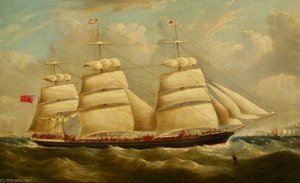
StatsThe Ship 'Gitana'
 1872
1872 57.0 x 93.0 cm
 Read More
Giclée / Art Print
Museum-quality giclée or canvas print with fast production and flexible finish options. ( Buy Hand Made Painting Switch to Digital Image)




































Pick from our preset sizes that match the artwork's original proportions.

Type the width and the height you need, to fit your frame or your wall. A print can only be cut, never made bigger than the picture, so a size with a different shape loses a part of the image. We send you a digital mockup to approve before we print anything. The picture shown on this page does not show the real cut — only the mockup does.
Worldwide Delivery () in 2 weeks instead of standard 4/5 weeks. (27 October)

Free Worldwide Express Shipping

High-Quality Linen Canvas

Full Shipping Insurance

Customs Tax Refund Guarantee

True Color Matching Guarantee

100-Day Return Policy (Defects Only)

100% Money-Back Guarantee

Bulk Discount Offer
 Glass option is only available in size under 110 CM

The Ship 'Gitana'
Giclée / Art Print
Reproduction Size
-


Total Price
$ 81
Composition and Style
The painting depicts several sailing ships navigating through the ocean, set against a backdrop of clouds that adds depth and atmosphere to the scene. The composition creates an impression of movement and energy, as if the ships are gliding across the waves. Light and shadow are used effectively to create a sense of volume and texture, drawing the viewer's eye into the heart of the painting.Artist and Influences
Richard Ball Spencer was a talented artist known for his maritime paintings, which often featured sailing ships and ocean scenes. His work is characterized by attention to detail and a deep understanding of the sea and its rhythms. For more information on the artist's life and works, visit Richard Ball Spencer's page on OriginalUniqueArt.Other Notable Works
Some of Richard Ball Spencer's other notable works include The Barque 'Minero', The Clipper 'Leander', and The Ship 'Australia'. These paintings showcase the artist's mastery of maritime art and his ability to capture the beauty and power of the sea. You can view these works on OriginalUniqueArt, along with other maritime paintings from various artists.- The Barque 'Minero': A beautiful oil on canvas piece measuring 48 x 79 cm, housed at the National Maritime Museum.
- The Clipper 'Leander': A stunning painting measuring 48 x 61 cm, also housed at the National Maritime Museum.
- The Ship 'Australia': A magnificent oil on canvas piece measuring 57 x 92 cm, housed at the National Maritime Museum.
For art enthusiasts and collectors, OriginalUniqueArt offers high-quality, handmade oil painting reproductions of Richard Ball Spencer's works, including The Ship 'Gitana'. Visit our website to explore our collection and discover the beauty of maritime art.
Questions & Answers
What is the format of "The Ship 'Gitana'"?
The format of "The Ship 'Gitana'" is panoramic. This is useful when planning where a reproduction will be placed.
What is the creation date of "The Ship 'Gitana'" by Richard Ball Spencer?
The creation of "The Ship 'Gitana'" by Richard Ball Spencer is dated 1872.
Where can I buy a print of "The Ship 'Gitana'" by Richard Ball Spencer?
A print of "The Ship 'Gitana'" by Richard Ball Spencer can be ordered directly on its Fine Art Print page: a fine art print on cotton canvas or archival canvas paper.
Artist Biography
A Life Painted on the Waves: Richard Ball Spencer and the Spirit of Maritime England
Richard Ball Spencer, born in London’s East End on November 11th, 1812, was a painter inextricably linked to the rhythms and romance of the sea. Though not formally trained, Spencer emerged as a significant figure within the tradition of British marine painting during the mid-19th century. His life story is one of quiet dedication, rooted in the working-class fabric of London yet reaching out to capture the grandeur and drama of seafaring life. He wasn’t a product of aristocratic patronage or academic institutions; instead, Spencer honed his skills through observation and a deep connection to the bustling ports that defined his surroundings. His father, John Spencer, was a grocer, and Elizabeth Ball, his mother, provided a stable family environment in Mile End Old Town—a backdrop that would profoundly shape his artistic focus. The year 1843 marked a personal milestone with his marriage to Caroline Gibson at St George’s in the East, Stepney, solidifying his identity as ‘Painter’, a profession he pursued with unwavering commitment.The “Pierhead Painter” and His Technique
Spencer earned the moniker of a “pierhead painter,” a term that speaks volumes about his working method and clientele. These artists weren't typically found in grand galleries; rather, they established themselves at busy ports—Brunswick Wharf and the Isle of Dogs among them—offering their services directly to sailors and ship captains eager for portraits of their vessels. Speed and accessibility were paramount. Spencer’s paintings are characterized by broadside views, a standard composition that allowed him to efficiently capture the essence of a ship while working in the dynamic environment of a busy harbor. While he rarely ventured far from shore himself, his canvases transported viewers to the open sea, meticulously detailing rigging, deck features, and the overall majesty of the ships he depicted. He wasn’t striving for high art in the academic sense; instead, he provided a valuable service—a tangible memento of a ship's identity and a sailor’s pride. His style, while not revolutionary, demonstrated a keen eye for detail and an ability to convey the power and beauty of these working vessels. He drew inspiration from contemporaries like Joseph Heard, William John Huggins, and Robert Salmon, but developed his own distinct approach—one that prioritized accuracy in ship representation over elaborate scenic backgrounds.Family Legacy: The Spencer Tradition
The artistic talent wasn’t confined to Richard Ball Spencer alone. His son, William Ball Spencer (1854-1923), followed in his father's footsteps, also becoming a respected ship portraitist. Interestingly, William was sometimes incorrectly referred to as Richard Barnett Spencer, highlighting the complexities of family history and artistic attribution within this period. The continuation of the Spencer name in the marine painting world speaks to a shared passion and a successful transmission of skills across generations. Both father and son produced works that are remarkably similar in style and subject matter, often making it challenging to definitively attribute specific paintings without careful examination. This familial continuity underscores the importance of apprenticeship and inherited artistic traditions within the context of 19th-century British art.Subjects and Historical Context
Spencer’s oeuvre primarily consists of ship portraits—a testament to the vital role maritime commerce played in Victorian England. He captured a wide range of vessels, from barques like the ‘Randolph’, dramatically depicted during a rescue off Eddystone Light, to the majestic ‘Queen of Nations’. These paintings weren't merely representations of ships; they were visual records of an era defined by global trade, naval power, and exploration. The 'Bombardment of Algiers' (1816) demonstrates his ability to capture historical events, albeit with a focus on the maritime aspects of conflict. His work provides valuable insight into the types of vessels that populated British waters during this period, as well as the pride and identity associated with seafaring life. While he didn’t engage in grand historical narratives or allegorical themes, Spencer's paintings offer a compelling glimpse into the everyday realities of maritime commerce and naval activity.A Lasting Impression: The Enduring Appeal of Richard Ball Spencer
Richard Ball Spencer died in East Ham in 1897, leaving behind a substantial body of work that continues to resonate with art collectors and historians alike. His paintings are now held in prominent public collections, including the National Maritime Museum, Science Museum, Bristol Museum & Art Gallery, and others—a testament to their enduring artistic and historical value. He may not be a household name like Turner or Constable, but his contribution to British marine painting is significant. Spencer’s legacy lies in his ability to capture the spirit of maritime England with honesty, skill, and a deep understanding of his subject matter. His paintings are more than just portraits of ships; they are windows into a bygone era—a celebration of seafaring life, commerce, and the enduring power of the waves.- Born: November 11th, 1812, London, England
- Died: 1897, East Ham, England
- Style: Marine Painting, Ship Portraiture
- Known For: Broadside views of ships, “Pierhead Painter” style
- Influences: Joseph Heard, William John Huggins, Robert Salmon

Richard Ball Spencer
1812 - 1897
Quick Facts
- Full Name: Richard Ball Spencer
- Nationality: British
- Date Of Birth: 1812
- Date Of Death: 1897
- Place Of Birth: England
- Notable Artworks:
- The Montgomery Castle
- The Ship 'Gitana'
- SS 'Toxteth'
- Barque 'Randolph'
- Artistic Movement Or Style: Marine Painting
- Artists Who Influenced This Artist:
- William Turner
- John Constable
- Artists Or Movements Influenced By This Artist: ['Romanticism']