

 Preview
 Send
Send Share
Share
 Details
 Guide
Guide

 Download
 Similars
 X-Ray
X-Ray Diaporama
 Stats
StatsFaust
 Etching
- WallArt
- Neoclassical
 1652
1652 16.0 x 21.0 cm
 Rijksmuseum
 Read More
Purchase a high-resolution, enhanced digital image, far superior to the online preview.
Each file is meticulously prepared by our in-house specialists using advanced tools and expert manual retouching. We ensure every image has exceptional clarity, precise color accuracy, and fine detail.
The final file is delivered via email within 72 hours, optimized for immediate use in professional, editorial, and print environments. This is the same quality trusted by top-tier design studios, publishers, and galleries.
Digital Image
Download a high-resolution file for personal display, printing, and creative projects. ( Switch to Print Buy Hand Made Painting)
Included in Every Digital Image Order
Expert Digital Delivery, Guaranteed
When you choose OriginalUniqueArt.com, you're not just getting an image - you're receiving a professionally enhanced digital artwork, crafted with precision and backed by a satisfaction guarantee. Here's everything that comes with your order, automatically:

Fast Email Delivery
Your high-resolution digital image file will be emailed to you within 72 hours of ordering - ready for immediate use.

AI-Enhanced Digital File
Your artwork is professionally optimized using advanced AI tools and manual editing, ensuring maximum detail, clarity, and color accuracy.

Free Lifetime Re-Delivery
Accidentally deleted or lost your file? No worries - we'll resend it to you anytime, free of charge.

No Import Fees - Ever
Enjoy your artwork instantly with zero customs, duties, or delivery fees - digital downloads are always tax-free.

Color Accuracy Guarantee
We ensure your digital image reflects the original colors as closely as possible using professional tools and color management.

100-Day Satisfaction Guarantee
If you're not satisfied with your digital image, we'll revise it or refund 100% within 100 days - no questions asked.

100% Money-Back Guarantee
Not satisfied? Get a full refund within 100 days of receiving your digital file - no questions asked.

Bulk Order Discounts
Buy 3 images, save 10% - Buy 5, save 15% - Buy 10+, save 20%. Great for creative projects, galleries, and agencies.
The Enigmatic Figure of Faust
Rembrandt Peale's 1652 etching, “Faust,” presents a profoundly arresting vision of intellectual pursuit intertwined with the looming specter of mortality. More than simply a depiction of a man absorbed in scholarly endeavors, it’s a carefully constructed tableau brimming with symbolic weight and dramatic tension. The artwork immediately commands attention through its stark monochrome palette – a deliberate choice that amplifies the chiaroscuro effect, creating pools of impenetrable shadow and highlighting areas of intense light. This masterful manipulation of tonal values draws the viewer into a world of mystery and uncertainty, mirroring the protagonist’s own internal struggles.
At the heart of the composition lies Faust himself, positioned slightly off-center yet undeniably dominant. He leans intently over a cluttered table laden with papers, astrological instruments, and scientific tools – objects that speak to his relentless quest for knowledge and power. The arrangement isn’t haphazard; it's meticulously planned to suggest both intellectual fervor and a certain precariousness. The figure’s posture, the furrowed brow, and the focused gaze all convey a man consumed by his studies, yet also hinting at a deep-seated dissatisfaction or perhaps even a dangerous obsession.
A Rembrandtian Technique: Line as Light and Shadow
Peale's skill lies not just in his subject matter but in his masterful execution of the etching technique. This was a process demanding immense control, relying on the artist’s ability to precisely scratch lines into a copper plate before meticulously inking it and pressing it onto paper. The resulting image is characterized by an extraordinary density of hatching – fine, closely spaced lines that build up areas of shadow with remarkable subtlety. This technique, deeply rooted in Rembrandt's own practice, allows Peale to create a sense of texture and volume, imbuing the seemingly flat surface of the print with a palpable three-dimensionality.
The use of line is paramount; it defines form, suggests movement, and ultimately dictates the overall mood. Sharp, decisive lines delineate the edges of objects and the contours of Faust’s face, while softer, more broken lines create areas of ambiguity and uncertainty. The geometric shapes – the rectangular window panes, the rounded head, the angular instruments – are rendered with a precision that reflects Peale's commitment to Neoclassical ideals, yet they are infused with an underlying sense of drama and psychological depth.
Symbolism and Mortality
Beyond its technical brilliance, “Faust” is rich in symbolic meaning. The large window, flooding the scene with light, represents both divine intervention and the pursuit of enlightenment – a potential source of knowledge but also a reminder of the limitations of human understanding. Crucially, the skull positioned partially obscured in shadow to Faust’s left serves as a potent memento mori, a stark reminder of mortality and the consequences of his relentless ambition. This visual juxtaposition immediately establishes a thematic tension between intellectual curiosity and the inevitable end.
The astrological instruments further reinforce this theme, hinting at alchemical practices and a fascination with the occult – realms where knowledge is often pursued without regard for ethical boundaries. Faust’s engagement with these subjects suggests a willingness to delve into dangerous territories, ultimately foreshadowing his potential downfall. The entire composition, therefore, becomes a meditation on the seductive allure of power and the perilous consequences of unchecked ambition.
A Legacy of Likeness and Dramatic Portraiture
Rembrandt Peale’s legacy extends far beyond this single etching. Born in Bucks County, Pennsylvania, in 1778, he was part of a prominent artistic family – his father, Charles Willson Peale, was himself a painter, museum founder, and cultural icon. This environment profoundly shaped Peale's artistic development, instilling in him a deep appreciation for both art and science. His portraits, particularly those of George Washington and Thomas Jefferson, are celebrated for their realism and dignified portrayal of historical figures. “Faust,” however, stands apart as a more introspective and psychologically complex work, showcasing Peale’s ability to capture not just likeness but also the inner turmoil of his subject.
Questions & Answers
What is the creation date of "Faust" by Rembrandt Peale?
"Faust" by Rembrandt Peale was created in 1652.
Who created "Faust" and what style is it in?
Rembrandt Peale created "Faust" within the Neoclassical movement.
Where does "Faust" stand among Rembrandt Peale's recurring subjects?
Among Rembrandt Peale's recorded themes - classical ideals, moral allegory, renaissance echoes, human condition, religious debate, peale's legacy, american art, museum showcase - "Faust" brings its own focus on faust legend, religious subject, classical portrait, 18th century art, moral allegory, human psychology, neoclassical style.
Artist Biography
A Legacy of Likeness: The Life and Art of Rembrandt Peale
Rembrandt Peale, born in Bucks County, Pennsylvania, in 1778, emerged from a family deeply entrenched in the burgeoning artistic landscape of early America. His father, Charles Willson Peale, was not merely an artist but a cultural force—a painter, museum founder, and ardent believer in the power of art to shape national identity. It was within this stimulating environment that young Rembrandt received his foundational training, alongside his siblings, learning the techniques of portraiture and landscape painting from their father’s skilled hand. The very bestowal of the name “Rembrandt,” echoing the Dutch master Harmenszoon van Rijn, signaled Charles Willson Peale's aspirations for his son—a hope that he would carry forward a tradition of artistic excellence. From an astonishingly young age, Rembrandt demonstrated remarkable aptitude, completing his first self-portrait at just thirteen years old, a work already hinting at the precision and ambition that would characterize his mature style. This early piece wasn’t simply a display of technical skill; it was a statement of intent, a young artist declaring his presence on the American art scene.Formative Years and Neoclassical Influences
Peale's artistic journey took him to Paris in his early thirties, a pivotal experience that profoundly shaped his aesthetic sensibilities. Immersed in the heart of European culture, he encountered the prevailing currents of French neoclassicism—a style emphasizing order, clarity, and a return to classical ideals. This influence is readily apparent in Peale’s subsequent work, characterized by its refined draftsmanship, balanced compositions, and meticulous attention to detail. While his father's portraits often possessed a certain rustic vitality, Rembrandt’s leaned towards a more polished and idealized representation of his subjects. He embraced the encaustic technique during this period, an ancient method utilizing wax as a medium, demonstrating a commitment to exploring innovative approaches to painting. However, Peale didn’t simply mimic European styles; he adapted them to the American context, creating portraits that reflected the nation's evolving sense of identity and its aspirations for cultural independence. His dedication to capturing accurate likenesses, combined with his neoclassical training, allowed him to create images that were both aesthetically pleasing and historically significant.A Prolific Portraitist: Capturing an Era
Rembrandt Peale’s career was remarkably prolific, marked by a relentless pursuit of artistic perfection and a dedication to documenting the prominent figures of his time. He became particularly renowned for his portraits of George Washington, creating over seventy replicas of his iconic “Patriae Pater” (Father of His Country). These images weren't merely representations of physical appearance; they were carefully constructed symbols of national pride and leadership. Peale understood the power of portraiture to shape public perception and contribute to the creation of a collective memory. Beyond Washington, he painted numerous other influential individuals, including Thomas Jefferson, John C. Calhoun, and various members of the American elite. His portraits weren’t limited to political figures; he also captured the likenesses of ordinary citizens, offering a glimpse into the lives and aspirations of everyday Americans. Man with a Beard, though undated, exemplifies his skill in capturing individual character and psychological depth. Each brushstroke reveals not just physical features but also hints at the sitter’s inner life.Beyond the Canvas: The Peale Museum and Enduring Legacy
Rembrandt Peale's contributions extended beyond the realm of painting; he was a visionary museum founder, driven by a desire to educate the public and promote artistic appreciation. In 1814, he established his first museum in Baltimore, Maryland—a groundbreaking institution that served as a precursor to many modern art museums. This wasn’t simply a gallery for displaying artworks; it was conceived as a center for learning, offering exhibitions of paintings, sculptures, and natural history specimens. The museum later became the second Baltimore City Hall before being restored as the Peale Museum, continuing his legacy of public service through art. His commitment to making art accessible to all reflects a deeply held belief in its transformative power. Today, Rembrandt Peale’s works are housed in prestigious collections around the world, including the National Portrait Gallery in Washington D.C., and continue to be celebrated for their historical significance and artistic merit. His influence can be seen in the work of subsequent generations of American portrait painters, solidifying his place as a pivotal figure in the nation's art history.A Lasting Impression
Rembrandt Peale’s life was one dedicated to both artistic creation and cultural enrichment. He wasn’t simply a painter; he was a historian, an educator, and a champion of American identity. His portraits offer invaluable insights into the personalities and values of his era, while his museum served as a beacon of enlightenment in a rapidly changing nation. His legacy endures not only through his numerous artworks but also through his pioneering spirit and unwavering commitment to the power of art. He left behind a body of work that continues to inspire and captivate audiences today, reminding us of the enduring importance of preserving our cultural heritage and celebrating the achievements of those who came before us.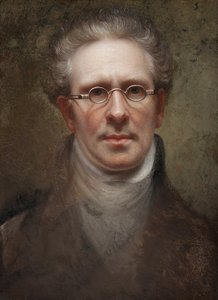
Rembrandt Peale
1778 - 1860 , United States of America
Quick Facts
- Full Name: Rembrandt Peale
- Nationality: American
- Date Of Birth: 1778
- Date Of Death: 1860
- Place Of Birth: Bucks County, United States of America
- Notable Artworks:
- George Washington (porthole type)
- Man with a beard
- Rev. John Pierpont portrait
- Artistic Movement Or Style: Neoclassicism
- Artists Who Influenced This Artist: ['Rembrandt van Rijn']