
 Preview
 Send
Send Share
Share
 Details
 Guide
Guide

 Download
 Similars
 X-Ray
X-Ray Diaporama
 Stats
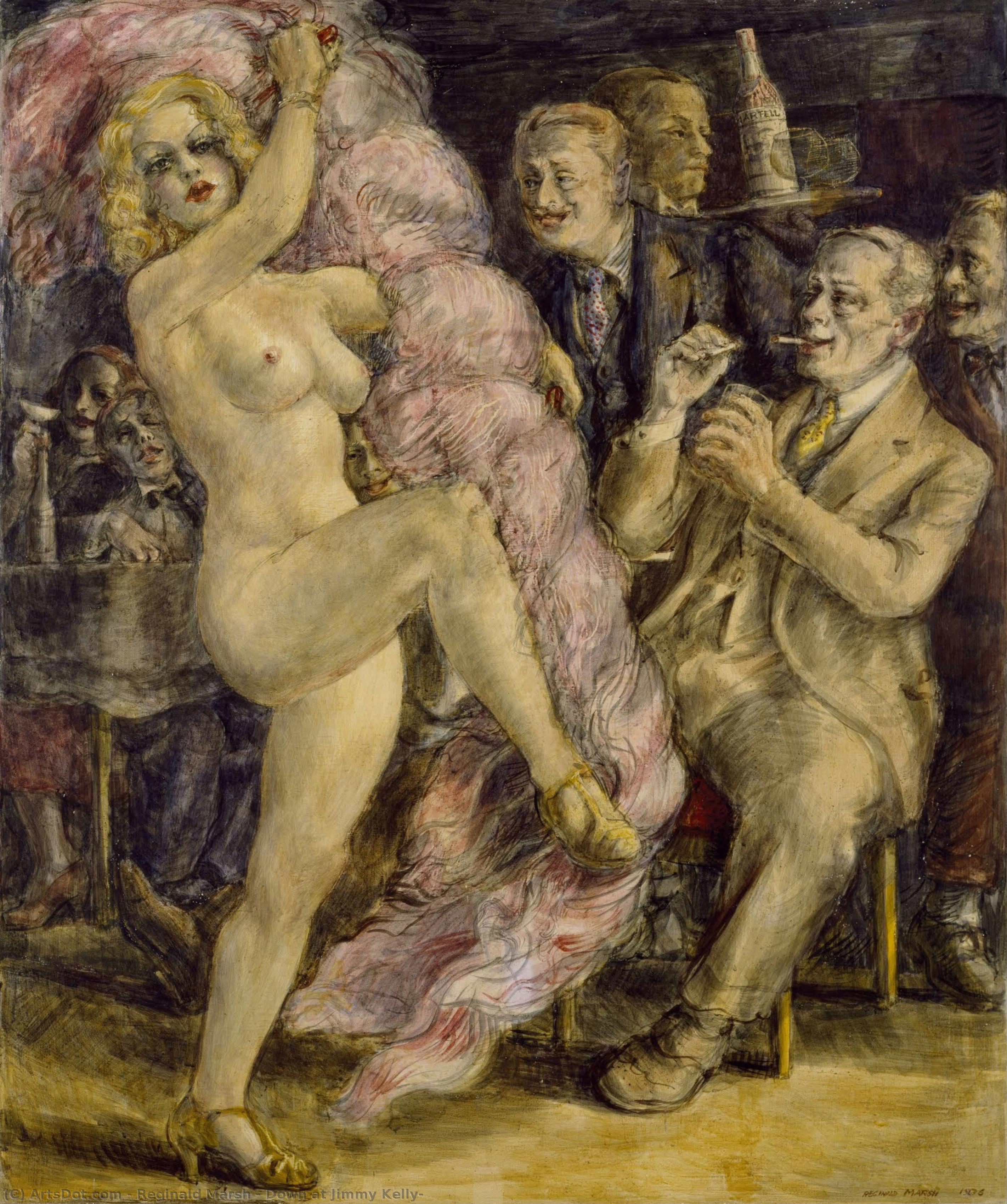
StatsDown at Jimmy Kelly
 Acrylic
- WallArt
- Social Realism
 91.0 x 76.0 cm
 Chrysler Museum of Art
 Read More
Purchase a high-resolution, enhanced digital image, far superior to the online preview.
Each file is meticulously prepared by our in-house specialists using advanced tools and expert manual retouching. We ensure every image has exceptional clarity, precise color accuracy, and fine detail.
The final file is delivered via email within 72 hours, optimized for immediate use in professional, editorial, and print environments. This is the same quality trusted by top-tier design studios, publishers, and galleries.
Digital Image
Download a high-resolution file for personal display, printing, and creative projects. ( Switch to Print Buy Hand Made Painting)
Included in Every Digital Image Order
Expert Digital Delivery, Guaranteed
When you choose OriginalUniqueArt.com, you're not just getting an image - you're receiving a professionally enhanced digital artwork, crafted with precision and backed by a satisfaction guarantee. Here's everything that comes with your order, automatically:

Fast Email Delivery
Your high-resolution digital image file will be emailed to you within 72 hours of ordering - ready for immediate use.

AI-Enhanced Digital File
Your artwork is professionally optimized using advanced AI tools and manual editing, ensuring maximum detail, clarity, and color accuracy.

Free Lifetime Re-Delivery
Accidentally deleted or lost your file? No worries - we'll resend it to you anytime, free of charge.

No Import Fees - Ever
Enjoy your artwork instantly with zero customs, duties, or delivery fees - digital downloads are always tax-free.

Color Accuracy Guarantee
We ensure your digital image reflects the original colors as closely as possible using professional tools and color management.

100-Day Satisfaction Guarantee
If you're not satisfied with your digital image, we'll revise it or refund 100% within 100 days - no questions asked.

100% Money-Back Guarantee
Not satisfied? Get a full refund within 100 days of receiving your digital file - no questions asked.

Bulk Order Discounts
Buy 3 images, save 10% - Buy 5, save 15% - Buy 10+, save 20%. Great for creative projects, galleries, and agencies.
Reginald Marsh: Capturing Urban Grit and Artistic Vision
Reginald Marsh (1898-1954) stands as a pivotal figure in American Social Realism, renowned for his strikingly detailed depictions of New York City during the 1920s and 1930s. More than just documenting scenes of Coney Island beaches or burlesque performances—though these undeniably populate his oeuvre—Marsh’s art embodies a profound engagement with the textures and rhythms of urban life, underpinned by an unwavering commitment to artistic exploration. His legacy resides not only in his iconic images but also in his pioneering techniques and enduring influence on subsequent generations of artists. Born in Paris above the Café du Dome, Marsh's formative years were steeped in artistic heritage. The son of Frederick Dana Marsh—a muralist who championed American Impressionism—and Alice Randall, a miniaturist painter—Marsh’s family fostered an environment where creativity flourished. His father’s early embrace of modernist aesthetics established a foundation for Marsh’s own distinctive approach to visual representation.The Canvas of Coney Island
Marsh's fascination with the burgeoning American urban landscape found its most immediate expression in works like “Down at Jimmy Kelly’s,” a vibrant tableau capturing the frenetic energy of a burlesque nightclub. Painted in 1936, this piece exemplifies Marsh’s masterful use of conte crayon and gouache—a technique he honed to achieve unparalleled realism—resulting in an astonishing level of detail that transports viewers directly into the smoky atmosphere of Jimmy Kelly's. The composition is deliberately asymmetrical, mirroring the chaotic dynamism of the scene itself; figures jostle for space amidst a backdrop of tables, bottles, and performers, creating a palpable sense of immediacy. Marsh’s meticulous rendering of light and shadow further enhances this effect, emphasizing the physicality of the environment and conveying its emotional impact—a celebration of hedonistic indulgence juxtaposed with an underlying awareness of social disparity.Symbolism Within Spectacle
Marsh wasn't merely recording what he saw; he was actively interpreting it through a lens informed by Social Realist principles. The inclusion of portraits, notably Lloyd Goodrich—a prominent art critic and Marsh’s close collaborator—serves as more than just stylistic embellishment. Goodrich represents the intellectual discourse surrounding artistic innovation at the time, highlighting the tension between aesthetic beauty and social responsibility. Furthermore, the depiction of a woman performing in burlesque underscores themes of female agency and vulnerability within a societal context marked by shifting gender roles. Marsh’s subtle use of symbolism elevates “Down at Jimmy Kelly’s” beyond mere visual representation, prompting contemplation about the complexities of urban culture and its influence on human experience.A Pioneer's Technique
Marsh’s groundbreaking approach to painting—characterized by his unwavering dedication to meticulous observation and painstaking execution—established him as a leader in American Social Realism. He rejected idealized representations, favoring instead unflinching portrayals of everyday life that confronted social issues head-on. His mastery of conte crayon and gouache allowed him to achieve remarkable tonal range and textural depth, capturing the gritty surfaces of urban spaces with astonishing accuracy. This technique—a deliberate departure from Impressionistic tendencies—became a cornerstone of Marsh’s artistic vision, ensuring that his images retained an enduring power to engage viewers emotionally and intellectually.Legacy and Influence
Reginald Marsh's influence extends far beyond his own lifetime, inspiring countless artists who followed in his footsteps. His commitment to realism combined with a keen awareness of social commentary continues to resonate within contemporary art practice. “Down at Jimmy Kelly’s,” as well as his broader body of work—including depictions of Coney Island and the Bowery—remains a testament to Marsh's enduring legacy as one of America’s most compelling Social Realist painters, securing his place in art history as an artist who captured not only the visual splendor of his era but also its underlying moral dilemmas.Questions & Answers
What is the color identity of "Down at Jimmy Kelly" by Reginald Marsh?
"Down at Jimmy Kelly" is defined by an earthy palette led by espresso (#5e4d30).
What color leads the composition of "Down at Jimmy Kelly" by Reginald Marsh?
The dominant color of "Down at Jimmy Kelly" by Reginald Marsh is espresso (#5e4d30).
Where is "Down at Jimmy Kelly" by Reginald Marsh on display today?
You can see the original "Down at Jimmy Kelly" at the Chrysler Museum of Art, Norfolk, United States of America.
Who created "Down at Jimmy Kelly" and what style is it in?
Behind "Down at Jimmy Kelly" stand Reginald Marsh and the Social Realism movement.
Where in the home does a reproduction of "Down at Jimmy Kelly" fit well?
A reproduction of "Down at Jimmy Kelly" fits well in a living room.
Are the colors of "Down at Jimmy Kelly" by Reginald Marsh vivid or muted?
The colors of "Down at Jimmy Kelly" by Reginald Marsh show a balanced soft saturation with a balanced intensity.
How big is the original "Down at Jimmy Kelly"?
"Down at Jimmy Kelly" measures 91 x 76 cm in its original form. Original dimensions are a useful reference when choosing a reproduction size.
How do I preview a reproduction of "Down at Jimmy Kelly" by Reginald Marsh?
The Preview page of "Down at Jimmy Kelly" lets you preview the artwork before ordering.
Artist Biography
The Urban Chronicler: The Life and Legacy of Reginald Marsh
Reginald Marsh stands as a pivotal figure in American Social Realism, renowned for his strikingly detailed depictions of New York City during the 1920s and 1930s. More than just documenting scenes of Coney Island beaches or burlesque performances—though these undeniably populate his oeuvre—Marsh’s art embodies a profound engagement with the textures and rhythms of urban life, underpinned by an unwavering commitment to artistic exploration. His legacy resides not only in his iconic images but also in his pioneering techniques and enduring influence on subsequent generations of artists.
Born in Paris in 1898 above the Café du Dome, Marsh's formative years were steeped in a rich artistic heritage. The son of Frederick Dana Marsh—a muralist who championed American Impressionism—and Alice Randall—a miniaturist painter—Marsh’s family fostered an environment where creativity flourished from his earliest days. Moving to Nutley, New Jersey, at the age of two, he benefited from proximity to Frank Fowler's Artist Colony, a haven for American painters seeking inspiration and camaraderie, which further cemented his connection to the artistic tradition. This early exposure to both the delicate precision of miniature painting and the grand scale of muralism would later inform his ability to capture both the intimate human moment and the sweeping energy of the metropolis.
A Journey from Law to the Canvas
Marsh’s path to becoming a master of urban realism was far from linear. He pursued formal education with great diligence, earning a Bachelor’s degree in Law from Yale University in 1920 before subsequently delving into art studies at the Yale Art School. During this period, he honed his skills as an illustrator for the Yale Record, immersing himself in the vibrant spirit of collegiate life and developing an early mastery of visual storytelling. This formative period solidified his artistic sensibilities and prepared him for a career dedicated to capturing the essence of human experience through compelling imagery.
As his professional journey began in New York City, Marsh tirelessly sought to document the pulse of the streets. His work often utilized diverse media to achieve specific atmospheric effects, ranging from the gritty energy of conte crayon and gouache to the thick, dynamic impasto of oil paintings. Whether he was portraying the hedonistic atmosphere of Jimmy Kelly's burlesque nightclub or the maritime commerce found in his mural studies like Atlantic Liner in Harbor, Marsh possessed a unique ability to translate the chaos of the city into structured, rhythmic compositions.
The Essence of Social Realism and Urban Grit
The significance of Reginald Marsh lies in his role as a visual historian of a vanished era. His work serves as a window into the Social Realist movement, focusing on the lives of the working class and the raw, unvarnished reality of New York's most famous districts, such as the Bowery and Coney Island. His paintings are characterized by:
- Dynamic Movement: A mastery of capturing the frantic, overlapping motion of crowds in subway stations, beaches, and dance halls.
- Textural Depth: The use of varied techniques to replicate the grime, light, and physical weight of an industrializing city.
- Human Connection: An ability to find poignant, individual emotions within massive, anonymous urban gatherings.
Beyond his crowded street scenes, Marsh also demonstrated a remarkable capacity for portraiture, blending realism with subtle emotion as seen in his black and white oil works. Through his dedication to the "urban grit," Reginald Marsh did more than paint New York; he immortalized its soul, ensuring that the energy of the early twentieth century would continue to resonate through the decades.

Reginald Marsh
1898 - 1954 , France
Quick Facts
- Full Name: Reginald Marsh
- Nationality: American
- Date Of Birth: 1898
- Date Of Death: 1954
- Place Of Birth: Paris, France
- Notable Artworks:
- Atlantic Liner in Harbor with Tug
- The Steeplechase
- Asbury Park The Morrow Castle
- Artistic Movement Or Style: Social Realism
- Artists Who Influenced This Artist:
- Frank Fowler
- John Sloan
- Kenneth Hayes Miller
- George Luks
- Jacques Maroger
- Artists Or Movements Influenced By This Artist:
- Tintoretto
- Rubens
- Thomas Hart Benton