High Renaissance · 1519
The Transfiguration (Raphael, 1519)
Raphael (1483–1520) made The Transfiguration. It dates from 1519. It belongs to the High Renaissance movement. It is made in oil on canvas. It is kept at Vatican Pinacoteca in Vatican City, Italy. It measures 405 × 278 cm.
- 1519
- Oil On Canvas
- 405 × 278 cm
- Vatican Pinacoteca, Vatican City

 Preview

 Hand Made Oil Painting
 Send
 Share
 Fact sheet


 Download
 Similars
 X-Ray
 Diaporama
 Q&A

 Stats
The Transfiguration, in brief
- Title
- The Transfiguration
- Artist
- Raphael (1483–1520)
- Artist born in
- Urbino, Italy
- Date
- 1519
- Medium
- Oil On Canvas
- Dimensions
- 405 × 278 cm
- Where to see it
- Vatican Pinacoteca, Vatican City, Italy
- Movement
- High Renaissance
- Period
- Renaissance
- Subject
- religious art, divine revelation, biblical scene, transfiguration, renaissance, jesus christ
What does The Transfiguration depict?
The Divine Vision: A Masterpiece of High Renaissance Art
Raphael's "The Transfiguration" is a breathtaking embodiment of the High Renaissance, capturing the divine revelation of Jesus Christ in a composition that seamlessly blends celestial glory and human emotion. This monumental artwork, created in 1519, stands as a testament to Raphael's mastery and his ability to convey profound spiritual experiences through art.
A Harmony of Heaven and Earth
The painting is divided into two distinct yet harmoniously connected realms: the ethereal upper section and the tumultuous lower plane. The upper realm is dominated by the glowing figure of Jesus, flanked by Moses and Elijah, suspended amidst radiant clouds. This divine trio is bathed in a luminous golden light that symbolizes purity and enlightenment, creating a stark contrast with the darker, earthly scene below.
Vibrant Colors and Dynamic Composition
Raphael's use of color is nothing short of spectacular. The upper section is awash with ethereal blues, whites, and golden hues, evoking a sense of divine transcendence. In contrast, the lower section employs earthy tones of browns, greens, and muted reds, grounding the scene in human reality. The dynamic composition guides the viewer's eye from the chaotic gathering below to the serene divinity above, creating a powerful visual journey.
Symbolism and Emotional Depth
The Transfiguration is rich with symbolism. The glowing central figure of Jesus represents divine revelation and enlightenment, while the reactions of the people below—ranging from awe to distress—symbolize human confusion and fear in the face of the divine. This duality not only highlights the contrast between the spiritual and the mundane but also invites viewers to reflect on their own relationship with the divine.
Technical Brilliance
Raphael's technique is a marvel of Renaissance artistry. The painting employs detailed brushwork, creating a sense of movement and depth that draws the viewer in. The use of chiaroscuro—strong contrasts between light and shadow—adds drama and intensity to the scene. The organic shapes of the figures and clouds contrast with the angular gestures of the people below, adding to the overall dynamism of the composition.
Historical Context
"The Transfiguration" was one of Raphael's final works, completed just before his untimely death in 1520. It reflects the culmination of his artistic journey, blending the influences of his early years in Umbria, his time in Florence, and his later work in Rome. The painting is a testament to Raphael's ability to synthesize the best elements of Renaissance art, creating a masterpiece that continues to inspire and captivate.
Emotional Impact
The emotional impact of "The Transfiguration" is profound. The divine light emanating from Jesus creates a sense of awe and reverence, while the chaotic reactions of the people below evoke empathy and introspection. This duality makes the painting not just a religious icon but also a deeply human experience, inviting viewers to contemplate their own spiritual journeys.
Why Choose This Reproduction?
For art lovers, collectors, and interior designers seeking a piece that combines spiritual depth with artistic brilliance, "The Transfiguration" is an unparalleled choice. Its vibrant colors, dynamic composition, and profound symbolism make it a stunning addition to any collection or living space. Whether you are looking to inspire contemplation in a sacred setting or add a touch of Renaissance grandeur to your home, this high-quality reproduction captures the essence of Raphael's masterpiece, bringing its divine vision to life.
Which museum holds The Transfiguration?
Vatican Pinacoteca
Vatican City, Italy
The History of Vatican Pinacoteca The Vatican Pinacoteca emerged from a need to provide a permanent, dedicated home for sacred works that had previously been moved between various apostolic palaces. Established at the behest of Pope Pius XI, the gallery was inaugurated on 27 October 1932. This creation allowed for a structured arrangement of the Church's artistic holdings, moving away from the scattered placement of earlier centuries.


High-resolution images of The Transfiguration

Raphael, The Transfiguration (1519), Vatican Pinacoteca. Public domain.
Questions on The Transfiguration, answered
Where can I see the original "The Transfiguration" by Raphael?
"The Transfiguration" by Raphael is on display at the Vatican Pinacoteca, Vatican City, Italy. The museum listing refers to the original work, not to reproductions.
In what year was "The Transfiguration" by Raphael created?
The creation of "The Transfiguration" by Raphael is dated 1519.
What medium is "The Transfiguration" by Raphael executed in?
Raphael used the oil on canvas technique for "The Transfiguration". The technique defines the material nature of the original work.
How big is the original "The Transfiguration"?
"The Transfiguration" measures 405 x 278 cm in its original form. Original dimensions are a useful reference when choosing a reproduction size.
What is "The Transfiguration" about?
The themes present in "The Transfiguration" by Raphael include religious art, divine revelation, biblical scene, transfiguration, renaissance, jesus christ, moses, elijah. Together they summarize the artwork's subject matter.
Can the image of "The Transfiguration" by Raphael be freely reproduced?
The copyright answer for "The Transfiguration" by Raphael: the work is in the public domain - its copyright has expired. This determines whether reproductions of the image may be freely made.
Who is the artist behind "The Transfiguration"?
The artist behind "The Transfiguration" is Raphael. The work is catalogued under Raphael's name.
Which artistic current is "The Transfiguration" by Raphael part of?
The movement associated with "The Transfiguration" by Raphael is High Renaissance. This classification situates the work among related artists and artworks.
What stage of Raphael's development does "The Transfiguration" represent?
"The Transfiguration" represents the Mature Period of Raphael.
About the artist, Raphael

1483–1520, Italy
Raphael
The Life and Identity of Raphael Raphael, known to history by several names including Raffaello Sanzio, Raffaello Santi, and Raffaello Sanzio da Urbino, was a central figure of the Italian High Renaissance. His life was defined by a dual mastery of painting and architecture, a versatility that allowed him to move seamlessly between the intimate scale of a portrait and the monumental demands of papal construction. He was born in Urbino, Italy, on April 6, 1483, into a world of intellectual and artistic activity. His career was marked by an immense productivity that required the management of a large workshop to meet the needs of his patrons.
Also by Raphael
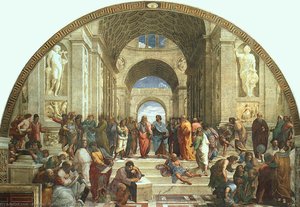 School of Athens1511
 The Sistine Madonna1513
 Marriage of the Virgin1504
 La Fornarina
Essays around The Transfiguration
 The Ethereal Gaze: Tracing Divine Revelation and Spiritual Visions through the Old MastersExplore the profound connection between divine revelation and Old Master paintings. Journey through sacred art history with us.
 Emotional Transmutation in Visual Art: A Study of Affective Representation Through Color, Form, and TextureExplore the fascinating intersection of art & emotion! Discover how color, form, and texture convey feelings in masterpieces. Expert analys…
 Masterpieces of Raphael: The Top 25 Essential Artworks of the High RenaissanceExplore 25 iconic Raphael masterpieces of the High Renaissance. Discover timeless beauty and curated art on OriginalUniqueArt.com.