Preview
 Send
Send Share
Share
 Details

 Download
 Similars
 X-Ray
X-Ray Diaporama
 Stats
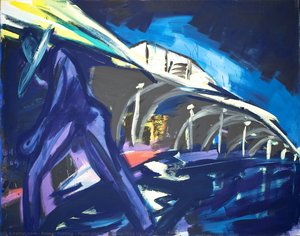
StatsHurricane


 Read More
Giclée / Art Print
Museum-quality giclée or canvas print with fast production and flexible finish options. ( Buy Hand Made Painting Switch to Digital Image)




































Pick from our preset sizes that match the artwork's original proportions.

You may enter your own dimensions to fit a specific frame or space. If your selected size does not match the original image's proportions, we will either crop the artwork or extend the image with a mirrored or solid-fill edge. A digital mockup will be sent for your approval before production begins.
Please note that the on-screen preview does not reflect the actual cropping or extension. Only the mockup will accurately show the final composition.
While custom sizes are available, we recommend selecting a dimension from the predefined list to preserve the original proportions.
Worldwide Delivery () in 2 weeks instead of standard 4/5 weeks. (13 September)

Free Worldwide Express Shipping

High-Quality Linen Canvas

Full Shipping Insurance

Customs Tax Refund Guarantee

True Color Matching Guarantee

100-Day Return Policy (Defects Only)

100% Money-Back Guarantee

Bulk Discount Offer
 Glass option is only available in size under 110 CM

Hurricane
Giclée / Art Print
Reproduction Size
-


Total Price
$ 81
Artist Biography
A Berlin Energy: The Life and Art of Rainer Fetting
Rainer Fetting, born in Wilhelmshaven, Germany, in 1949, is a pivotal figure in the resurgence of figurative painting during the late 20th century. His journey began not within the traditional confines of art school, but with a practical apprenticeship as a carpenter and stage designer at the Landesbühne Niedersachsen. This early exposure to craft and theatricality instilled in him a foundational understanding of form, space, and narrative – elements that would later become hallmarks of his artistic expression. Moving to Berlin in the early 1970s, Fetting enrolled at the Hochschule der Künste (Academy of Fine Arts), studying under Professor Hans Jaenisch. However, it was outside the academy walls, within the burgeoning counter-culture scene of West Berlin, that his true artistic identity began to take shape.The ‘Junge Wilde’ and a Rejection of Convention
In 1977, Fetting co-founded the Galerie am Moritzplatz alongside Helmut Middendorf, Bernd Zimmer, Salomé, Anne Jud, and Berthold Schepers. This gallery became the epicenter for a group of young artists who would soon be dubbed the ‘Junge Wilde’ (Young Wild Ones) or ‘Neue Wilde’ (New Wilds). The movement represented a deliberate rebellion against the prevailing artistic trends of minimalism and conceptual art that had dominated the German art scene. The 'Junge Wilde' embraced an unapologetic expressiveness, favoring bold colors, raw emotion, and a return to figuration – a direct challenge to the intellectual austerity of their predecessors. Fetting’s early work, deeply rooted in his Berlin surroundings, captured the city’s fragmented energy, its stark contrasts, and the palpable sense of division that characterized the Cold War era. These weren't polished depictions; they were visceral responses to an urban landscape brimming with tension and possibility.Evolution of Style: From Cityscapes to Human Experience
Fetting’s artistic style underwent a significant evolution throughout his career. Initially, his paintings focused on Berlin cityscapes – gritty, angular representations of buildings and streets that reflected the city's post-war reconstruction and political climate. He also explored portraiture and figurative compositions, often depicting individuals within these urban settings. Over time, his work moved away from strictly representational forms towards a more dynamic and expressive style. Strong lines, vibrant colors, and an increasingly loose brushwork became defining characteristics of his paintings. He began experimenting with diverse materials, notably incorporating driftwood assemblages into his canvases, adding texture and a sense of organic decay to his compositions. Throughout this evolution, however, Fetting consistently explored themes of urban life, human relationships, and personal experiences – subjects that resonated deeply with the anxieties and aspirations of his generation. His work is not merely about *what* he depicts, but *how* he feels about it; a raw emotionality permeates every brushstroke.International Recognition and Lasting Legacy
Fetting’s talent quickly garnered international attention. A DAAD scholarship in 1978 provided him with the opportunity to live and work in New York, exposing his art to a wider audience and influencing his artistic development. He participated in landmark exhibitions such as ‘A New Spirit in Painting’ at the Royal Academy of Arts in London (1981) and “Zeitgeist” in the Martin-Gropius-Bau, Berlin (1982), solidifying his position within the international art world. His work has since been featured in major museums including the MoMA and the Guggenheim Museum, attesting to its enduring significance. Beyond painting, Fetting also received notable commissions, creating sculptures for prominent locations like the Willy Brandt House in Berlin and portraits of influential figures such as Henri Nannen and Helmut Schmidt. Influenced by artists like Van Gogh and the German Expressionists, Fetting forged a unique artistic voice that revitalized figurative painting in Germany during the 1980s. He continues to live and work between Berlin and New York, remaining an active and influential figure in contemporary art, his legacy secured as a key innovator who challenged conventions and captured the spirit of a generation. His paintings are not simply images; they are windows into a world felt with intense passion and unwavering honesty.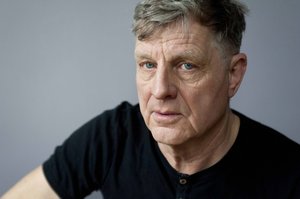
Rainer Fetting
1949 - , Germany
Quick Facts
- Artistic Movement Or Style: Neo-Expressionism
- Artists Or Movements Influenced By This Artist:
- Junge Wilde
- Neue Wilde
- Artists Who Influenced This Artist:
- Van Gogh
- German Expressionists
- Date Of Birth: December 31, 1949
- Full Name: Rainer Fetting
- Nationality: German
- Notable Artworks:
- Selbst mit Palette
- Ilko sitzend
- Martin in Fabrik
- Place Of Birth: Wilhelmshaven, Germany