

 Preview
 Send
Send Share
Share
 Details
 Guide
Guide

 Download
 Similars
 X-Ray
X-Ray Diaporama
 Stats
StatsUp the River During Qingming
 Oil On Canvas
- WallArt
- Ming Dynasty Painting
 1644
1644 34.0 x 804.0 cm
 National Palace Museum
 Read More
Giclée / Art Print
Museum-quality giclée or canvas print with fast production and flexible finish options. ( Buy Hand Made Painting Switch to Digital Image)




P118B $10

P118H $10

P118W $10

P438Z $10

P508JH $12

P508YH $12

P805H $10

P805Z $10

P919BZ $10

P919G $10

P919XJ $10

P959ZH $10

P968JZ $12

W106C $8

W218G $10

W218JH $8

W218Y $10

W307PJ $10

W316G $10

W316PJ $8

W316Y $10

W398PJ $8

W4111J $10

W500HY $15

W500JH $15

W692G $12

W849H $8

W940BG $15

W953PJ $8




Pick from our preset sizes that match the artwork's original proportions.

Type the width and the height you need, to fit your frame or your wall. A print can only be cut, never made bigger than the picture, so a size with a different shape loses a part of the image. We send you a digital mockup to approve before we print anything. The picture shown on this page does not show the real cut — only the mockup does.
Worldwide Delivery () in 2 weeks instead of standard 4/5 weeks. (23 October)

Free Worldwide Express Shipping

High-Quality Linen Canvas

Full Shipping Insurance

Customs Tax Refund Guarantee

True Color Matching Guarantee

100-Day Return Policy (Defects Only)

100% Money-Back Guarantee

Bulk Discount Offer
 Glass option is only available in size under 110 CM

Up the River During Qingming
Giclée / Art Print
Reproduction Size
-


Total Price
$ 81
A Glimpse into Imperial Life and Artistic Mastery
“Up the River During Qingming” – a title that conjures images of a vibrant, bustling scene, yet within its painted surface lies a profound meditation on life, death, and the ephemeral beauty of the natural world. Attributed to the masterful Qiu Ying, a painter who defied conventional artistic paths to forge his own legacy during the Ming Dynasty (1494-1552), this handscroll offers an unparalleled window into 17th-century China – a time of immense cultural flourishing and imperial grandeur. More than just a depiction of a river journey, it’s a meticulously crafted tableau that speaks volumes about social hierarchy, artistic innovation, and the enduring fascination with capturing fleeting moments.
The Painter's Journey: From Lacquer to Legend
Qiu Ying’s origins were remarkably unconventional. He began his career not within the established academies of art, but as a lacquer artisan – a skill that instilled in him an extraordinary attention to detail and a deep understanding of color and texture. This early apprenticeship honed his ability to render intricate patterns with precision, a quality that would become hallmarks of his later paintings. He subsequently studied under Zhou Chen in Suzhou, a renowned master who further refined his technique and exposed him to the prevailing artistic trends of the era. Qiu Ying’s journey is a testament to the power of self-directed learning and the diverse paths one can take to achieve artistic greatness.
A Symphony of Color and Technique
The scroll's visual impact is immediately arresting, dominated by a rich palette of mineral pigments – vibrant blues derived from lapis lazuli, shimmering greens sourced from malachite, and fiery reds achieved with cinnabar. Qiu Ying’s technique exemplifies the “gongbi” style, characterized by meticulous brushwork and an almost photographic realism. Notice the incredible detail in the rendering of the buildings lining the riverbank – each tile meticulously depicted, reflecting the opulence of imperial architecture. The water itself is treated with a remarkable fluidity, utilizing layered washes to create an illusion of movement and depth. The use of “wet-on-wet” technique further enhances this effect, blurring the boundaries between foreground and background.
Scenes of Celebration and Social Commentary
“Up the River During Qingming” is not simply a landscape painting; it’s a carefully constructed narrative. The scene unfolds along the Jinming River, teeming with activity as people celebrate the Qingming Festival – a time for honoring ancestors and visiting graves. We see elaborate boat races, lively dance performances, acrobatic displays, and even military reviews, all taking place within the confines of a grand palace complex. These activities are not merely decorative; they subtly comment on the social hierarchy of the time, with the emperor’s presence and lavish displays signifying his authority and power. The inclusion of stage performances suggests an appreciation for entertainment and cultural refinement.
Symbolism and the Ephemeral Nature of Life
Beyond its surface details, “Up the River During Qingming” is imbued with symbolic meaning. The river itself represents the flow of time, while the figures within the scene embody the diverse roles and aspirations of Ming Dynasty society. The meticulous detail with which Qiu Ying depicts the landscape – from the towering willow trees to the meticulously rendered buildings – underscores the importance of harmony between humanity and nature. Ultimately, the painting serves as a poignant reminder of the fleeting beauty of life and the enduring desire to capture it on canvas. It’s a masterpiece that continues to resonate with viewers centuries later, offering a glimpse into a bygone era and inviting us to contemplate our own place within the grand sweep of history.
Questions & Answers
Why is the copyright status of "Up the River During Qingming" what it is?
The copyright status of "Up the River During Qingming" - in the public domain - its copyright has expired - follows from the artist's death in 1552.
What technique was used for "Up the River During Qingming" by Qiu Ying?
The medium of "Up the River During Qingming" by Qiu Ying is oil on canvas. Reproductions aim to render the appearance of this technique.
Is "Up the River During Qingming" by Qiu Ying among the sought-after Ming Dynasty Painting artworks?
Within the Ming Dynasty Painting movement, "Up the River During Qingming" has a recognized popularity level.
Artist Biography
A Life Forged in Brushstrokes: The World of Qiu Ying
Born into humble circumstances in 1494, in the town of Taicang near present-day Jiangsu province, Qiu Ying rose to become one of the most celebrated painters of the Ming Dynasty. Unlike many artists of his era who benefited from scholarly upbringing and formal education within established artistic circles, Qiu Ying’s path was remarkably self-made. He began his artistic journey not through traditional channels, but as an apprentice lacquer artisan, honing his skills in detailed decorative work – a foundation that would profoundly influence the meticulous precision characteristic of his later paintings. This early experience instilled in him a mastery of line and color, qualities he would refine under the tutelage of Zhou Chen in Suzhou, a vibrant cultural hub during the Ming period. It was within this dynamic environment that Qiu Ying truly began to blossom, absorbing techniques and developing an artistic voice uniquely his own.Master of Versatility: Style and Technique
Qiu Ying’s genius lay not in adhering rigidly to one school or style, but in his extraordinary versatility. While Suzhou was a stronghold of the delicate ink wash painting favored by the Wu School, Qiu Ying demonstrated an exceptional ability to master both this nuanced approach and the vibrant, detailed *gongbi* technique. This adaptability allowed him to cater to a diverse clientele with varying tastes, establishing himself as a highly sought-after artist. He skillfully blended these techniques, often incorporating elements of the green-and-blue style – known for its rich coloration and intricate detail – into his compositions. His paintings are distinguished by an exquisite refinement of color, meticulous attention to detail, and a remarkable ability to capture both grand panoramic landscapes and intimate, delicately rendered scenes. This technical prowess wasn’t merely about skill; it was about storytelling, conveying emotion, and bringing narratives to life on silk or paper.Patronage and the Flourishing of a Career
Qiu Ying's career flourished thanks to the generous support of wealthy patrons who commissioned works across a broad spectrum of subjects. He painted landscapes imbued with atmospheric perspective, religious scenes radiating spiritual devotion, delicate depictions of flowers and gardens brimming with life, and compelling figural compositions that captured the essence of his subjects. Among his most celebrated creations are masterful renditions like *Up the River During Qingming*, inspired by the iconic Northern Song dynasty original; *Lady in a Bamboo Grove*, showcasing his skill in portraying elegant figures within natural settings; *The Seven Sages of the Bamboo Grove*, demonstrating his understanding of classical literary themes; and *Spring Morning in the Han Palace*, a vibrant depiction of courtly life. Key patrons such as Chen Guan of Suzhou, and later Zhou Fenglai and Xiang Yuanbian – both prominent art collectors – played pivotal roles in supporting his artistic endeavors, providing him with the freedom to explore his creativity and refine his technique.Legacy and Lasting Influence
Qiu Ying’s talent and versatility earned him a place among the “Four Masters” of the Ming Dynasty—a testament to his profound impact on Chinese painting. He bridged the gap between traditional styles and contemporary tastes, creating works that were both technically brilliant and aesthetically pleasing. His paintings reflect influences from earlier masters, particularly those of the Song Dynasty, but he skillfully blended these historical precedents with the aesthetics of his own time. He didn’t simply imitate; he synthesized, innovated, and ultimately created a style that was distinctly his own. Beyond his lifetime, Qiu Ying's influence extended to generations of artists who admired his masterful technique and innovative approach. He remains a celebrated figure in the history of Chinese art, revered for his ability to capture beauty, convey meaning, and leave an indelible mark on the artistic landscape. Even today, his name graces a crater on Mercury—a fitting tribute to an artist whose vision reached beyond earthly bounds. His legacy continues to inspire awe and admiration among art enthusiasts worldwide.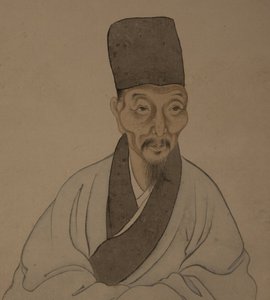
Qiu Ying
1494 - 1552 , China
Quick Facts
- Artistic Movement Or Style: Gongbi, Wu School
- Artists Or Movements Influenced By This Artist: ['Ming Dynasty artists']
- Artists Who Influenced This Artist: ['Song Dynasty masters']
- Date Of Birth: 1494
- Date Of Death: 1552
- Full Name: Qiu Ying
- Nationality: Chinese
- Notable Artworks:
- Up the River During Qingming
- Lady in a Bamboo Grove
- Seven Sages of Bamboo Grove
- Spring Morning in Han Palace
- Place Of Birth: Taicang, China
Related Articles
Xie Zhiliu: A Legacy of Ink Wash Painting & Modern Chinese Literati Tradition
Explore the legacy of Xie Zhiliu, a master of Chinese ink wash painting & prominent figure in modern art. Discover his techniques, influences, and contributions to literati tradition. A guide for discerning collectors.
The Timeless Beauty of Chinese Calligraphy: An Exploration of Ink, Spirit, and the Art of the Brush
Embark on a profound journey through the soul of Chinese calligraphy. Explore the historical mastery of ink, brush, and script, from ancient Zhuanshu to elegant running script, and discover how this timeless art form reflects the enduring spirit of classical East Asian aesthetics.

Ephemeral Expressions: Exploring the Nuances of Ink on Paper Through History & Contemporary Art
Explore the captivating world of ink wash painting – from its ancient origins to contemporary masters. Discover techniques, symbolism & conservation insights with OriginalUniqueArt.com.
Pu Xinyu's 'Puru': A Legacy of Literati Painting & Emotional Resonance
Explore the captivating world of Pu Xinyu (Puru), the last great literati painter. Discover his imperial heritage, masterful ink wash techniques & enduring legacy – a valuable addition to any discerning art collection.
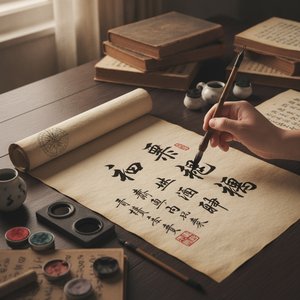
Mastering the Flow: The Timeless Art of Ink on Paper and the Legacy of Calligraphic Mastery
Explore the profound elegance of ink on paper. From the rhythmic running script of the Ming Dynasty to Zen-inspired haiku, discover the history, technique, and meditative mastery behind the world's most timeless calligraphic traditions.


