

 Send
Send Share
Share
 Details
 Guide
Guide

 Download
 Similars
 Diaporama
 Stats
StatsNiccolò Piccinino,


 Read More
Giclée / Art Print
Museum-quality giclée or canvas print with fast production and flexible finish options. ( Buy Hand Made Painting Switch to Digital Image)




































Pick from our preset sizes that match the artwork's original proportions.

Type the width and the height you need, to fit your frame or your wall. A print can only be cut, never made bigger than the picture, so a size with a different shape loses a part of the image. We send you a digital mockup to approve before we print anything. The picture shown on this page does not show the real cut — only the mockup does.
Worldwide Delivery () in 2 weeks instead of standard 4/5 weeks. (25 October)

Free Worldwide Express Shipping

High-Quality Linen Canvas

Full Shipping Insurance

Customs Tax Refund Guarantee

True Color Matching Guarantee

100-Day Return Policy (Defects Only)

100% Money-Back Guarantee

Bulk Discount Offer
 Glass option is only available in size under 110 CM

Niccolò Piccinino,
Giclée / Art Print
Reproduction Size
-


Total Price
$ 81
A Miniature Masterpiece of Renaissance Might
In the delicate, shimmering surface of Pisanello’s bronze medal depicting Niccolò Piccinino, we encounter more than just a portrait; we witness the very heartbeat of the early Renaissance. Created around 1441, this exquisite work serves as a profound testament to an era where the elegance of the International Gothic style began to merge with the burgeoning humanism of the Italian Quattrocento. As one gazes upon the weathered bronze, the face of the formidable condottiero emerges from the metal, not merely as a likeness, but as a study in character and command. Pisanello, a master of detail, captures Piccinino in his military finery, using the medium of alloy tending towards bell metal to evoke a sense of permanence and gravity that mirrors the subject's own historical weight.
The artistry lies in the subtle interplay of light and shadow across the embossed features. Pisanello employs a technique of masterful bronze casting that allows for a breathtaking level of precision, rendering the textures of armor and the stern contours of the face with an almost tactile quality. The subject, Niccolò Piccinino, was a man of immense influence—a mercenary leader whose very name commanded respect across the Italian peninsula. Through this small-scale sculpture, the artist elevates a soldier of fortune to the status of a monumental figure, utilizing the static, dignified pose characteristic of Renaissance portraiture to inspire a sense of moral authority and civic virtue.
Symbolism and the Language of the Soul
Beyond the striking obverse lies a reverse composition that invites the viewer into a world of deep, allegorical meaning. Here, Pisanello departs from the literal to embrace the poetic, presenting a dynamic scene featuring a gryphon suckling two children. This choice is far from arbitrary; it is a sophisticated use of visual rhetoric rooted in medieval heraldry and Christian iconography. The gryphon, a creature of mythic strength combining the eagle and the lion, serves as a potent symbol of vigilance, courage, and divine protection. In its nurturing act, it creates a poignant contrast with the innocence of the infants, embodying the dual nature of power: the ferocity required for defense and the tenderness required for preservation.
For the discerning collector or interior designer, this medal offers an unparalleled opportunity to introduce a piece of profound intellectual depth into a curated space. The inscription “PERVSIA” and the intricate heraldic motifs provide a narrative layer that rewards close inspection, making it an ideal focal point for those who appreciate art that speaks of history, legacy, and the complexities of the human condition. To possess a reproduction of such a piece is to hold a fragment of the Renaissance spirit—a bridge between the chivalric traditions of the past and the enlightened ideals of the future.
Questions & Answers
What type of artwork is "Niccolò Piccinino," by Pisanello?
"Niccolò Piccinino," by Pisanello is classified as sculpture. The category describes the kind of artwork the original is.
What is "Niccolò Piccinino," about?
"Niccolò Piccinino," by Pisanello depicts: portrait, medal, renaissance, italy, military, pisanello, bronze.
What palette and what feeling does "Niccolò Piccinino," combine?
In "Niccolò Piccinino,", earthy colors accompany a calm feeling.
Artist Biography
A Life Bridging Worlds: The Art of Pisanello
Born Antonio di Puccio Pisano in Pisa around 1395, Pisanello emerged as a pivotal figure in the transition from the International Gothic style to the burgeoning Renaissance. His very name—sometimes rendered Vittore Pisano, a misattribution by Giorgio Vasari—hints at the enduring mystique surrounding his life and work. While precise details remain elusive, we know he spent formative years absorbing the refined traditions of Veronese painting, a foundation that would forever inform his delicate linework and appreciation for opulent detail. This early influence wasn’t confined to technique; it instilled in him a love for richly textured fabrics, gleaming surfaces, and an overall aesthetic of courtly elegance. Around 1415-1420, a crucial apprenticeship with Gentile da Fabriano commenced, solidifying Pisanello's artistic trajectory. From Gentile, he inherited not only technical mastery but also a discerning eye for precious materials and a commitment to meticulous observation—qualities that would become hallmarks of his style. He traveled extensively throughout Italy, securing commissions from various courts – Florence saw him immortalizing Emperor Sigismund and other notable figures in portraiture, demonstrating an early talent for capturing likeness and conveying status.Masterpieces and a Distinctive Style
Pisanello’s artistic output, though fragmented by loss and misattribution, reveals a remarkably versatile talent. His *Saint George and the Princess of Trebizond*, a fresco adorning the Pellegrini Chapel in Verona's Church of Sant'Anastasia, is widely considered his masterpiece. It isn’t merely a depiction of a legendary tale; it’s a vibrant tapestry of courtly life, exotic animals, and intricate details that draw the viewer into a fantastical realm. The *Madonna of the Quail*, signed “Antonius Pisanus,” showcases a harmonious blend of Gentile da Fabriano's refinement and Stefano da Verona’s stylistic nuances. Beyond these celebrated works, his *Fresco Annunciation* in San Fermo, Verona—created as part of Nicolò di Brenzoni’s funeral monument—demonstrates his skill in narrative composition and devotional imagery. He even completed frescoes begun by Gentile da Fabriano at the Basilica of St. John Lateran in Rome after his mentor's untimely death, a testament to his growing reputation and technical prowess. Pisanello’s style is instantly recognizable: delicate lines that define form with precision, an almost obsessive attention to detail, and a predilection for depicting luxurious textures and elegant costumes. His drawings, often autonomous works of art in their own right, are particularly noteworthy—studies of fauna, flora, and human figures reveal his keen observational skills and artistic sensitivity. However, perhaps his most groundbreaking contribution was the creation of commemorative portrait medals, effectively originating this genre and influencing generations of artists to come.Influences and Artistic Development
Pisanello’s artistic journey wasn't solely defined by formal training; it was shaped by a constant dialogue with the art of the past and present. Gentile da Fabriano remained a profound influence, particularly in his emphasis on detail and lavish ornamentation. Stefano da Verona likely contributed to his early stylistic development, grounding him in the Veronese tradition. Interestingly, some scholars suggest a possible connection to Paolo Uccello, noting a shared fascination with horses—a motif that appears frequently in Pisanello’s drawings and paintings. But his influences extended beyond contemporary artists; he drew inspiration from the art of ancient Greece and Rome, particularly evident in his portrait medals which echo the numismatic portraits of antiquity. Over time, Pisanello's style evolved. He moved away from purely Gothic conventions, incorporating elements of Renaissance naturalism and a growing interest in anatomical accuracy. His drawings became increasingly independent works, demonstrating not just preparatory sketches but explorations of form and texture for their own sake. This evolution reflects his ability to synthesize diverse influences into a uniquely personal artistic vision—a vision that bridged the gap between two eras.Historical Significance and Lasting Legacy
Pisanello’s place in art history is secure, not merely as a talented painter but as an innovator who helped define the early Renaissance aesthetic. He stands as a pioneer of portrait medals—a genre that would become immensely popular among Italian nobility and beyond. His work embodies a crucial transition from the decorative elegance of International Gothic to the more naturalistic and human-centered approach of the Renaissance, blending detailed observation with refined ornamentation. He was celebrated in his own time, lauded by poets like Guarino da Verona and esteemed by humanist scholars who recognized his exceptional talent. While many of his paintings have been lost or misattributed over the centuries, his surviving drawings and medals continue to inspire awe and admiration. His influence on later artists is undeniable, even if it’s often subtle—his meticulous draftsmanship, his attention to detail, and his innovative use of portraiture all left an indelible mark on subsequent generations. Pisanello's art remains a testament to the power of observation, the beauty of craftsmanship, and the enduring allure of a world caught between tradition and innovation.
Pisanello
1395 - 1455 , Italy
Quick Facts
- Full Name: Antonio di Puccio Pisano
- Nationality: Italian
- Date Of Birth: 1395
- Date Of Death: 1455
- Place Of Birth: Pisa, Italy
- Notable Artworks:
- St. George & Princess
- Madonna of the Quail
- Annunciation (Verona)
- Artistic Movement Or Style: Early Renaissance, Int'l Gothic
- Artists Who Influenced This Artist:
- Gentile da Fabriano
- Stefano da Verona
- Artists Or Movements Influenced By This Artist: ['Portrait medalists']
Related Articles

Bronze Age to Modern Masters: 10 Sculptures That Redefined Art | OriginalUniqueArt
Journey through art history with 10 legendary bronze sculptures – from Michelangelo's David to Rodin’s Thinker. Explore the stories, techniques & timeless beauty of these masterpieces. Find museum-quality reproductions & elevate your home decor on OriginalUniqueArt.com.
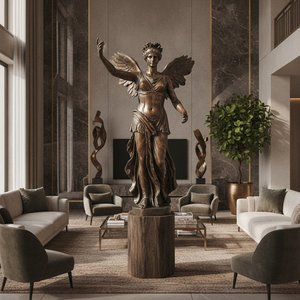
Timeless Bronze Sculptures: Elevate Your Space with Masterful Metal Artworks
Discover the enduring allure of bronze sculptures at OriginalUniqueArt.com. From classical lost-wax casting to modern metal masterpieces, explore museum-quality artworks designed to elevate luxury interiors. Expert curation, authenticity guaranteed, and worldwide shipping for discerning collectors.

The Enduring Legacy of Bronze: A Historical & Artistic Exploration for the Collector
Explore the rich history & enduring appeal of bronze sculpture with expert insights for collectors at OriginalUniqueArt. Learn about casting techniques, iconic artists, collecting tips & contemporary interpretations.

Timeless Strength: The Ultimate Guide to Bronze Art and Sculpture for the Discerning Collector
Discover the enduring elegance of bronze sculpture. Our expert guide explores lost-wax casting, patina mastery, and professional tips for collecting and commissioning museum-quality bronze art to create a lasting legacy in your private collection.

The Eternal Glow of Bronze: A Guide to Sculpting with Light, Strength, and Timeless Artistry
Explore the profound beauty of bronze sculpture. From the ancient lost-wax technique to the interplay of light and patina, discover how this enduring alloy captures human emotion and history through masterful artistry and strength.


