Preview
 Send
Send Share
Share
 Details
 Guide
Guide

 Download
 Similars
 X-Ray
X-Ray Diaporama
 Stats
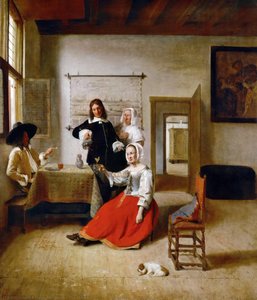
StatsInterior with a Young Couple
 Oil On Panel
- WallArt
- Dutch Golden Age
 1662
1662- Early Modern
 55.0 x 63.0 cm
 Metropolitan Museum of Art
 Read More
Giclée / Art Print
Museum-quality giclée or canvas print with fast production and flexible finish options. ( Buy Hand Made Painting Switch to Digital Image)




P118B $10

P118H $10

P118W $10

P438Z $10

P508JH $12

P508YH $12

P805H $10

P805Z $10

P919BZ $10

P919G $10

P919XJ $10

P959ZH $10

P968JZ $12

W106C $8

W218G $10

W218JH $8

W218Y $10

W307PJ $10

W316G $10

W316PJ $8

W316Y $10

W398PJ $8

W4111J $10

W500HY $15

W500JH $15

W692G $12

W849H $8

W940BG $15

W953PJ $8




Pick from our preset sizes that match the artwork's original proportions.

Type the width and the height you need, to fit your frame or your wall. A print can only be cut, never made bigger than the picture, so a size with a different shape loses a part of the image. We send you a digital mockup to approve before we print anything. The picture shown on this page does not show the real cut — only the mockup does.
Worldwide Delivery () in 2 weeks instead of standard 4/5 weeks. (25 October)

Free Worldwide Express Shipping

High-Quality Linen Canvas

Full Shipping Insurance

Customs Tax Refund Guarantee

True Color Matching Guarantee

100-Day Return Policy (Defects Only)

100% Money-Back Guarantee

Bulk Discount Offer
 Glass option is only available in size under 110 CM

Interior with a Young Couple
Giclée / Art Print
Reproduction Size
-


Total Price
$ 81
A Window into Dutch Domestic Tranquility
In the quiet corners of the seventeenth century, amidst the burgeoning prosperity of the Dutch Golden Age, Pieter de Hooch captured something far more profound than mere domesticity. His masterpiece, “Interior with a Young Couple,” painted in 1662, serves as an exquisite portal into a world defined by peace, intimacy, and the subtle dance of light. As one gazes upon this oil-on-panel treasure, currently held in the prestigious Metropolitan Museum of Art, there is an immediate sense of being invited into a private sanctuary. The scene is not merely a depiction of a room, but a carefully orchestrated meditation on the beauty found within the mundane rituals of middle-class life.
The composition draws the viewer inward through a masterful use of perspective and light. De Hooch, a luminary of his era, possessed an unparalleled ability to manipulate natural illumination to create depth and atmosphere. In this work, light pours through a window, casting soft glows upon the figures and highlighting the textures of the domestic setting. This technique does more than just illuminate the room; it breathes life into the very air, creating a palpable warmth that makes the space feel inhabited and eternally present. The interplay between sunlit surfaces and velvety shadows lends a rhythmic quality to the architecture, guiding the eye from the foreground figures toward the receding planes of the interior.
The Poetry of Human Connection
At the heart of this painting lies a tender narrative of companionship. The central figures—a young man and woman—are caught in a moment of quiet, shared existence. While the woman gazes thoughtfully, perhaps lost in reflection or observing her own image in a mirror, the man engages playfully with a canine companion. This interaction introduces a layer of gentle movement and warmth to the stillness of the room. The presence of the dog, a common motif in Dutch genre painting, often symbolizes fidelity and the comforts of a well-ordered home, reinforcing the themes of love and familial contentment that permeate the canvas.
Beyond the human subjects, the meticulous details of the room speak to the aspirations of the Dutch bourgeoisie. Every element, from the placement of the chairs to the soft light hitting the furniture, suggests a life of stability and refined taste. For the modern collector or interior designer, this painting offers more than just aesthetic beauty; it provides a blueprint for creating spaces that feel both sophisticated and deeply soulful. The artwork transcends its historical era, offering a timeless reminder that true luxury is often found in the quiet, luminous moments of togetherness and the serene atmosphere of a well-loved home.
To possess a high-quality reproduction of this work is to bring a piece of history’s most tranquil light into one's own environment. It serves as an anchor of calm, a conversation piece that invites contemplation, and a testament to the enduring power of the Dutch masters to find the extraordinary within the ordinary.
Questions & Answers
What atmosphere would a reproduction of "Interior with a Young Couple" by Pieter de Hooch bring to a room?
The serene atmosphere of "Interior with a Young Couple" by Pieter de Hooch matches its recommended space: a living room.
What style does "Interior with a Young Couple" belong to?
"Interior with a Young Couple" is a work of Dutch Golden Age. The movement indicates the artistic tradition the work is part of.
Can I see "Interior with a Young Couple" by Pieter de Hooch under different lights?
"Interior with a Young Couple" can be examined layer by layer on the artwork's X-Ray page, a viewer inspired by a conservator's light bench with eleven optical readings of the image.
Artist Biography
early life and training
pieter de hooch, a prominent figure in the dutch golden age, was born on december 20, 1629, in rotterdam, netherlands. he was the eldest of five children to hendrick hendricksz de hooch, a bricklayer, and annetge pieters, a midwife. little is known about his early life, but it is believed that he worked in rotterdam, delft, and amsterdam. de hooch's artistic training took place in haarlem under the landscape painter nicolaes berchem, alongside jacob ochtervelt. this period laid the foundation for his future success as a painter of quiet domestic scenes with an open doorway.artistic style and themes
de hooch's work is characterized by its attention to detail, naturalism, and use of light. his paintings often featured everyday life, reflecting the values and aspirations of the emerging middle class. a notable example of this style is "the courtyard of a house in delft" (1658), which showcases his ability to capture the mundane details of everyday life. de hooch's work also shares themes and compositions with emanuel de witte, but his focus on people and their relationships sets him apart. this is evident in "woman nursing" (1658) and "woman with a baby on her lap" (1658), which demonstrate his interest in domestic scenes.notable works and legacy
some of de hooch's most notable works include:- "the merry drinker" (c. 1650)
- "cardplayers in a sunlit room" (1658)
- "a woman preparing bread and butter for a boy" (1661)
museums and collections
de hooch's work can be found in various museums, including the koninklijk museum voor schone kunsten in antwerp, belgium, which features a vast collection of european art from the 15th to the 20th centuries. discover more about pieter de hooch and his works on OriginalUniqueArt: [https://OriginalUniqueArt.com/@/pieter-de-hooch](https://OriginalUniqueArt.com/@/pieter-de-hooch) /en/art/show/art-d3b4kt-en/ (discover the masterpieces of koninklijk museum voor schone kunsten, belgium) note: the provided links are from OriginalUniqueArt and are relevant to the topic. no external links were added as per the instructions.
Pieter de Hooch
1629 - 1694 , Netherlands
Quick Facts
- Full Name: Pieter Hendricksz de Hooch
- Nationality: Dutch
- Date Of Birth: 1629
- Date Of Death: 1694
- Place Of Birth: Rotterdam, Netherlands
- Notable Artworks:
- The Empty Glass
- Woman Reading a Letter
- Cardplayers in a sunlit room
- A woman preparing bread and butter
- Artistic Movement Or Style: Delft School, Dutch Golden Age
- Artists Who Influenced This Artist: ['Nicolaes Berchem']
- Artists Or Movements Influenced By This Artist: ['Jan Vermeer']
Related Articles

Golden Light & Dutch Skies: The Timeless Magic of Dutch Golden Age Landscapes
Discover the breathtaking beauty of Dutch Golden Age landscapes. Explore the mastery of light, chiaroscuro, and 17th-century realism through an expert art history lens, celebrating the enduring legacy of the Dutch Masters for discerning collectors and art lovers.
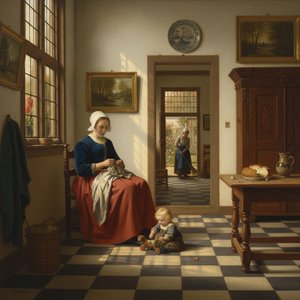
Pieter de Hooch: Illuminating Dutch Domestic Life & Golden Age Charm
Explore the captivating world of Pieter de Hooch, a master of Dutch Golden Age painting. Discover his innovative use of light, intimate domestic scenes, and lasting influence on art history. Learn more at OriginalUniqueArt.

Masterpieces of the Dutch Golden Age: How a Global Market Revolutionized Art History
Explore the profound impact of the Dutch Golden Age. Discover how a global trade revolution transformed art history through breathtaking realism, masterful light, and the elevation of everyday life into timeless masterpieces for the modern collector.

Dutch Masters: 10 Golden Age Paintings That Still Inspire |
Journey into the Dutch Golden Age! Explore 10 iconic paintings by Rembrandt, Vermeer & Hals. Discover the stories behind these Baroque masterpieces and find museum-quality art reproductions to elevate your home decor on .

Mastering Light & Shadow: A Journey Through the Dutch Golden Age's Luminous Legacy
Embark on a cultural journey through the Dutch Golden Age. Explore the masterful interplay of light and shadow in 17th-century masterpieces, from Rembrandt to Vermeer, and discover how this era of profound realism continues to inspire fine art collectors today.