
 Preview
 Send
Send Share
Share
 Details
 Guide
Guide

 Download
 Similars
 X-Ray
X-Ray Diaporama
 Q&A
Q&A Stats
StatsHercules Standing


 Read More
Giclée / Art Print
Museum-quality giclée or canvas print with fast production and flexible finish options. ( Buy Hand Made Painting Switch to Digital Image)




P118B $10

P118H $10

P118W $10

P438Z $10

P508JH $12

P508YH $12

P805H $10

P805Z $10

P919BZ $10

P919G $10

P919XJ $10

P959ZH $10

P968JZ $12

W106C $8

W218G $10

W218JH $8

W218Y $10

W307PJ $10

W316G $10

W316PJ $8

W316Y $10

W398PJ $8

W4111J $10

W500HY $15

W500JH $15

W692G $12

W849H $8

W940BG $15

W953PJ $8




Pick from our preset sizes that match the artwork's original proportions.

Type the width and the height you need, to fit your frame or your wall. A print can only be cut, never made bigger than the picture, so a size with a different shape loses a part of the image. We send you a digital mockup to approve before we print anything. The picture shown on this page does not show the real cut — only the mockup does.
Worldwide Delivery () in 2 weeks instead of standard 4/5 weeks. (5 November)

Free Worldwide Express Shipping

High-Quality Linen Canvas

Full Shipping Insurance

Customs Tax Refund Guarantee

True Color Matching Guarantee

100-Day Return Policy (Defects Only)

100% Money-Back Guarantee

Bulk Discount Offer
 Glass option is only available in size under 110 CM

Hercules Standing
Giclée / Art Print
Reproduction Size
-


Total Price
$ 81
A Titan of Marble: Exploring Pierre Puget’s Hercules Standing
Pierre Puget (1620-1694), a sculptor whose career spanned decades and encompassed both artistic brilliance and engineering prowess, remains one of France's most celebrated Baroque masters. His monumental statue, “Hercules Standing,” created around 1660, exemplifies the stylistic ideals of his era – a fusion of realism, anatomical precision, and dramatic emotion that continues to captivate audiences today.
- Subject Matter: The sculpture depicts Hercules, the legendary hero of Greek mythology known for his strength and prowess. Puget’s depiction captures him in a dynamic contrapposto pose—a stance where one leg is extended while the other relaxes—reflecting classical ideals of human form and movement.
- Style & Technique: “Hercules Standing” firmly anchors itself within Hellenistic sculpture, inheriting the legacy of artists like Bernini who championed anatomical accuracy and expressive gesture. Puget skillfully employed terracotta – a durable material favored for monumental sculptures – demonstrating meticulous craftsmanship and attention to detail. The statue’s surface is polished to achieve a luminous sheen, mirroring the idealized beauty of ancient Greek art.
Historical Context: Puget's artistic journey began in Marseille, where he honed his skills carving galleys before embarking on a transformative voyage to Italy during his formative years. This immersion in Italian Baroque art profoundly influenced his style, exposing him to the grandeur of Pietro da Cortona’s frescoes and fostering an appreciation for theatrical composition. Returning to Marseille with renewed vision, Puget continued to produce works that celebrated human dignity and artistic innovation.
- Material & Reproduction: The original sculpture is crafted from terracotta—a material chosen for its ability to withstand the elements and maintain sculptural form over time. OriginalUniqueArt’s reproduction utilizes high-resolution photographic printing on premium archival paper, guaranteeing exceptional color fidelity and preserving the statue's textural nuances for generations to come.
- Symbolism: Hercules embodies courage, resilience, and divine power—themes central to Greek mythology and reflecting broader humanist aspirations of his time. Puget’s portrayal underscores the enduring fascination with heroic narratives and idealized representations of human potential.
“Hercules Standing” transcends mere representation; it communicates a palpable sense of energy and contemplation. Its serene gaze contrasts sharply with the muscular physique, inviting viewers to ponder themes of strength versus stillness—a duality that speaks to the complexities of human experience. This remarkable sculpture serves as an enduring testament to Pierre Puget’s artistic genius and the timeless beauty of Hellenistic art.
Questions & Answers
How is "Hercules Standing" recommended to be printed - what size, what orientation?
A print of "Hercules Standing" by Pierre Puget is recommended at a large size in portrait orientation.
What feeling does "Hercules Standing" by Pierre Puget convey?
In "Hercules Standing", an elegant mood accompanies a dramatic emotion.
Who created "Hercules Standing" and in what year?
Pierre Puget made "Hercules Standing" in 1660.
Artist Biography
Pierre Puget: A Life in Art and Engineering
- Born: Marseille, France (1620)
- Died: 1694
Early Life and Italian Influences
- Apprenticeship: Puget began his career at fourteen, carving ornaments for galleys built in Marseille. This early exposure to craftsmanship laid the foundation for his later artistic pursuits.
- Journey to Italy (1640): Seeking opportunities, he traveled to Italy, initially to Livorno and then Florence. He honed his skills as a woodcarver and painter.
- Rome and Pietro da Cortona: A pivotal moment arrived when he was taken under the wing of Pietro da Cortona in Rome. Puget assisted in painting elaborate ceilings at the Palazzo Barberini and Palazzo Pitti, absorbing the dynamism and grandeur of Roman Baroque art.
- Return to Marseille (1643): After three years in Italy, he returned to Marseille, bringing with him a refined artistic sensibility shaped by Italian masters.
Major Works and Artistic Development
- Early Commissions: Upon his return, Puget received commissions for paintings and altarpieces, demonstrating an evolving style influenced by Annibale Carracci and Rubens.
- Sculptural Breakthroughs: He increasingly focused on sculpture, creating works like the medallions for the stern of French warships, showcasing a growing mastery of form and detail.
- Vaux-le-Vicomte (1660s): Nicolas Fouquet commissioned Puget to sculpt Hercules for his château at Vaux-le-Vicomte, marking a significant moment in his career and demonstrating the patronage of powerful figures.
- Genoa Period: Following Fouquet's downfall, Puget moved to Genoa, where he created notable works such as the “Hercule Gaulois” (Louvre) and sculptures for churches like Santa Maria di Carignano.
- Versailles Commissions: Colbert brought Puget back to France, leading to commissions for Versailles, including the celebrated groups of “Milo of Croton” and “Perseus and Andromeda.” These works are characterized by their dramatic intensity and expressive realism.
Style and Influences
- Baroque Drama: Puget’s style is firmly rooted in the Baroque tradition, emphasizing movement, emotion, and theatricality.
- Classical Inspiration: While embracing Baroque dynamism, his work also reveals an appreciation for classical forms and ideals.
- Michelangelo and Bernini: His sculptures show influences from Michelangelo's powerful figures and Bernini’s dynamic compositions.
- Unique Expression: Despite these influences, Puget developed a distinctive style marked by its raw energy and expressive intensity, setting him apart from more conventional Baroque artists.
Legacy and Historical Significance
- Bridging Art and Engineering: Puget’s ability to seamlessly blend artistic talent with engineering skills was unique. His work on naval architecture and fortifications demonstrates a practical ingenuity alongside his artistic achievements.
- A Tormented Genius: Théophile Gautier famously described him as the "melancholy emperor of convicts," reflecting the intensity and perhaps struggles inherent in his creative process.
- Lasting Impact: Puget’s sculptures, particularly “Milo of Croton” and “Perseus and Andromeda,” remain iconic examples of French Baroque sculpture, admired for their expressive power and technical virtuosity.
- Recognition Today: His work is celebrated in museums worldwide, including the Louvre and Musée des Beaux-Arts de Marseille, solidifying his place as a significant figure in art history.
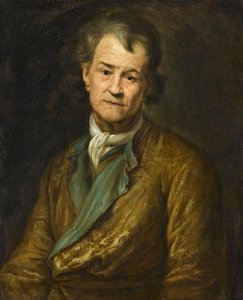
Pierre Puget
1620 - 1694 , France
Quick Facts
- Artistic Movement Or Style: Baroque
- Artists Who Influenced This Artist:
- Annibale Carracci
- Rubens
- Michelangelo
- Bernini
- Date Of Birth: 1620
- Date Of Death: 1694
- Full Name: Pierre Puget
- Nationality: French
- Notable Artworks:
- Hercules at Rest
- The Faun terracotta
- Door of the Hôtel de Ville
- The Stoning of St Peter
- A Frigate at Sea
- Place Of Birth: Marseille, France
Related Articles

Bronze Sculptures That Defined Art History | OriginalUniqueArt
Journey through art history with our Top 10 bronze sculptures! Explore masterpieces by Rodin, Michelangelo & more. Discover stories behind iconic statues and find museum-quality reproductions for your home decor at OriginalUniqueArt.com.

The Enduring Allure of Marble in Art History: From Classical Sculpture to Modern Abstraction
Explore the captivating history of marble sculpture from ancient Greece to modern art. Discover renowned artists like Canova & Michelangelo, carving techniques, and investment insights at OriginalUniqueArt.

The Enduring Form: Exploring Themes & Techniques in Sculpture Across Historical Periods
Explore the rich history of sculpture from ancient masterpieces to contemporary innovations. Discover key techniques, influential artists & investment potential for discerning art collectors.

25 Masterpieces by Pierre-Auguste Renoir: The Essence of Impressionism
Explore 25 iconic Pierre-Auguste Renoir masterpieces. Discover the beauty of Impressionism on OriginalUniqueArt.com.

The Enduring Legacy of Marble: A Comprehensive Exploration of Technique, Symbolism & Artistic Expression
Explore the rich history of marble sculpture from antiquity to the Renaissance! Discover key techniques, influential artists & enduring themes in classical art. Expert insights for collectors and enthusiasts at OriginalUniqueArt.


