Text size

() ·

A painting made for you, by hand

André-Marie Ampère

Hand Made Oil Reproduction

Hand-painted oil on canvas in your size and frame, made to order by our artists. ( Switch to Print Switch to Digital Image)

Collectible Description

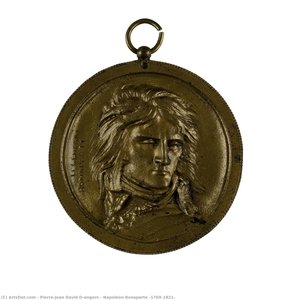
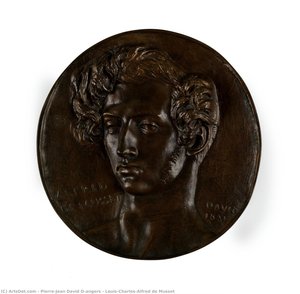
Discover André-Marie Ampère's portrait by Pierre-Jean David d’Angers (1829). A captivating bronze coin depicting the pioneering physicist, showcasing his legacy and scientific brilliance.

Artist Biography

Pierre-Jean David d'Angers (1788-1856): French sculptor & medalist renowned for neoclassical portraits, monumental works like the Pantheon frieze, and heroic figures. Explore his legacy!

from ·

Chapter 1

How large should it be?

Slide to change the size; the picture on the left shows the frame at its real width. The proportions of the original are kept.

Standard
custom
CM
INCH

Pick from our preset sizes that match the artwork's original proportions.

width
height

Type the width and the height you need, to fit your frame or your wall. This is hand-painted, so for a size with a different shape the artist can paint a bit more around the picture, or cut a bit — you choose. We send you a digital mockup to approve before the painting starts. The picture shown on this page does not show the real result — only the mockup does.

Chapter 2

How should it arrive?

Choose the edges of the stretched canvas

Choose your frame

Corner sample of the WhiteWrap canvas edge finish, stretched on solid wood bars
White $1
Corner sample of the BlurSideWrap canvas edge finish, stretched on solid wood bars
Blurside $1
Corner sample of the ExtendedWrap canvas edge finish, stretched on solid wood bars
Extended $1
Corner sample of the P118B picture frame: moulded polystyrene, 5 cm wide and 3 cm thick
P118B $10
Corner sample of the P118H picture frame: moulded polystyrene, 5 cm wide and 3 cm thick
P118H $10
Corner sample of the P118W picture frame: moulded polystyrene, 5 cm wide and 3 cm thick
P118W $10
Corner sample of the P438Z picture frame: moulded polystyrene, 5.5 cm wide and 3.5 cm thick
P438Z $10
Corner sample of the P508JH picture frame: moulded polystyrene, 7 cm wide and 3.5 cm thick
P508JH $12
Corner sample of the P508YH picture frame: moulded polystyrene, 7 cm wide and 3.5 cm thick
P508YH $12
Corner sample of the P805H picture frame: moulded polystyrene, 5 cm wide and 3.5 cm thick
P805H $10
Corner sample of the P805Z picture frame: moulded polystyrene, 5 cm wide and 3.5 cm thick
P805Z $10
Corner sample of the P919BZ picture frame: moulded polystyrene, 7 cm wide and 3.5 cm thick
P919BZ $10
Corner sample of the P919G picture frame: moulded polystyrene, 7 cm wide and 3.5 cm thick
P919G $10
Corner sample of the P919XJ picture frame: moulded polystyrene, 7 cm wide and 3.5 cm thick
P919XJ $10
Corner sample of the P959ZH picture frame: moulded polystyrene, 5 cm wide and 3 cm thick
P959ZH $10
Corner sample of the P968JZ picture frame: moulded polystyrene, 6 cm wide and 4 cm thick
P968JZ $12
Corner sample of the W106C picture frame: solid wood, 5 cm wide and 3 cm thick
W106C $8
Corner sample of the W218G picture frame: solid wood, 5 cm wide and 3 cm thick
W218G $10
Corner sample of the W218JH picture frame: solid wood, 5 cm wide and 3 cm thick
W218JH $8
Corner sample of the W218Y picture frame: solid wood, 5 cm wide and 3 cm thick
W218Y $10
Corner sample of the W307PJ picture frame: solid wood, 6 cm wide and 3 cm thick
W307PJ $10
Corner sample of the W316G picture frame: solid wood, 6 cm wide and 3 cm thick
W316G $10
Corner sample of the W316PJ picture frame: solid wood, 6 cm wide and 3 cm thick
W316PJ $8
Corner sample of the W316Y picture frame: solid wood, 6 cm wide and 3 cm thick
W316Y $10
Corner sample of the W398PJ picture frame: solid wood, 5 cm wide and 3 cm thick
W398PJ $8
Corner sample of the W4111J picture frame: solid wood, 6.5 cm wide and 3.5 cm thick
W4111J $10
Corner sample of the W500HY picture frame: solid wood, 7 cm wide and 5 cm thick
W500HY $15
Corner sample of the W500JH picture frame: solid wood, 7 cm wide and 5 cm thick
W500JH $15
Corner sample of the W692G picture frame: solid wood, 8 cm wide and 4 cm thick
W692G $12
Corner sample of the W849H picture frame: solid wood, 5 cm wide and 3 cm thick
W849H $8
Corner sample of the W940BG picture frame: solid wood, 7.5 cm wide and 4.5 cm thick
W940BG $15
Corner sample of the W953PJ picture frame: solid wood, 6 cm wide and 3.5 cm thick
W953PJ $8
Corner sample of the H24-GOLD picture frame: carved wood with gesso, 10 cm wide and 6 cm thick
H24-GOLD $30
Corner sample of the H24-SILVER picture frame: carved wood with gesso, 10 cm wide and 6 cm thick
H24-SILVER $30
Corner sample of the H36-GOLD picture frame: carved wood with gesso, 15 cm wide and 6.5 cm thick
H36-GOLD $45
Corner sample of the H36-SILVER picture frame: carved wood with gesso, 15 cm wide and 6.5 cm thick
H36-SILVER $45
Frame preview
Framed

Moulding: . Overall size with the frame: .

Chapter 3

Who paints it, and should anything change?

Examples of what can be changed: Replace face with customer photo; Add pet (e.g., replace cat with dog); Include hidden message in background; Change background landscape or elements.
After order, OriginalUniqueArt.com team will email client for instructions and provide a mockup preview

Worldwide Delivery () in 3/4 weeks instead of standard 5 weeks. (7 November). No compromise on quality.

Chapter 4

The finishing touches

A nameplate, as in a museum?

Engraved Bronze Plaque Details

This elegant plaque features the artist's name and the title of the artwork, finely engraved for a timeless presentation.

It is made from bronze with a refined, elegant finish. The text is precisely laser-engraved for a sharp and permanent result. Measuring 9x2 cm, the plaque is compact yet easy to read. It's built to be durable and scratch-resistant, offering a professional, museum-quality look. Mounting is simple thanks to the included adhesive backing.

Transparent Acrylic Plaque Details

The plaque includes essential engraved details such as the artist's name, the title of the artwork, the date it was created, the type of media used-like oil on canvas or watercolor-a brief description of the piece, and a QR code that links to the complete artwork information.

It is crafted from clear acrylic, offering a sleek, modern appearance. The text is UV-engraved in black to ensure strong visual contrast. With a size of 10x15 cm, it ensures optimal readability. It comes equipped with two metal hooks for secure wall mounting. The plaque is designed to be weather-resistant, making it suitable for various environments, and it includes interactive features that work seamlessly with smartphone scanning.

Black Acrylic Plaque Details

This elegant plaque includes engraved information such as the artist's name, the title of the artwork, the date it was created, the type of media used (like oil on canvas or watercolor), a short description of the artwork, and a QR code for quick access to more information.

The plaque itself is made from refined black acrylic with a premium finish. The text is laser-engraved in white for high contrast and readability. Its size is 10x15 cm, designed to be easy to read. It comes with two metal hooks for professional mounting. The design is sleek and fits any interior style. It is also weather-resistant and durable, with built-in digital integration for mobile compatibility.

A protective varnish?

When do you need it?

Chapter 5

Your painting, as you ordered it

André-Marie Ampère

Reproduction Medium

Reproduction Size

-

Elite Senior Artist

More detail, finesse, and extra production time

-

Reproduction Frame

-

-

For artworks or reproductions larger than 105 cm (approximately 41 inches) on any side, the frame will be shipped as a kit, disassembled. This method ensures safe delivery and prevents damage during transport.

Professional assembly required - this is not a DIY product.
The kit must be assembled and the canvas stretched by an experienced professional framer, using wood glue (not supplied), a canvas stretching plier and clamps to hold the bars square while the glue dries. Incorrect assembly or uneven canvas tension can permanently damage the artwork and is not covered by our warranty.

  • All solid wood bars are included, precisely cut to size.

  • Assembled with the screws provided, plus wood glue for the corner joints, which is not supplied and must be sourced by your framer.

  • Professional tools are required and not included: a canvas stretching plier (tensioner) and clamps to hold the bars square while the glue dries.

Important:
The corner joints require wood glue, the bars must be held with clamps until the glue is fully dry, and tightening the canvas on the assembled frame requires a canvas stretching plier. None of these are included in the kit. Please arrange an experienced professional framer before ordering this size.

Nameplate

-

-

Protective Varnish

Glossy Varnish (enhances colors, protects against light/moisture)

-

Customize My Artwork

Examples of what can be changed: Replace face with customer photo; Add pet (e.g., replace cat with dog); Include hidden message in background; Change background landscape or elements.

-

Urgent

Worldwide Delivery () in 3/4 weeks instead of standard 5 weeks. (7 November). No compromise on quality.

-

Express Shipping

Worldwide Delivery () in 5 weeks. (14 November).

Included

Total Price

$ 300

Total Price $ 300

Glass option is only available in size under 110 CM

Included with every order

  • Free Worldwide Express Shipping
  • High-Quality Linen Canvas
  • Full Shipping Insurance
  • Customs Tax Refund Guarantee
  • True Color Matching Guarantee
  • 100-Day Return Policy (Defects Only)
  • 100% Money-Back Guarantee
  • Bulk Discount Offer

The Enigmatic Face: Pierre-Jean David d’Angers and André-Marie Ampère

Pierre-Jean David d’Angers's portrait of André-Marie Ampère, completed in 1829, is more than a simple likeness; it’s a carefully constructed embodiment of the man behind one of science’s most foundational discoveries. The image, rendered with the meticulous detail characteristic of David d’Angers’s neoclassical style, captures Ampère not merely as a physicist, but as a figure of intellectual authority and quiet contemplation. The bronze coin-like composition—a deliberate choice by the artist—immediately establishes a sense of gravitas, elevating Ampère to the status of a revered scholar and public servant. The subject's severe features, framed by a carefully sculpted wig and a neatly trimmed mustache, project an air of dignified seriousness, reflecting the weight of his groundbreaking work in electromagnetism.

André-Marie Ampère portrait by Pierre-Jean David d’Angers

A Scientific Icon: The Life and Times of André-Marie Ampère

Born in Lyon in 1775, André-Marie Ampère was a product of the Enlightenment, nurtured on the works of Buffon, Diderot, and Euler. His father’s radical republicanism, tragically culminating in his execution during the French Revolution, profoundly shaped Ampère's life, instilling within him a deep respect for knowledge and a commitment to rational thought. He pursued his education largely independently, devouring books and mastering mathematics with remarkable self-discipline. This autodidactic approach led him to become a leading figure in the burgeoning field of electromagnetism, building upon the foundational work of Ørsted’s discovery that electric currents create magnetic fields. Ampère's systematic investigations established the laws governing these relationships, forming the bedrock of modern electrical engineering and paving the way for technologies like the telegraph – a testament to his enduring legacy.

Neoclassical Precision: David d’Angers’s Artistic Vision

Pierre-Jean David d’Angers was a prominent sculptor and portraitist during the early 19th century, known for his ability to capture both the physical likeness and the inner character of his subjects. His style is characterized by its meticulous detail, balanced compositions, and a restrained emotionality—a hallmark of neoclassical art. He adopted the name “David d’Angers” as a deliberate assertion of lineage and artistic ambition, distinguishing himself from his celebrated master, Jacques-Louis David. In this portrait, David d’Angers skillfully employs chiaroscuro – the dramatic contrast between light and shadow – to sculpt Ampère's face, emphasizing his features and creating a sense of depth and volume. The coin-like format is not merely stylistic; it subtly elevates Ampère to the status of a revered figure, akin to a precious currency representing the value of knowledge.

Symbolism and Legacy: A Portrait Beyond Representation

The choice of a bronze coin as the medium for this portrait is particularly significant. Bronze, historically associated with antiquity and civic virtue, connects Ampère’s work to the foundations of scientific inquiry. The image itself speaks volumes about the era—a time of burgeoning industrialization, technological innovation, and a growing faith in reason and progress. Ampère's serious expression suggests not just intellectual prowess but also a profound sense of responsibility for his discoveries. This portrait is therefore more than a simple likeness; it’s a symbolic representation of Ampère as the architect of modern electromagnetism—a man whose work continues to shape our world today. It invites us to contemplate the intersection of science, art, and the enduring human quest for understanding.

Questions & Answers

How many people view "André-Marie Ampère"?

A Stats page exists for "André-Marie Ampère". It charts the monthly visits of the artwork and of the artist's other works, with country and language breakdowns.

Is "André-Marie Ampère" more bright or more dark overall?

The recorded values for "André-Marie Ampère" by Pierre-Jean David d'Angers are: brilliant brightness, luminous luminance.

What is the overall mood of "André-Marie Ampère" by Pierre-Jean David d'Angers?

"André-Marie Ampère" has a calm atmosphere.

More about this painting

Preview AR preview Switch to Print Switch to Digital Image Send
Details Guide Add to favorites Download Similars X-Ray Diaporama Q&A Stats

In numbers

  • 1829the year it was painted
  • 29frames to choose from
  • standard sizes, in its own proportions
  • 5weeks to paint and deliver it
Pierre-Jean David d'Angers

Pierre-Jean David d'Angers

1788 - 1856, France

Quick facts about Pierre-Jean David d'Angers

  • Artistic Movement Or Style: Neoclassical
  • Artists Who Influenced This Artist:
    • Jacques-Louis David
    • Philippe-Laurent Roland
  • Date Of Birth: 1788
  • Date Of Death: 1856
  • Full Name: Pierre-Jean David d'Angers
  • Nationality: French
  • Notable Artworks:
    • Wounded Philopoemen
    • La Douleur
    • Epaminondas
  • Place Of Birth: Angers, France

Artist Biography

A Legacy Forged in Stone: The Life and Art of Pierre-Jean David d’Angers

Born in Angers, France, in 1788, Pierre-Jean David began his artistic journey steeped in the republican fervor that would define much of his life and work. Initially apprenticed to a local wood carver – his father – young David quickly demonstrated an aptitude for sculpting that propelled him towards greater ambitions. He arrived in Paris in 1808, a city brimming with both classical tradition and revolutionary spirit, seeking tutelage under Philippe-Laurent Roland at the École des Beaux-Arts. This period was formative, grounding him in neoclassical principles while simultaneously exposing him to the burgeoning Romantic movement. A pivotal moment came in 1809 when he entered the studio of Jacques-Louis David, adopting the name “David d’Angers” not merely as a professional designation but as a conscious assertion of lineage and artistic ambition – a distinction from his celebrated master. This adoption signaled a desire to forge his own path while acknowledging the profound influence of the era's leading painter. Early struggles marked his Parisian years, yet he persevered, winning recognition with works like “Othryades” in 1810 and ultimately securing the prestigious Prix de Rome in 1811 for his sculpture "Epaminondas."

From Roman Reverie to Neoclassical Mastery

The five years David d’Angers spent in Rome, from 1811 to 1816, proved transformative. Immersed in the world of classical antiquity and under the influence of masters like Antonio Canova, his artistic vision matured. He absorbed the ideals of Greek sculpture – its emphasis on idealized form, heroic narrative, and emotional restraint – yet began to infuse these principles with a distinctly personal sensibility. This period wasn’t solely about academic study; it was also one of political awakening. The restoration of the Bourbon monarchy in France cast a shadow over his return, prompting a brief sojourn in England where he encountered both admiration and scrutiny due to his association with Jacques-Louis David, who had been linked to the revolutionary regime. Back in Paris, however, his talent quickly found favor. He became renowned for his portrait medallions – remarkably detailed and psychologically insightful representations of prominent figures – as well as monumental sculptures that celebrated civic virtue and national heroes. His work on the Arc de Triomphe and the Louvre demonstrated an early mastery of large-scale projects, establishing him as a sculptor capable of tackling ambitious commissions.

A Sculptor of Heroes and Ideals

David d’Angers' artistic output was remarkably diverse, encompassing statues, bas-reliefs, tombs, and, most notably, portrait medallions. He possessed an extraordinary ability to capture not just the physical likeness but also the inner character of his subjects. His portraits weren’t simply representations; they were interpretations – imbued with a sense of dignity, intelligence, and moral strength. Among his celebrated works are “Wounded Philopoemen,” housed in the Louvre, a poignant depiction of the Greek general's tragic fate, and "La Douleur," showcasing his mastery of emotional expression. However, it was his monumental commissions that truly cemented his reputation. The pedimental sculpture for the Panthéon in Paris stands as perhaps his most significant achievement – a sweeping allegorical representation of French patriotism and intellectual heritage. Other notable works include the Gutenberg monument in Strasbourg and the equestrian statue of General Gobert in Père Lachaise Cemetery, both testaments to his skill in conveying power and dynamism through sculpted form. He also created a bust of Lafayette for the United States Congress, a symbol of Franco-American friendship.

A Lasting Influence: Legacy and Historical Significance

Pierre-Jean David d’Angers was more than just a sculptor; he was a product of his time – a witness to revolution, empire, and restoration. His art reflects the political and intellectual currents that shaped 19th-century France. He embraced republican ideals, celebrating figures who embodied courage, integrity, and dedication to public service. While firmly rooted in neoclassical tradition, his work also foreshadowed the emergence of Romanticism, with its emphasis on emotional intensity and dramatic narrative. His influence extended beyond the realm of sculpture, inspiring generations of artists and shaping the visual landscape of France. Today, his works can be found in prominent museums around the world, including The Walters Art Museum in Baltimore and The Metropolitan Museum of Art in New York. The Musée David in Angers serves as a dedicated repository of his art, preserving his legacy for future generations. David d’Angers remains a compelling figure – a sculptor who not only captured the likenesses of heroes but also embodied the spirit of an era. His ability to blend classical form with Romantic expression continues to resonate with audiences today, solidifying his place as one of France's most important and enduring artists.

Quick Facts

  • Location: Walters Art Museum
  • Artist: Pierre-Jean David d'Angers
  • Movement: Neoclassical
  • Medium: Bronze coin
  • Subject or theme: Historical figure

Art Quiz

There is only one correct answer for each question.

Question 1:
André-Marie Ampère was primarily known for his work in which field?
Question 2:
The image depicts a bronze coin featuring André-Marie Ampère. What is a key characteristic of the man's appearance in the coin?
Question 3:
Pierre-Jean David d'Angers was renowned for his work in which artistic medium?
Question 4:
In what year was the coin depicting André-Marie Ampère created?
Question 5:
André-Marie Ampère's contributions were crucial for the development of which scientific field?