
 Preview
 Send
Send Share
Share
 Details
 Guide
Guide

 Download
 Similars
 X-Ray
X-Ray Diaporama
 Q&A
Q&A Stats
StatsSiesta

- 109.0 x 132.0 cm


 Read More
Get a print-ready file that goes far beyond the web preview. Every digital image we sell comes from a high-resolution master in our stock database — usually 5,000 to 15,000 pixels wide — so you can print large, crop tightly, or reproduce fine detail with confidence.
No file leaves our studio untouched. A digital expert checks the colors against the original painting and corrects them if needed, then improves clarity and detail with professional retouching tools — always staying faithful to the artist's brushwork and style. The result is an image that looks like the painting, not like a filtered scan.
You approve before you're done: our expert sends the image by e-mail within 72 hours for your review. Not satisfied? Ask for improvements or corrections, or request a refund if the quality falls short.
This is the quality relied on by publishers, design studios, galleries and print shops.
Digital Image
Download a high-resolution file for personal display, printing, and creative projects. ( Switch to Print Buy Hand Made Painting)
Included in Every Digital Image Order
Expert Digital Delivery, Guaranteed
When you choose OriginalUniqueArt.com, you're not just getting an image - you're receiving a professionally enhanced digital artwork, crafted with precision and backed by a satisfaction guarantee. Here's everything that comes with your order, automatically:

Fast Email Delivery
Your high-resolution digital image file will be emailed to you within 72 hours of ordering - ready for immediate use.

AI-Enhanced Digital File
Your artwork is professionally optimized using advanced AI tools and manual editing, ensuring maximum detail, clarity, and color accuracy.

Free Lifetime Re-Delivery
Accidentally deleted or lost your file? No worries - we'll resend it to you anytime, free of charge.

No Import Fees - Ever
Enjoy your artwork instantly with zero customs, duties, or delivery fees - digital downloads are always tax-free.

Color Accuracy Guarantee
We ensure your digital image reflects the original colors as closely as possible using professional tools and color management.

100-Day Satisfaction Guarantee
If you're not satisfied with your digital image, we'll revise it or refund 100% within 100 days - no questions asked.

100% Money-Back Guarantee
Not satisfied? Get a full refund within 100 days of receiving your digital file - no questions asked.

Bulk Order Discounts
Buy 3 images, save 10% - Buy 5, save 15% - Buy 10+, save 20%. Great for creative projects, galleries, and agencies.
A Sanctuary of Stillness: The Luminous World of Pierre Bonnard’s Siesta
In the quietude of a sun-drenched afternoon, Pierre Bonnard’s "Siesta" invites the viewer into a realm where time seems to dissolve. Painted in 1900, this masterpiece is far more than a mere depiction of a woman at rest; it is a profound exploration of the Post-Impressionist spirit, capturing a fleeting moment of domestic peace with an almost spiritual intensity. As one gazes upon the canvas, the boundaries between the physical world and subjective emotion begin to blur, much like the soft edges of the painting itself. The scene, which currently resides in the National Gallery of Victoria, serves as a breathtaking testament to Bonnard’s ability to transform a private, intimate setting into a universal experience of tranquility.
The technique employed in "Siesta" is a masterclass in the use of light and color to evoke atmosphere. Eschewing the rigid precision of academic realism, Bonnard utilizes broad, expressive brushstrokes that allow light to dance across the surface. There is a deliberate softness to the composition, where edges bleed into one another, creating a dreamlike haze that mimics the heavy-lidded sensation of a midday nap. His palette—a sophisticated harmony of muted yellows, warm oranges, and soothing blues—works in concert to bathe the room in a diffused, golden glow. This careful layering of color does not merely represent light; it embodies the warmth of a summer afternoon filtering through a window, making the canvas feel alive with a gentle, breathing energy.
Symbolism and the Poetry of the Everyday
Beyond its immediate aesthetic charm, "Siesta" is rich with subtle layers of meaning that reward deep contemplation. Every element within the frame has been curated to ground the viewer in a sense of comfort and continuity. The floral print blanket draped across the bed acts as a vibrant symbol of fertility and the cyclical rhythms of nature, adding a touch of organic elegance to the domestic scene. Near the woman’s feet, a curled dog rests in quiet companionship, its presence injecting a sense of loyalty and warmth into the composition. Even the small detail of a book resting on the bedside table suggests a narrative of intellectual leisure—a hint that this moment of rest was preceded by a period of quiet reflection.
For the collector or the interior designer, "Siesta" offers an unparalleled emotional resonance. It is a piece that does not demand attention through loud or jarring imagery, but rather earns it through a persistent, calming grace. Integrating a high-quality reproduction of this work into a living space can transform an environment, providing a focal point of serenity and sophisticated charm. Whether placed in a sunlit reading nook or as a centerpiece in a contemporary lounge, the painting brings with it the timeless allure of the French Intimist movement, offering anyone who views it a momentary escape into a world of light, color, and profound peace.
Questions & Answers
What color saturation does "Siesta" by Pierre Bonnard have?
"Siesta" by Pierre Bonnard is recorded with a balanced soft saturation.
Which artistic current is "Siesta" by Pierre Bonnard part of?
The movement associated with "Siesta" by Pierre Bonnard is Post-Impressionism. This classification situates the work among related artists and artworks.
In which year and which movement was "Siesta" made?
"Siesta" was created in 1900 as a work of the Post-Impressionism movement. Date and movement anchor the artwork in art history.
Artist Biography
Early Life, Family and Training
Pierre Bonnard entered the world on 3 October 1867 in Fontenay-aux-Roses, Hauts-de-Seine, France. He was born into a family of structured expectations; his father, Eugène Bonnard, held a senior position within the French Ministry of War. While his lineage was rooted in the administrative stability of the state, Pierre’s domestic sphere was shaped by his mother, Élisabeth Mertzdorff, who hailed from Alsace. He grew up alongside his brother, Charles, and his sister, Andrée, within a household that would eventually see his sister marry the composer Claude Terrasse.
His formal education followed the traditional paths of the era, yet his inclinations leaned toward the visual rather than the bureaucratic. He sought instruction at the Ecole des Beaux-Arts and later at the Academie Julian. These institutions provided the technical foundation for a man who would eventually move away from academic rigidity. His early years were marked by a developing sensitivity to the way light and form could be captured, a skill that would later define his approach to the most mundane aspects of existence.
The Nabis and Artistic Development
Bonnard’s early years were marked by a quiet departure from the legal path his father had envisioned. After honing his observational skills through caricature, he found his true calling within the avant-garde circles of Paris. He became a founding member of Les Nabis, a group of artists who sought to move beyond mere representation. This period was defined by a shift toward the decorative and the symbolic, as he began to distance himself from the strictures of academic tradition. He was a leading figure in the transition from Impressionism to Modernism, navigating the space between the fleeting light of the previous generation and the more structured, subjective explorations of the new century.
His developing vision was shaped by a profound interest in the works of Paul Gauguin, whose influence helped steer him toward a more stylized approach to form and color. This was further enriched by the influence of Japanese art. The prints of Hokusai and other Japanese masters offered him a new way to organize space and line. Rather than focusing on grand historical narratives, Bonnard turned his attention to the quietude of domestic life. He sought to capture the atmosphere of a moment, often working from memory to translate personal impressions onto the canvas. This method allowed him to prioritize the emotional resonance of a scene over a literal, photographic depiction of reality.
Technique and Unique Artistic Style
Bonnard’s approach to the canvas was defined by a preference for the internal logic of color over the strictures of literal representation. He often moved away from direct observation, choosing instead to paint from memory. This reliance on recollection allowed him to distill a scene into its essential emotional components, frequently resulting in works where the decorative qualities and chromatic intensity took precedence over the actual subject matter. In his hands, a domestic interior became less a record of a room and more an exploration of how light and hue interact within a private space.
His physical relationship with the medium was equally unconventional. He frequently unstretched his canvases, tacking them directly to the wall. This method allowed him to work on the edges of the frame, occasionally using the cropping effect to further flatten the pictorial space. Such techniques contributed to the stylized, almost graphic quality of his compositions. The resulting surfaces often appeared to breathe with a sense of movement, achieved through a varied application of oil color that could range from thin, translucent washes to thick, textured marks.
This focus on the atmosphere of the everyday meant that even the most mundane arrangements—a bowl of fruit or a woman in a quiet room—were transformed through his specific use of light. He possessed a particular ability to capture both the harsh glare of midday sun and the soft, artificial glow of an indoor lamp. By prioritizing the subjective experience of color, he moved his work toward a modern sensibility that favored the sensation of a moment over its mere documentation.
Life with Marthe de Méligny
In 1893, a woman named Maria Boursin entered Bonnard’s life, a presence that would define the domestic landscape of his later years. Known to him as Marthe, she was more than a companion; she became the primary lens through which he viewed the private world. Their relationship was one of long-term intimacy and shared space, evolving from a deep connection into a formal union when they married in 1925. This partnership provided the steady, quiet rhythm that underpinned his creative output for decades.
Marthe was a constant presence in his studio, often serving as his most frequent model. She appeared in his works in a variety of roles, from the casual participant in a family scene to the subject of many nudes. Because she bathed every day to manage a tubercular condition, Bonnard frequently captured her in the private, vulnerable moments of her bathing rituals. These depictions were not mere studies of anatomy but were reflections of their daily life together, often characterized by the soft light of their shared surroundings.
Their life together was marked by a certain stillness, a sense of being caught in a fleeting moment of domesticity. Even as the years passed, her image remained central to his vision, appearing in various forms as they moved through their lives. She remained by his side until her death in 1942, leaving behind a visual record of a life lived in close, observant proximity.
Key Works and Notable Paintings
Bonnard’s early output reveals the foundations of his evolving vision. In 1891, Panneaux décoratifs - Femmes au jardin demonstrated the stylized decorative qualities that would define his career. By 1892, The Dressing Gown showed a growing interest in the quietude of domestic life. These early years were marked by a transition from the structured influences of his training toward a more personal, subjective way of seeing the world.
As his style matured, the subject matter often became secondary to the way light and color occupied a space. Girl in Straw Hat (Femme au chapeau rouge, painted in 1903, exemplifies this shift, where the figure is often absorbed into a complex arrangement of color. Later, in 1925, The Window captured a sense of looking through a frame into a world of shifting light. His late work continued this exploration until the very end; The Almond Tree in Blossom, painted about 1946, remains a significant example of his preoccupation with the interplay of light and nature.
- Panneaux décoratifs - Femmes au jardin (1891)
- The Dressing Gown (1892)
- Girl in Straw Hat (Femme au chapeau rouge) (1903)
- The Window (1925)
- The Almond Tree in Blossom (about 1946)
Legacy and Lasting Influence
Bonnard’s contribution to modernism lies in his refusal to be easily categorized. While his early years were defined by his membership in Les Nabis alongside Edouard Vuillard and Paul Serusier, his work eventually moved beyond the group's specific boundaries. He transitioned from the structured concerns of Impressionism toward a more complex, subjective modernism. His paintings are visually complex in the extreme, often blurring the lines between the subject and its surroundings. This complexity was achieved through a restless, tactile approach to the medium, utilizing a remarkable range of thick or thin, fat or lean, brushed or wiped marks.
The artist’s influence is felt in the way he treated the surface of the canvas. By often tacking unstretched canvases directly to the wall, he allowed for a unique, haptic quality that influenced how subsequent generations approached the physical presence of a painting. His ability to manipulate color and light allowed him to capture the flux of a moment, often treating the scene as a fragment of a larger, shifting experience. He did not merely record a view; he reconstructed it through a personal, internal logic that prioritized the sensation of seeing over the mere accuracy of the object.
- La Vielle Femme, l’Enfant, et la Bassett (1927)
- Méditerranée (1909 and 1911)
- The White Interior (1932)
- The French Window (1932)
Where to See His Works Today
The physical presence of Bonnard’s vision remains scattered across several major institutions, allowing his specific approach to light and domesticity to be studied in various contexts. In the United States, his influence is felt through collections in New York City, where the Museum of Modern Art holds his paintings. The Metropolitan Museum of Art also maintains works that reflect his shift toward a more modern sensibility. For those seeking his presence in the American Midwest, the Art Institute of Chicago preserves pieces that highlight his unique handling of color.
Across the Atlantic, his reach extends into the prominent galleries of Europe. The Tate Modern in London houses his works, offering a perspective on his development within the broader movements of the era. These collections provide a way to encounter the quiet, often fragmented scenes he composed from memory, moving away from the grand narratives of his predecessors toward the intimacy of the everyday.
- Woman in Checkered Dress (1890)
- The Dining Room (1913)
- The Window (1925)
- The Almond Tree in Blossom (1947)
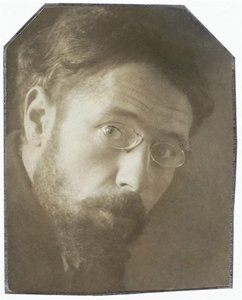
Pierre Bonnard
1867 - 1947 , France
Quick Facts
- Artistic Movement Or Style: Post-Impressionism, Intimism, Les Nabis
- Artists Or Movements Influenced By This Artist: ['Modernism']
- Artists Who Influenced This Artist:
- Paul Gauguin
- Hokusai
- Full Name: Pierre Bonnard
- Nationality: French
- Notable Artworks:
- Woman in Checkered Dress
- The Dining Room
- Bowl of Fruit
- The Almond Tree in Blossom
- Place Of Birth: Fontenay-aux-Roses, France
- Date Of Birth: 1867
- Date Of Death: 1947