

 Preview
 Send
Send Share
Share
 Details
 Guide
Guide

 Download
 Similars
 X-Ray
X-Ray Diaporama
 Stats
StatsConversation


 Read More
Purchase a high-resolution, enhanced digital image, far superior to the online preview.
Each file is meticulously prepared by our in-house specialists using advanced tools and expert manual retouching. We ensure every image has exceptional clarity, precise color accuracy, and fine detail.
The final file is delivered via email within 72 hours, optimized for immediate use in professional, editorial, and print environments. This is the same quality trusted by top-tier design studios, publishers, and galleries.
Digital Image
Download a high-resolution file for personal display, printing, and creative projects. ( Switch to Print Buy Hand Made Painting)
Included in Every Digital Image Order
Expert Digital Delivery, Guaranteed
When you choose OriginalUniqueArt.com, you're not just getting an image - you're receiving a professionally enhanced digital artwork, crafted with precision and backed by a satisfaction guarantee. Here's everything that comes with your order, automatically:

Fast Email Delivery
Your high-resolution digital image file will be emailed to you within 72 hours of ordering - ready for immediate use.

AI-Enhanced Digital File
Your artwork is professionally optimized using advanced AI tools and manual editing, ensuring maximum detail, clarity, and color accuracy.

Free Lifetime Re-Delivery
Accidentally deleted or lost your file? No worries - we'll resend it to you anytime, free of charge.

No Import Fees - Ever
Enjoy your artwork instantly with zero customs, duties, or delivery fees - digital downloads are always tax-free.

Color Accuracy Guarantee
We ensure your digital image reflects the original colors as closely as possible using professional tools and color management.

100-Day Satisfaction Guarantee
If you're not satisfied with your digital image, we'll revise it or refund 100% within 100 days - no questions asked.

100% Money-Back Guarantee
Not satisfied? Get a full refund within 100 days of receiving your digital file - no questions asked.

Bulk Order Discounts
Buy 3 images, save 10% - Buy 5, save 15% - Buy 10+, save 20%. Great for creative projects, galleries, and agencies.
A Moment Frozen in Light: Exploring Renoir’s Conversation
Pierre-Auguste Renoir's "Conversation," painted in 1879, stands as a quintessential embodiment of Impressionism—a movement that sought to capture the fleeting beauty of everyday life and the immediacy of sensory experience. More than just a portrait, it’s an invitation into a Parisian garden scene brimming with warmth, intimacy, and subtle contemplation. Located at the Nationalmuseum in Stockholm, Sweden, this oil on canvas masterpiece continues to resonate with audiences today due to its masterful execution and profound exploration of human connection.The Impressionist Vision: Light and Atmosphere
Renoir’s artistic approach aligns perfectly with the core tenets of Impressionism. Rejecting academic conventions that prioritized meticulous detail and idealized representations, he embraced loose brushstrokes—a technique pioneered by artists like Monet and Sisley—to depict light and color as they appeared to the eye at a particular moment. Observe how Renoir skillfully blends shades of emerald green and lavender to recreate the lush foliage of the rose garden, creating an atmosphere that feels palpable. The diffused sunlight filters through the blossoms, casting delicate shadows on the figures below, emphasizing the ephemeral nature of beauty itself. This deliberate disregard for precise realism wasn’t a failure; it was a triumph—a conscious decision to prioritize feeling over factual accuracy.A Study in Character: Renoir's Composition and Technique
The composition is deceptively simple yet remarkably effective. Two figures – a man and a woman – occupy the central space, engaged in what appears to be a quiet conversation. The man’s gaze is directed intently at the woman, conveying a palpable sense of interest and connection. His posture exudes relaxed confidence, while her hand rests gently on her chin—a gesture indicative of thoughtful consideration or perhaps wistful reflection. Renoir's brushwork is characterized by soft, blended strokes that contribute to the painting’s overall softness and luminosity. He employs glazing techniques – applying thin layers of translucent color over underlying pigments – to build up depth and richness without sacrificing vibrancy. The subtle gradations of tone create a harmonious interplay between light and shadow, enhancing the emotional impact of the scene.Symbolism Within Everyday Life
Beyond its technical brilliance, “Conversation” carries symbolic weight. The rose garden itself represents beauty, pleasure, and romance—themes frequently explored by Impressionist artists. However, Renoir’s focus isn't merely on depicting picturesque scenery; he delves into the complexities of human relationships. The quiet exchange between the figures speaks to the importance of genuine connection and shared experience. It suggests that true artistry lies in capturing not just what we see but also what we feel—the unspoken emotions that bind us together.Legacy and Relevance Today
“Conversation” remains remarkably relevant in contemporary art discourse. Its understated elegance, combined with its masterful depiction of light and emotion, continues to inspire artists and designers alike. Reproductions offer a beautiful way to bring Renoir’s vision into any home—a reminder that beauty can be found in the simplest moments of life and that capturing fleeting impressions is an enduring pursuit of artistic excellence. Like “The Boating Party Lunch,” it exemplifies Renoir's dedication to portraying authentic human experience, cementing his place as one of Impressionism’s foremost luminaries.Questions & Answers
Did "Conversation" stay in its artist's homeland?
No - the artwork is kept abroad. "Conversation" is held in Sweden, while Pierre-Auguste Renoir was born in France.
Who is the author of "Conversation", and in which movement?
Pierre-Auguste Renoir created "Conversation" within the Impressionism movement.
Does "Conversation" show strong light-dark contrasts?
The contrast level of "Conversation" by Pierre-Auguste Renoir is bold.
Artist Biography
A Childhood of Porcelain and Light
In the provincial streets of Limoges, France, a young boy named Pierre-Auguste Renoir began his life immersed in the delicate precision of craftsmanship. His father was a tailor, and the family eventually moved to Paris in 1845, seeking better prospects in the bustling capital. At thirteen, necessity led him into an apprenticeship as a porcelain painter, a role that demanded a keen eye for detail and a steady hand. This early work with ceramics instilled in him a lasting appreciation for color and texture. While his days were spent decorating fine china, his spirit often wandered toward the galleries of the Louvre. There, he studied the techniques of the Old Masters, absorbing the way they handled light and form.
The path from decorative art to the canvas was paved by a desire for something more expressive than mere reproduction. After leaving the porcelain factory, he sought formal training at the studio of Charles Gleyre. It was within this creative circle that he met fellow students such as Claude Monet, Alfred Sisley, and Frédéric Bazille. These friendships formed the bedrock of a new way of seeing. They shared a common goal to move away from the rigid rules of academic painting, preferring instead to capture the fleeting atmosphere of a moment. His early successes, like Lise with a Parasol in 1867, began to show this emerging interest in the natural world and the soft glow of outdoor light.
The Pulse of Parisian Life
As the years progressed, Renoir became a central figure in the movement known as Impressionism. He participated in the first exhibition of this group in 1874, displaying six paintings that challenged the traditional art establishment. His work during this period focused on the joy found in everyday social gatherings and the lively energy of the city. In works such as Dance at Le Moulin de la Galette, he used broken brushstrokes to mimic the way sunlight filters through leaves, creating a sense of movement and warmth. He did not seek grand historical narratives; rather, he looked for beauty in the simple pleasure of a summer afternoon or a group of friends enjoying a meal.
The subject matter of his canvases often celebrated the human form and the softness of skin. He had a particular talent for portraying feminine beauty, drawing inspiration from the sensual lines of Peter Paul Rubens and Jean-Antoine Watteau. His paintings, such as Luncheon of the Boating Party, captured the conviviality of life on the Seine, with figures bathed in a natural, luminous glow. This period of his life was defined by an embrace of the ephemeral, focusing on how light dances across fabric and settles upon a garden landscape.
A Shift Toward Form and Final Years
In the 1890s, Renoir’s approach to the canvas underwent a significant change. Following travels to Italy, where he studied the works of Raphael and Titian, he began to move away from the loose, blurry edges of his youth. He sought a more structured and classical method, emphasizing volume, contour, and clear lines. This transition toward a more disciplined technique is evident in his later works, such as The Great Bathers, which possess a sculptural quality. Despite the physical struggle of rheumatoid arthritis, which eventually forced him to paint with a brush attached to his hand, his dedication to his vision never wavered.
He eventually settled in Cagnes-sur-Mer, France, at the Domaine des Collettes, a place filled with olive groves and orange trees that provided fresh inspiration. In these later years, his palette remained warm, even as his style became more formal. He continued to produce portraits, landscapes, and still lifes until his death in 1919. His legacy remains tied to his ability to find divinity in the mundane, leaving behind a body of work that continues to reflect the warmth and light of the human experience.
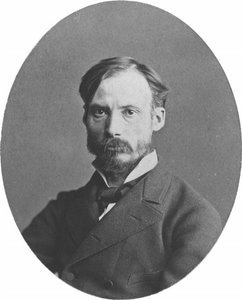
Pierre-Auguste Renoir
1841 - 1919 , France
Quick Facts
- Artistic Movement Or Style: Impressionism
- Artists Or Movements Influenced By This Artist: ['Impressionism']
- Artists Who Influenced This Artist:
- Gustave Courbet
- Édouard Manet
- Peter Paul Rubens
- Jean-Antoine Watteau
- Full Name: Pierre-Auguste Renoir
- Nationality: French
- Notable Artworks:
- Dance at Le Moulin de la Galette
- Luncheon of the Boating Party
- After the Bath
- Place Of Birth: Limoges, France
- Date Of Birth: 1841
- Date Of Death: 1919