

 Preview
 Send
Send Share
Share
 Details
 Guide
Guide

 Download
 Similars
 X-Ray
X-Ray Diaporama
 Stats
StatsTransition
 1975
1975 168.0 x 205.0 cm
 Read More
The artwork displayed on this page is protected by copyright law, which means we cannot legally create or sell an identical reproduction. This protection is enforced under international agreements such as the Berne Convention and by national laws, including those outlined by the U.S. Copyright Law - Title 17.
As a respectful and legal alternative, we offer custom, hand-painted artworks inspired by the original. Our skilled and professional artists carefully study the original's style, mood, and artistic essence to create a new, unique piece that evokes the same feeling - while remaining an original creation in its own right.
This method fully complies with copyright regulations because it does not involve copying or duplicating the protected artwork. Instead, it is a creative reinterpretation - a new painting that is influenced by the original but not identical to it.
Hand Made Oil Reproduction
Hand-painted oil on canvas in your size and frame, made to order by our artists. ( Switch to Print Switch to Digital Image)




































Pick from our preset sizes that match the artwork's original proportions.

Type the width and the height you need, to fit your frame or your wall. This is hand-painted, so for a size with a different shape the artist can paint a bit more around the picture, or cut a bit — you choose. We send you a digital mockup to approve before the painting starts. The picture shown on this page does not show the real result — only the mockup does.
After order, OriginalUniqueArt.com team will email client for instructions and provide a mockup preview
Worldwide Delivery () in 3/4 weeks instead of standard 5 weeks. (21 October). No compromise on quality.

Free Worldwide Express Shipping

High-Quality Linen Canvas

Full Shipping Insurance

Customs Tax Refund Guarantee

True Color Matching Guarantee

100-Day Return Policy (Defects Only)

100% Money-Back Guarantee

Bulk Discount Offer
 Glass option is only available in size under 110 CM

Transition
Reproduction Medium
Reproduction Size
-


Total Price
$ 300
Artistic Composition
The composition of Transition creates an interesting and dynamic visual experience. The placement of the rocks and the tennis racket on the right side of the painting, along with a chair, adds depth and complexity to the artwork. The use of bold colors and abstract shapes is reminiscent of the Cubist movement, which Kazimir Severinovich Malevich was also a part of.Influences and Style
Philip Guston's style in Transition is characterized by the use of bold colors and abstract shapes. This is similar to the style of other artists, such as Pablo Picasso, who was known for his pioneering role in co-founding the Cubist movement. The artwork can be seen as a representation of the postmodern art movement, which sought to contradict some aspects of modernism.- The use of text and collage in Transition is also reminiscent of the postmodern art movement.
- The recycling of past styles and themes in a modern-day context is another characteristic of postmodern art that can be seen in this artwork.
- For more information on postmodern art, visit https://en.wikipedia.org/wiki/Postmodern_art.
The history of painting can be found on https://en.wikipedia.org/wiki/History_of_painting, which provides an overview of the development of painting from pre-historic times to the present day. For more information on Western painting, visit https://en.wikipedia.org/wiki/Western_painting.
Questions & Answers
What is the dominant color of "Transition" by Philip Guston?
rosy brown (#c7978e) is the leading color of "Transition" by Philip Guston.
Is "Transition" by Philip Guston in the public domain?
Regarding copyright, "Transition" is still protected by copyright.
How can I get a digital file of "Transition" by Philip Guston?
"Transition" is available as a high-resolution digital image download, purchased directly on its Digital Image page.
Artist Biography
Philip Guston: A Life in Art
- Born: Montreal, Canada (June 27, 1913)
- Died: June 7, 1980
Philip Guston was a renowned Canadian-American painter and printmaker whose career spanned over four decades. His artistic journey is marked by significant shifts in style and subject matter, blending elements of abstract expressionism and representational art to explore complex themes of racism, antisemitism, fascism, and American identity.
Early Life and Influences
Guston's early life was profoundly impacted by tragedy. His father, a Ukrainian Jewish immigrant, took his own life in 1923. This event deeply affected Guston’s artistic development. He began drawing at a young age and attended Los Angeles Manual Arts High School, where he started painting in 1927. Supported by his mother, he often created art in a small closet with a hanging bulb.
- Education: Studied under Frederick John de St. Vrain Schwankovsky, who introduced him to European modern art, Eastern philosophy, Theosophy, and mystic literature.
- Early Connections: Met Jackson Pollock, with whom he published a paper opposing the high school's policies.
Artistic Evolution: From Abstraction to Figurative Expression
Guston’s artistic career can be broadly divided into two distinct phases. Initially, his work was figurative and representational, showcasing early influences from Renaissance masters like Piero della Francesca. He later embraced abstraction, becoming a prominent figure in the New York School alongside artists like Jackson Pollock and Willem de Kooning.
- Abstract Expressionism: By the 1950s, Guston achieved recognition for his abstract expressionist paintings, characterized by dynamic compositions and gestural brushwork.
- Shift to Figuration: In the mid-1960s, he dramatically renounced abstraction, pioneering a modified form of representational art known as neo-expressionism. This shift was accompanied by a critical reevaluation of his earlier work and a desire to engage with more direct social and political commentary.
The Late Period: Satire and Social Commentary
Guston’s later works are perhaps the most controversial and impactful of his career. These paintings often featured dark, satirical elements, including drawings of Richard Nixon and hooded Klansmen. He explored themes of racism, antisemitism, and American identity with a raw honesty that challenged conventional artistic norms.
- Recurring Motifs: His late period is characterized by a limited palette and cartoonish renderings of various personal situations, symbols, and objects—often depicting figures with exaggerated features and unsettling expressions.
- Influences & Themes: Influenced by his experiences with racism and antisemitism, as well as his interest in Eastern philosophy and mystic literature, Guston’s work became a powerful commentary on the darker aspects of American society.
Legacy and Significance
Philip Guston's legacy continues to inspire artists and art enthusiasts alike. His unique perspective and artistic style have left an indelible mark on the world of art.
- Key Figure: A prominent figure in the abstract expressionist movement, Guston’s work challenged established conventions and paved the way for new forms of artistic expression.
- Museum Presence: His works are featured in prestigious museums worldwide, including the Whitney Museum of American Art and the Tate Modern.
- Ongoing Relevance: The postponement of his international retrospective in 2020 underscored the ongoing relevance of Guston’s work in addressing issues of social justice and racial equality.
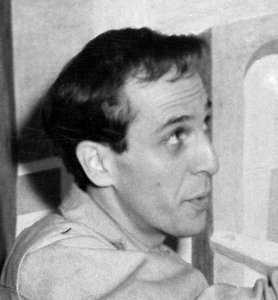
Philip Guston
1913 - 1980 , Canada
Quick Facts
- Full Name: Philip Guston
- Nationality: Canadian-American
- Date Of Birth: 1913
- Date Of Death: 1980
- Place Of Birth: Montreal, Canada
- Notable Artworks: ['To Fellini']
- Artistic Movement Or Style:
- Abstract Expressionism
- Neo-Expressionism
- Artists Who Influenced This Artist: ['Piero della Francesca']
- Artists Or Movements Influenced By This Artist: ['Eddie Martinez']


