

 Preview
 Send
Send Share
Share
 Details
 Guide
Guide

 Download
 Similars
 X-Ray
X-Ray Diaporama
 Stats
StatsThe Palette
 Abstract Expressionism
 1975
1975 132.0 x 202.0 cm
 Read More
Purchase a high-resolution, enhanced digital image, far superior to the online preview.
Each file is meticulously prepared by our in-house specialists using advanced tools and expert manual retouching. We ensure every image has exceptional clarity, precise color accuracy, and fine detail.
The final file is delivered via email within 72 hours, optimized for immediate use in professional, editorial, and print environments. This is the same quality trusted by top-tier design studios, publishers, and galleries.
Digital Image
Download a high-resolution file for personal display, printing, and creative projects. ( Switch to Print Buy Hand Made Painting)
Included in Every Digital Image Order
Expert Digital Delivery, Guaranteed
When you choose OriginalUniqueArt.com, you're not just getting an image - you're receiving a professionally enhanced digital artwork, crafted with precision and backed by a satisfaction guarantee. Here's everything that comes with your order, automatically:

Fast Email Delivery
Your high-resolution digital image file will be emailed to you within 72 hours of ordering - ready for immediate use.

AI-Enhanced Digital File
Your artwork is professionally optimized using advanced AI tools and manual editing, ensuring maximum detail, clarity, and color accuracy.

Free Lifetime Re-Delivery
Accidentally deleted or lost your file? No worries - we'll resend it to you anytime, free of charge.

No Import Fees - Ever
Enjoy your artwork instantly with zero customs, duties, or delivery fees - digital downloads are always tax-free.

Color Accuracy Guarantee
We ensure your digital image reflects the original colors as closely as possible using professional tools and color management.

100-Day Satisfaction Guarantee
If you're not satisfied with your digital image, we'll revise it or refund 100% within 100 days - no questions asked.

100% Money-Back Guarantee
Not satisfied? Get a full refund within 100 days of receiving your digital file - no questions asked.

Bulk Order Discounts
Buy 3 images, save 10% - Buy 5, save 15% - Buy 10+, save 20%. Great for creative projects, galleries, and agencies.
Philip Guston's "The Palette": A Chaotic Exploration of Creativity
Philip Guston’s “The Palette,” painted in 1975, is a monumental work that offers a raw and unsettling glimpse into the artist's creative process. This large-scale canvas (132 x 202 cm) transcends traditional representation, plunging viewers into a dreamlike studio environment brimming with color, form, and implied narrative. It’s a piece that resonates deeply within the realm of Abstract Expressionism while hinting at later figurative explorations.
Subject Matter & Composition: A Disordered Workspace
The painting depicts what appears to be an artist's workspace—a chaotic jumble of tools, materials, and structures. The foreground is dominated by a tilted table covered in paint splatters, suggesting the immediacy and physicality of artistic creation. Behind this, a collection of wooden easels, frames, and discarded objects creates a sense of disarray. A sign reading "Musa" (likely referring to Guston's wife) adds a personal touch amidst the clutter. The composition lacks clear perspective or a focal point, contributing to a feeling of disorientation and unease. The horizontal format emphasizes the breadth of this imagined space.
Style & Technique: Abstract Expressionism with Figurative Undertones
“The Palette” firmly resides within the realm of Abstract Expressionism, characterized by its emphasis on spontaneous gesture and subjective emotion. Guston’s technique involves loose brushwork, layering of colors, and impasto application – a thick build-up of paint that creates texture and depth. Lines are gestural rather than precise, further enhancing the feeling of immediacy. However, unlike some purely abstract works, "The Palette" contains recognizable forms—the easels, frames, and even the sign—suggesting a transition towards Guston’s later figurative style. The colors – predominantly pinks, reds, and whites with accents of black, green, and yellow – are applied in broad strokes and washes, creating fluidity and movement.
Symbolism & Emotional Impact: Anxiety, Inspiration, and Artistic Struggle
The chaotic arrangement and muted color palette evoke a complex range of emotions. The disarray can be interpreted as representing the anxieties and struggles inherent in the creative process. The presence of "Musa" suggests inspiration, but its placement within this unsettling context implies that even sources of creativity can exist within a state of confusion or turmoil. The overall effect is introspective and unsettling, prompting viewers to contemplate the psychological landscape of an artist at work. Guston’s use of color contributes significantly to this emotional impact; the dominant pinks and reds create a sense of intensity and perhaps even unease, while the touches of black add weight and darkness.
Historical Context & Philip Guston's Artistic Journey
“The Palette” was created in 1975, during a pivotal period in Guston’s career. Having initially gained recognition as an Abstract Expressionist, he famously abandoned abstraction in the late 1960s to pursue a raw and often satirical figurative style that explored themes of racism, identity, and political satire. While "The Palette" predates his most overtly figurative works, it foreshadows this shift by incorporating recognizable objects within an abstract framework. Born in Montreal, Canada (1913) and later becoming a prominent figure in the New York School, Guston’s artistic journey was marked by tragedy and constant evolution, making him one of the most important American artists of the 20th century.
Questions & Answers
Do the colors of "The Palette" appear strong or soft?
The colors in "The Palette" by Philip Guston have a balanced intensity.
Where can I find artworks similar to "The Palette" by Philip Guston?
The Similars page of "The Palette" by Philip Guston presents related artworks.
What color leads the composition of "The Palette" by Philip Guston?
The color that stands out most in "The Palette" is espresso (#6a2c33). The dominant color is useful when matching an artwork to an interior.
Artist Biography
Philip Guston: A Life in Art
- Born: Montreal, Canada (June 27, 1913)
- Died: June 7, 1980
Philip Guston was a renowned Canadian-American painter and printmaker whose career spanned over four decades. His artistic journey is marked by significant shifts in style and subject matter, blending elements of abstract expressionism and representational art to explore complex themes of racism, antisemitism, fascism, and American identity.
Early Life and Influences
Guston's early life was profoundly impacted by tragedy. His father, a Ukrainian Jewish immigrant, took his own life in 1923. This event deeply affected Guston’s artistic development. He began drawing at a young age and attended Los Angeles Manual Arts High School, where he started painting in 1927. Supported by his mother, he often created art in a small closet with a hanging bulb.
- Education: Studied under Frederick John de St. Vrain Schwankovsky, who introduced him to European modern art, Eastern philosophy, Theosophy, and mystic literature.
- Early Connections: Met Jackson Pollock, with whom he published a paper opposing the high school's policies.
Artistic Evolution: From Abstraction to Figurative Expression
Guston’s artistic career can be broadly divided into two distinct phases. Initially, his work was figurative and representational, showcasing early influences from Renaissance masters like Piero della Francesca. He later embraced abstraction, becoming a prominent figure in the New York School alongside artists like Jackson Pollock and Willem de Kooning.
- Abstract Expressionism: By the 1950s, Guston achieved recognition for his abstract expressionist paintings, characterized by dynamic compositions and gestural brushwork.
- Shift to Figuration: In the mid-1960s, he dramatically renounced abstraction, pioneering a modified form of representational art known as neo-expressionism. This shift was accompanied by a critical reevaluation of his earlier work and a desire to engage with more direct social and political commentary.
The Late Period: Satire and Social Commentary
Guston’s later works are perhaps the most controversial and impactful of his career. These paintings often featured dark, satirical elements, including drawings of Richard Nixon and hooded Klansmen. He explored themes of racism, antisemitism, and American identity with a raw honesty that challenged conventional artistic norms.
- Recurring Motifs: His late period is characterized by a limited palette and cartoonish renderings of various personal situations, symbols, and objects—often depicting figures with exaggerated features and unsettling expressions.
- Influences & Themes: Influenced by his experiences with racism and antisemitism, as well as his interest in Eastern philosophy and mystic literature, Guston’s work became a powerful commentary on the darker aspects of American society.
Legacy and Significance
Philip Guston's legacy continues to inspire artists and art enthusiasts alike. His unique perspective and artistic style have left an indelible mark on the world of art.
- Key Figure: A prominent figure in the abstract expressionist movement, Guston’s work challenged established conventions and paved the way for new forms of artistic expression.
- Museum Presence: His works are featured in prestigious museums worldwide, including the Whitney Museum of American Art and the Tate Modern.
- Ongoing Relevance: The postponement of his international retrospective in 2020 underscored the ongoing relevance of Guston’s work in addressing issues of social justice and racial equality.
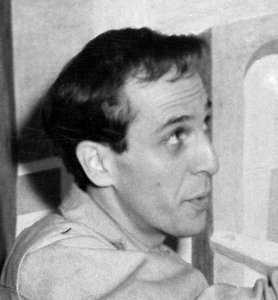
Philip Guston
1913 - 1980 , Canada
Quick Facts
- Full Name: Philip Guston
- Nationality: Canadian-American
- Date Of Birth: 1913
- Date Of Death: 1980
- Place Of Birth: Montreal, Canada
- Notable Artworks: ['To Fellini']
- Artistic Movement Or Style:
- Abstract Expressionism
- Neo-Expressionism
- Artists Who Influenced This Artist: ['Piero della Francesca']
- Artists Or Movements Influenced By This Artist: ['Eddie Martinez']