Abstract Expressionism
Clock (Philip Guston)
Philip Guston (1913–1980) made Clock. It belongs to the Abstract Expressionism movement.

 Preview

 Hand Made Oil Painting
 Send
 Share
 Fact sheet


 Download
 Similars
 X-Ray
 Diaporama
 Q&A

 Stats
Clock, in brief
- Title
- Clock
- Artist
- Philip Guston (1913–1980)
- Artist born in
- Montreal, Canada
- Movement
- Abstract Expressionism
High-resolution images of Clock
Protected by copyright: these files are for personal reference, not a licence to republish.
Philip Guston, Clock.
Questions on Clock, answered
Is "Clock" free of copyright?
"Clock" by Philip Guston is still protected by copyright. This status governs how the image of the work may be reproduced.
Which artist is "Clock" attributed to?
The artist behind "Clock" is Philip Guston. The work is catalogued under Philip Guston's name.
What art movement does "Clock" by Philip Guston belong to?
"Clock" by Philip Guston belongs to the Abstract Expressionism movement. This movement provides the stylistic context of the work.
What explains the copyright situation of "Clock" by Philip Guston?
"Clock" by Philip Guston is still protected by copyright. Copyright duration runs from the artist's death, which occurred in 1980.
About the artist, Philip Guston
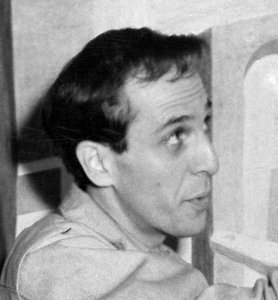
1913–1980, Canada
Philip Guston
Philip Guston: A Life in Art Born: Montreal, Canada (June 27, 1913) Died: June 7, 1980 Philip Guston was a renowned Canadian-American painter and printmaker whose career spanned over four decades. His artistic journey is marked by significant shifts in style and subject matter, blending elements of abstract expressionism and representational art to explore complex themes of racism, antisemitism, fascism, and American identity. Early Life and Influences Guston's early life was profoundly impacted by tragedy. His father, a Ukrainian Jewish immigrant, took his own life in 1923.
Also by Philip Guston
 The Pit1976
 The Room1970
 Early Mail Service and Construction of Railroads (mural study, Commerce, Georgia Post Office)1938
 Painter III1960
Essays around Clock
 Beyond Representation: Exploring Gesturality, Emotion, and Philosophical Underpinnings of Contemporary Abstract PaintingExplore the evolution of abstract painting with OriginalUniqueArt. Discover key artists, historical context & investment insights. Find mus…
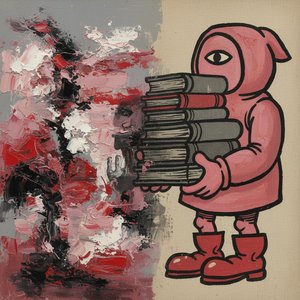 Philip Guston: Reassessing Abstraction, Figuration & the Weight of RepresentationExplore the complex evolution of Philip Guston's art – from abstraction to raw figuration. Discover his powerful social commentary, lasting…
 Beyond the Canvas: A Definitive Guide to Abstract Expressionism, Action Painting, and Color Field MastersExplore the profound history of Abstract Expressionism, from the visceral energy of Action Painting to the serene depth of Color Field mast…