Switch to Print
 Read More







































 For artworks or reproductions larger than 105 cm (approximately 41 inches) on any side, the frame will be shipped as a kit, disassembled. This method ensures safe delivery and prevents damage during transport.


A Reflection of Faith and Craftsmanship: Examining Peter Parler’s Self-Portrait
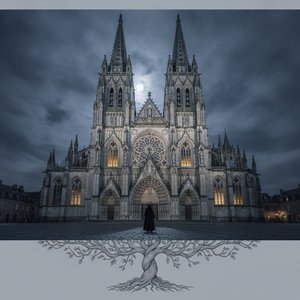
Peter Cavallini, born around 1240 in Rome and tragically dying circa 1330 in the same city, stands as a pivotal figure bridging the Gothic and Early Renaissance periods in Italian art. While his life was relatively short, marked by both artistic triumph and personal hardship – notably a severe eye injury sustained during his studies of solar eclipses – Cavallini’s impact on subsequent generations of artists is undeniable. He wasn't merely a painter; he was a sculptor, architect, and a key contributor to the evolving visual language of his time, particularly through his masterful application of Roman naturalism within a distinctly Gothic framework. His legacy resides in monumental frescoes, intricate mosaics, and sculpted effigies that continue to captivate viewers with their emotional depth and technical precision. The sculpture itself, attributed to Peter Parler—a celebrated architect and sculptor of the Late Medieval era—offers a fascinating glimpse into both artistic ambition and personal introspection. Executed around 1379, this remarkable piece portrays Parler himself in a contemplative pose within what appears to be St. Vitus’ Cathedral in Prague. The artist's deliberate choice of medium – stone – speaks volumes about the prevailing aesthetic sensibilities of the time; Roman naturalism, championed by Cavallini and his contemporaries, sought to emulate the idealized beauty of classical sculpture while retaining the solemn grandeur characteristic of Gothic architecture.- Style & Technique: Parler’s approach exemplifies the meticulous craftsmanship demanded by monumental commissions. The sculptor skillfully captures the human form with remarkable accuracy, utilizing subtle shading and textural detail to convey a sense of serenity and inner contemplation. Notice the careful rendering of the beard and mustache—a hallmark of portraiture during this period—and the drapery folds that drape elegantly over Parler’s shoulders.
- Historical Context: St. Vitus Cathedral, Prague, served as a focal point for religious devotion and artistic patronage during Parler's lifetime. The cathedral’s weathered stone walls provide an evocative backdrop, hinting at the passage of time and reflecting the enduring influence of Gothic architectural principles.
- Symbolism: The hooded cloak symbolizes humility and piety—values deeply ingrained in medieval spirituality. Closed eyes suggest introspection and a desire for spiritual contemplation, mirroring Parler’s own artistic pursuits.
Questions & Answers
Is "Self-Portrait" by Peter Parler kept in the artist's home country?
No - the artwork is kept abroad. The birth country of Peter Parler is Germany, and the museum holding the original of "Self-Portrait" is in Czechia.
How can I view "Self-Portrait" by Peter Parler as a slideshow?
"Self-Portrait" by Peter Parler can be viewed as a slideshow on the artwork's Diaporama page.
How do I download the image of "Self-Portrait" by Peter Parler?
"Self-Portrait" by Peter Parler can be downloaded from the artwork's Download page, as a high-resolution digital image download.
More about this painting
 Preview
 Send
Send Share
Share
 Details
 Guide
Guide

 Download
 Similars
 X-Ray
X-Ray Diaporama
 Q&A
Q&A Stats
Stats