Switch to Print
 Read More







































 For artworks or reproductions larger than 105 cm (approximately 41 inches) on any side, the frame will be shipped as a kit, disassembled. This method ensures safe delivery and prevents damage during transport.


Peder Balke’s Mount Snøhetta: A Vision of Norwegian Sublime
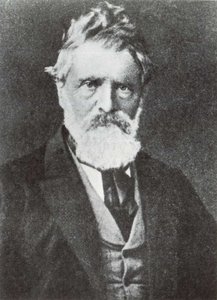
Peder Andersen Balke (1804–1887) stands as a singular figure within the landscape tradition of 19th-century Norway, embodying a Romantic spirit that transcended mere observation to capture profound emotional resonance. His life’s journey—marked by hardship and unwavering artistic dedication—established him as an artist deeply attuned to the rugged beauty of his homeland. Recognizing Balke's innate talent early on, his community rallied support for his education, demonstrating a belief in creativity even amidst modest circumstances. This formative encouragement propelled him toward formal training under influential masters like Heinrich August Grosch and Jacob Munch, broadening his artistic horizons beyond Hegøy’s rural confines. Further studies at the Royal Swedish Academy of Fine Arts in Stockholm honed his skills under Carl Johan Fahlcrantz, culminating in a refined understanding of artistic principles. Balke's oeuvre is instantly recognizable for its dramatic lighting—often bathed in ethereal moonlight or shrouded in atmospheric darkness—a stylistic hallmark that distinguishes him from more conventional Romantic landscapes. He wasn’t simply replicating the visual world; instead, he sought to convey its emotional essence, mirroring the sublime grandeur of nature itself. This fascination with light—particularly its fleeting effects—became a cornerstone of his artistic vision. His distinctive brushwork, characterized by textured strokes and an unconventional use of color, created a dreamlike quality that elevates his paintings beyond mere depictions into expressions of feeling. He meticulously rendered scenes imbued with mood and atmosphere, reflecting the Romantic preoccupation with subjective experience. The painting depicts Mount Snøhetta in Dovre, Norway—a formidable peak dominating the upper half of the frame—and is executed in watercolor on paper. The artist’s technique leverages the transparency inherent in watercolor washes to build depth and tonal variations, layering colors subtly to achieve a luminous effect. Loose brushstrokes contribute to an atmospheric perspective that emphasizes the vastness of the landscape and conveys a sense of solitude. Two reindeer inhabit the middle ground, serving as scale markers and symbolizing harmony with the natural world—a recurring motif in Balke’s work reflecting his humanist convictions. The composition prioritizes balance, guiding the viewer's eye upward toward the mountain while grounding it with the darker foreground field. The color palette is predominantly cool and muted, dominated by shades of blue, grey, white, and brown—colors that evoke a feeling of melancholy and contemplation. Subtle warmth in the foreground hints at an underlying energy, countering the dominant coolness of the sky and mountains. The painting embodies Romantic ideals, prioritizing emotional response to nature over precise representation. It’s a testament to Balke's ability to transform observation into profound artistic expression—a legacy that continues to inspire admiration for its evocative beauty and symbolic depth.- Artist: Peder Andersen Balke
- Born Year: 1804
- Death Year: 1887
- Birth City: Hegøy
- Birth Country: Norway
Historical Context & Romantic Ideals
Balke’s artistic endeavors coincided with the burgeoning Romantic movement, which championed emotion and imagination as pathways to understanding the human condition. Artists like Balke rejected Neoclassical formalism in favor of expressive brushwork and dramatic lighting—techniques designed to elicit a visceral response from the viewer. His paintings captured the spirit of an era grappling with questions of faith, morality, and the relationship between humanity and nature—themes central to Romantic thought. Mount Snøhetta serves as a visual embodiment of this sublime landscape tradition, reflecting the Romantic fascination with awe-inspiring vistas and the power of untamed wilderness.- Style: Romantic
- Technique: Watercolor
- Medium: Watercolor on Paper
Symbolism & Emotional Impact
The painting’s muted color palette and diffused lighting contribute to a mood of quiet contemplation—inviting viewers to immerse themselves in the grandeur of the Norwegian landscape. The inclusion of reindeer symbolizes harmony with nature, reflecting Balke's humanist convictions and aligning with Romantic ideals that celebrated the beauty and spiritual significance of the natural world. Mount Snøhetta itself represents the sublime—a concept championed by Edmund Burke and Johann Wolfgang von Goethe—suggesting an experience of awe and terror mingled with reverence for the immensity of creation.Questions & Answers
How does "Mount Snøhetta, Dovre" by Peder Balke connect Romantic Landscape Painting to the artist's home country?
The Romantic Landscape Painting work "Mount Snøhetta, Dovre" was made by an artist born in Norway.
Who created "Mount Snøhetta, Dovre" and what style is it in?
"Mount Snøhetta, Dovre" was created by Peder Balke in the Romantic Landscape Painting style. Artist and movement identify the work's tradition.
What is the emotional tone of "Mount Snøhetta, Dovre" by Peder Balke?
"Mount Snøhetta, Dovre" is associated with a romantic feeling. The emotional tone describes the impression the work gives.
More about this painting
 Preview
 Send
Send Share
Share
 Details
 Guide
Guide

 Download
 Similars
 X-Ray
X-Ray Diaporama
 Q&A
Q&A Stats
Stats