Text size

() ·

A print made for you, with care

The Mountain Stream

Giclée / Art Print

Museum-quality giclée or canvas print with fast production and flexible finish options. ( Buy Hand Made Painting Switch to Digital Image)

Collectible Description

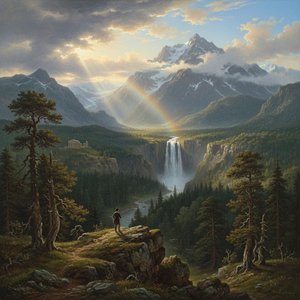
This moody Romantic landscape by Paul Weber captures a tranquil forest stream. Explore this sublime masterpiece today.

Artist Biography

Explore the landscapes of Paul Weber, a Hudson River School painter known for his evocative mountain scenes & portraits. Discover his German heritage & influence.

from ·

Chapter 1

On which medium should it be printed?

Canvas is printed with giclée inks and can be stretched or framed like a painting; paper comes flat, or framed behind glass.

Chapter 2

How large should it be?

Slide to change the size; the picture on the left shows the frame at its real width. The proportions of the original are kept.

Standard
custom
CM
INCH

Pick from our preset sizes that match the artwork's original proportions.

width
height

Type the width and the height you need, to fit your frame or your wall. A print can only be cut, never made bigger than the picture, so a size with a different shape loses a part of the image. We send you a digital mockup to approve before we print anything. The picture shown on this page does not show the real cut — only the mockup does.

Chapter 3

How should it arrive?

Choose the edges of the stretched canvas

Choose your frame

Corner sample of the WhiteWrap canvas edge finish, stretched on solid wood bars
White $1
Corner sample of the BlurSideWrap canvas edge finish, stretched on solid wood bars
Blurside $1
Corner sample of the ExtendedWrap canvas edge finish, stretched on solid wood bars
Extended $1
Corner sample of the P118B picture frame: moulded polystyrene, 5 cm wide and 3 cm thick
P118B $10
Corner sample of the P118H picture frame: moulded polystyrene, 5 cm wide and 3 cm thick
P118H $10
Corner sample of the P118W picture frame: moulded polystyrene, 5 cm wide and 3 cm thick
P118W $10
Corner sample of the P438Z picture frame: moulded polystyrene, 5.5 cm wide and 3.5 cm thick
P438Z $10
Corner sample of the P508JH picture frame: moulded polystyrene, 7 cm wide and 3.5 cm thick
P508JH $12
Corner sample of the P508YH picture frame: moulded polystyrene, 7 cm wide and 3.5 cm thick
P508YH $12
Corner sample of the P805H picture frame: moulded polystyrene, 5 cm wide and 3.5 cm thick
P805H $10
Corner sample of the P805Z picture frame: moulded polystyrene, 5 cm wide and 3.5 cm thick
P805Z $10
Corner sample of the P919BZ picture frame: moulded polystyrene, 7 cm wide and 3.5 cm thick
P919BZ $10
Corner sample of the P919G picture frame: moulded polystyrene, 7 cm wide and 3.5 cm thick
P919G $10
Corner sample of the P919XJ picture frame: moulded polystyrene, 7 cm wide and 3.5 cm thick
P919XJ $10
Corner sample of the P959ZH picture frame: moulded polystyrene, 5 cm wide and 3 cm thick
P959ZH $10
Corner sample of the P968JZ picture frame: moulded polystyrene, 6 cm wide and 4 cm thick
P968JZ $12
Corner sample of the W106C picture frame: solid wood, 5 cm wide and 3 cm thick
W106C $8
Corner sample of the W218G picture frame: solid wood, 5 cm wide and 3 cm thick
W218G $10
Corner sample of the W218JH picture frame: solid wood, 5 cm wide and 3 cm thick
W218JH $8
Corner sample of the W218Y picture frame: solid wood, 5 cm wide and 3 cm thick
W218Y $10
Corner sample of the W307PJ picture frame: solid wood, 6 cm wide and 3 cm thick
W307PJ $10
Corner sample of the W316G picture frame: solid wood, 6 cm wide and 3 cm thick
W316G $10
Corner sample of the W316PJ picture frame: solid wood, 6 cm wide and 3 cm thick
W316PJ $8
Corner sample of the W316Y picture frame: solid wood, 6 cm wide and 3 cm thick
W316Y $10
Corner sample of the W398PJ picture frame: solid wood, 5 cm wide and 3 cm thick
W398PJ $8
Corner sample of the W4111J picture frame: solid wood, 6.5 cm wide and 3.5 cm thick
W4111J $10
Corner sample of the W500HY picture frame: solid wood, 7 cm wide and 5 cm thick
W500HY $15
Corner sample of the W500JH picture frame: solid wood, 7 cm wide and 5 cm thick
W500JH $15
Corner sample of the W692G picture frame: solid wood, 8 cm wide and 4 cm thick
W692G $12
Corner sample of the W849H picture frame: solid wood, 5 cm wide and 3 cm thick
W849H $8
Corner sample of the W940BG picture frame: solid wood, 7.5 cm wide and 4.5 cm thick
W940BG $15
Corner sample of the W953PJ picture frame: solid wood, 6 cm wide and 3.5 cm thick
W953PJ $8
Corner sample of the H24-GOLD picture frame: carved wood with gesso, 10 cm wide and 6 cm thick
H24-GOLD $30
Corner sample of the H24-SILVER picture frame: carved wood with gesso, 10 cm wide and 6 cm thick
H24-SILVER $30
Corner sample of the H36-GOLD picture frame: carved wood with gesso, 15 cm wide and 6.5 cm thick
H36-GOLD $45
Corner sample of the H36-SILVER picture frame: carved wood with gesso, 15 cm wide and 6.5 cm thick
H36-SILVER $45
Frame preview
Framed

Moulding: . Overall size with the frame: .

Chapter 4

Worldwide Delivery () in 2 weeks instead of standard 4/5 weeks. (22 November)

The finishing touches

A nameplate, as in a museum?

Engraved Bronze Plaque Details

This elegant plaque features the artist's name and the title of the artwork, finely engraved for a timeless presentation.

It is made from bronze with a refined, elegant finish. The text is precisely laser-engraved for a sharp and permanent result. Measuring 9x2 cm, the plaque is compact yet easy to read. It's built to be durable and scratch-resistant, offering a professional, museum-quality look. Mounting is simple thanks to the included adhesive backing.

Transparent Acrylic Plaque Details

The plaque includes essential engraved details such as the artist's name, the title of the artwork, the date it was created, the type of media used-like oil on canvas or watercolor-a brief description of the piece, and a QR code that links to the complete artwork information.

It is crafted from clear acrylic, offering a sleek, modern appearance. The text is UV-engraved in black to ensure strong visual contrast. With a size of 10x15 cm, it ensures optimal readability. It comes equipped with two metal hooks for secure wall mounting. The plaque is designed to be weather-resistant, making it suitable for various environments, and it includes interactive features that work seamlessly with smartphone scanning.

Black Acrylic Plaque Details

This elegant plaque includes engraved information such as the artist's name, the title of the artwork, the date it was created, the type of media used (like oil on canvas or watercolor), a short description of the artwork, and a QR code for quick access to more information.

The plaque itself is made from refined black acrylic with a premium finish. The text is laser-engraved in white for high contrast and readability. Its size is 10x15 cm, designed to be easy to read. It comes with two metal hooks for professional mounting. The design is sleek and fits any interior style. It is also weather-resistant and durable, with built-in digital integration for mobile compatibility.

A protective varnish?

When do you need it?

Chapter 5

Your print, as you ordered it

The Mountain Stream

Reproduction Medium

Reproduction Size

-

Reproduction Frame

-

-

For artworks or reproductions larger than 105 cm (approximately 41 inches) on any side, the frame will be shipped as a kit, disassembled. This method ensures safe delivery and prevents damage during transport.

Professional assembly required - this is not a DIY product.
The kit must be assembled and the canvas stretched by an experienced professional framer, using wood glue (not supplied), a canvas stretching plier and clamps to hold the bars square while the glue dries. Incorrect assembly or uneven canvas tension can permanently damage the artwork and is not covered by our warranty.

  • All solid wood bars are included, precisely cut to size.

  • Assembled with the screws provided, plus wood glue for the corner joints, which is not supplied and must be sourced by your framer.

  • Professional tools are required and not included: a canvas stretching plier (tensioner) and clamps to hold the bars square while the glue dries.

Important:
The corner joints require wood glue, the bars must be held with clamps until the glue is fully dry, and tightening the canvas on the assembled frame requires a canvas stretching plier. None of these are included in the kit. Please arrange an experienced professional framer before ordering this size.

Nameplate

-

-

Protective Varnish

Glossy Varnish (enhances colors, protects against light/moisture)

-

Urgent

Worldwide Delivery () in 2 weeks instead of standard 4/5 weeks. (22 November)

-

Express Shipping

Worldwide Delivery () in 4/5 weeks. (29 November).

Included

Total Price

$ 81

Total Price $ 81

Glass option is only available in size under 110 CM

Included with every order

  • Free Worldwide Express Shipping
  • High-Quality Linen Canvas
  • Full Shipping Insurance
  • Customs Tax Refund Guarantee
  • True Color Matching Guarantee
  • 100-Day Return Policy (Defects Only)
  • 100% Money-Back Guarantee
  • Bulk Discount Offer

Identification of The Mountain Stream

In this work, The Mountain Stream, Paul Weber presents a secluded woodland interior. Painted about 1850, the scene captures a dense, shadowy forest where a stream winds through the landscape. The composition focuses on the quietude of the natural world, drawing the eye into the depths of the shaded greenery.

Within this landscape, Weber includes a subtle vignette of a solitary hunter. The figure is at rest, accompanied by his dog and his gun, tucked away in the quietude of the trees. This small detail adds a sense of scale and human presence to the expansive, primeval setting of the forest.

Composition and Visual Elements

The composition is defined by a strong sense of verticality, with large trees dominating the frame and establishing a rhythmic structure throughout the woodland interior. These towering elements create a sense of enclosure, framing a secluded space that feels both intimate and vast. A stream winds through the center of the scene, acting as a leading line that draws the eye steadily into the depths of the forest. This movement is grounded by a foreground composed of heavy rocks and moss, which provides a tactile sense of depth and stability to the viewer.

The lighting is notably dramatic, utilizing a chiaroscuro effect to manipulate the atmosphere. Pools of light break through the canopy to illuminate specific patches of foliage and stone, while much of the surrounding landscape remains held in deep shadow. This interplay of light and dark creates a quiet, mysterious mood. The color palette is predominantly earthy and muted, relying on subtle tones to maintain the somber, tranquil atmosphere of the forest interior.

Technique and Artistic Style

Executed in oil on canvas, this work leans toward the principles of Romanticism. The artist moves away from strict realism to prioritize a subjective, emotional experience of the natural world. There is a palpable sense of the sublime here, where the scale and atmosphere of the forest suggest a quiet, introspective power. The lighting is handled with a dramatic chiaroscuro effect, utilizing deep shadows and sudden pools of light to define the terrain.

The surface of the painting is characterized by a physical presence. Texture is achieved through deliberate, visible brushstrokes that create a rough, impasto-like quality, particularly across the foliage and the rugged bark of the trees. This tactile approach gives the organic elements a sense of weight and immediacy. Rather than smooth transitions, the paint is applied to emphasize the varied textures of moss, stone, and flowing water.

Questions & Answers

Is "The Mountain Stream" by Paul Weber a light or a dark artwork?

"The Mountain Stream" is deep_shadow overall, and its luminance is dark.

Who created "The Mountain Stream" and what style is it in?

"The Mountain Stream" was created by Paul Weber in the Hudson River School style. Artist and movement identify the work's tradition.

Is there a factsheet about "The Mountain Stream" by Paul Weber for students?

The Guide page of "The Mountain Stream" by Paul Weber offers a printable two-sheet factsheet: the artwork with its identity table, a decade band placing it in the artist's lifetime, other works by the artist, the measured color palette, and ready-to-copy citations in four styles.

More about this painting

Preview AR preview Buy Hand Made Painting Switch to Digital Image Send
Details Guide Add to favorites Download Similars X-Ray Diaporama Q&A Stats

In numbers

  • 1850the year it was painted
  • 29frames to choose from
  • standard sizes, in its own proportions
  • 5weeks to paint and deliver it
Paul Weber

Paul Weber

1823 - 1916, Germany

Quick facts about Paul Weber

  • Full Name: Gottlieb Daniel Paul Weber
  • Nationality: German
  • Date Of Birth: 1823
  • Date Of Death: 1916
  • Place Of Birth: Darmstadt, Germany
  • Notable Artworks:
    • Landscape: Evening
    • Mountain Landscape with River
  • Artistic Movement Or Style: Hudson River School
  • Artists Who Influenced This Artist: ['Josephus Laurentius Dyckmans']
  • Artists Or Movements Influenced By This Artist: ['Hudson River School']

Artist Biography

Early Life and Artistic Training

Gottlieb Daniel Paul Weber (19 January 1823 – 12 October 1916) was born in Darmstadt, Germany—the son of Johann Daniel Weber, a composer who served as court musician to the Duke of Hesse. From an early age, Weber’s father instilled in him a love for music and artistic appreciation, shaping his formative years profoundly. He pursued his education at the Städelschen Kunstinstitut in Frankfurt before relocating to Munich in 1844 where he enrolled at the Academy—a pivotal step in establishing his lifelong artistic trajectory. During his studies, Weber was mentored by Josephus Laurentius Dyckmans, whose teachings solidified his understanding of landscape painting and its expressive potential. Notably, Weber traveled alongside Prince Regent Luitpold of Bavaria on a journey to the Eastern Mediterranean, documenting scenes from Constantinople (Istanbul), Greece, and Sicily—experiences that would fuel his artistic vision for years to come.

  • Weber’s father's musical influence fostered an appreciation for beauty and harmony.
  • His studies at Frankfurt and Munich provided foundational knowledge in art history and technique.
  • The mentorship of Dyckmans honed his skills in capturing the essence of natural landscapes.

Career Highlights: Philadelphia and Landscape Painting

Weber’s artistic ambitions led him to emigrate to the United States in 1848—a bold move that marked the beginning of a prolific career. He settled in Philadelphia, where he quickly gained recognition as a landscape painter, establishing himself as a prominent figure within the burgeoning Hudson River School movement.
  • Weber’s arrival in Philadelphia coincided with the rise of American Impressionism.
  • He became a frequent exhibitor at the Pennsylvania Academy of Fine Arts (PAFA), showcasing his landscapes and portraits to critical acclaim.
  • His collaborations with fellow artists like William Trost Richards and Edward Moran cemented his reputation as a leader in the Hudson River School.
Weber’s artistic style was characterized by meticulous observation and skillful rendering of natural scenery—particularly mountain vistas. He embraced techniques that blended realism with Romantic idealism, aiming to convey not merely visual accuracy but also emotional resonance.“He sought to capture the sublime,” wrote art historian Robert Rosenblum, “the awe-inspiring grandeur of nature that evoked feelings of wonder and humility.”His landscapes were imbued with a sense of atmosphere—light, color, and texture—creating immersive experiences for viewers.

Influence and Legacy: The Hudson River School

Weber’s contribution to American art extended beyond individual paintings; he profoundly shaped the aesthetic sensibilities of his time.
  • He championed the Hudson River School's emphasis on plein air painting—working outdoors directly from observation.
  • His meticulous attention to detail and masterful use of color influenced subsequent generations of landscape artists.
  • Weber’s work continues to inspire admiration for its beauty, tranquility, and profound connection to the natural world.
Weber's influence can be seen in the works of many American painters who followed him—artists who embraced similar stylistic approaches and shared a fascination with capturing the grandeur of the American wilderness.“Weber’s landscapes,” noted art critic Hilton Hunt, “established a visual vocabulary that would dominate American painting for decades.”His legacy resides not only in his artistic achievements but also in his role as a teacher—inspiring countless students to pursue their own creative endeavors.

Notable Works and Exhibitions

Weber’s oeuvre encompasses a diverse range of paintings—spanning landscapes, portraits, and genre scenes.
  • Among his most celebrated works are “Landscape: Evening” (1856) and “The Mountain Stream” (c. 1863)—masterpieces that exemplify the Hudson River School’s aesthetic ideals.
  • He exhibited extensively at PAFA, the National Academy of Design, and the Boston Athenaeum—demonstrating his commitment to sharing his artistic vision with the public.
  • His paintings were showcased at international exhibitions—including the Centennial Exposition in Philadelphia (1876)—solidifying his reputation as a globally recognized artist.
Weber’s enduring appeal stems from his ability to convey both visual beauty and emotional depth—capturing the spirit of his era while transcending stylistic conventions.“Weber’s paintings,” concluded art historian Kenneth Clark, “remain among the most evocative and memorable images of nineteenth-century America.”His artistic legacy continues to inspire artists and scholars alike—a testament to his enduring contribution to the history of American art.

Quick Facts

  • Artist: Paul Weber
  • Subject or theme: Forest interior, stream, solitary hunter
  • Title: The Mountain Stream
  • Year: 1850
  • Medium: Oil painting on canvas

Art Quiz

There is only one correct answer for each question.

Question 1:
In what year was the artwork 'The Mountain Stream' painted?
Question 2:
Where did Weber begin exhibiting works in 1849?
Question 3:
Which poet described the primeval forest in 'A Forest Hymn'?
Question 4:
What is the subject matter of the vignette in the painting?
Question 5:
From which country did Paul Weber immigrate to the United States?