
 Preview
 Send
Send Share
Share
 Details
 Guide
Guide

 Download
 Similars
 X-Ray
X-Ray Diaporama
 Stats
StatsNumber 1A


 Read More
Purchase a high-resolution, enhanced digital image, far superior to the online preview.
Each file is meticulously prepared by our in-house specialists using advanced tools and expert manual retouching. We ensure every image has exceptional clarity, precise color accuracy, and fine detail.
The final file is delivered via email within 72 hours, optimized for immediate use in professional, editorial, and print environments. This is the same quality trusted by top-tier design studios, publishers, and galleries.
Digital Image
Download a high-resolution file for personal display, printing, and creative projects. ( Switch to Print Buy Hand Made Painting)
Included in Every Digital Image Order
Expert Digital Delivery, Guaranteed
When you choose OriginalUniqueArt.com, you're not just getting an image - you're receiving a professionally enhanced digital artwork, crafted with precision and backed by a satisfaction guarantee. Here's everything that comes with your order, automatically:

Fast Email Delivery
Your high-resolution digital image file will be emailed to you within 72 hours of ordering - ready for immediate use.

AI-Enhanced Digital File
Your artwork is professionally optimized using advanced AI tools and manual editing, ensuring maximum detail, clarity, and color accuracy.

Free Lifetime Re-Delivery
Accidentally deleted or lost your file? No worries - we'll resend it to you anytime, free of charge.

No Import Fees - Ever
Enjoy your artwork instantly with zero customs, duties, or delivery fees - digital downloads are always tax-free.

Color Accuracy Guarantee
We ensure your digital image reflects the original colors as closely as possible using professional tools and color management.

100-Day Satisfaction Guarantee
If you're not satisfied with your digital image, we'll revise it or refund 100% within 100 days - no questions asked.

100% Money-Back Guarantee
Not satisfied? Get a full refund within 100 days of receiving your digital file - no questions asked.

Bulk Order Discounts
Buy 3 images, save 10% - Buy 5, save 15% - Buy 10+, save 20%. Great for creative projects, galleries, and agencies.
The Essence of Abstract Expressionism
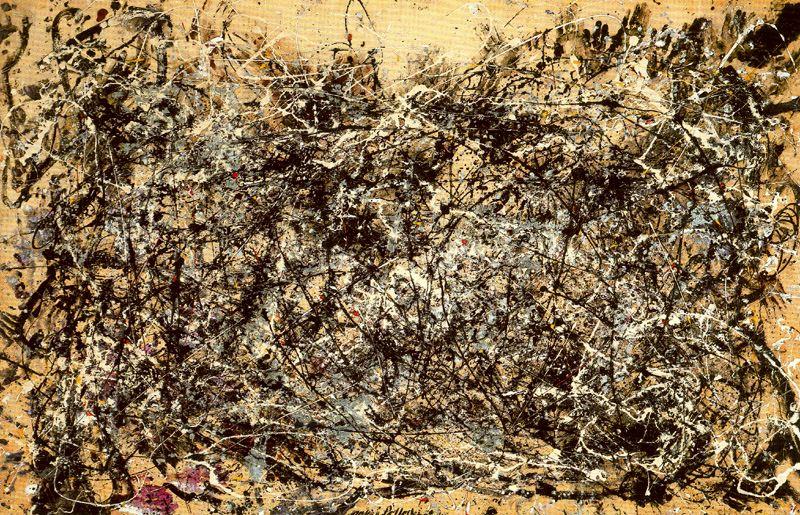
Jackson Pollock's "Number 1A" is a quintessential example of Abstract Expressionism, a movement that redefined American art in the mid-20th century. This captivating piece embodies the raw energy and spontaneity that Pollock is renowned for, making it a must-have for any contemporary art collection or modern interior.A Dance of Chaos and Control
The artwork presents an abstract composition characterized by chaotic, energetic brushstrokes and a dense accumulation of lines and textures. Pollock's innovative technique involves pouring and splashing paint onto a horizontal canvas, allowing him to move around the painting in a dance-like motion. This method results in a dynamic interplay of colors and forms that evoke a sense of movement and spontaneity.Earthy Tones and Textured Depth
The color palette is dominated by earthy tones such as browns, blacks, and grays, with occasional flecks of other colors peeking through. These muted colors contribute to a somber yet intense atmosphere, grounding the piece in a sense of natural elements or industrial materials. The use of thick impasto techniques gives the paint a three-dimensional quality, making the surface appear rough and uneven. This tactile texture enhances the visual impact, inviting viewers to explore the intricate details of the artwork.Symbolism and Emotional Resonance
The subject matter is abstract, open to interpretation, and rich in symbolic potential. The chaotic brushstrokes might symbolize energy, movement, or even emotional turmoil. The dense accumulation of lines could represent a complex network or interconnectedness. This abstract nature invites multiple interpretations, making "Number 1A" a deeply personal piece that resonates with each viewer uniquely.Historical Context and Legacy
Created during Pollock's groundbreaking "drip period" between 1947 and 1950, "Number 1A" is a testament to the artist's revolutionary approach to painting. This period marked a significant shift in Pollock's style, as he moved away from traditional easel painting to embrace a more physical and intuitive method. The artwork's historical significance lies in its contribution to the Abstract Expressionist movement, which challenged conventional norms and paved the way for future generations of artists.Enhancing Your Space with "Number 1A"
For art lovers and collectors, owning a high-quality reproduction of "Number 1A" is an opportunity to bring a piece of art history into your home or office. The dynamic composition and earthy tones make it a versatile addition to various interior styles, from modern minimalism to eclectic bohemian spaces. Interior designers can use this artwork to create a focal point in a room, adding depth and character to the decor.Experience the Power of Abstract Art
"Number 1A" is more than just a painting; it is an experience that engages the senses and stirs the emotions. Whether you are drawn to its chaotic beauty or its historical significance, this artwork has the power to transform any space into a sanctuary of creativity and inspiration. Embrace the spirit of Abstract Expressionism and let "Number 1A" become a centerpiece in your collection.Bring Home a Masterpiece
Elevate your art collection with a hand-painted reproduction of Jackson Pollock's "Number 1A." Each reproduction is crafted with meticulous attention to detail, ensuring that the essence and energy of the original artwork are captured. Invest in a piece that not only enhances your space but also celebrates the legacy of one of the most influential artists of the 20th century.Questions & Answers
Is "Number 1A" free of copyright?
"Number 1A" by Paul Jackson Pollock is in the public domain - its copyright has expired. This status governs how the image of the work may be reproduced.
Is "Number 1A" by Paul Jackson Pollock in the public domain, and why?
The copyright status of "Number 1A" - in the public domain - its copyright has expired - follows from the artist's death in 1956.
What kind of piece is "Number 1A"?
"Number 1A" is a wall art piece.
Artist Biography
Early Life and the Seeds of Innovation
Paul Jackson Pollock, born in Cody, Wyoming, in 1912, was a restless spirit from the outset. His early life was marked by frequent relocation as his father pursued work as a land surveyor across the vast landscapes of the American West. This itinerant existence instilled in young Pollock a deep connection to the natural world and an exposure to diverse cultures, particularly through encounters with Native American art during those surveying trips – impressions that would subtly permeate his artistic vision later in life. Though he never explicitly imitated Indigenous styles, the raw energy and spiritual resonance of these early experiences undoubtedly left their mark.
Pollock’s formal artistic training began at the Manual Arts High School in Los Angeles, followed by studies at the Art Students League of New York under the tutelage of Thomas Hart Benton. Benton, a prominent figure in the Regionalist movement, emphasized rhythmic composition and narrative themes rooted in American life. While Pollock initially absorbed these lessons, his inherent inclination leaned toward more abstract explorations. He was also profoundly impacted by Mexican muralists like José Clemente Orozco, whose powerful depictions of social struggle resonated deeply with him. These early influences laid a foundation, but it was the burgeoning world of Surrealism that truly unlocked Pollock’s artistic potential.
The Birth of Action Painting and a Revolutionary Technique
The 1930s saw Pollock experimenting with various techniques, seeking alternatives to traditional brushwork. He began pouring paint, exploring its fluidity and unpredictable nature. However, it was around 1947 that his artistic trajectory underwent a radical transformation. Abandoning the easel altogether, Pollock laid canvases directly on the floor, initiating what would become known as his “drip technique.” He then proceeded to drip, splash, and fling paint onto the canvas from above, orchestrating a dynamic dance between artist, medium, and surface.
This wasn’t merely about applying paint; it was about embodying the act of creation itself. Pollock's canvases became arenas for physical expression, capturing the immediacy of his gestures and emotions. The resulting paintings are characterized by their “all-over” composition – a lack of central focus that invites the viewer to explore the entire surface as a unified field of energy. Intricate networks of lines and colors intertwine, creating a visual complexity that is both captivating and challenging. He employed unconventional tools—sticks, knives, even syringes—to manipulate the paint in unpredictable ways, further emphasizing the spontaneous nature of his process.
This innovative approach positioned Pollock as a central figure in the burgeoning Abstract Expressionist movement, which emerged in post-World War II New York City. Abstract Expressionism prioritized spontaneous gesture, large scale, and non-representational imagery, reflecting a broader cultural shift away from traditional artistic conventions. His marriage to fellow artist Lee Krasner was also pivotal; she provided unwavering emotional support and actively encouraged his artistic development, recognizing the groundbreaking nature of his work.
Iconic Works and Lasting Legacy
Pollock’s most celebrated works—such as Number 1, 1950 (Lavender Mist), One: Number 31, 1950, Blue Poles: Number 11, 1952, and Convergence—are testaments to his revolutionary technique. These paintings are not simply images; they are records of a performance, imbued with the artist’s physical presence and emotional intensity. The dynamic energy that emanates from these canvases is palpable, drawing viewers into a world of pure abstraction.
His style transcends mere aesthetics; it's an exploration of process over product. Pollock sought to capture the immediacy of his actions and emotions on canvas, rejecting traditional notions of composition and representation. He delved into Jungian psychology, exploring archetypes and the subconscious in his art, seeking to tap into universal symbols and primal energies.
Pollock’s impact on the history of art is immeasurable. He fundamentally altered the way artists approached painting, breaking free from easel-based methods and embracing a more performative approach. His work helped solidify New York City's position as a global center for modern art, shifting the focus away from European dominance. His influence can be seen in the work of countless artists who followed, including those associated with Color Field painting and later forms of abstract expressionism.
Though initially met with mixed reviews—some critics dismissed his work as chaotic or lacking skill—Pollock’s reputation grew steadily after his untimely death in 1956 at the age of 44. Today, he is universally recognized as one of the most important and influential artists of the 20th century, a visionary who dared to challenge conventions and redefine the boundaries of artistic expression. His innovative techniques and expressive style continue to inspire and provoke, ensuring his enduring legacy for generations to come.

Paul Jackson Pollock
1912 - 1956 , United States of America
Quick Facts
- Full Name: Paul Jackson Pollock
- Nationality: American
- Date Of Birth: 1912
- Date Of Death: 1956
- Place Of Birth: Cody, United States of America
- Notable Artworks:
- Number 1, 1950 (Lavender Mist)
- One: Number 31, 1950
- Blue Poles: Number 11, 1952
- Convergence
- Artistic Movement Or Style: Abstract Expressionism
- Artists Who Influenced This Artist:
- José Clemente Orozco
- André Masson
- Max Ernst
- Thomas Hart Benton
- Artists Or Movements Influenced By This Artist:
- Color Field painting
- Abstract Expressionism