

 Preview
 Send
Send Share
Share
 Details
 Guide
Guide

 Download
 Similars
 X-Ray
X-Ray Diaporama
 Stats
StatsL'Estaque. View through the Trees
 Oil On Canvas
- WallArt
- Post-Impressionism
 1879
1879- 19th Century
 44.0 x 53.0 cm
 Read More
Purchase a high-resolution, enhanced digital image, far superior to the online preview.
Each file is meticulously prepared by our in-house specialists using advanced tools and expert manual retouching. We ensure every image has exceptional clarity, precise color accuracy, and fine detail.
The final file is delivered via email within 72 hours, optimized for immediate use in professional, editorial, and print environments. This is the same quality trusted by top-tier design studios, publishers, and galleries.
Digital Image
Download a high-resolution file for personal display, printing, and creative projects. ( Switch to Print Buy Hand Made Painting)
Included in Every Digital Image Order
Expert Digital Delivery, Guaranteed
When you choose OriginalUniqueArt.com, you're not just getting an image - you're receiving a professionally enhanced digital artwork, crafted with precision and backed by a satisfaction guarantee. Here's everything that comes with your order, automatically:

Fast Email Delivery
Your high-resolution digital image file will be emailed to you within 72 hours of ordering - ready for immediate use.

AI-Enhanced Digital File
Your artwork is professionally optimized using advanced AI tools and manual editing, ensuring maximum detail, clarity, and color accuracy.

Free Lifetime Re-Delivery
Accidentally deleted or lost your file? No worries - we'll resend it to you anytime, free of charge.

No Import Fees - Ever
Enjoy your artwork instantly with zero customs, duties, or delivery fees - digital downloads are always tax-free.

Color Accuracy Guarantee
We ensure your digital image reflects the original colors as closely as possible using professional tools and color management.

100-Day Satisfaction Guarantee
If you're not satisfied with your digital image, we'll revise it or refund 100% within 100 days - no questions asked.

100% Money-Back Guarantee
Not satisfied? Get a full refund within 100 days of receiving your digital file - no questions asked.

Bulk Order Discounts
Buy 3 images, save 10% - Buy 5, save 15% - Buy 10+, save 20%. Great for creative projects, galleries, and agencies.
A Glimpse into Modernity: Unveiling Cézanne’s *L'Estaque. View through the Trees*
This captivating landscape, painted in 1879, offers a pivotal moment in art history – a bridge between the fleeting impressions of Impressionism and the revolutionary forms of Cubism. L'Estaque. View through the Trees isn’t merely a depiction of a Provençal village; it’s a foundational exploration of how we *see* and represent the world around us.Subject & Composition: A Village Seen Anew
The painting presents a serene view of L'Estaque, a small fishing village near Marseille, France. Houses cluster on a hillside, partially obscured by lush trees that dominate the foreground. Cézanne doesn’t offer a panoramic vista; instead, he frames the scene *through* the foliage, creating a sense of intimacy and selective observation. The composition is striking for its deliberate arrangement of geometric shapes – the buildings become almost architectural blocks, while the trees are rendered as simplified masses. This isn't about replicating reality with photographic precision; it’s about constructing an image based on underlying structure.Style & Technique: Pioneering Post-Impressionism
Cézanne’s technique is immediately recognizable. He employs bold, visible brushstrokes that aren’t blended to create smooth surfaces. Instead, they stand as individual marks, contributing to a textured and dynamic quality. The color palette leans towards cool blues and greens, punctuated by warmer tones in the buildings, creating a harmonious yet vibrant effect. This deliberate application of paint, prioritizing form over fleeting impression, is a hallmark of Post-Impressionism. He moves away from capturing light’s effects to focus on the solidity and permanence of objects.Historical Context: The Dawn of Modern Art
Painted during a period of significant artistic transition, *L'Estaque. View through the Trees* represents Cézanne’s departure from traditional landscape painting. He was rejecting the academic conventions that dictated perspective and representation. His time spent in L’Estaque, alongside artists like Claude-Émile Schuffenecker, proved crucial to his development of a new visual language. This work directly influenced subsequent generations of artists, most notably Pablo Picasso and Georges Braque, who would go on to develop Cubism.Symbolism & Emotional Impact: Tranquility and Structure
While not overtly symbolic, the painting evokes a sense of tranquility and harmony between nature and human settlement. The simplified forms suggest an underlying order and stability. The trees, acting as a framing device, can be interpreted as representing Cézanne’s own act of artistic selection and interpretation. The emotional impact is one of quiet contemplation – a feeling of being present in this peaceful landscape, observing its inherent structure and beauty.For Collectors & Designers: A Timeless Investment
*L'Estaque. View through the Trees* remains an incredibly influential work. Its enduring appeal lies in its ability to simultaneously represent a specific place and time while also exploring universal themes of perception, form, and structure. A high-quality reproduction would be a stunning addition to any collection, bringing a touch of artistic history and intellectual depth to a home or office space. The painting’s muted color palette and strong geometric forms make it surprisingly versatile, complementing both modern and traditional interiors.Further Exploration: Cézanne's Legacy
- Consider exploring other works from Cézanne’s L’Estaque series, such as *View of L'Estaque and Chateaux d'If* to understand the evolution of his style.
- Investigate the influence of Cézanne on Cubism by studying the early works of Picasso and Braque.
- Delve into the life and times of Paul Cézanne, a true pioneer who reshaped our understanding of art.
Questions & Answers
How does the style of "L'Estaque. View through the Trees" relate to its creator's era?
"L'Estaque. View through the Trees" by Paul Cézanne is placed in the Post-Impressionism movement, within the 19th-Century era of its creator.
Where does "L'Estaque. View through the Trees" by Paul Cézanne sit in art history?
"L'Estaque. View through the Trees" by Paul Cézanne belongs to the Post-Impressionism movement, within the 19th-Century period. Together they give the work its place in art history.
What does "L'Estaque. View through the Trees" by Paul Cézanne bring to an interior?
The serene atmosphere of "L'Estaque. View through the Trees" by Paul Cézanne matches its recommended space: a living room.
Artist Biography
The Architect of Form
Paul Cézanne was born in Aix-en-Provence, France, into a family with deep roots in the local banking industry. His father, Louis-Auguste Cézanne, helped found the Banque Cézanne et Cabassol, providing a level of financial stability that many of his contemporaries lacked. This security allowed Paul to move away from the legal studies his father had planned for him. Though he initially studied law at the University of Aix-en-Provence, he abandoned those studies in 1860 to focus entirely on painting. His early years were spent in the company of friends like Émile Zola, and together they shared a childhood of swimming and fishing along the banks of the Arc River.
The early works of Cézanne often carried the weight of Romanticism, utilizing dark palettes and heavy, expressive brushwork. He was influenced by the dramatic tonal contrasts found in the tradition of Eugène Delacroix. However, his approach began to shift as he moved toward Paris. He sought a way to move beyond the fleeting light captured by the Impressionists. Instead of merely recording a passing moment, he wanted to find the permanent structure within nature. He looked at a mountain or a piece of fruit and saw the underlying geometry—the cones, spheres, and cylinders that form the bones of the world.
A New Way of Seeing
Cézanne developed a technique characterized by small, repetitive, and constructive brushstrokes. He layered these patches of color to build up volume and texture, creating a sense of solidity. This method allowed him to explore spatial relationships without relying on traditional single-point perspective. In many of his compositions, objects appear independent within the space, often presented from multiple viewpoints at once. This rejection of classical perspective rules helped create a new pictorial language.
His subject matter was deeply tied to his surroundings in Provence. The Mont Sainte-Victoire became a recurring presence in his work, appearing in approximately eighty different paintings and watercolors over many years. He also found profound meaning in the simplest objects. His still lifes, featuring items like apples, jars, and cups, were not mere decorations but intense studies of light, shadow, and mass. Through these works, he demonstrated how color modulation could define shape without the need for traditional shading.
- The Bathers (Les Grandes Baigneuses)
- Mont Sainte-Victoire series
- Still Life with Apples and a Pot of Primroses
- Portrait of Émile Zola
- The Card Players
A Lasting Influence
By the time of his death in 1906, Cézanne had fundamentally altered the direction of modern painting. His emphasis on geometric form and multiple perspectives provided a foundation for the Cubist movement. Artists such as Pablo Picasso and Georges Braque drew heavily from his analytical approach to nature. His use of bold, non-naturalistic color also left an impression on the Fauvists, including Henri Matisse. He moved art away from the imitation of reality toward a construction of visual experience based on perception and structure.
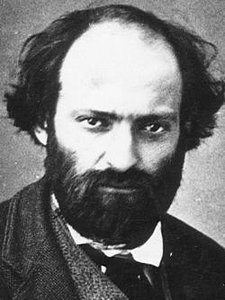
Paul Cézanne
1839 - 1906 , France
Quick Facts
- Artistic Movement Or Style: Post-Impressionism
- Artists Or Movements Influenced By This Artist:
- Cubism
- Fauvism
- Pablo Picasso
- Henri Matisse
- Artists Who Influenced This Artist:
- Paul Gauguin
- Georges Seurat
- Full Name: Paul Cézanne
- Nationality: French
- Notable Artworks:
- The Pond at Jas de Bouffan
- Portrait of Émile Zola
- Mont Sainte-Victoire series
- Bathers
- Place Of Birth: Aix-en-Provence, France
- Date Of Birth: 1839
- Date Of Death: 1906