

 Preview
 Send
Send Share
Share
 Details
 Guide
Guide

 Download
 Similars
 X-Ray
X-Ray Diaporama
 Stats
StatsHarlequin 1

 Read More
Purchase a high-resolution, enhanced digital image, far superior to the online preview.
Each file is meticulously prepared by our in-house specialists using advanced tools and expert manual retouching. We ensure every image has exceptional clarity, precise color accuracy, and fine detail.
The final file is delivered via email within 72 hours, optimized for immediate use in professional, editorial, and print environments. This is the same quality trusted by top-tier design studios, publishers, and galleries.
Digital Image
Download a high-resolution file for personal display, printing, and creative projects. ( Switch to Print Buy Hand Made Painting)
Included in Every Digital Image Order
Expert Digital Delivery, Guaranteed
When you choose OriginalUniqueArt.com, you're not just getting an image - you're receiving a professionally enhanced digital artwork, crafted with precision and backed by a satisfaction guarantee. Here's everything that comes with your order, automatically:

Fast Email Delivery
Your high-resolution digital image file will be emailed to you within 72 hours of ordering - ready for immediate use.

AI-Enhanced Digital File
Your artwork is professionally optimized using advanced AI tools and manual editing, ensuring maximum detail, clarity, and color accuracy.

Free Lifetime Re-Delivery
Accidentally deleted or lost your file? No worries - we'll resend it to you anytime, free of charge.

No Import Fees - Ever
Enjoy your artwork instantly with zero customs, duties, or delivery fees - digital downloads are always tax-free.

Color Accuracy Guarantee
We ensure your digital image reflects the original colors as closely as possible using professional tools and color management.

100-Day Satisfaction Guarantee
If you're not satisfied with your digital image, we'll revise it or refund 100% within 100 days - no questions asked.

100% Money-Back Guarantee
Not satisfied? Get a full refund within 100 days of receiving your digital file - no questions asked.

Bulk Order Discounts
Buy 3 images, save 10% - Buy 5, save 15% - Buy 10+, save 20%. Great for creative projects, galleries, and agencies.
A Revolutionary Figure in Motion: Cézanne’s ‘Harlequin’
Paul Cézanne's “Harlequin,” painted between 1888 and 1890, isn’t merely a depiction of a theatrical character; it’s a pivotal moment in the evolution of modern art. This vibrant oil painting, now available as a stunning hand-painted reproduction from OriginalUniqueArt.com, captures the essence of post-impressionism – a movement Cézanne profoundly shaped. The image presents us with a figure, identified by scholars as Paul Cézanne’s son, Paul, embodying the iconic Harlequin, a stock character deeply rooted in Italian commedia dell'arte. Cézanne wasn’t interested in simply recreating a costume; he sought to distill the *idea* of Harlequin – his energy, his playful chaos, and his inherent dynamism – onto canvas. The painting’s genesis lies within Cézanne’s exploration of form and color, moving away from the fleeting impressions of Impressionism towards a more structured, geometric approach that would foreshadow Cubism. It's a testament to his desire to capture not just what he saw, but *how* he perceived the world around him.The Costume as Composition: Color and Form
The immediate impact of “Harlequin” is one of intense color and fractured form. The dominant red and black checkered pattern isn’t applied with smooth brushstrokes; instead, Cézanne employs a technique of broken planes – short, distinct strokes that build up the image layer by layer. This creates an illusion of depth and movement, as if the fabric itself is actively shifting and swirling. Notice how he uses color not to represent reality faithfully, but to convey feeling and structure. The vibrant red contrasts sharply with the black, drawing the eye and emphasizing the figure’s energetic posture. The artist's use of complementary colors – a hallmark of his style – intensifies the visual impact, creating a sense of heightened drama. Furthermore, Cézanne deliberately distorts perspective, flattening space and prioritizing the formal elements of composition over realistic representation. This deliberate departure from traditional academic painting is precisely what makes “Harlequin” such a revolutionary work.Symbolism and the Character of Harlequin
To understand "Harlequin," we must delve into the rich history of the character itself. Originating in Italian commedia dell’arte, Harlequin was traditionally depicted as a mischievous servant, often paired with Pierrot – his melancholic counterpart. He represented chaos, humor, and a certain rebellious spirit. Cézanne's choice to portray his son as Harlequin is significant; it suggests an exploration of youthful energy and the potential for disruption within the family dynamic. The inclusion of the two birds adds another layer of symbolic richness. Birds are often associated with freedom, flight, and transformation – qualities that align perfectly with the spirit of Harlequin. Their placement near the top left and bottom right corners creates a sense of balance and visual interest, subtly reinforcing the painting’s overall composition.A Legacy of Innovation: Cézanne's Influence
“Harlequin” stands as a crucial bridge between Impressionism and modern art. Cézanne’s exploration of form, color, and perspective profoundly influenced generations of artists, including Pablo Picasso and Henri Matisse. His emphasis on the underlying structure of objects – what he famously called “the black line” – paved the way for Cubism's fragmented approach to representation. The painting’s bold use of color and its dynamic composition challenged traditional notions of beauty and realism, opening up new possibilities for artistic expression. Owning a hand-painted reproduction of "Harlequin" from OriginalUniqueArt.com isn’t just acquiring a beautiful artwork; it’s gaining access to a pivotal moment in art history – a testament to Cézanne's revolutionary vision.- Explore the dynamic composition and vibrant color palette.
- Consider how Cézanne uses broken planes to create an illusion of movement.
- Reflect on the symbolism of the character Harlequin and the birds within the painting.
Bringing ‘Harlequin’ into Your Space
Whether you're a seasoned art collector or simply seeking to add a touch of artistic flair to your home, a hand-painted reproduction of Cézanne’s “Harlequin” offers an exceptional opportunity. OriginalUniqueArt.com meticulously recreates this iconic masterpiece using the finest materials and techniques, ensuring that every detail faithfully captures the original's power and beauty. The vibrant colors and dynamic composition will undoubtedly become a focal point in any room, injecting energy and visual interest into your décor. Imagine ‘Harlequin’ gracing your living room wall – a constant reminder of Cézanne’s revolutionary spirit and his enduring legacy.Questions & Answers
Where can I see a preview of "Harlequin 1"?
To preview a reproduction of "Harlequin 1" by Paul Cézanne, open the artwork's Preview page.
Which artistic current is "Harlequin 1" by Paul Cézanne part of?
"Harlequin 1" is a work of Post-Impressionism. The movement indicates the artistic tradition the work is part of.
Does "Harlequin 1" have an augmented reality preview?
"Harlequin 1" has an augmented reality preview: the artwork's AR Preview page shows it in your own space on a compatible device.
Artist Biography
The Architect of Form
Paul Cézanne was born in Aix-en-Provence, France, into a family with deep roots in the local banking industry. His father, Louis-Auguste Cézanne, helped found the Banque Cézanne et Cabassol, providing a level of financial stability that many of his contemporaries lacked. This security allowed Paul to move away from the legal studies his father had planned for him. Though he initially studied law at the University of Aix-en-Provence, he abandoned those studies in 1860 to focus entirely on painting. His early years were spent in the company of friends like Émile Zola, and together they shared a childhood of swimming and fishing along the banks of the Arc River.
The early works of Cézanne often carried the weight of Romanticism, utilizing dark palettes and heavy, expressive brushwork. He was influenced by the dramatic tonal contrasts found in the tradition of Eugène Delacroix. However, his approach began to shift as he moved toward Paris. He sought a way to move beyond the fleeting light captured by the Impressionists. Instead of merely recording a passing moment, he wanted to find the permanent structure within nature. He looked at a mountain or a piece of fruit and saw the underlying geometry—the cones, spheres, and cylinders that form the bones of the world.
A New Way of Seeing
Cézanne developed a technique characterized by small, repetitive, and constructive brushstrokes. He layered these patches of color to build up volume and texture, creating a sense of solidity. This method allowed him to explore spatial relationships without relying on traditional single-point perspective. In many of his compositions, objects appear independent within the space, often presented from multiple viewpoints at once. This rejection of classical perspective rules helped create a new pictorial language.
His subject matter was deeply tied to his surroundings in Provence. The Mont Sainte-Victoire became a recurring presence in his work, appearing in approximately eighty different paintings and watercolors over many years. He also found profound meaning in the simplest objects. His still lifes, featuring items like apples, jars, and cups, were not mere decorations but intense studies of light, shadow, and mass. Through these works, he demonstrated how color modulation could define shape without the need for traditional shading.
- The Bathers (Les Grandes Baigneuses)
- Mont Sainte-Victoire series
- Still Life with Apples and a Pot of Primroses
- Portrait of Émile Zola
- The Card Players
A Lasting Influence
By the time of his death in 1906, Cézanne had fundamentally altered the direction of modern painting. His emphasis on geometric form and multiple perspectives provided a foundation for the Cubist movement. Artists such as Pablo Picasso and Georges Braque drew heavily from his analytical approach to nature. His use of bold, non-naturalistic color also left an impression on the Fauvists, including Henri Matisse. He moved art away from the imitation of reality toward a construction of visual experience based on perception and structure.
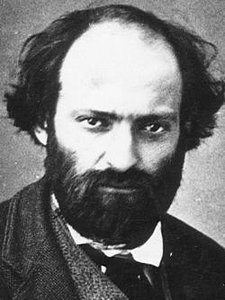
Paul Cézanne
1839 - 1906 , France
Quick Facts
- Artistic Movement Or Style: Post-Impressionism
- Artists Or Movements Influenced By This Artist:
- Cubism
- Fauvism
- Pablo Picasso
- Henri Matisse
- Artists Who Influenced This Artist:
- Paul Gauguin
- Georges Seurat
- Full Name: Paul Cézanne
- Nationality: French
- Notable Artworks:
- The Pond at Jas de Bouffan
- Portrait of Émile Zola
- Mont Sainte-Victoire series
- Bathers
- Place Of Birth: Aix-en-Provence, France
- Date Of Birth: 1839
- Date Of Death: 1906