

 Preview
 Send
Send Share
Share
 Details
 Guide
Guide

 Download
 Similars
 X-Ray
X-Ray Diaporama
 Q&A
Q&A Stats
StatsApples and Napkin

 Read More
Get a print-ready file that goes far beyond the web preview. Every digital image we sell comes from a high-resolution master in our stock database — usually 5,000 to 15,000 pixels wide — so you can print large, crop tightly, or reproduce fine detail with confidence.
No file leaves our studio untouched. A digital expert checks the colors against the original painting and corrects them if needed, then improves clarity and detail with professional retouching tools — always staying faithful to the artist's brushwork and style. The result is an image that looks like the painting, not like a filtered scan.
You approve before you're done: our expert sends the image by e-mail within 72 hours for your review. Not satisfied? Ask for improvements or corrections, or request a refund if the quality falls short.
This is the quality relied on by publishers, design studios, galleries and print shops.
Digital Image
Download a high-resolution file for personal display, printing, and creative projects. ( Switch to Print Buy Hand Made Painting)
Included in Every Digital Image Order
Expert Digital Delivery, Guaranteed
When you choose OriginalUniqueArt.com, you're not just getting an image - you're receiving a professionally enhanced digital artwork, crafted with precision and backed by a satisfaction guarantee. Here's everything that comes with your order, automatically:

Fast Email Delivery
Your high-resolution digital image file will be emailed to you within 72 hours of ordering - ready for immediate use.

AI-Enhanced Digital File
Your artwork is professionally optimized using advanced AI tools and manual editing, ensuring maximum detail, clarity, and color accuracy.

Free Lifetime Re-Delivery
Accidentally deleted or lost your file? No worries - we'll resend it to you anytime, free of charge.

No Import Fees - Ever
Enjoy your artwork instantly with zero customs, duties, or delivery fees - digital downloads are always tax-free.

Color Accuracy Guarantee
We ensure your digital image reflects the original colors as closely as possible using professional tools and color management.

100-Day Satisfaction Guarantee
If you're not satisfied with your digital image, we'll revise it or refund 100% within 100 days - no questions asked.

100% Money-Back Guarantee
Not satisfied? Get a full refund within 100 days of receiving your digital file - no questions asked.

Bulk Order Discounts
Buy 3 images, save 10% - Buy 5, save 15% - Buy 10+, save 20%. Great for creative projects, galleries, and agencies.
A Quiet Revolution: Exploring Cézanne’s ‘Apples and Napkin’
Paul Cézanne's “Apples and Napkin,” painted circa 1880, represents a pivotal moment in artistic history—a deliberate departure from Impressionism’s fleeting sensations toward the nascent explorations of Cubism. It’s more than just a depiction of fruit; it’s an embodiment of Cézanne’s unwavering commitment to distilling visual experience into its fundamental geometric forms, foreshadowing movements that would reshape modern art decades later. This seemingly simple composition holds profound significance within Cézanne's oeuvre and the broader context of late 19th-century artistic discourse.The Impressionist Legacy Challenged
Cézanne’s initial exposure to Impressionism—particularly through artists like Monet and Renoir—provided him with invaluable training in capturing light and color. However, Cézanne quickly recognized the limitations of Impressionism's preoccupation with optical illusion. He felt that it failed to convey the underlying structure of objects, dismissing it as “a mere trick of the eye.” This dissatisfaction fueled his relentless experimentation with form and perspective, pushing him away from the shimmering surfaces favored by his contemporaries toward a more assertive approach. The influence of Japanese prints—particularly their flattened perspectives and simplified compositions—further solidified Cézanne’s desire to transcend representational accuracy in favor of conveying essential visual truths.A Geometric Exploration: Technique and Composition
“Apples and Napkin” exemplifies Cézanne's groundbreaking technique, characterized by a deliberate fragmentation of objects into interlocking planes. Unlike Impressionists who strive for atmospheric haze and blended colors, Cézanne meticulously renders each apple as a series of overlapping cylinders and cones—a revolutionary departure from traditional artistic conventions. The vase positioned centrally anchors the composition, providing a grounding element against which the apples’ forms are contrasted. Cézanne employs a muted palette dominated by blues and ochres, enhancing the painting's contemplative mood and emphasizing the solidity of its shapes. Careful attention to tonal gradations contributes to the illusion of depth without resorting to conventional aerial perspective.Symbolism Within Still Life: Mont Sainte-Victoire’s Presence
The inclusion of a napkin bearing the unmistakable silhouette of Mont Sainte-Victoire—a mountain Cézanne obsessively revisited throughout his artistic life—adds another layer of symbolic resonance to “Apples and Napkin.” Mont Sainte-Victoire served as a constant source of inspiration for Cézanne, representing not only a physical landscape but also an embodiment of permanence and stability amidst the ephemeral beauty of nature. Its presence subtly underscores Cézanne’s ambition to capture something beyond mere visual appearance—a deeper connection to the natural world and its underlying geometric structure. The arrangement of the apples themselves is deliberately asymmetrical, mirroring Cézanne's broader artistic philosophy: a rejection of idealized harmony in favor of embracing complexity and ambiguity.Emotional Resonance: Calm Contemplation
Ultimately, “Apples and Napkin” transcends its formal innovations to evoke a profound sense of calm contemplation. The stillness of the scene—captured with remarkable precision—invites viewers to pause and consider the fundamental questions posed by Cézanne’s artistic vision. It's not an emotionally charged piece in the conventional Impressionist sense; rather, it communicates a quiet confidence in the power of observation and geometric abstraction to reveal the essence of reality. This enduring appeal speaks to the painting’s ability to resonate with audiences across generations—a testament to Cézanne’s transformative contribution to modern art.Questions & Answers
Does "Apples and Napkin" show strong light-dark contrasts?
"Apples and Napkin" by Paul Cézanne shows a gentle contrast between its light and dark areas.
What is the dominant color of "Apples and Napkin" by Paul Cézanne?
gray (#747f7b) is the leading color of "Apples and Napkin" by Paul Cézanne.
What emotion does "Apples and Napkin" by Paul Cézanne convey?
"Apples and Napkin" by Paul Cézanne conveys a calm emotional tone.
Artist Biography
The Architect of Form
Paul Cézanne was born in Aix-en-Provence, France, into a family with deep roots in the local banking industry. His father, Louis-Auguste Cézanne, helped found the Banque Cézanne et Cabassol, providing a level of financial stability that many of his contemporaries lacked. This security allowed Paul to move away from the legal studies his father had planned for him. Though he initially studied law at the University of Aix-en-Provence, he abandoned those studies in 1860 to focus entirely on painting. His early years were spent in the company of friends like Émile Zola, and together they shared a childhood of swimming and fishing along the banks of the Arc River.
The early works of Cézanne often carried the weight of Romanticism, utilizing dark palettes and heavy, expressive brushwork. He was influenced by the dramatic tonal contrasts found in the tradition of Eugène Delacroix. However, his approach began to shift as he moved toward Paris. He sought a way to move beyond the fleeting light captured by the Impressionists. Instead of merely recording a passing moment, he wanted to find the permanent structure within nature. He looked at a mountain or a piece of fruit and saw the underlying geometry—the cones, spheres, and cylinders that form the bones of the world.
A New Way of Seeing
Cézanne developed a technique characterized by small, repetitive, and constructive brushstrokes. He layered these patches of color to build up volume and texture, creating a sense of solidity. This method allowed him to explore spatial relationships without relying on traditional single-point perspective. In many of his compositions, objects appear independent within the space, often presented from multiple viewpoints at once. This rejection of classical perspective rules helped create a new pictorial language.
His subject matter was deeply tied to his surroundings in Provence. The Mont Sainte-Victoire became a recurring presence in his work, appearing in approximately eighty different paintings and watercolors over many years. He also found profound meaning in the simplest objects. His still lifes, featuring items like apples, jars, and cups, were not mere decorations but intense studies of light, shadow, and mass. Through these works, he demonstrated how color modulation could define shape without the need for traditional shading.
- The Bathers (Les Grandes Baigneuses)
- Mont Sainte-Victoire series
- Still Life with Apples and a Pot of Primroses
- Portrait of Émile Zola
- The Card Players
A Lasting Influence
By the time of his death in 1906, Cézanne had fundamentally altered the direction of modern painting. His emphasis on geometric form and multiple perspectives provided a foundation for the Cubist movement. Artists such as Pablo Picasso and Georges Braque drew heavily from his analytical approach to nature. His use of bold, non-naturalistic color also left an impression on the Fauvists, including Henri Matisse. He moved art away from the imitation of reality toward a construction of visual experience based on perception and structure.
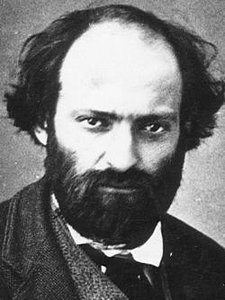
Paul Cézanne
1839 - 1906 , France
Quick Facts
- Artistic Movement Or Style: Post-Impressionism
- Artists Or Movements Influenced By This Artist:
- Cubism
- Fauvism
- Pablo Picasso
- Henri Matisse
- Artists Who Influenced This Artist:
- Paul Gauguin
- Georges Seurat
- Full Name: Paul Cézanne
- Nationality: French
- Notable Artworks:
- The Pond at Jas de Bouffan
- Portrait of Émile Zola
- Mont Sainte-Victoire series
- Bathers
- Place Of Birth: Aix-en-Provence, France
- Date Of Birth: 1839
- Date Of Death: 1906