

 Preview
 Send
Send Share
Share
 Details
 Guide
Guide

 Download
 Similars
 X-Ray
X-Ray Diaporama
 Stats
StatsJapanese Children


 Read More
Giclée / Art Print
Museum-quality giclée or canvas print with fast production and flexible finish options. ( Buy Hand Made Painting Switch to Digital Image)




P118B $10

P118H $10

P118W $10

P438Z $10

P508JH $12

P508YH $12

P805H $10

P805Z $10

P919BZ $10

P919G $10

P919XJ $10

P959ZH $10

P968JZ $12

W106C $8

W218G $10

W218JH $8

W218Y $10

W307PJ $10

W316G $10

W316PJ $8

W316Y $10

W398PJ $8

W4111J $10

W500HY $15

W500JH $15

W692G $12

W849H $8

W940BG $15

W953PJ $8




Pick from our preset sizes that match the artwork's original proportions.

You may enter your own dimensions to fit a specific frame or space. If your selected size does not match the original image's proportions, we will either crop the artwork or extend the image with a mirrored or solid-fill edge. A digital mockup will be sent for your approval before production begins.
Please note that the on-screen preview does not reflect the actual cropping or extension. Only the mockup will accurately show the final composition.
While custom sizes are available, we recommend selecting a dimension from the predefined list to preserve the original proportions.
Worldwide Delivery () in 2 weeks instead of standard 4/5 weeks. (7 October)

Free Worldwide Express Shipping

High-Quality Linen Canvas

Full Shipping Insurance

Customs Tax Refund Guarantee

True Color Matching Guarantee

100-Day Return Policy (Defects Only)

100% Money-Back Guarantee

Bulk Discount Offer
 Glass option is only available in size under 110 CM

Japanese Children
Giclée / Art Print
Reproduction Size
-


Total Price
$ 81
Artist Biography
A Lens Between Reality and Myth: The Life of Patrick Nagatani
The life of Patrick Nagatani began under the heavy, historical shadow of nuclear devastation. Born on August 19, 1945, in Chicago, his arrival occurred just ten days after the atomic bombing of Nagasaki, a temporal coincidence that would forever color his artistic consciousness. As a Sansei, Nagatani carried the profound legacy of the Japanese American experience, specifically the memories of forced relocation and internment camps that had reshaped his community. Moving to Los Angeles in 1955, he grew up in the vibrant Crenshaw District, an area that served as a cultural heartbeat for Japanese Americans. This upbringing, rooted in both the resilience of his heritage and the looming specter of nuclear history, provided the emotional foundation for a career defined by the tension between what is seen and what is imagined.
Nagatani’s journey from a disciplined student-athlete at Dorsey High School to a visionary photographer was paved by a rigorous academic pursuit of the arts. His formal training at Cal State L.A. and his subsequent Master of Fine Arts from UCLA placed him under the mentorship of influential figures such as Robert Heinecken and Judith Golden. These educators encouraged a departure from traditional photographic conventions, pushing him toward experimentation and a critical interrogation of the medium. Before fully immersing himself in the fine art world, Nagatani’s creative spirit found expression through filmmaking and special effects modeling, skills that would later become indispensable to his signature style of theatrical staging and meticulous composition.
The Art of Staged Truths
Nagatani’s photographic practice was far more than mere documentation; it was a deliberate, cinematic construction of reality. He possessed a singular ability to blend the precision of social documentary with the surrealism of mythic storytelling. His work often functioned as a bridge between the tangible struggles of identity and displacement and a fantastical, dreamlike realm. In pieces such as Japanese Children, he utilized surreal imagery—such as a large fish with a painted face reaching toward the sky—to explore profound themes of cultural identity through a lens of enchantment. This technique allowed him to confront uncomfortable historical truths, like the trauma of internment, by wrapping them in layers of metaphor and theatricality.
The technical mastery evident in his work often relied on a sophisticated use of light, shadow, and texture. Whether he was capturing the weathered, antique soul of a historical relic like the Star of Hope badge or constructing elaborate, staged scenes, Nagatani’s eye for detail was unparalleled. His ability to manipulate the viewer's perception through carefully curated environments turned every photograph into a window onto another time or a different dimension. This duality—the ability to be both a witness to history and an architect of imagination—is what defines his enduring contribution to contemporary photography.
Legacy and Historical Significance
Throughout his career, Nagatani’s work earned international recognition, with exhibitions spanning from the Netherlands to New York City. His solo shows, such as Nuclear Enchantment and the Chromatherapy series, showcased his evolving fascination with the intersection of light, color, and memory. Beyond the gallery walls, his influence extended into academia, where he shared his expertise as an educator at Loyola Marymount University and the University of New Mexico, mentoring a new generation of artists in the nuances of visual storytelling.
The significance of Patrick Nagatani lies in his refusal to separate the political from the poetic. He did not merely record the history of the Japanese American experience; he reimagined it, giving voice to the displaced and the forgotten through a medium that felt both ancient and avant-garde. His death in 2017 in Albuquerque marked the end of a profound creative journey, yet his work remains a vital testament to the power of photography to act as both a mirror to our darkest histories and a portal to our most beautiful dreams.

Patrick Nagatani
1945 - 2017 , United States of America
Quick Facts
- Full Name: Patrick Nagatani
- Nationality: American
- Date Of Birth: 1945
- Date Of Death: 2017
- Place Of Birth: United States of America
- Notable Artworks:
- Japanese Children
- Fin de Siecle, Bat Flight Amphitheater
- Star of hope badge
- Artistic Movement Or Style: Staged Photography
- Artists Who Influenced This Artist: ['Robert Heinecken']
- Artists Or Movements Influenced By This Artist: ['Hiroshige']
Related Articles
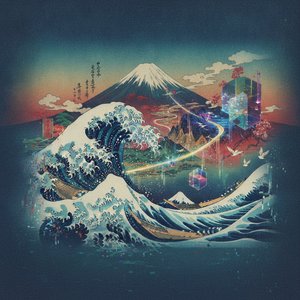
Beyond the Great Wave: The High-Impact Visual Revolution of Japanese Landscape Art
Go beyond Hokusai's Great Wave. Explore the high-impact, graphic world of Japanese Ukiyo-e landscapes and urban prints. Discover how these bold, vibrant woodblock masterpieces continue to shape modern pop culture and contemporary design aesthetics.
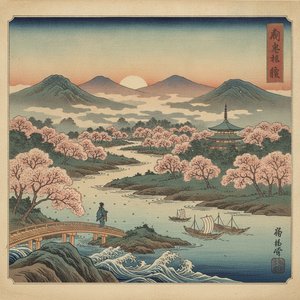
Zen on Canvas: The Timeless Artistry and Spiritual Depth of Japanese Landscape Painting
Explore the profound beauty of Japanese landscape painting. From Hokusai's iconic vistas to Zen-inspired compositions, discover the spiritual depth and historical mastery of Ukiyo-e art in this expert cultural retrospective.

Hokusai's Masterpieces: 25 Iconic Prints & Paintings for Art Lovers | OriginalUniqueArt
Journey through Katsushika Hokusai’s 25 most iconic artworks, including *The Great Wave*. Explore the ukiyo-e master's history, style & timeless Japanese woodblock prints. Find museum-quality reproductions for your home at OriginalUniqueArt.com.

Timeless Elegance: Capturing the Spirit of Japanese Culture Through the Lens of Ukiyo-e Fine Art
Explore the profound beauty of Japanese Ukiyo-e art. Discover the legacy of Hokusai and the Utagawa school through an expert exploration of Edo-period aesthetics, seasonal motifs, and the enduring global influence of Japan's 'Floating World' on fine art history.

Floating Worlds: The Captivating Magic and Timeless Legacy of Japanese Ukiyo-e Art
Explore the ephemeral beauty of Japanese Ukiyo-e art. From the dynamic warriors of Kuniyoshi to serene landscapes, discover the profound history, masterful techniques, and global influence of these iconic woodblock prints in our deep cultural retrospective.


