Menu
PreviewPreview AR previewAR preview Switch to Print Switch to PrintSwitch to Digital Image Switch to Digital Image SendSend
DetailsDetails Add to favorites Add to favorites DownloadDownload SimilarsSimilars X-RayX-Ray DiaporamaDiaporama StatsStats

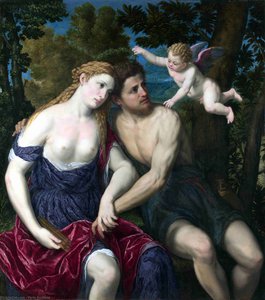
Allegory with Lovers

Explore Allegory with Lovers by Paris Bordone – a masterful Renaissance oil painting housed at the Kunsthistorisches Museum. Discover its symbolism, vibrant colors & intricate composition.

Discover Paris Bordone: Venetian Renaissance painter known for Mannerist complexity & provincial vigor. Explore his unique style & iconic works like 'Fisherman's Ring'. #art #renaissance

Hand Made Oil Reproduction

Hand-painted oil on canvas in your size and frame, made to order by our artists. (Switch to Print Switch to PrintSwitch to Digital Image Switch to Digital Image)

P118B $10
P118H $10
P118W $10
P438Z $10
P508JH $12
P508YH $12
P805H $10
P805Z $10
P919BZ $10
P919G $10
P919XJ $10
P959ZH $10
P968JZ $12
W106C $8
W218G $10
W218JH $8
W218Y $10
W307PJ $10
W316G $10
W316PJ $8
W316Y $10
W398PJ $8
W4111J $10
W500HY $15
W500JH $15
W692G $12
W849H $8
W940BG $15
W953PJ $8

Standard
custom
CM
INCH

Pick from our preset sizes that match the artwork's original proportions.

width
height

You may enter your own dimensions to fit a specific frame or space. If your selected size does not match the original image's proportions, we will either crop the artwork or extend the painting with additional hand-painted elements. A digital mockup will be sent for your approval before production begins.
Please note that the on-screen preview does not reflect the actual cropping or extension. Only the mockup will accurately show the final composition.
While custom sizes are available, we recommend selecting a dimension from the predefined list to preserve the original proportions.

Examples of what can be changed: Replace face with customer photo; Add pet (e.g., replace cat with dog); Include hidden message in background; Change background landscape or elements.
After order, OriginalUniqueArt.com team will email client for instructions and provide a mockup preview

Worldwide Delivery () in 3/4 weeks instead of standard 5 weeks. (9 September). No compromise on quality.

why_choose_icon
Free Worldwide Express Shipping
why_choose_icon
High-Quality Linen Canvas
why_choose_icon
Full Shipping Insurance
why_choose_icon
Customs Tax Refund Guarantee
why_choose_icon
True Color Matching Guarantee
why_choose_icon
100-Day Return Policy (Defects Only)
why_choose_icon
100% Money-Back Guarantee
why_choose_icon
Bulk Discount Offer

Total Price

$ 300

reproduction

Allegory with Lovers

Reproduction Medium

Reproduction Size

-

Total Price

$ 300

Quick Facts

  • Title: Allegory with Lovers
  • Subject or theme: Allegory; Love; Virtue
  • Artist: Paris Bordone
  • Movement: Mannerism
  • Artistic style: Complex and stylized
  • Year: 1550
  • Dimensions: 111 x 174 cm

Art Quiz

There is only one correct answer for each question.

Question 1:
What is the artist’s name?
Question 2:
In which museum is this painting housed?
Question 3:
What year was the painting created?
Question 4:
The painting depicts a scene featuring which figures?
Question 5:
What is the predominant color scheme of Allegory with Lovers?

Allegory with Lovers: A Venetian Renaissance Masterpiece

The Kunsthistorisches Museum in Vienna proudly showcases Allegory with Lovers, an oil painting by Paris Bordone completed in 1550—a testament to the artistic fervor of the Venetian Renaissance and a captivating exploration of humanist ideals. Measuring 111 x 174 cm, this monumental canvas transcends mere visual representation; it’s imbued with layers of symbolism that invite contemplation and reveal Bordone's masterful command of Mannerist aesthetics.

The Artist and His Context

Paris Bordone (1500 – 1571) emerged from Treviso as a prodigious talent, briefly apprenticed under the titan of Venetian painting, Titian. Despite this influential mentorship, Bordone forged his own distinctive path—a divergence that cemented his reputation as a champion of Mannerist art, characterized by its intricate compositional complexity and a subtle yet palpable connection to provincial sensibilities. Unlike Titian’s grand narratives focused on mythological grandeur, Bordone's vision embraced a more intimate dialogue between observation and imagination, reflecting the humanist spirit burgeoning across Europe during this period.

A Symphony of Color and Composition

The painting’s palette is deliberately restrained—primarily muted tones punctuated by striking contrasts—particularly evident in the garments of the women depicted. The blues and reds dominate, creating an arresting visual dynamic that draws the eye and underscores the importance of color within Mannerist art. Bordone skillfully employs pyramidal compositions, guiding the viewer's gaze towards the central figure – a man clad in black armor – who embodies strength and protection. Surrounding him are three women draped in elegant robes, representing virtues such as love, beauty, and grace—a deliberate allusion to classical ideals of feminine perfection. The backdrop features lush foliage and trees, establishing a serene landscape that serves as an anchor for the figures’ activity and enhancing the painting's overall atmosphere.

Symbolism Unveiled: Flowers, Virtue, and Allegory

Beyond the formal structure, Allegory with Lovers is rife with symbolic significance. The flowers adorning the figures—roses, lilies, violets—represent not merely decorative embellishments but potent emblems of spiritual awakening and divine grace. Their presence underscores Bordone’s intention to convey a deeper moral message—a celebration of human flourishing guided by virtue and illuminated by faith. As an allegory, the painting speaks to broader themes of harmony between man and nature, and the pursuit of intellectual enlightenment – concepts central to Renaissance humanist thought.

A Legacy Enduring at the Kunsthistorisches Museum

Allegory with Lovers remains a cornerstone of the Kunsthistorisches Museum’s collection, inspiring admiration for Bordone's artistic genius and prompting ongoing scholarly debate about its interpretation. Its meticulous detail, harmonious balance, and evocative symbolism continue to captivate viewers today—a timeless masterpiece that embodies the spirit of Venetian Renaissance art.
  • Artist: Paris Bordone
  • Born Year: 1500
  • Death Year: 1570
  • Birth City: Treviso
  • Birth Country: Italy
Additional Resources: Size: 111 x 174 cm Date: 1550

Artist Biography

The Venetian Maverick: The Life and Legacy of Paris Bordone

In the vibrant, sun-drenched landscape of the sixteenth-century Venetian Renaissance, few figures possess a spirit as fiercely independent as Paris Bordone. Born in Treviso around 1500, Bordone emerged from the shadow of the great masters to carve out a reputation defined by a unique tension between classical grace and a restless, Mannerist energy. While his contemporaries often sought the polished perfection of the High Renaissance, Bordone embraced a more complex, sometimes provocative aesthetic that blended the monumental scale of his era with a distinctively provincial vitality. His journey was one of constant negotiation between the established traditions of Venice and an unyielding desire to forge a personal visual language.

The foundation of Bordone’s technical prowess was laid during his formative years in Venice, most notably through his apprenticeship under the legendary Titian. This period was undoubtedly the crucible of his talent, exposing him to the rich textures, dramatic lighting, and atmospheric depth that define the Venetian school. However, the relationship between master and pupil was famously fraught with creative friction. Historical accounts, including those by Vasari, suggest a certain discordance between Bordone’s experimental impulses and Titian’s more refined aesthetic. Rather than being stifled by this tension, Bordone utilized it as a catalyst for growth, developing a style that moved away from pure imitation toward a more intricate and sometimes agitated compositional approach.

A Tapestry of Myth, Devotion, and Portraiture

Bordone’s prolific career is characterized by an extraordinary breadth of subject matter, ranging from the sacred to the profane. His ability to navigate religious iconography with the same vigor as mythological narratives allowed him to capture the diverse interests of the Venetian elite. In his religious works, such as the Pentecost housed in the Hermitage Museum, one observes a masterful command of sfumato and warm, emotive tones that invite deep spiritual contemplation. Yet, even within these devotional settings, a sense of Mannerist complexity often emerges through swirling drapery and crowded, dynamic arrangements.

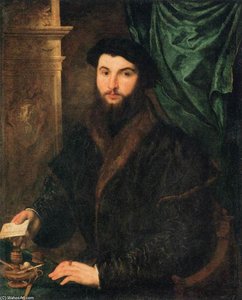
When turning his gaze toward the secular, Bordone achieved a level of narrative drama that remains captivating to modern viewers. His mythological paintings, such as Allegory with Lovers, showcase his talent for using vibrant colors and symbolic depth to weave complex tales of passion and fate. This mastery extended into the realm of portraiture, where he captured the dignity and social standing of his subjects with remarkable precision. A notable example is his 1540 Portrait of Thomas Stachel, currently residing in the Louvre; here, the artist utilizes an intricate composition to highlight the sitter's status, using the fine details of robes and heraldic letters to ground the subject in a tangible historical reality.

Historical Significance and Artistic Endurance

The enduring significance of Paris Bordone lies in his refusal to conform. He stands as a vital bridge between the balanced harmony of the early Renaissance and the more stylized, expressive complexities of the Mannerist period. While he may not have reached the universal heights of Titian, his work offers a necessary counterpoint—a more textured, experimental, and often more humanistic perspective on the Venetian world. His paintings serve as windows into a time of profound transition, where the stability of tradition was being challenged by a new, more restless artistic consciousness.

Today, Bordone’s legacy is preserved in some of the world's most prestigious institutions, inviting scholars and art lovers alike to rediscover his unique vision. His contributions can be summarized through several key artistic pillars:

  • Stylistic Innovation: The successful integration of Titian-inspired grandeur with a more complex, Mannerist compositional structure.
  • Versatility of Theme: An unparalleled ability to move seamlessly between the serene beauty of the Madonna with Sleeping Child and the dramatic intensity of historical allegories.
  • Technical Mastery: A sophisticated use of light, color, and texture that brought a palpable sense of life and movement to the canvas.
  • Cultural Impact: Representing the vibrant, often turbulent spirit of Treviso and Venice during one of the most transformative eras in Western art history.
Paris Bordone

Paris Bordone

1500 - 1570 , Italy

Quick Facts

  • Artistic Movement Or Style: Mannerist
  • Artists Who Influenced This Artist: Titian
  • Date Of Birth: July 5, 1500
  • Date Of Death: January 19, 1571
  • Full Name: Paris Bordone
  • Nationality: Italian
  • Notable Artworks:
    • Fisherman's Ring
    • Pentecost
    • Jupiter & Io
    • Baptism of Christ
  • Place Of Birth: Treviso, Italy
Explore artworks organized by themes, styles, and characteristics.