Text size

() ·

A painting made for you, by hand

Ceiling paintings

Hand Made Oil Reproduction

Hand-painted oil on canvas in your size and frame, made to order by our artists. ( Switch to Print Switch to Digital Image)

Collectible Description

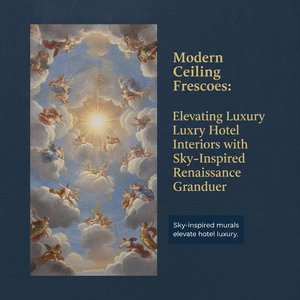
Marvel at Paolo Veronese's opulent ceiling paintings from the Palazzo Ducale, Venice (1578-82). Featuring biblical scenes & figures, these masterpieces showcase Mannerist drama and lavish detail.

Artist Biography

Paolo Veronese (1528-1588): Venetian Renaissance master celebrated for vibrant color, dramatic compositions & opulent scenes of feasts and architecture. Explore his legacy!

from ·

Chapter 1

How large should it be?

Slide to change the size; the picture on the left shows the frame at its real width. The proportions of the original are kept.

Standard
custom
CM
INCH

Pick from our preset sizes that match the artwork's original proportions.

width
height

Type the width and the height you need, to fit your frame or your wall. This is hand-painted, so for a size with a different shape the artist can paint a bit more around the picture, or cut a bit — you choose. We send you a digital mockup to approve before the painting starts. The picture shown on this page does not show the real result — only the mockup does.

Chapter 2

How should it arrive?

Choose the edges of the stretched canvas

Choose your frame

Corner sample of the WhiteWrap canvas edge finish, stretched on solid wood bars
White $1
Corner sample of the BlurSideWrap canvas edge finish, stretched on solid wood bars
Blurside $1
Corner sample of the ExtendedWrap canvas edge finish, stretched on solid wood bars
Extended $1
Corner sample of the P118B picture frame: moulded polystyrene, 5 cm wide and 3 cm thick
P118B $10
Corner sample of the P118H picture frame: moulded polystyrene, 5 cm wide and 3 cm thick
P118H $10
Corner sample of the P118W picture frame: moulded polystyrene, 5 cm wide and 3 cm thick
P118W $10
Corner sample of the P438Z picture frame: moulded polystyrene, 5.5 cm wide and 3.5 cm thick
P438Z $10
Corner sample of the P508JH picture frame: moulded polystyrene, 7 cm wide and 3.5 cm thick
P508JH $12
Corner sample of the P508YH picture frame: moulded polystyrene, 7 cm wide and 3.5 cm thick
P508YH $12
Corner sample of the P805H picture frame: moulded polystyrene, 5 cm wide and 3.5 cm thick
P805H $10
Corner sample of the P805Z picture frame: moulded polystyrene, 5 cm wide and 3.5 cm thick
P805Z $10
Corner sample of the P919BZ picture frame: moulded polystyrene, 7 cm wide and 3.5 cm thick
P919BZ $10
Corner sample of the P919G picture frame: moulded polystyrene, 7 cm wide and 3.5 cm thick
P919G $10
Corner sample of the P919XJ picture frame: moulded polystyrene, 7 cm wide and 3.5 cm thick
P919XJ $10
Corner sample of the P959ZH picture frame: moulded polystyrene, 5 cm wide and 3 cm thick
P959ZH $10
Corner sample of the P968JZ picture frame: moulded polystyrene, 6 cm wide and 4 cm thick
P968JZ $12
Corner sample of the W106C picture frame: solid wood, 5 cm wide and 3 cm thick
W106C $8
Corner sample of the W218G picture frame: solid wood, 5 cm wide and 3 cm thick
W218G $10
Corner sample of the W218JH picture frame: solid wood, 5 cm wide and 3 cm thick
W218JH $8
Corner sample of the W218Y picture frame: solid wood, 5 cm wide and 3 cm thick
W218Y $10
Corner sample of the W307PJ picture frame: solid wood, 6 cm wide and 3 cm thick
W307PJ $10
Corner sample of the W316G picture frame: solid wood, 6 cm wide and 3 cm thick
W316G $10
Corner sample of the W316PJ picture frame: solid wood, 6 cm wide and 3 cm thick
W316PJ $8
Corner sample of the W316Y picture frame: solid wood, 6 cm wide and 3 cm thick
W316Y $10
Corner sample of the W398PJ picture frame: solid wood, 5 cm wide and 3 cm thick
W398PJ $8
Corner sample of the W4111J picture frame: solid wood, 6.5 cm wide and 3.5 cm thick
W4111J $10
Corner sample of the W500HY picture frame: solid wood, 7 cm wide and 5 cm thick
W500HY $15
Corner sample of the W500JH picture frame: solid wood, 7 cm wide and 5 cm thick
W500JH $15
Corner sample of the W692G picture frame: solid wood, 8 cm wide and 4 cm thick
W692G $12
Corner sample of the W849H picture frame: solid wood, 5 cm wide and 3 cm thick
W849H $8
Corner sample of the W940BG picture frame: solid wood, 7.5 cm wide and 4.5 cm thick
W940BG $15
Corner sample of the W953PJ picture frame: solid wood, 6 cm wide and 3.5 cm thick
W953PJ $8
Corner sample of the H24-GOLD picture frame: carved wood with gesso, 10 cm wide and 6 cm thick
H24-GOLD $30
Corner sample of the H24-SILVER picture frame: carved wood with gesso, 10 cm wide and 6 cm thick
H24-SILVER $30
Corner sample of the H36-GOLD picture frame: carved wood with gesso, 15 cm wide and 6.5 cm thick
H36-GOLD $45
Corner sample of the H36-SILVER picture frame: carved wood with gesso, 15 cm wide and 6.5 cm thick
H36-SILVER $45
Frame preview
Framed

Moulding: . Overall size with the frame: .

Chapter 3

Who paints it, and should anything change?

Examples of what can be changed: Replace face with customer photo; Add pet (e.g., replace cat with dog); Include hidden message in background; Change background landscape or elements.
After order, OriginalUniqueArt.com team will email client for instructions and provide a mockup preview

Worldwide Delivery () in 3/4 weeks instead of standard 5 weeks. (31 October). No compromise on quality.

Chapter 4

The finishing touches

A nameplate, as in a museum?

Engraved Bronze Plaque Details

This elegant plaque features the artist's name and the title of the artwork, finely engraved for a timeless presentation.

It is made from bronze with a refined, elegant finish. The text is precisely laser-engraved for a sharp and permanent result. Measuring 9x2 cm, the plaque is compact yet easy to read. It's built to be durable and scratch-resistant, offering a professional, museum-quality look. Mounting is simple thanks to the included adhesive backing.

Transparent Acrylic Plaque Details

The plaque includes essential engraved details such as the artist's name, the title of the artwork, the date it was created, the type of media used-like oil on canvas or watercolor-a brief description of the piece, and a QR code that links to the complete artwork information.

It is crafted from clear acrylic, offering a sleek, modern appearance. The text is UV-engraved in black to ensure strong visual contrast. With a size of 10x15 cm, it ensures optimal readability. It comes equipped with two metal hooks for secure wall mounting. The plaque is designed to be weather-resistant, making it suitable for various environments, and it includes interactive features that work seamlessly with smartphone scanning.

Black Acrylic Plaque Details

This elegant plaque includes engraved information such as the artist's name, the title of the artwork, the date it was created, the type of media used (like oil on canvas or watercolor), a short description of the artwork, and a QR code for quick access to more information.

The plaque itself is made from refined black acrylic with a premium finish. The text is laser-engraved in white for high contrast and readability. Its size is 10x15 cm, designed to be easy to read. It comes with two metal hooks for professional mounting. The design is sleek and fits any interior style. It is also weather-resistant and durable, with built-in digital integration for mobile compatibility.

A protective varnish?

When do you need it?

Chapter 5

Your painting, as you ordered it

Ceiling paintings

Reproduction Medium

Reproduction Size

-

Elite Senior Artist

More detail, finesse, and extra production time

-

Reproduction Frame

-

-

For artworks or reproductions larger than 105 cm (approximately 41 inches) on any side, the frame will be shipped as a kit, disassembled. This method ensures safe delivery and prevents damage during transport.

Professional assembly required - this is not a DIY product.
The kit must be assembled and the canvas stretched by an experienced professional framer, using wood glue (not supplied), a canvas stretching plier and clamps to hold the bars square while the glue dries. Incorrect assembly or uneven canvas tension can permanently damage the artwork and is not covered by our warranty.

  • All solid wood bars are included, precisely cut to size.

  • Assembled with the screws provided, plus wood glue for the corner joints, which is not supplied and must be sourced by your framer.

  • Professional tools are required and not included: a canvas stretching plier (tensioner) and clamps to hold the bars square while the glue dries.

Important:
The corner joints require wood glue, the bars must be held with clamps until the glue is fully dry, and tightening the canvas on the assembled frame requires a canvas stretching plier. None of these are included in the kit. Please arrange an experienced professional framer before ordering this size.

Nameplate

-

-

Protective Varnish

Glossy Varnish (enhances colors, protects against light/moisture)

-

Customize My Artwork

Examples of what can be changed: Replace face with customer photo; Add pet (e.g., replace cat with dog); Include hidden message in background; Change background landscape or elements.

-

Urgent

Worldwide Delivery () in 3/4 weeks instead of standard 5 weeks. (31 October). No compromise on quality.

-

Express Shipping

Worldwide Delivery () in 5 weeks. (7 November).

Included

Total Price

$ 300

Total Price $ 300

Glass option is only available in size under 110 CM

Included with every order

  • Free Worldwide Express Shipping
  • High-Quality Linen Canvas
  • Full Shipping Insurance
  • Customs Tax Refund Guarantee
  • True Color Matching Guarantee
  • 100-Day Return Policy (Defects Only)
  • 100% Money-Back Guarantee
  • Bulk Discount Offer

The Celestial Tapestry: Veronese’s Ceiling Paintings in the Palazzo Ducale

Within the opulent halls of the Palazzo Ducale in Venice, a breathtaking spectacle unfolds – Paolo Veronese's ceiling paintings, completed between 1578 and 1582. More than mere decoration, these monumental works represent a pinnacle of Mannerist artistry, a dazzling fusion of classical grandeur, vibrant color, and theatrical drama that continues to captivate viewers centuries later. They are not simply painted images; they’re immersive environments, meticulously crafted illusions designed to transform the very space in which they reside.

Veronese, already a celebrated master by this period, had been commissioned to adorn the Sala del Collegio within the Palazzo Ducale – a project that demanded an unprecedented scale and ambition. The paintings depict a complex narrative, primarily rooted in classical mythology and religious allegory, yet rendered with a distinctly Venetian sensibility. The sheer number of figures—estimated at over 100—is staggering, each meticulously detailed and posed to contribute to the overall sense of bustling activity and vibrant life. This wasn’t merely about illustrating stories; it was about creating an illusion of boundless space, drawing the eye upwards into a realm of idealized beauty and divine presence.

A Symphony of Color and Technique

Veronese's mastery lies not just in his subject matter but also in his unparalleled command of color. He employed a technique known as “quadratura,” a sophisticated illusionistic method that seamlessly blends painted architecture with the real structure of the ceiling. This involved creating the *impression* of architectural elements – columns, arches, and elaborate moldings – entirely through paint, giving the illusion of an expansive, three-dimensional space. The colors themselves are extraordinarily rich and luminous, achieved through painstaking layering of glazes and a deep understanding of how light interacts with surface. The use of ultramarine blue, imported at great expense from the East, is particularly striking, lending a celestial quality to the overall composition.

Furthermore, Veronese’s brushwork is remarkably fluid and dynamic. He eschewed the smooth, polished surfaces favored by earlier Renaissance painters in favor of a more textured approach, creating a sense of movement and vitality within each figure and scene. The figures are not static representations; they seem to be caught in moments of action, conversation, or contemplation, contributing to the painting’s overall theatricality.

Symbolism and Venetian Grandeur

Decoding the symbolism woven throughout Veronese's ceiling paintings is a rewarding endeavor. The scenes depict a carefully orchestrated pageant of mythological figures – gods, goddesses, emperors, and heroes – engaged in elaborate feasts, processions, and dramatic encounters. These aren’t straightforward biblical narratives; they are infused with Venetian cultural values, celebrating wealth, power, and the city’s position as a center of trade and artistic innovation. The inclusion of numerous portraits—often believed to be likenesses of prominent Venetian citizens—further underscores this connection to the local elite.

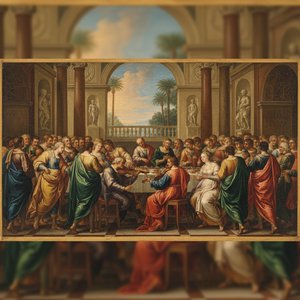
The central panel, often referred to as “The Feast in the House of Levi,” is particularly noteworthy for its lavish depiction of a banquet overflowing with food, drink, and elegantly dressed figures. This scene, drawing inspiration from the Gospel story of Jesus feeding the multitudes, serves as a potent metaphor for Venice’s prosperity and its role as a generous host. The sheer scale and opulence of the painting are designed to overwhelm the viewer, conveying a sense of boundless abundance and Venetian magnificence.

A Legacy of Illusion

Today, reproductions of Veronese's ceiling paintings continue to inspire awe and admiration. The intricate detail, vibrant colors, and masterful illusionistic techniques remain remarkably evident even in scaled-down versions. These works stand as a testament to Veronese’s genius—a celebration of beauty, grandeur, and the transformative power of art. They offer a glimpse into the heart of Renaissance Venice, inviting us to lose ourselves in their dazzling spectacle and contemplate the enduring legacy of one of history's greatest painters.

Questions & Answers

What luminance does "Ceiling paintings" by Paolo Veronese have?

The luminance recorded for "Ceiling paintings" by Paolo Veronese is soft shadow.

What kind of piece is "Ceiling paintings"?

"Ceiling paintings" is a wall art piece.

Is there a factsheet about "Ceiling paintings" by Paolo Veronese for students?

The Guide page of "Ceiling paintings" by Paolo Veronese offers a printable two-sheet factsheet: the artwork with its identity table, a decade band placing it in the artist's lifetime, other works by the artist, the measured color palette, and ready-to-copy citations in four styles.

More about this painting

Preview AR preview Switch to Print Switch to Digital Image Send
Details Guide Add to favorites Download Similars X-Ray Diaporama Q&A Stats

In numbers

  • 1578the year it was painted
  • 29frames to choose from
  • standard sizes, in its own proportions
  • 5weeks to paint and deliver it
Paolo Veronese

Paolo Veronese

1528 - 1588, Italy

Quick facts about Paolo Veronese

  • Artistic Movement Or Style: Renaissance, Mannerism
  • Artists Or Movements Influenced By This Artist:
    • Rubens
    • Watteau
  • Artists Who Influenced This Artist: ['Titian']
  • Date Of Birth: 1528
  • Date Of Death: 1588
  • Full Name: Paolo Veronese
  • Nationality: Italian
  • Notable Artworks:
    • The Wedding at Cana
    • Feast in the House of Levi
  • Other Names: Paolo Caliari
  • Place Of Birth: Verona, Italy

Artist Biography

A Venetian Visionary: The Life and Art of Paolo Veronese

Paolo Caliari, known to the world as Paolo Veronese, emerged from the vibrant artistic landscape of 16th-century Venice as a master of color, composition, and opulent spectacle. Born in Verona in 1528, the son of a stonecutter, his early life was steeped in the visual richness of his surroundings – the classical architecture, sculpted forms, and burgeoning humanist ideals that characterized the region. His initial training under Antonio Badile and Giovanni Francesco Caroto laid a foundation in traditional techniques, but it was his move to Venice in the 1550s that truly ignited his artistic genius. The city itself became his muse, its bustling marketplaces, grand palazzi, and shimmering waterways informing the scale and drama of his work. He quickly absorbed the influences of established Venetian masters like Titian, whose mastery of color profoundly impacted Veronese’s palette, yet he forged a distinct style characterized by an unparalleled sense of theatricality and grandeur.

The Painter of Feasts and Grand Narratives

Veronese's reputation rests upon his monumental paintings, particularly those depicting lavish feasts and biblical scenes transformed into dazzling displays of Venetian life. The Wedding at Cana, completed in 1563 for the Benedictine monastery of San Giorgio Maggiore, stands as a testament to his skill. This colossal canvas isn’t merely an illustration of the miracle; it's a vibrant panorama of 16th-century society, teeming with elegantly dressed figures, musicians, and architectural details rendered with breathtaking precision. The painting is not just about what happened at Cana but *how* it would have looked if it had occurred in Venice during Veronese’s time. Similarly, The Feast in the House of Levi, originally titled The Last Supper, caused controversy with the Inquisition due to its inclusion of contemporary figures and a seemingly irreverent atmosphere. Veronese defended his artistic license, asserting that painters were entitled to the same creative freedom as poets and jesters – a bold statement reflecting his belief in art’s power to interpret and reimagine sacred narratives. These works weren't simply religious depictions; they were celebrations of life, wealth, and the splendor of Venice itself. He wasn’t interested in austere spirituality but rather in capturing the joy and abundance of existence.

Influences and Artistic Development

While Titian’s influence on Veronese’s colorism is undeniable, his artistic development was a complex interplay of various influences. The architectural precision he brought to his compositions owes much to the classical tradition prevalent in Verona during his formative years, particularly the work of architects like Michele Sanmicheli. He also absorbed elements from Central Italian masters such as Raphael and Parmigianino, evident in the graceful lines and harmonious arrangements within his paintings. However, Veronese didn’t simply imitate these influences; he synthesized them into a uniquely Venetian style characterized by its dramatic use of light, vibrant color palettes, and meticulous attention to detail. He excelled at creating illusions of space and depth, employing perspective techniques to draw viewers into the heart of his elaborate scenes. His mastery of oil painting allowed him to achieve an unparalleled luminosity and richness of texture. He also ran a large workshop, with contributions from his brother Benedetto and sons Gabriele and Carlo, ensuring that his style continued to flourish even after his death in 1588.

Legacy and Historical Significance

Paolo Veronese’s impact extends far beyond the realm of Renaissance art. His work has resonated through centuries, inspiring artists across various disciplines. His dramatic compositions and vibrant color schemes have been cited as influences on everything from Baroque painting to modern cinema – even finding echoes in the visual aesthetics of Spaghetti Westerns. He was part of the “great trio” of Venetian painters—alongside Titian and Tintoretto—each contributing uniquely to the city’s artistic legacy, yet Veronese often stands apart for his sheer exuberance and celebration of earthly pleasures. His paintings continue to captivate audiences with their grandeur and spectacle, offering a glimpse into the opulent world of 16th-century Venice.
  • He redefined historical painting by imbuing it with contemporary life.
  • His use of color remains influential for artists today.
  • His work embodies the spirit of Renaissance humanism and celebration of earthly beauty.
Veronese’s legacy is a testament to his artistic genius, his ability to capture the essence of an era, and his enduring contribution to the history of art.

Quick Facts

  • Location: Palazzo Ducale, Venice
  • Movement: Mannerism
  • Year: 1578-1582
  • Artist: Paolo Veronese
  • Title: Ceiling paintings

Art Quiz

There is only one correct answer for each question.

Question 1:
What is the primary artistic style represented in Paolo Veronese’s ‘Ceiling Paintings’?
Question 2:
The ‘Ceiling Paintings’ were originally commissioned for which prominent Venetian building?
Question 3:
Which of the following best describes a key characteristic of ‘quadratura’ as used in these ceiling paintings?
Question 4:
The ‘Ceiling Paintings’ are renowned for their lavish use of what material?
Question 5:
What historical period does Paolo Veronese's work primarily represent?