

 Preview
 Send
Send Share
Share
 Details

 Download
 Similars
 X-Ray
X-Ray Diaporama
Interior Scene

 Read More
Hand Made Oil Reproduction
Hand-painted oil on canvas in your size and frame, made to order by our artists. ( Buy Print Buy Image)




P118B $10

P118H $10

P118W $10

P438Z $10

P508JH $12

P508YH $12

P805H $10

P805Z $10

P919BZ $10

P919G $10

P919XJ $10

P959ZH $10

P968JZ $12

W106C $8

W218G $10

W218JH $8

W218Y $10

W307PJ $10

W316G $10

W316PJ $8

W316Y $10

W398PJ $8

W4111J $10

W500HY $15

W500JH $15

W692G $12

W849H $8

W940BG $15

W953PJ $8




Pick from our preset sizes that match the artwork's original proportions.

You may enter your own dimensions to fit a specific frame or space. If your selected size does not match the original image's proportions, we will either crop the artwork or extend the painting with additional hand-painted elements. A digital mockup will be sent for your approval before production begins.
Please note that the on-screen preview does not reflect the actual cropping or extension. Only the mockup will accurately show the final composition.
While custom sizes are available, we recommend selecting a dimension from the predefined list to preserve the original proportions.
After order, OriginalUniqueArt.com team will email client for instructions and provide a mockup preview
Worldwide Delivery () in 3/4 weeks instead of standard 5 weeks. (27 August). No compromise on quality.

Free Worldwide Express Shipping

High-Quality Linen Canvas

Full Shipping Insurance

Customs Tax Refund Guarantee

True Color Matching Guarantee

60-Day Return Policy (Defects Only)

100% Money-Back Guarantee

Bulk Discount Offer
 Glass option is only available in size under 110 CM

Interior Scene
Reproduction Medium
Reproduction Size
-


Total Price
$ 300
Artist Biography
The Elegance of an Era: The Life and Art of Otto Erdmann
In the golden twilight of the nineteenth century, as the industrial world began its rapid, soot-stained ascent, there existed a profound longing for the vanished splendor of the past. It was within this cultural tension that Otto Erdmann (1834–1905) carved his legacy, acting as a master weaver of nostalgia. Born in Leipzig to the chemist Otto Linné Erdmann, the artist inherited a sense of scientific precision that would later manifest in the meticulous textures of his brushwork. His journey through the prestigious academies of Leipzig, Dresden, and Munich allowed him to absorb the finest traditions of German genre painting, yet it was his encounter with the works of Ludwig von Hagn that truly ignited his passion for the Rococo Revival.
Erdmann’s artistic soul found its true home in Düsseldorf, a city then pulsating with creative energy. Settling there in 1858, he became a cornerstone of the illustrious Malkasten artists' association, serving on its board and contributing to a community that bridged the gap between classical tradition and modern observation. His work did not merely depict scenes; it resurrected an entire atmosphere of courtly grace. Through his eyes, the viewer is transported into opulent salons and sun-drenched corridors where the light dances across silk gowns and gilded ornaments, capturing a world of aristocratic leisure that felt both intimately real and dreamily distant.
A Mastery of Light and Rococo Revival
The brilliance of Erdmann’s technique lies in his ability to balance the decorative flourishes of the Rococo style with a profound sense of realism. He did not simply mimic the ornamentation of Louis XIV’s France; he reinterpreted it through a nineteenth-century lens, infusing his compositions with a psychological depth that elevated them above mere decoration. His paintings, such as the captivating Gossip on the Stairs, serve as windows into a highly choreographed social dance. Every fold of fabric, every glint of light on a porcelain tea service, and every subtle glance between figures is rendered with an almost tactile clarity.
This dedication to detail extended beyond the canvas into the realm of illustration, where his ability to capture character and atmosphere made him a sought-after talent for scholarly and high-society publications. His contributions to the Belgian journal L'Illustration Européenne in 1870 demonstrate his versatility as a visual storyteller. Whether he was documenting the intricate patterns of a ballroom or the quiet dignity of an interior scene, Erdmann possessed a unique gift for finding the extraordinary within the elegant.
Legacy and Historical Significance
While some might view the Rococo Revival as a retreat from the pressing realities of the late nineteenth century, Erdmann’s work represents something much more complex: a sophisticated preservation of cultural heritage. He was an artist who understood that beauty is a vital component of the human experience, even when it feels like a memory. His life was a tapestry of diverse interests, ranging from his involvement in theatrical performances to his recognition with the prestigious Order of the Red Eagle in 1898.
Today, the significance of Otto Erdmann resides in his role as a chronicler of an idealized European elegance. His paintings remain enduring testaments to a period of transition, offering a serene refuge of color and light. To study his oeuvre is to witness a master at work, navigating the delicate boundary between historical homage and personal artistic expression, ensuring that the charm of the aristocratic past would never truly fade from the collective memory of the art world.

otto erdmann
1834 - 1905
Quick Facts
- Artistic Movement Or Style: Rococo Revival
- Artists Or Movements Influenced By This Artist: ['American Modernism']
- Artists Who Influenced This Artist: ['Ludwig von Hagen']
- Date Of Birth: 1834
- Date Of Death: 1905
- Full Name: Otto Erdmann
- Nationality: German
- Notable Artworks:
- Gossip on the Stairs
- Interior Scene
- Place Of Birth: Germany
Related Articles
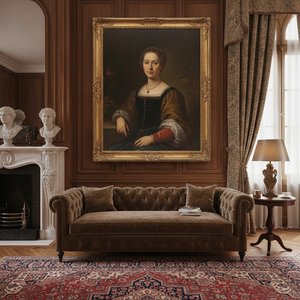
Timeless Elegance: The Ultimate Buyer's Guide to Choosing Classical Portraits for Sophisticated Interiors
Discover how to select the perfect classical portrait for your home. Our expert guide explores matching art styles to interiors, choosing between hand-painted oils and Giclée prints, and transforming personal photos into timeless masterpieces with professional artistry.
Harmonizing Contrasts: Integrating Abstract Art into Classic Interiors for Timeless Modernity
Elevate your classic home with abstract art! Discover expert tips for seamlessly blending modern pieces into timeless interiors. Find the perfect artwork & design advice at OriginalUniqueArt.

Rococo's Radiant Legacy: 10 Masterpieces for Your Home |
Indulge in the elegance of Rococo! Explore 10 masterpieces by Fragonard, Boucher & Watteau. Discover the stories behind these iconic paintings and bring timeless art to your home with museum-quality reproductions from .

Neo-Classicism's Greatest Hits: 10 Masterpieces for Your Home |
Journey through Neo-Classicism's finest! Explore 10 iconic masterpieces by David, Ingres & Canova. Discover art history, techniques & timeless beauty – perfect for inspiring your home decor. Find museum-quality reproductions at

The Rococo Aesthetic: Opulence, Rebellion & the Pursuit of Pleasure in 18th-Century Art
Explore the opulent world of Rococo art! Discover its origins, key artists like Watteau & Boucher, and lasting influence on design. Expert insights for collectors & enthusiasts.



