Preview
 Send
Send Share
Share
 Details
 Guide
Guide

 Download
 Similars
 X-Ray
X-Ray Diaporama
 Stats
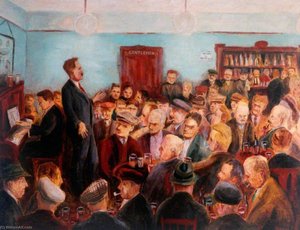
StatsThe Hermit
 1938
1938 51.0 x 61.0 cm
 Woodhorn Museum - Northumberland Archives
 Read More
The artwork displayed on this page is protected by copyright law, which means we cannot legally create or sell an identical reproduction. This protection is enforced under international agreements such as the Berne Convention and by national laws, including those outlined by the U.S. Copyright Law - Title 17.
This method fully complies with copyright regulations because it does not involve copying or duplicating the protected artwork. Instead, it is a creative reinterpretation - a new painting that is influenced by the original but not identical to it.
Giclée / Art Print
Museum-quality giclée or canvas print with fast production and flexible finish options. ( Buy Hand Made Painting Switch to Digital Image)




































Pick from our preset sizes that match the artwork's original proportions.

Type the width and the height you need, to fit your frame or your wall. A print can only be cut, never made bigger than the picture, so a size with a different shape loses a part of the image. We send you a digital mockup to approve before we print anything. The picture shown on this page does not show the real cut — only the mockup does.
Worldwide Delivery () in 2 weeks instead of standard 4/5 weeks. (27 October)

Free Worldwide Express Shipping

High-Quality Linen Canvas

Full Shipping Insurance

Customs Tax Refund Guarantee

True Color Matching Guarantee

100-Day Return Policy (Defects Only)

100% Money-Back Guarantee

Bulk Discount Offer
 Glass option is only available in size under 110 CM

The Hermit
Giclée / Art Print
Reproduction Size
-


Total Price
$ 81
Artist Biography
The Soul of the Pit: The Life and Legacy of Oliver Kilbourn
Oliver Percival Kilbourn (1904-1993) stands as a singular testament to the intersection of artistic vision and lived experience—a figure inextricably linked to the Ashington Group, a collective of Northumberland miners who revolutionized British art in the mid-20th century. Born in Washington D.C., United Kingdom, Kilbourn’s life began amidst the harsh realities of coal mining, shaping his worldview and informing the profound emotional depth that characterizes his paintings. He was not merely documenting labor; he was channeling it into a uniquely expressive form of artistic communication, turning the grit of the colliery into the gold of fine art.
Kilbourn’s journey into the realm of creativity was born from the very earth he worked. From humble beginnings as a child laborer at the Duke Pit—a position he held for eleven years after turning thirteen—he developed an unwavering connection to the physical world and, crucially, to the human condition within it. The transformative moment of his life arrived around 1934, when he enrolled in Robert Lyon's art appreciation course. This formative experience instilled in him a lifelong belief that art could be used to express the deepest feelings about existence. Through Lyon’s guidance, Kilbourn and his fellow miners found a language to articulate the struggles and triumphs of their community.
A Vision of Social Realism and Natural Beauty
The Ashington Group, established in 1927, provided Kilbourn with an unparalleled environment for honing his craft and disseminating his ideas. Unlike many artists of his era who sought refuge from societal concerns, Kilbourlar embraced the challenge of confronting social issues head-on. He became a master of translating the physicality and emotional resonance of daily life into powerful imagery. His work often oscillates between the heavy, industrial weight of mining life and the delicate, fleeting beauty of the natural world.
His repertoire is remarkably diverse, showcasing a range of subjects that reflect both his heritage and his observations:
- The Mining Experience: Through series such as My Life as a Pitman, Kilbourn captured the raw, unvarnished reality of colliery life, focusing on the strength and solidarity of the workers.
- Industrial Landscapes: Works like Station Bridge and Haul Away demonstrate his ability to find structural beauty and narrative tension within industrial settings.
- Nature and Wildlife: Beyond the coal dust, Kilbourn possessed a keen eye for the organic world. His depictions of birds and landscapes reveal a softer, more contemplative side of his artistry, where light and movement take center stage.
Historical Significance and Artistic Triumph
The significance of Oliver Kilbourn lies in his ability to bridge the gap between the working class and the high art establishment. He was a key figure in the development of British Social Realism, proving that profound aesthetic value could be extracted from the most mundane and difficult circumstances. His work does not seek to idealize poverty or toil; instead, it seeks an honest, visceral connection with the viewer, demanding recognition for the dignity of the laborer.
Today, Kilbourn’s legacy is preserved through institutions like the Woodhorn Museum in Northumberland, which celebrates the mining heritage and the artistic triumphs of the Ashington Group. His paintings remain vital pieces of British cultural history, serving as both a window into a vanished way of life and a timeless exploration of the human spirit. Through his brush, the soot-stained reality of the North East was transformed into an enduring legacy of light, color, and profound human truth.

Oliver Kilbourn
1904 - 1993 , United Kingdom
Quick Facts
- Full Name: Oliver Percival Kilbourn
- Nationality: British
- Date Of Birth: 1904
- Date Of Death: 1993
- Place Of Birth: Washington, D.C., United Kingdom
- Notable Artworks:
- Station Bridge
- Haul Away
- Birds
- Artistic Movement Or Style: Social Realism
- Artists Who Influenced This Artist: ['Robert Lyon']
- Artists Or Movements Influenced By This Artist: ['Ashington Group']