Preview
 Send
Send Share
Share
 Details

 Download
 Similars
 X-Ray
X-Ray Diaporama
 Stats
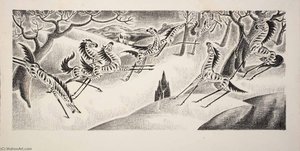
StatsWomen Washing
 1933
1933 10.0 x 18.0 cm
 Read More
Giclée / Art Print
Museum-quality giclée or canvas print with fast production and flexible finish options. ( Buy Hand Made Painting Switch to Digital Image)




































Pick from our preset sizes that match the artwork's original proportions.

You may enter your own dimensions to fit a specific frame or space. If your selected size does not match the original image's proportions, we will either crop the artwork or extend the image with a mirrored or solid-fill edge. A digital mockup will be sent for your approval before production begins.
Please note that the on-screen preview does not reflect the actual cropping or extension. Only the mockup will accurately show the final composition.
While custom sizes are available, we recommend selecting a dimension from the predefined list to preserve the original proportions.
Worldwide Delivery () in 2 weeks instead of standard 4/5 weeks. (20 September)

Free Worldwide Express Shipping

High-Quality Linen Canvas

Full Shipping Insurance

Customs Tax Refund Guarantee

True Color Matching Guarantee

100-Day Return Policy (Defects Only)

100% Money-Back Guarantee

Bulk Discount Offer
 Glass option is only available in size under 110 CM

Women Washing
Giclée / Art Print
Reproduction Size
-


Total Price
$ 81
Artist Biography
The Visionary Eye of Olin Dows: From Pastoral Serenity to the Front Lines
Born into a world of burgeoning American modernism, Olin Dows (August 14, 1904 – June 6, 1981) carved a unique niche in the mid-twentieth-century art scene by bridging the gap between the tranquil beauty of the natural world and the harrowing realities of human conflict. Raised in Irvington-on-Hudson, New York, Dows was steeped in an environment of cultural refinement, being the son of Tracy "Pup" Dals and the celebrated socialite and poet Alice Olin Dows. His early artistic formation was nothing short of prestigious; he refined his technical prowess at Harvard University's Department of Fine Arts and Yale’s Student League. Under the watchful guidance of masters such as Eugene F. Savage, Edward C. Taylor, and C.K. Chatterton, Dows developed a meticulous command of realism and an eye for the intricate details that define the American landscape tradition.
The early years of his career were marked by a profound fascination with the rhythms of nature and the fleeting qualities of light. Heavily influenced by the Impressionist and Post-Impressionist movements—specifically the luminous palettes of Claude Monet and the expressive textures of Vincent van Gogh—Dows sought to capture the ephemeral essence of the changing seasons. His celebrated series, which includes works such as The Seasons Spring, Summer, Fall, and Winter, showcases a remarkable ability to use lithography and painting to evoke atmosphere. In these pieces, one finds a delicate balance of movement and stillness, where animals like zebras or horses are woven into landscapes that shift from the vibrant energy of spring to the stark, frozen motion of winter. This period of his work reflects a deep-seated reverence for the organic world, rendered with a precision that suggests both scientific observation and poetic soul.
A Witness to History: The War Artist’s Transformation
While Dows is often remembered for his pastoral elegance, his life took a dramatic and transformative turn with the onset of World War II. Choosing duty over the comforts of an officer training school assignment, Dows enlisted in the U.S. Army, driven by a profound desire to document the unfolding human drama of the European Theater of Operations. This transition from landscape painter to war artist redefined his artistic identity. No longer merely observing the quietude of the American countryside, he became a primary visual chronicler of combat and its aftermath. As the head of a specialized trio of artists, Dows applied his mastery of detail to the gritty, often devastating scenes of war, providing an unflinching perspective that captured the psychological and physical weight of the conflict.
This period of active service allowed Dows to merge his established skill in realism with a new, urgent subject matter. His work from this era serves as a vital historical record, moving beyond mere reportage to capture the emotional resonance of the European landscape under siege. The contrast between his early, serene lithographs and his later, more somber wartime documentation highlights a remarkable versatility. Through his eyes, the viewer experiences the duality of the twentieth century: the enduring beauty of the natural world and the profound fragility of civilization during times of upheaval.
Legacy and Artistic Significance
The legacy of Olin Dows resides in his ability to navigate these two disparate worlds with equal grace and intensity. His contributions to American art are characterized by a rare synthesis of technical academic training and raw, experiential truth. Beyond his personal canvases, his involvement in significant public endeavors—such as the Treasury Department’s Mural Designs project—demonstrates his role in shaping the visual landscape of American civic identity during the era of the New Deal.
Today, Dows' works are cherished not only for their aesthetic beauty but for their historical depth. His pieces held within institutions like the Smithsonian American Art Museum serve as windows into a bygone era, reminding us of the artist's unique power to act as both a poet of the earth and a witness to history. His life remains a testament to the idea that art is not merely a reflection of beauty, but a profound tool for understanding the complexities of the human condition.

olin dows
1904 - 1981
Quick Facts
- Artistic Movement Or Style: Realism
- Artists Who Influenced This Artist:
- Eugene F. Savage
- Edward C. Taylor
- C.K. Chatterton
- Date Of Birth: August 14, 1904
- Date Of Death: June 6, 1981
- Full Name: Stephen Olin Dows
- Nationality: United States
- Notable Artworks:
- The Seasons Spring
- The Seasons Summer
- The Seasons Winter
- Place Of Birth: Irvington-on-Hudson, New York