Suprematism · 1910
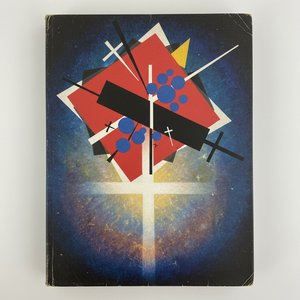
Abstract Composition (Olga Rozanova, 1910)
Olga Rozanova (1886–1918) made Abstract Composition. It dates from 1910. It belongs to the Suprematism movement. It is kept at The State Russian Museum in St. Petersburg, Russian Federation.

 Preview

 Hand Made Oil Painting
 Send
 Share
 Guide


 Download
 Similars
 X-Ray
 Diaporama
 Q&A

 Stats
Abstract Composition: the essentials
- Title
- Abstract Composition
- Artist
- Olga Rozanova (1886–1918)
- Artist born in
- Melenki, Russia
- Date
- 1910
- Where to see it
- The State Russian Museum, St. Petersburg, Russian Federation
- Movement
- Suprematism
- Subject
- composition
Which museum holds Abstract Composition?
The State Russian Museum
St. Petersburg, Russian Federation
The State Russian Museum and Its Origins The State Russian Museum is located in Saint Petersburg, Russian Federation. It was established in 1895 by Emperor Alexander III. The institution was founded to safeguard Russia's visual heritage.


Abstract Composition in high resolution
Olga Rozanova, Abstract Composition (1910), The State Russian Museum. Public domain.
A digital expert checks the colors against the original painting and retouches the file, faithful to the artist's brushwork.
Buy the high-resolution imageQuestions about Abstract Composition
From which country does the Suprematism work "Abstract Composition" come?
"Abstract Composition" connects the Suprematism movement with Russia through its creator's birthplace.
Is "Abstract Composition" more bright or more dark overall?
The recorded values for "Abstract Composition" by Olga Rozanova are: brilliant brightness, bright balance luminance.
What is "Abstract Composition" about?
The subjects of "Abstract Composition" are composition.
What was Olga Rozanova's age when "Abstract Composition" was created?
Olga Rozanova was 24 years old when creating "Abstract Composition" in 1910. The age is computed from the artist's birth year, 1886.
Does "Abstract Composition" by Olga Rozanova use strong contrasts or soft harmonies?
The color composition of "Abstract Composition" by Olga Rozanova combines a statement contrast with a softly mixed palette harmony.
What saturation and intensity does "Abstract Composition" by Olga Rozanova show?
The colors of "Abstract Composition" by Olga Rozanova show a muted saturation with a balanced intensity.
Which inventory number does The State Russian Museum use for "Abstract Composition"?
"Abstract Composition" is recorded under inventory number ЖБ-1382 at The State Russian Museum.
In what year was "Abstract Composition" by Olga Rozanova created?
The creation of "Abstract Composition" by Olga Rozanova is dated 1910.
What other names is Olga Rozanova known by?
Olga Rozanova appears under the alternate names Olga Vladimirovna Rozanova, Olʹga Vladimirovna Rozanova, Olga Rozanova, O. Rozanova, Olga Wladimirowna Rosanowa.
About the artist, Olga Rozanova

1886–1918, Russia
Olga Rozanova
A Life Illuminated: The Pioneering Vision of Olga Rozanova Olga Vladimirovna Rozanova, a name resonating with increasing force in the annals of 20th-century art, was a Russian avant-garde artist whose tragically short life belied an astonishingly prolific and innovative career. Born in 1886 in Melenki, Russia, to a family steeped in both civic duty – her father was a district police officer – and religious tradition through her Orthodox priest grandfather, Rozanova’s path diverged from convention as she pursued the burgeoning world of modern art in Moscow. After graduating from the Vladimir Women's Gymnasium in 1904, she immersed herself in artistic training, first at the Bolshakov Art School under Nikolai Ulyanov and sculptor Andrey Matveev, then auditing courses at the Stroganov School of Applied Art and finally honing her skills in Konstantin Yuon’s private studio. These formative years laid the groundwork for a restless exploration that would see her navigate and contribute to some of the most radical artistic movements of her time.
Also by Olga Rozanova
 Non-objective Composition1916
 Female Portrait1907
 Portrait of a girl1911
 Simultaneous Representation of Kings of Hearts and Diamonds1915
Essays around Abstract Composition
 25 Masterpieces by Kazimir Malevich: The Ultimate Guide to SuprematismJourney through the radical world of Kazimir Malevich. Explore 25 iconic Suprematist masterpieces, from Black Square to White on White. Dis…
 Geometric Abstraction's 10 Defining Masterpieces | Art for Your Home - OriginalUniqueArtExplore 10 defining masterpieces of Geometric Abstraction! Discover Kandinsky, Mondrian & Malevich’s iconic works. Find museum-quality art …
 Beyond Representation: Exploring the Radical Geometry of Suprematism & Its Spiritual FoundationsExplore the revolutionary world of Suprematism with our expert guide. Discover Kazimir Malevich's groundbreaking art, its spiritual foundat…