Preview
 Send
Send Share
Share
 Details
 Guide
Guide

 Download
 Similars
 X-Ray
X-Ray Diaporama
 Stats
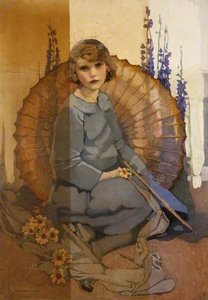
StatsA Belgian Refugee
 1921
1921 126.0 x 87.0 cm
 Read More
Giclée / Art Print
Museum-quality giclée or canvas print with fast production and flexible finish options. ( Buy Hand Made Painting Switch to Digital Image)




































Pick from our preset sizes that match the artwork's original proportions.

You may enter your own dimensions to fit a specific frame or space. If your selected size does not match the original image's proportions, we will either crop the artwork or extend the image with a mirrored or solid-fill edge. A digital mockup will be sent for your approval before production begins.
Please note that the on-screen preview does not reflect the actual cropping or extension. Only the mockup will accurately show the final composition.
While custom sizes are available, we recommend selecting a dimension from the predefined list to preserve the original proportions.
Worldwide Delivery () in 2 weeks instead of standard 4/5 weeks. (25 September)

Free Worldwide Express Shipping

High-Quality Linen Canvas

Full Shipping Insurance

Customs Tax Refund Guarantee

True Color Matching Guarantee

100-Day Return Policy (Defects Only)

100% Money-Back Guarantee

Bulk Discount Offer
 Glass option is only available in size under 110 CM

A Belgian Refugee
Giclée / Art Print
Reproduction Size
-


Total Price
$ 81
Artist Biography
The Radiant Vision of Norah Neilson Gray
In the vibrant tapestry of the early twentieth-century art world, few threads shine with as much nuanced brilliance as those woven by Norah Neilson Gray. A prominent figure within the celebrated Glasgow School, Gray was far more than a mere practitioner of paint and canvas; she was a pioneer who navigated the shifting tides of Edwardian society with both grace and profound emotional depth. Born in 1882 in Helensburgh, Scotland, her early life was steeped in an environment that fostered a keen eye for detail and a burgeoning passion for the visual arts. As a member of The Glasgow Girls, a collective of female artists who dared to challenge the rigid patriarchal structures of their era, Gray helped redefine the boundaries of artistic expression, proving that the female gaze could be both tenderly observant and strikingly powerful.
Gray’s journey through the halls of the Glasgow School of Art was marked by an extraordinary academic rigor. Studying under luminaries such as Fra Newbery and the Belgian artist Jean Delville, she honed a technique that balanced classical discipline with the experimental spirit of her time. Her education was not merely about mastering the brush; it was an immersion into the evolving languages of Impressionism and Symbolism. This period of her life saw her developing a unique stylistic signature—one characterized by a remarkable sensitivity to light and a belief in the hidden complexities of color. She famously earned the nickname "Purple Patch" among her peers, a testament to her insistence that even the deepest shadows held vibrant, colorful truths if one only possessed the vision to see them.
A Witness to History and Human Resilience
The trajectory of Gray’s career took a poignant turn with the onset of World War I, an era that would forever alter the soul of her work. Moving beyond the tranquil landscapes and intimate portraits of her youth, she became a profound chronicler of human suffering and endurance. Her experience volunteering as a nurse at the Royaumont Hospital in France provided her with an unfiltered view of the psychological and physical toll of conflict. This immersive encounter breathed a new, somber vitality into her compositions. The landscapes she painted were no longer just studies in light, but became stages for the heavy themes of loss, duty, and the quiet resilience of the human spirit.
Her ability to translate the visceral reality of war into fine art earned her significant acclaim on the international stage. Gray was not merely a local talent; she was a regular presence at the prestigious Paris Salon and the Royal Academy in London. Her work often bridged the gap between the personal and the political, using subtle tonal variations to evoke the atmosphere of a world in flux. Whether through her meticulous depictions of wounded soldiers or her more experimental uses of pointillism—as seen in works like The Missing Trawler—she maintained an unwavering commitment to capturing the truth of the moment, making her one of the most significant Scottish voices of her generation.
Legacy and Artistic Triumph
Beyond her technical mastery, Gray’s legacy is defined by her role as a trailblazer for women in the arts. By achieving success in major exhibitions and holding her own studio on Glasgow's Bath Street, she paved the way for future generations of female painters to claim their space in the academic and commercial spheres. Her contributions were recognized through various prestigious honors, including her election to the Royal Scottish Society of Painters in Watercolour.
As we reflect on her life and work today, several key elements emerge that define her enduring significance:
- Technical Innovation: Her mastery of light and her unique "purple patch" approach to shadows brought a modern, vibrant energy to the Glasgow School tradition.
- Social Impact: As a member of The Glasgow Girls, she was instrumental in shifting the narrative of women artists from domestic subjects to active, professional creators.
- Historical Documentation: Her wartime works serve as vital visual records of the emotional landscape of the early twentieth century.
- Versatility: From delicate portraiture and still lifes to the heavy, emotive themes of war-torn landscapes, her range remains a cornerstone of Scottish art history.
Though her life was tragically short, ending in 1931, the impact of Norah Neilson Gray continues to resonate. Her paintings remain windows into a transformative era, inviting viewers to look closely at the shadows and find, as she did, the hidden colors within.
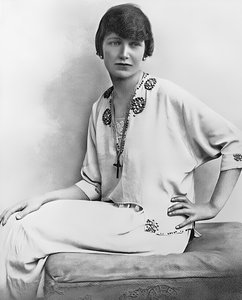
norah neilson gray
1882 - 1931
Quick Facts
- Artistic Movement Or Style: Glasgow School Art
- Artists Or Movements Influenced By This Artist: ['Impressionism']
- Artists Who Influenced This Artist:
- Frank Lloyd Wright
- James Abbott McNeill Whistler
- Date Of Birth: 1882
- Date Of Death: 1931
- Full Name: Norah Neilson Gray
- Nationality: Scottish
- Notable Artworks:
- Little Boy with Oranges
- Hôpital Auxiliaire d'Armée 300
- Place Of Birth: Glasgow, Scotland