
 Preview
 Send
Send Share
Share
 Details
 Guide
Guide

 Download
 Similars
 X-Ray
X-Ray Diaporama
 Stats
StatsSasha


 Read More
The artwork displayed on this page is protected by copyright law, which means we cannot legally create or sell an identical reproduction. This protection is enforced under international agreements such as the Berne Convention and by national laws, including those outlined by the U.S. Copyright Law - Title 17.
This method fully complies with copyright regulations because it does not involve copying or duplicating the protected artwork. Instead, it is a creative reinterpretation - a new painting that is influenced by the original but not identical to it.
Giclée / Art Print
Museum-quality giclée or canvas print with fast production and flexible finish options. ( Buy Hand Made Painting Switch to Digital Image)




P118B $10

P118H $10

P118W $10

P438Z $10

P508JH $12

P508YH $12

P805H $10

P805Z $10

P919BZ $10

P919G $10

P919XJ $10

P959ZH $10

P968JZ $12

W106C $8

W218G $10

W218JH $8

W218Y $10

W307PJ $10

W316G $10

W316PJ $8

W316Y $10

W398PJ $8

W4111J $10

W500HY $15

W500JH $15

W692G $12

W849H $8

W940BG $15

W953PJ $8




Pick from our preset sizes that match the artwork's original proportions.

Type the width and the height you need, to fit your frame or your wall. A print can only be cut, never made bigger than the picture, so a size with a different shape loses a part of the image. We send you a digital mockup to approve before we print anything. The picture shown on this page does not show the real cut — only the mockup does.
Worldwide Delivery () in 2 weeks instead of standard 4/5 weeks. (25 October)

Free Worldwide Express Shipping

High-Quality Linen Canvas

Full Shipping Insurance

Customs Tax Refund Guarantee

True Color Matching Guarantee

100-Day Return Policy (Defects Only)

100% Money-Back Guarantee

Bulk Discount Offer
 Glass option is only available in size under 110 CM

Sasha
Giclée / Art Print
Reproduction Size
-


Total Price
$ 81
A Serene Encounter Within the Verdant Wild
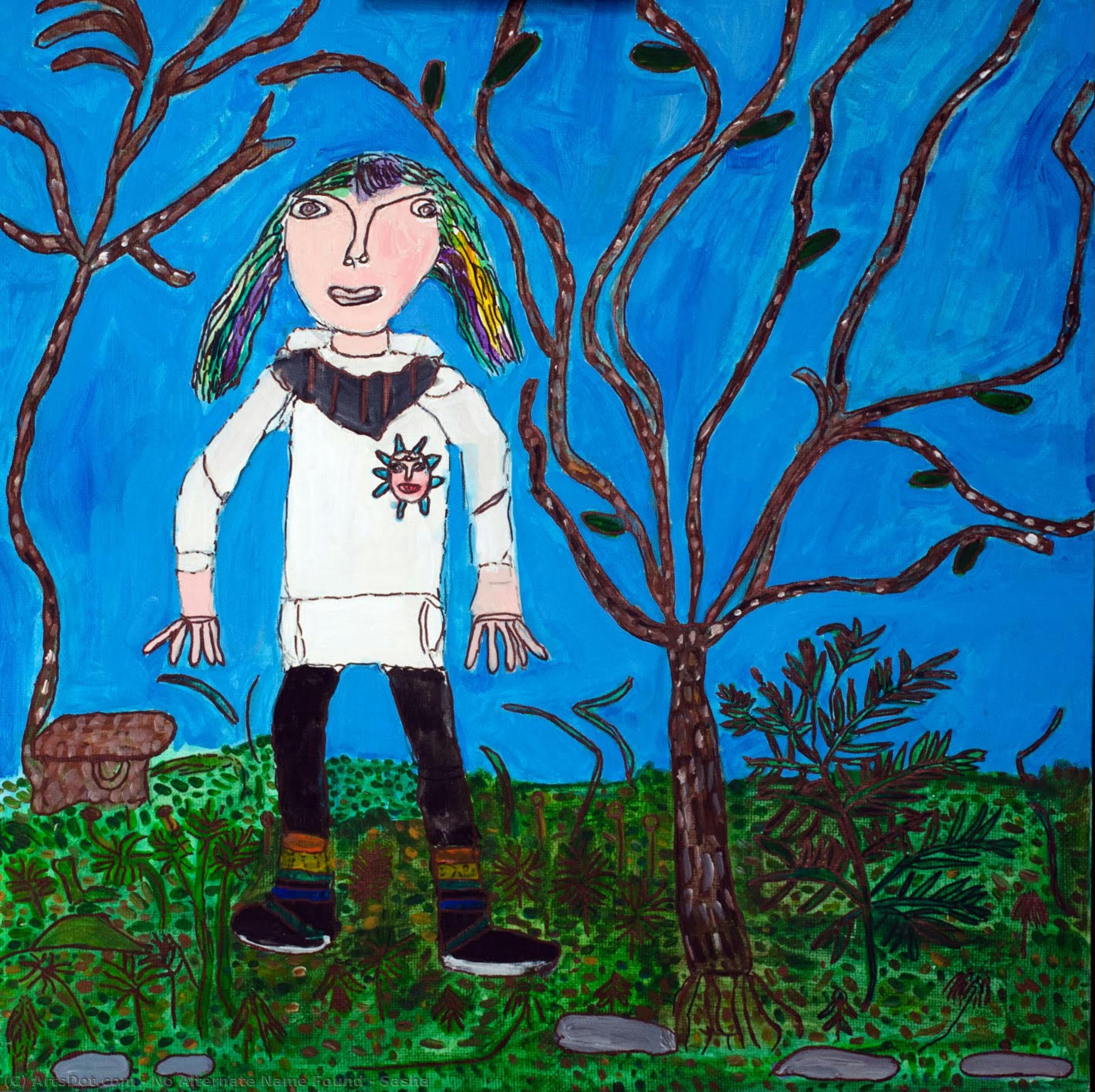
In the evocative painting Sasha, we are invited into a moment of profound stillness, where the boundaries between the human spirit and the natural world begin to dissolve. The scene unfolds within the heart of a lush forest, a sanctuary of greenery where sunlight and shadow dance amongst a dense arrangement of trees. At the center of this emerald realm stands a solitary figure, draped in a simple white shirt, their long hair catching the light as they find themselves anchored amidst the surrounding woodland. This central presence acts as a focal point for the viewer's gaze, grounding the composition with a sense of quiet introspection and peace.The Artistry of Atmosphere and Light
The technique employed in Sasha breathes life into the forest, utilizing a vibrant and colorful palette to construct a multi-layered landscape. The artist masterfully orchestrates various shades of green, earth tones, and bright highlights to create depth, making the foliage feel tactile and immersive. Beyond the primary figure, the composition subtly introduces a second, smaller figure toward the left, adding a layer of narrative mystery—is this a shared moment of quietude or a fleeting glimpse of a companion? The inclusion of a distant bench tucked into the background further enhances the sense of a lived-in landscape, suggesting a place designed for rest and contemplation.Symbolism and Emotional Resonance
Beyond its visual beauty, Sasha serves as a powerful symbol of the connection between humanity and the earth. The figure’s placement within the center of the forest suggests a state of being "at one" with nature, embodying a sense of tranquility that is increasingly rare in our modern, hurried lives. For collectors and interior designers alike, this piece offers more than mere decoration; it provides an emotional anchor for a room. It evokes a feeling of sanctuary, making it an ideal selection for spaces intended for meditation, reading, or quiet reflection. To possess a reproduction of this work is to bring a fragment of that forest's enduring peace into one's own home, inviting a permanent sense of calm and natural wonder.Questions & Answers
What emotional tone accompanies the Color Field Painting style of "Sasha"?
The tranquil emotion of "Sasha" accompanies its Color Field Painting style.
Where do the visitors of "Sasha" by Gary Wragg come from?
The Stats page of "Sasha" by Gary Wragg presents public visit statistics: monthly visits of this artwork, a comparison with the artist's most viewed works, and where its visitors come from.
Is there a slideshow for "Sasha" by Gary Wragg?
A slideshow is available: the Diaporama page of "Sasha" by Gary Wragg.
Artist Biography
Gary Wragg: Weaver of Color and the Echoes of Wu
Gary Wragg, born in High Wycombe, United Kingdom in 1946, stands as a significant figure within the landscape of post-war British abstract art. His work, deeply rooted in the principles of color field painting and profoundly influenced by the teachings of the esteemed Wu Kwong Yu, resonates with a quiet intensity and an exploration of form’s inherent capacity to evoke emotion. Wragg's journey through the artistic world began at High Wycombe School of Art (1962-66) and continued at Camberwell School of Arts and Crafts (1966-69), culminating in studies at Slade School of Fine Art (1969-71). His career unfolded gradually, marked by a consistent dedication to his chosen style and a growing recognition within the British art scene. Wragg’s artistic philosophy is inextricably linked to the color field movement, a pivotal development in abstract expressionism that emerged in the 1940s and 50s. This approach prioritizes the relationship between color, shape, and composition—a deliberate rejection of representational imagery in favor of an exploration of pure sensation and emotional resonance. The influence of Wu Kwong Yu, a senior disciple whose teachings emphasized meditative practice and the spiritual dimension of art, is particularly evident in Wragg’s later work. Yu's emphasis on achieving a state of ‘wu wei’ – effortless action – seems to permeate Wragg’s process, resulting in paintings that possess an almost hypnotic quality. This connection to Wu Kwong Yu has solidified his position as the principal instructor of the style within Europe, ensuring the continuation and evolution of this unique artistic lineage.Style and Influences: Color, Form, and the Essence of Abstraction
Wragg’s paintings are characterized by a deliberate simplicity and an avoidance of overt gestures. He employs broad, sweeping brushstrokes to build layers of color—often utilizing a restricted palette of blues, greens, yellows, and reds—that coalesce into luminous fields. These fields aren't merely decorative; they function as conduits for emotional expression, inviting the viewer to lose themselves in their depths. The works are not about depicting anything specific but rather about conveying an atmosphere, a mood, or a state of being. The scale of his canvases – frequently large-format – further enhances this immersive effect, enveloping the viewer within the painted space. His work is deeply informed by the principles of color theory, understanding how hues interact and create visual harmony or discord. The deliberate use of negative space contributes to the sense of openness and tranquility that pervades many of his paintings.Works and Exhibitions: A Journey Through Collections
Wragg’s art has been exhibited extensively throughout the United Kingdom, establishing him as a respected voice within contemporary abstraction. His pieces are held in significant collections worldwide, including The State Russian Museum in St. Petersburg, Russia; the Museum of Fine Arts in Tallahassee, Florida, USA; and numerous provincial, corporate, and foreign public collections. Notable exhibitions include appearances at the Royal Academy (British Painting 1952–77), the Sydney Biennale (1982), the RA Summer Exhibition, and the John Moores Exhibition in Liverpool. Solo shows have been presented by Nicola Jacobs (1982-6) and Goldsmiths’ College Gallery (1990), with a series at Flowers East beginning in 1996. In 1998 and 2000, he was an artist-in-residence at the Montmiral School of Painting in France, continuing his exploration of color and form within a supportive artistic community.Connections and Legacy: Wu Family Tradition
Wragg’s dedication to the teachings of Wu Kwong Yu has cemented his role as a key figure in preserving and expanding the Wu family style. His influence extends beyond his own work, shaping the practice of numerous artists across Europe. The emphasis on meditative preparation, intuitive brushwork, and the pursuit of ‘wu wei’ – a state of effortless action – are hallmarks of this tradition. His commitment to fostering this lineage ensures that the principles of Wu Kwong Yu's teachings will continue to resonate within the world of abstract art for generations to come. Furthermore, his travels to visit Jack Tworkov and Willem de Kooning in America during the 1970s and 1980s represent a crucial period of artistic exchange and inspiration, broadening his understanding of abstraction and informing his own unique style.Further Resources
For more information about Gary Wragg’s work and exhibitions, please visit: * Gary Wragg (b.1946) - Art UK * Gary Wragg | CAS - Contemporary Art Society * Found footage (film technique) * Jessica (given name)
Gary Wragg
1946 - , United Kingdom
Quick Facts
- Full Name: Gary Wragg
- Nationality: British
- Date Of Birth: 1946
- Place Of Birth: High Wycombe, United Kingdom
- Notable Artworks: ['Various abstract works']
- Artistic Movement Or Style: Abstract color field
- Artists Who Influenced This Artist: ['Wu Kwong Yu']
- Artists Or Movements Influenced By This Artist:
- Color field
- Victor Pasmore
Related Articles

Enchanted Woodlands: Top 10 Masterpieces Exploring the Magic of Forests
Step into the magic of nature with our curated selection of 10 iconic forest landscape paintings. From Impressionist light to moody woodland masterpieces, explore the stories behind these timeless works and find museum-quality art reproductions. Discover all masterpieces on OriginalUniqueArt.com.
Enchanted Woodlands: Top 10 Masterpieces Exploring the Magic of Forests
Step into the enchanting world of woodland landscapes. From Impressionist light to moody oil paintings, explore 10 iconic forest artworks and their timeless stories. Find museum-quality reproductions and decor inspiration at OriginalUniqueArt.com. Discover all masterpieces online.
10 Breathtaking Masterpieces That Redefine the Landscape Genre
Journey through history with 10 iconic landscape paintings that capture the soul of nature. From Impressionist light to dramatic vistas, explore the stories behind these timeless masterpieces and find museum-quality reproductions for your decor. Discover all masterpieces on OriginalUniqueArt.com

Beyond the Horizon: 10 Masterpieces That Redefine Landscape Art
Journey through history with 10 iconic landscape paintings that capture the soul of nature. From Impressionist light to Romantic vistas, explore the stories behind these timeless masterpieces and find museum-quality reproductions for your decor. Discover all masterpieces on OriginalUniqueArt.com

Beyond the Horizon: 10 Masterpieces That Redefine Landscape Art
Journey through history with 10 iconic landscape paintings that capture the soul of nature. From Impressionist light to dramatic vistas, explore the stories behind these timeless masterpieces and find museum-quality reproductions for your decor. Discover all masterpieces on OriginalUniqueArt.com.


