 Preview
 Send
Send Share
Share
 Details

 Download
 Similars
 X-Ray
X-Ray Diaporama
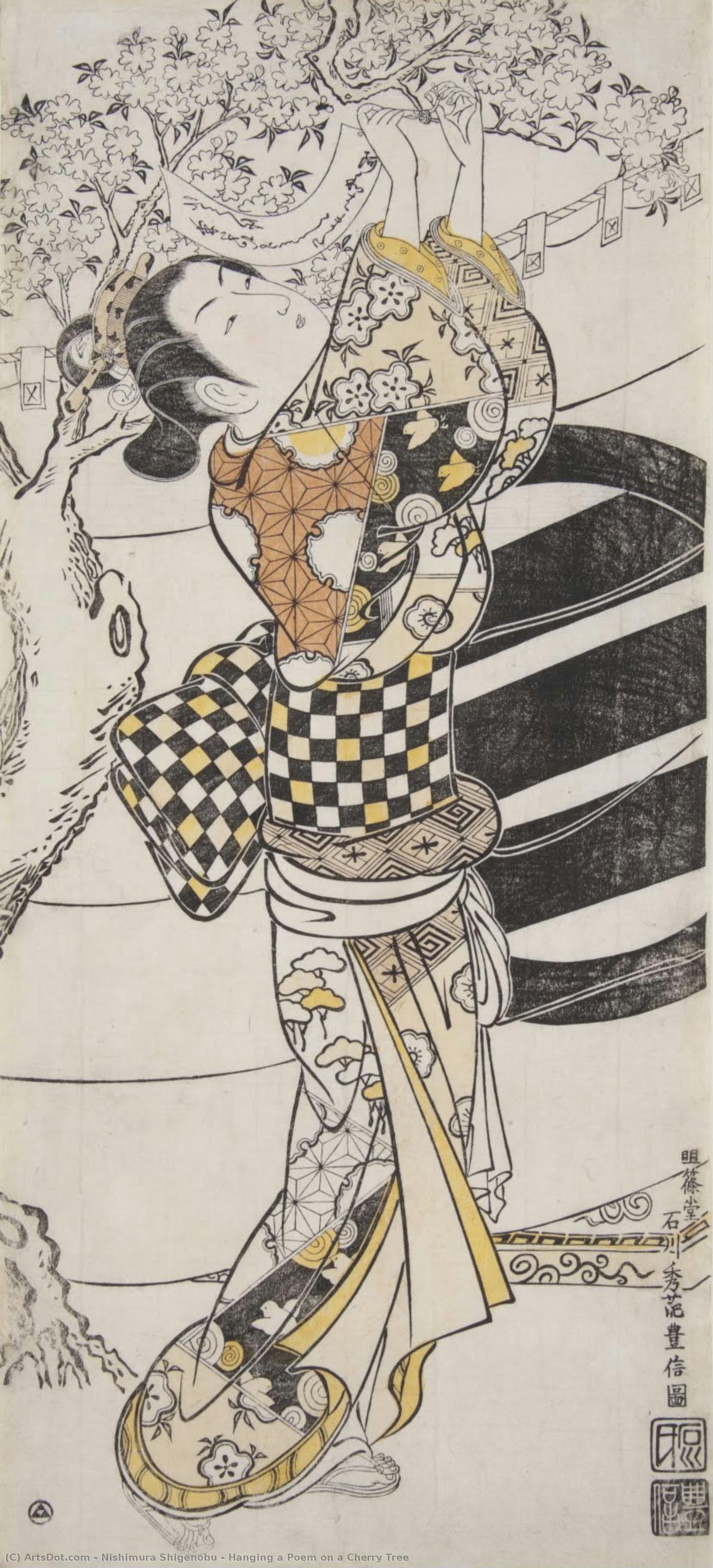
Hanging a Poem on a Cherry Tree


 Read More
Hand Made Oil Reproduction
Hand-painted oil on canvas in your size and frame, made to order by our artists. ( Buy Print Buy Image)




































Pick from our preset sizes that match the artwork's original proportions.

You may enter your own dimensions to fit a specific frame or space. If your selected size does not match the original image's proportions, we will either crop the artwork or extend the painting with additional hand-painted elements. A digital mockup will be sent for your approval before production begins.
Please note that the on-screen preview does not reflect the actual cropping or extension. Only the mockup will accurately show the final composition.
While custom sizes are available, we recommend selecting a dimension from the predefined list to preserve the original proportions.
After order, OriginalUniqueArt.com team will email client for instructions and provide a mockup preview
Worldwide Delivery () in 3/4 weeks instead of standard 5 weeks. (19 August). No compromise on quality.

Free Worldwide Express Shipping

High-Quality Linen Canvas

Full Shipping Insurance

Customs Tax Refund Guarantee

True Color Matching Guarantee

60-Day Return Policy (Defects Only)

100% Money-Back Guarantee

Bulk Discount Offer
 Glass option is only available in size under 110 CM

Hanging a Poem on a Cherry Tree
Reproduction Medium
Reproduction Size
-


Total Price
$ 300
Artist Biography
A Master of Transience: The World of Nishimura Shigenobu (Ishikawa Toyonobu)
The Edo period in Japan witnessed an explosion of artistic creativity, and within the vibrant landscape of *ukiyo-e* – “pictures of the floating world” – emerged artists who captured the ephemeral beauty of life with remarkable skill. Among them stands Nishimura Shigenobu, also known as Ishikawa Toyonobu (1711–1785), a figure whose work embodies both the elegance and subtle sensuality characteristic of early *ukiyo-e*. While biographical details remain somewhat elusive, piecing together his artistic trajectory reveals a master printmaker deeply influenced by his predecessors yet forging his own distinct path. Born in Tokyo, Toyonobu’s career unfolded during a pivotal moment in the development of woodblock printing, bridging the gap between earlier monochrome styles and the burgeoning world of full-color *nishiki-e*. He is often considered to have been the same person as Nishimura Shigenobu, a contemporary artist and student of Nishimura Shigenaga.Early Influences and the Lacquered Print
Toyonobu’s artistic education began under the tutelage of Nishimura Shigenaga, a pupil of the renowned Okumura Masanobu. This lineage is crucial to understanding his early work. Masanobu was a pioneer in *urushi-e*, or “lacquered prints,” a technique involving the application of black lacquer to woodblocks, creating images with a striking sheen and depth. Toyonobu wholeheartedly embraced this method, producing numerous monochrome prints that showcased the influence of his mentor’s style. These early works frequently depicted *yakusha-e* – portraits of actors – and *bijin-ga*, beautiful women, often courtesans. A hallmark of these compositions was a deliberate stillness, an impassivity in the faces of the subjects reminiscent of the Kaigetsudō school's aesthetic. The figures exuded a refined grace, their beauty rendered with meticulous detail and a subtle air of mystery. He skillfully captured the essence of his subjects, focusing on elegant poses and expressive gestures rather than overt displays of emotion.Exploring Sensuality and the Limits of Representation
As Toyonobu’s career progressed, he began to experiment with more suggestive themes. While not abandoning his signature style, he ventured into depicting semi-nude figures – a practice common among *ukiyo-e* artists of the time. These images, however, were never intended as explicit representations but rather as carefully constructed studies in form and allure. Richard Lane, a prominent art historian, notes that these works aimed to be “suggestive and erotic” rather than a straightforward “glorification of the human form.” The compositions often featured women with the upper portion of their kimonos deliberately loosened, revealing glimpses of their breasts – a technique designed to tantalize without fully exposing. This delicate balance between suggestion and restraint speaks to the complex social context in which Toyonobu operated, navigating the boundaries of acceptable imagery within the constraints of Edo-period morality.The Transition to Color Printing and Legacy
Later in his career, Toyonobu became a leading producer of *benizuri-e*, or “rose prints,” employing multiple blocks to achieve richer color palettes. However, his foray into full-color printing – the revolutionary *nishiki-e* pioneered by Suzuki Harunobu around 1765 – was relatively short-lived. He largely ceased producing *ukiyo-e* shortly after Harunobu’s innovations gained prominence. Despite this shift, Toyonobu's contribution to the art form remains significant. His mastery of monochrome printing, his elegant depictions of courtesans and actors, and his subtle exploration of sensuality laid the groundwork for future generations of *ukiyo-e* artists. He left behind a notable pupil, Ishikawa Toyomasa, who is celebrated for his charming portrayals of children at play – perhaps even a son of Toyonobu himself. Through his work, Nishimura Shigenobu (Ishikawa Toyonobu) offers us a glimpse into the fleeting world of Edo-period Japan, capturing its beauty, grace, and underlying currents of desire with unparalleled skill and sensitivity.Major Achievements & Historical Significance
- Pioneering Lacquered Prints: Toyonobu’s early mastery of *urushi-e* established him as a leading figure in the development of monochrome woodblock printing.
- Elegant Bijin-ga & Yakusha-e: His refined depictions of courtesans and actors set a high standard for portraiture within the *ukiyo-e* genre, emphasizing grace and expressive detail.
- Subtle Sensuality: Toyonobu’s exploration of suggestive themes demonstrated a nuanced understanding of social boundaries and artistic expression.
- Bridging Generations: He served as a crucial link between the earlier monochrome styles of *ukiyo-e* and the burgeoning world of full-color printing, influencing subsequent artists like Harunobu.
- Influence on Toyomasa: His mentorship of Ishikawa Toyomasa ensured the continuation of his artistic legacy, with Toyomasa becoming known for his unique style of depicting children.

nishimura shigenobu
1711 - 1785 , Japan
Quick Facts
- Artistic Movement Or Style: Ukiyo-e (Lacquer Print Art)
- Artists Or Movements Influenced By This Artist: ['Suzuki Harunobu']
- Artists Who Influenced This Artist:
- Okumura Masanobu
- Nishimura Shigenaga
- Date Of Birth: 1711
- Date Of Death: July 1, 1785
- Full Name: Ishikawa Toyonobu (also known as Nishimura Shigenobu)
- Nationality: Japanese
- Notable Artworks:
- Hanging a Poem on a Cherry Tree
- Courtesan Reading a Letter
- Place Of Birth: Tokyo, Japan