Text size

() ·

A painting made for you, by hand

Le Moulinet

Hand Made Oil Reproduction

Hand-painted oil on canvas in your size and frame, made to order by our artists. ( Switch to Print Switch to Digital Image)

Collectible Description

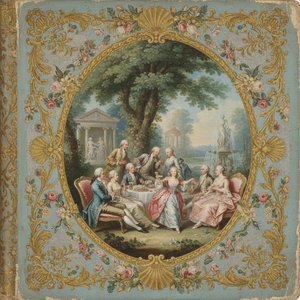
Discover 'Le Moulinet' by Nicolas Lancret – a stunning Rococo painting of aristocratic leisure at the Schloss Charlottenburg museum. Explore its pastel hues, intricate details & classical elements.

Artist Biography

Explore the charming world of Nicolas Lancret (1690-1743), a French Rococo painter known for his delightful scenes of Parisian life, fêtes galantes & lighthearted social gatherings. Discover 'Le Déjeuner de Jambon' and more!

from ·

Chapter 1

How large should it be?

Slide to change the size; the picture on the left shows the frame at its real width. The proportions of the original are kept.

Standard
custom
CM
INCH

Pick from our preset sizes that match the artwork's original proportions.

width
height

Type the width and the height you need, to fit your frame or your wall. This is hand-painted, so for a size with a different shape the artist can paint a bit more around the picture, or cut a bit — you choose. We send you a digital mockup to approve before the painting starts. The picture shown on this page does not show the real result — only the mockup does.

Chapter 2

How should it arrive?

Choose the edges of the stretched canvas

Choose your frame

Corner sample of the WhiteWrap canvas edge finish, stretched on solid wood bars
White $1
Corner sample of the BlurSideWrap canvas edge finish, stretched on solid wood bars
Blurside $1
Corner sample of the ExtendedWrap canvas edge finish, stretched on solid wood bars
Extended $1
Corner sample of the P118B picture frame: moulded polystyrene, 5 cm wide and 3 cm thick
P118B $10
Corner sample of the P118H picture frame: moulded polystyrene, 5 cm wide and 3 cm thick
P118H $10
Corner sample of the P118W picture frame: moulded polystyrene, 5 cm wide and 3 cm thick
P118W $10
Corner sample of the P438Z picture frame: moulded polystyrene, 5.5 cm wide and 3.5 cm thick
P438Z $10
Corner sample of the P508JH picture frame: moulded polystyrene, 7 cm wide and 3.5 cm thick
P508JH $12
Corner sample of the P508YH picture frame: moulded polystyrene, 7 cm wide and 3.5 cm thick
P508YH $12
Corner sample of the P805H picture frame: moulded polystyrene, 5 cm wide and 3.5 cm thick
P805H $10
Corner sample of the P805Z picture frame: moulded polystyrene, 5 cm wide and 3.5 cm thick
P805Z $10
Corner sample of the P919BZ picture frame: moulded polystyrene, 7 cm wide and 3.5 cm thick
P919BZ $10
Corner sample of the P919G picture frame: moulded polystyrene, 7 cm wide and 3.5 cm thick
P919G $10
Corner sample of the P919XJ picture frame: moulded polystyrene, 7 cm wide and 3.5 cm thick
P919XJ $10
Corner sample of the P959ZH picture frame: moulded polystyrene, 5 cm wide and 3 cm thick
P959ZH $10
Corner sample of the P968JZ picture frame: moulded polystyrene, 6 cm wide and 4 cm thick
P968JZ $12
Corner sample of the W106C picture frame: solid wood, 5 cm wide and 3 cm thick
W106C $8
Corner sample of the W218G picture frame: solid wood, 5 cm wide and 3 cm thick
W218G $10
Corner sample of the W218JH picture frame: solid wood, 5 cm wide and 3 cm thick
W218JH $8
Corner sample of the W218Y picture frame: solid wood, 5 cm wide and 3 cm thick
W218Y $10
Corner sample of the W307PJ picture frame: solid wood, 6 cm wide and 3 cm thick
W307PJ $10
Corner sample of the W316G picture frame: solid wood, 6 cm wide and 3 cm thick
W316G $10
Corner sample of the W316PJ picture frame: solid wood, 6 cm wide and 3 cm thick
W316PJ $8
Corner sample of the W316Y picture frame: solid wood, 6 cm wide and 3 cm thick
W316Y $10
Corner sample of the W398PJ picture frame: solid wood, 5 cm wide and 3 cm thick
W398PJ $8
Corner sample of the W4111J picture frame: solid wood, 6.5 cm wide and 3.5 cm thick
W4111J $10
Corner sample of the W500HY picture frame: solid wood, 7 cm wide and 5 cm thick
W500HY $15
Corner sample of the W500JH picture frame: solid wood, 7 cm wide and 5 cm thick
W500JH $15
Corner sample of the W692G picture frame: solid wood, 8 cm wide and 4 cm thick
W692G $12
Corner sample of the W849H picture frame: solid wood, 5 cm wide and 3 cm thick
W849H $8
Corner sample of the W940BG picture frame: solid wood, 7.5 cm wide and 4.5 cm thick
W940BG $15
Corner sample of the W953PJ picture frame: solid wood, 6 cm wide and 3.5 cm thick
W953PJ $8
Corner sample of the H24-GOLD picture frame: carved wood with gesso, 10 cm wide and 6 cm thick
H24-GOLD $30
Corner sample of the H24-SILVER picture frame: carved wood with gesso, 10 cm wide and 6 cm thick
H24-SILVER $30
Corner sample of the H36-GOLD picture frame: carved wood with gesso, 15 cm wide and 6.5 cm thick
H36-GOLD $45
Corner sample of the H36-SILVER picture frame: carved wood with gesso, 15 cm wide and 6.5 cm thick
H36-SILVER $45
Frame preview
Framed

Moulding: . Overall size with the frame: .

Chapter 3

Who paints it, and should anything change?

Examples of what can be changed: Replace face with customer photo; Add pet (e.g., replace cat with dog); Include hidden message in background; Change background landscape or elements.
After order, OriginalUniqueArt.com team will email client for instructions and provide a mockup preview

Worldwide Delivery () in 3/4 weeks instead of standard 5 weeks. (3 November). No compromise on quality.

Chapter 4

The finishing touches

A nameplate, as in a museum?

Engraved Bronze Plaque Details

This elegant plaque features the artist's name and the title of the artwork, finely engraved for a timeless presentation.

It is made from bronze with a refined, elegant finish. The text is precisely laser-engraved for a sharp and permanent result. Measuring 9x2 cm, the plaque is compact yet easy to read. It's built to be durable and scratch-resistant, offering a professional, museum-quality look. Mounting is simple thanks to the included adhesive backing.

Transparent Acrylic Plaque Details

The plaque includes essential engraved details such as the artist's name, the title of the artwork, the date it was created, the type of media used-like oil on canvas or watercolor-a brief description of the piece, and a QR code that links to the complete artwork information.

It is crafted from clear acrylic, offering a sleek, modern appearance. The text is UV-engraved in black to ensure strong visual contrast. With a size of 10x15 cm, it ensures optimal readability. It comes equipped with two metal hooks for secure wall mounting. The plaque is designed to be weather-resistant, making it suitable for various environments, and it includes interactive features that work seamlessly with smartphone scanning.

Black Acrylic Plaque Details

This elegant plaque includes engraved information such as the artist's name, the title of the artwork, the date it was created, the type of media used (like oil on canvas or watercolor), a short description of the artwork, and a QR code for quick access to more information.

The plaque itself is made from refined black acrylic with a premium finish. The text is laser-engraved in white for high contrast and readability. Its size is 10x15 cm, designed to be easy to read. It comes with two metal hooks for professional mounting. The design is sleek and fits any interior style. It is also weather-resistant and durable, with built-in digital integration for mobile compatibility.

A protective varnish?

When do you need it?

Chapter 5

Your painting, as you ordered it

Le Moulinet

Reproduction Medium

Reproduction Size

-

Elite Senior Artist

More detail, finesse, and extra production time

-

Reproduction Frame

-

-

For artworks or reproductions larger than 105 cm (approximately 41 inches) on any side, the frame will be shipped as a kit, disassembled. This method ensures safe delivery and prevents damage during transport.

Professional assembly required - this is not a DIY product.
The kit must be assembled and the canvas stretched by an experienced professional framer, using wood glue (not supplied), a canvas stretching plier and clamps to hold the bars square while the glue dries. Incorrect assembly or uneven canvas tension can permanently damage the artwork and is not covered by our warranty.

  • All solid wood bars are included, precisely cut to size.

  • Assembled with the screws provided, plus wood glue for the corner joints, which is not supplied and must be sourced by your framer.

  • Professional tools are required and not included: a canvas stretching plier (tensioner) and clamps to hold the bars square while the glue dries.

Important:
The corner joints require wood glue, the bars must be held with clamps until the glue is fully dry, and tightening the canvas on the assembled frame requires a canvas stretching plier. None of these are included in the kit. Please arrange an experienced professional framer before ordering this size.

Nameplate

-

-

Protective Varnish

Glossy Varnish (enhances colors, protects against light/moisture)

-

Customize My Artwork

Examples of what can be changed: Replace face with customer photo; Add pet (e.g., replace cat with dog); Include hidden message in background; Change background landscape or elements.

-

Urgent

Worldwide Delivery () in 3/4 weeks instead of standard 5 weeks. (3 November). No compromise on quality.

-

Express Shipping

Worldwide Delivery () in 5 weeks. (10 November).

Included

Total Price

$ 525

Total Price $ 525

Glass option is only available in size under 110 CM

Included with every order

  • Free Worldwide Express Shipping
  • High-Quality Linen Canvas
  • Full Shipping Insurance
  • Customs Tax Refund Guarantee
  • True Color Matching Guarantee
  • 100-Day Return Policy (Defects Only)
  • 100% Money-Back Guarantee
  • Bulk Discount Offer

Nicolas Lancret: A Life in Rococo Charm

Nicolas Lancret’s artistic journey began in Paris, where he was born in 1690. While detailed records of his early life are scarce, it is known that he received initial training under Pierre d’Ulin, a respected history painter. A pivotal moment arrived when he encountered the work of Antoine Watteau, whose influence profoundly shaped Lancret's artistic direction. He subsequently studied with Jean-Baptiste Gillot, who himself had been a student of Watteau, further solidifying his connection to this influential artistic lineage. This period of training laid the foundation for Lancret’s distinctive style, characterized by its lighthearted depictions of Parisian society and celebrations of *fêtes galantes*. Lancret became renowned as a brilliant portrayer of everyday life within French society during the regency of the Duke of Orleans and, later, early reign of King Louis XV. His canvases captured fleeting moments of aristocratic leisure—elegant gatherings in gardens, lively balls adorned with flowers and ribbons, and picnics amidst picturesque landscapes—reflecting the prevailing aesthetic sensibilities of the era. Unlike Watteau’s melancholic visions of Venetian fantasies, Lancret embraced a joyous optimism, imbuing his scenes with warmth and vibrancy. This stylistic divergence stemmed from Lancret's formative encounter with Gillot, who had championed Watteau's expressive approach to painting, resulting in a style that prioritized visual delight and harmonious composition.
  • Style: Rococo – Lancret’s oeuvre embodies the hallmark characteristics of Rococo art: delicate ornamentation, pastel hues, asymmetrical arrangements, and an emphasis on illusionistic effects. He skillfully employed techniques like *sfumato* to soften contours and create atmospheric depth, mirroring Watteau's masterful manipulation of light and shadow.
  • Technique: Lancret excelled in oil painting on canvas, utilizing a loose brushstroke style that prioritized capturing the ephemeral beauty of his subjects. His meticulous attention to detail—particularly in rendering fabrics and floral decorations—demonstrated a mastery of artistic craftmanship.
  • Historical Context: Lancret’s paintings flourished during a period marked by opulent court life and aristocratic patronage. The Château de Versailles served as a crucible for artistic innovation, fostering collaborations between artists like Jean Petitot the Elder and Louis Paradis de la Roche, who contributed to Vaux le Vicomte's artistic landscape.
  • Symbolism: Lancret’s compositions frequently incorporated symbolic elements—such as statues of nude figures representing classical ideals—to convey moral lessons and elevate the viewer’s experience. The depiction of flowers and foliage served as emblems of fertility, beauty, and springtime, reflecting the Rococo fascination with nature's rejuvenating power.
  • Emotional Impact: Lancret’s works evoke a sense of carefree elegance and sensual pleasure, transporting viewers to idealized worlds of aristocratic indulgence. His paintings capture not merely visual splendor but also the emotional resonance of social rituals and celebrations—a testament to his ability to communicate profound feelings through subtle artistic gestures.
The painting Le Moulinet – Nicolas Lancret - 1st Art Gallery

Le Moulinet: A Masterpiece of Rococo Illusionism

“Le Moulinet,” or “The Reel,” exemplifies Lancret’s signature style—a breathtaking depiction of a Parisian fête galante bathed in dappled sunlight. Executed with remarkable precision and infused with an irresistible charm, this oil painting captures the essence of Rococo artistry: delicate ornamentation, pastel hues, asymmetrical arrangements, and masterful illusionistic effects. The scene unfolds within a formal garden setting, populated by elegantly dressed aristocrats engaged in leisurely pursuits—dancing, conversing, and admiring a magnificent statue of Venus. Lancret’s skillful use of *sfumato* creates an ethereal atmosphere, blurring boundaries between reality and fantasy and immersing the viewer in a world of refined beauty.

Detailed Analysis: Composition & Technique

Lancret's compositional brilliance is evident in the layering of planes and perspectives—a technique characteristic of Watteau’s influence—that draws the eye into the heart of the scene. The central group of dancers occupies a prominent position, framed by towering trees whose branches cast intricate shadows across the lawn. Lancret’s meticulous brushwork captures the textures of fabrics—silk gowns shimmering with sequins and embroidery—and floral decorations—bouquets overflowing with roses and lilies—adding to the painting's opulent sensory experience. The artist’s masterful blending of colors—primarily soft blues, pinks, and golds—creates a harmonious palette that enhances the overall mood of tranquility and delight.

Beyond the Canvas: Lancret’s Legacy

Nicolas Lancret remains celebrated as one of France's foremost Rococo painters, whose works continue to inspire admiration for their elegance, artistry, and evocative portrayal of aristocratic life. His influence extended beyond his own time, foreshadowing the stylistic innovations of artists like Jean-Honoré Fragonard and Thomas Gainsborough—a testament to Lancret’s enduring contribution to European art history. The Château de Versailles, where Lancret adorned several halls with monumental paintings, stands as a tangible reminder of his artistic prowess and the grandeur of Louis XIV's reign. Explore Vaux le Vicomte’s artistic landscape and discover Jean Petitot the Elder, Louis Paradis de la Roche, and Jean-Baptiste Boulard’s contributions to Vaux le Vicomte's artistic landscape.

Questions & Answers

What style does "Le Moulinet" belong to?

"Le Moulinet" is a work of Rococo. The movement indicates the artistic tradition the work is part of.

What kind of colors does "Le Moulinet" use?

The colors of "Le Moulinet" form an earthy palette. This classification describes the dominant color families.

How many people view "Le Moulinet"?

The Stats page of "Le Moulinet" by Nicolas Lancret presents public visit statistics: monthly visits of this artwork, a comparison with the artist's most viewed works, and where its visitors come from.

More about this painting

Preview AR preview Switch to Print Switch to Digital Image Send
Details Guide Add to favorites Download Similars X-Ray Diaporama Q&A Stats

In numbers

  • 29frames to choose from
  • standard sizes, in its own proportions
  • 5weeks to paint and deliver it
Nicolas Lancret

Nicolas Lancret

1690 - 1743, France

Quick facts about Nicolas Lancret

  • Full Name: Nicolas Lancret
  • Nationality: French
  • Date Of Birth: 1690
  • Date Of Death: 1743
  • Place Of Birth: Paris, France
  • Notable Artworks:
    • Le déjeuner de jambon
    • La servante justifiée
    • Le jeu des quatre-coins
    • Marie-anne de Camargo
  • Artistic Movement Or Style: Rococo
  • Artists Who Influenced This Artist:
    • Pierre d'Ulin
    • Jean-Baptiste Gillot
    • Antoine Watteau
  • Artists Or Movements Influenced By This Artist: ['François Boucher']

Artist Biography

Nicolas Lancret: A Life in Rococo Charm

  • Born: Paris, France (January 22, 1690)
  • Died: Paris, France (September 14, 1743)

Early Life and Training

Nicolas Lancret's artistic journey began in Paris, where he was born in 1690. While detailed records of his early life are scarce, it is known that he received initial training under Pierre d’Ulin, a respected history painter. A pivotal moment arrived when he encountered the work of Antoine Watteau, whose influence profoundly shaped Lancret's artistic direction. He subsequently studied with Jean-Baptiste Gillot, who himself had been a student of Watteau, further solidifying his connection to this influential artistic lineage. This period of training laid the foundation for Lancret’s distinctive style, characterized by its lighthearted depictions of Parisian society and celebrations of *fêtes galantes*.

Artistic Style and Notable Works

Lancret became renowned as a brilliant portrayer of everyday life within French society during the Regency of the Duke of Orleans and the early reign of King Louis XV. His artistic style is marked by charming scenes of balls, fairs, village weddings, and other social gatherings, reflecting the tastes and manners of his time. He excelled at capturing the spirit of Rococo elegance and frivolity.
  • Notable Works:
    • *Le Déjeuner de Jambon* (Chantilly, Musée Condé, 1735): A quintessential example of his genre scenes, depicting a convivial ham breakfast with lively figures.
    • *La Servante Justifiée* (1735-1740): Showcases Lancret's ability to portray domestic scenes with wit and charm.
    • *Le Jeu des Quatre-Coins*: A playful depiction of a popular game, capturing the energy and amusement of social interaction.
    • *Marie-Anne de Camargo* (1730): A portrait demonstrating his skill in depicting fashionable figures.

Influences and Legacy

Lancret’s artistic style bears a clear resemblance to that of Watteau, often leading art historians to compare the two. While some critics have considered Lancret's work to be somewhat less profound than Watteau's, his ability to capture the essence of French society in the 18th century has secured him a significant place in art history. His paintings are celebrated for their lightheartedness and charm, offering valuable insights into the social customs and aesthetics of the Rococo period. Lancret’s influence can be seen in later artists like François Boucher. His works reside in prestigious collections worldwide, including the National Gallery and the Musée d'Orsay, ensuring his legacy continues to inspire appreciation for French Rococo art.

Development and Historical Significance

Throughout his career, Lancret demonstrated a gradual evolution in his artistic approach. While initially heavily influenced by Watteau, he developed a more distinctive style characterized by livelier colors and a greater sense of harmony between figures and their surroundings. His later works, such as *Montreir de lanterne magique* and *Family in a Garden*, are considered to represent the peak of his artistic achievement, showcasing an increasing ability to create depth and intimacy within his compositions. Lancret’s historical significance lies in his contribution to the Rococo movement and his ability to document the social life and cultural values of 18th-century France through his charming and accessible paintings.

Quick Facts

  • Dimensions: 129 x 95 cm
  • Artist: Nicolas Lancret
  • Notable elements or techniques: Light and shadow; Intricate patterns; Statue of nude figure
  • Subject or theme: Aristocratic gathering; Dance; Leisure
  • Title: Le Moulinet