

 Preview
 Send
Send Share
Share
 Details
 Guide
Guide

 Download
 Similars
 X-Ray
X-Ray Diaporama
 Stats
StatsLa Camargo Dancing
 Oil On Canvas
- WallArt
- Rococo
 1730
1730- Early Modern
 76.0 x 107.0 cm
 National Gallery of Art
 Read More
Giclée / Art Print
Museum-quality giclée or canvas print with fast production and flexible finish options. ( Buy Hand Made Painting Switch to Digital Image)




P118B $10

P118H $10

P118W $10

P438Z $10

P508JH $12

P508YH $12

P805H $10

P805Z $10

P919BZ $10

P919G $10

P919XJ $10

P959ZH $10

P968JZ $12

W106C $8

W218G $10

W218JH $8

W218Y $10

W307PJ $10

W316G $10

W316PJ $8

W316Y $10

W398PJ $8

W4111J $10

W500HY $15

W500JH $15

W692G $12

W849H $8

W940BG $15

W953PJ $8




Pick from our preset sizes that match the artwork's original proportions.

Type the width and the height you need, to fit your frame or your wall. A print can only be cut, never made bigger than the picture, so a size with a different shape loses a part of the image. We send you a digital mockup to approve before we print anything. The picture shown on this page does not show the real cut — only the mockup does.
Worldwide Delivery () in 2 weeks instead of standard 4/5 weeks. (23 October)

Free Worldwide Express Shipping

High-Quality Linen Canvas

Full Shipping Insurance

Customs Tax Refund Guarantee

True Color Matching Guarantee

100-Day Return Policy (Defects Only)

100% Money-Back Guarantee

Bulk Discount Offer
 Glass option is only available in size under 110 CM

La Camargo Dancing
Giclée / Art Print
Reproduction Size
-


Total Price
$ 81
A Moment in the Grove
The canvas presents an outdoor scene set within a grove of trees where dappled sunlight falls across several figures. At the center of the composition, a woman identified as Marie Anne de Cupis moves with outstretched arms. She wears a white gown featuring ruffles at the neckline and sleeves. Beside her, a man is dressed in scarlet attire. The background contains various other individuals; some are seated on benches while others rest on the ground. The color palette relies heavily on earth tones, including ochre yellows, terracotta reds, and olive greens. These muted shades contrast with the bright white of the woman's dress and the deep red of the man's clothing. The light is soft and diffused, creating a sense of stillness across the landscape.
The artist uses loose brushstrokes to suggest the movement of the dancers. While the figures appear in motion, the overall composition remains stable. Fine details are present in the rendering of textures, such as the bark on the tree trunks and the folds within the fabric of the gowns. The painting is signed Nicolas Lancret in the lower right corner.
Context and Rococo Elements
Created around 1730, this work belongs to the Rococo era and depicts a fête galante, a type of social gathering common among the French aristocracy. These events involved outdoor entertainment, including music and choreographed dance. The setting of the grove functions as a representation of Arcadia, an idealized pastoral paradise. The subject, Marie Anne de Cupis, was a professional ballerina known for her technical ability and for introducing changes to ballet attire, such as the use of slippers instead of heeled shoes.
The painting reflects the social customs of the Regency of the Duke of Orleans and the early reign of King Louis XV. Through the depiction of leisure activities, the work documents the aesthetic preferences of 18th-century French society. The use of pastel hues and light, airy atmospheres is characteristic of the period's approach to genre painting.
Questions & Answers
Who created "La Camargo Dancing" and what style is it in?
Behind "La Camargo Dancing" stand Nicolas Lancret and the Rococo movement.
Is a high-resolution download of "La Camargo Dancing" available?
A digital image of "La Camargo Dancing" by Nicolas Lancret can be purchased on its Digital Image page: a high-resolution digital image download.
Where does "La Camargo Dancing" stand among Nicolas Lancret's recurring subjects?
Nicolas Lancret's recurring themes include watteau influence, aristocratic celebration, ballet tradition, decorative elegance, rococo aesthetic; "La Camargo Dancing" focuses on dance, ballet, rococo style, feminine elegance, parisian society, musical performance, decorative art.
Artist Biography
Nicolas Lancret: A Life in Rococo Charm
- Born: Paris, France (January 22, 1690)
- Died: Paris, France (September 14, 1743)
Early Life and Training
Nicolas Lancret's artistic journey began in Paris, where he was born in 1690. While detailed records of his early life are scarce, it is known that he received initial training under Pierre d’Ulin, a respected history painter. A pivotal moment arrived when he encountered the work of Antoine Watteau, whose influence profoundly shaped Lancret's artistic direction. He subsequently studied with Jean-Baptiste Gillot, who himself had been a student of Watteau, further solidifying his connection to this influential artistic lineage. This period of training laid the foundation for Lancret’s distinctive style, characterized by its lighthearted depictions of Parisian society and celebrations of *fêtes galantes*.Artistic Style and Notable Works
Lancret became renowned as a brilliant portrayer of everyday life within French society during the Regency of the Duke of Orleans and the early reign of King Louis XV. His artistic style is marked by charming scenes of balls, fairs, village weddings, and other social gatherings, reflecting the tastes and manners of his time. He excelled at capturing the spirit of Rococo elegance and frivolity.- Notable Works:
- *Le Déjeuner de Jambon* (Chantilly, Musée Condé, 1735): A quintessential example of his genre scenes, depicting a convivial ham breakfast with lively figures.
- *La Servante Justifiée* (1735-1740): Showcases Lancret's ability to portray domestic scenes with wit and charm.
- *Le Jeu des Quatre-Coins*: A playful depiction of a popular game, capturing the energy and amusement of social interaction.
- *Marie-Anne de Camargo* (1730): A portrait demonstrating his skill in depicting fashionable figures.
Influences and Legacy
Lancret’s artistic style bears a clear resemblance to that of Watteau, often leading art historians to compare the two. While some critics have considered Lancret's work to be somewhat less profound than Watteau's, his ability to capture the essence of French society in the 18th century has secured him a significant place in art history. His paintings are celebrated for their lightheartedness and charm, offering valuable insights into the social customs and aesthetics of the Rococo period. Lancret’s influence can be seen in later artists like François Boucher. His works reside in prestigious collections worldwide, including the National Gallery and the Musée d'Orsay, ensuring his legacy continues to inspire appreciation for French Rococo art.Development and Historical Significance
Throughout his career, Lancret demonstrated a gradual evolution in his artistic approach. While initially heavily influenced by Watteau, he developed a more distinctive style characterized by livelier colors and a greater sense of harmony between figures and their surroundings. His later works, such as *Montreir de lanterne magique* and *Family in a Garden*, are considered to represent the peak of his artistic achievement, showcasing an increasing ability to create depth and intimacy within his compositions. Lancret’s historical significance lies in his contribution to the Rococo movement and his ability to document the social life and cultural values of 18th-century France through his charming and accessible paintings.
Nicolas Lancret
1690 - 1743 , France
Quick Facts
- Full Name: Nicolas Lancret
- Nationality: French
- Date Of Birth: 1690
- Date Of Death: 1743
- Place Of Birth: Paris, France
- Notable Artworks:
- Le déjeuner de jambon
- La servante justifiée
- Le jeu des quatre-coins
- Marie-anne de Camargo
- Artistic Movement Or Style: Rococo
- Artists Who Influenced This Artist:
- Pierre d'Ulin
- Jean-Baptiste Gillot
- Antoine Watteau
- Artists Or Movements Influenced By This Artist: ['François Boucher']
Related Articles

Rococo's Radiant Legacy: 10 Masterpieces for Your Home |
Indulge in the elegance of Rococo! Explore 10 masterpieces by Fragonard, Boucher & Watteau. Discover the stories behind these iconic paintings and bring timeless art to your home with museum-quality reproductions from .

The Elegance of Rococo: A Journey Through Pastel Dreams and Ornate Splendor
Embark on an elegant journey through the Rococo era. Discover the delicate beauty of pastel masterpieces, the intricate artistry of 18th-century French masters, and how this era of ornate splendor continues to inspire timeless luxury in fine art collecting.
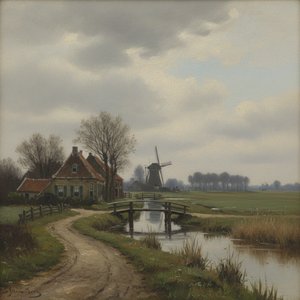
Jacob Henricus Maris: A Master of Dutch Atmospheric Realism & the Intimate Landscape
Explore the captivating world of Jacob Henricus Maris, a leading figure of the Dutch Hague School. Discover his atmospheric landscapes, signature brushstrokes & lasting influence on 19th-century art. Learn more at OriginalUniqueArt.

The Allure of Elegance in Art: A Historical & Aesthetic Exploration of Refinement & Grace
Explore the exquisite world of Rococo art! Discover its history, masters (Watteau, Boucher & more), and defining elegance. Expert insights for collectors seeking museum-quality reproductions & custom portraits.

The Rococo Aesthetic: Opulence, Rebellion & the Pursuit of Pleasure in 18th-Century Art
Explore the opulent world of Rococo art! Discover its origins, key artists like Watteau & Boucher, and lasting influence on design. Expert insights for collectors & enthusiasts.


