() ·

A painting made for you, by hand

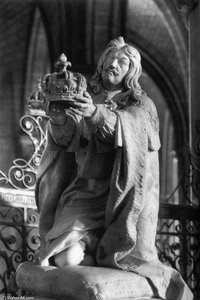
Pietà

Hand Made Oil Reproduction

Hand-painted oil on canvas in your size and frame, made to order by our artists. ( Switch to Print Switch to Digital Image)

Collectible Description

Experience the profound sorrow of Coustou's Baroque Pietà marble sculpture, a masterpiece embodying divine grace from 1712; discover this timeless work today.

Artist Biography

Nicolas Coustou (1658-1733), a Lyon sculptor and descendant of artisans, achieved fame through his monumental Baroque sculptures like Apollo & Daphne and Notre Dame’s statue of Saint Louis IX.

from ·

Chapter 1

How large should it be?

Slide to change the size; the picture on the left shows the frame at its real width. The proportions of the original are kept.

Standard
custom
CM
INCH

Pick from our preset sizes that match the artwork's original proportions.

width
height

Type the width and the height you need, to fit your frame or your wall. This is hand-painted, so for a size with a different shape the artist can paint a bit more around the picture, or cut a bit — you choose. We send you a digital mockup to approve before the painting starts. The picture shown on this page does not show the real result — only the mockup does.

Chapter 2

How should it arrive?

Choose the edges of the stretched canvas

Choose your frame

Corner sample of the WhiteWrap canvas edge finish, stretched on solid wood bars
White $1
Corner sample of the BlurSideWrap canvas edge finish, stretched on solid wood bars
Blurside $1
Corner sample of the ExtendedWrap canvas edge finish, stretched on solid wood bars
Extended $1
Corner sample of the P118B picture frame: moulded polystyrene, 5 cm wide and 3 cm thick
P118B $10
Corner sample of the P118H picture frame: moulded polystyrene, 5 cm wide and 3 cm thick
P118H $10
Corner sample of the P118W picture frame: moulded polystyrene, 5 cm wide and 3 cm thick
P118W $10
Corner sample of the P438Z picture frame: moulded polystyrene, 5.5 cm wide and 3.5 cm thick
P438Z $10
Corner sample of the P508JH picture frame: moulded polystyrene, 7 cm wide and 3.5 cm thick
P508JH $12
Corner sample of the P508YH picture frame: moulded polystyrene, 7 cm wide and 3.5 cm thick
P508YH $12
Corner sample of the P805H picture frame: moulded polystyrene, 5 cm wide and 3.5 cm thick
P805H $10
Corner sample of the P805Z picture frame: moulded polystyrene, 5 cm wide and 3.5 cm thick
P805Z $10
Corner sample of the P919BZ picture frame: moulded polystyrene, 7 cm wide and 3.5 cm thick
P919BZ $10
Corner sample of the P919G picture frame: moulded polystyrene, 7 cm wide and 3.5 cm thick
P919G $10
Corner sample of the P919XJ picture frame: moulded polystyrene, 7 cm wide and 3.5 cm thick
P919XJ $10
Corner sample of the P959ZH picture frame: moulded polystyrene, 5 cm wide and 3 cm thick
P959ZH $10
Corner sample of the P968JZ picture frame: moulded polystyrene, 6 cm wide and 4 cm thick
P968JZ $12
Corner sample of the W106C picture frame: solid wood, 5 cm wide and 3 cm thick
W106C $8
Corner sample of the W218G picture frame: solid wood, 5 cm wide and 3 cm thick
W218G $10
Corner sample of the W218JH picture frame: solid wood, 5 cm wide and 3 cm thick
W218JH $8
Corner sample of the W218Y picture frame: solid wood, 5 cm wide and 3 cm thick
W218Y $10
Corner sample of the W307PJ picture frame: solid wood, 6 cm wide and 3 cm thick
W307PJ $10
Corner sample of the W316G picture frame: solid wood, 6 cm wide and 3 cm thick
W316G $10
Corner sample of the W316PJ picture frame: solid wood, 6 cm wide and 3 cm thick
W316PJ $8
Corner sample of the W316Y picture frame: solid wood, 6 cm wide and 3 cm thick
W316Y $10
Corner sample of the W398PJ picture frame: solid wood, 5 cm wide and 3 cm thick
W398PJ $8
Corner sample of the W4111J picture frame: solid wood, 6.5 cm wide and 3.5 cm thick
W4111J $10
Corner sample of the W500HY picture frame: solid wood, 7 cm wide and 5 cm thick
W500HY $15
Corner sample of the W500JH picture frame: solid wood, 7 cm wide and 5 cm thick
W500JH $15
Corner sample of the W692G picture frame: solid wood, 8 cm wide and 4 cm thick
W692G $12
Corner sample of the W849H picture frame: solid wood, 5 cm wide and 3 cm thick
W849H $8
Corner sample of the W940BG picture frame: solid wood, 7.5 cm wide and 4.5 cm thick
W940BG $15
Corner sample of the W953PJ picture frame: solid wood, 6 cm wide and 3.5 cm thick
W953PJ $8
Corner sample of the H24-GOLD picture frame: carved wood with gesso, 10 cm wide and 6 cm thick
H24-GOLD $30
Corner sample of the H24-SILVER picture frame: carved wood with gesso, 10 cm wide and 6 cm thick
H24-SILVER $30
Corner sample of the H36-GOLD picture frame: carved wood with gesso, 15 cm wide and 6.5 cm thick
H36-GOLD $45
Corner sample of the H36-SILVER picture frame: carved wood with gesso, 15 cm wide and 6.5 cm thick
H36-SILVER $45
Frame preview
Framed

Moulding: . Overall size with the frame: .

Chapter 3

Who paints it, and should anything change?

Examples of what can be changed: Replace face with customer photo; Add pet (e.g., replace cat with dog); Include hidden message in background; Change background landscape or elements.
After order, OriginalUniqueArt.com team will email client for instructions and provide a mockup preview

Worldwide Delivery () in 3/4 weeks instead of standard 5 weeks. (7 November). No compromise on quality.

Chapter 4

The finishing touches

A nameplate, as in a museum?

Engraved Bronze Plaque Details

This elegant plaque features the artist's name and the title of the artwork, finely engraved for a timeless presentation.

It is made from bronze with a refined, elegant finish. The text is precisely laser-engraved for a sharp and permanent result. Measuring 9x2 cm, the plaque is compact yet easy to read. It's built to be durable and scratch-resistant, offering a professional, museum-quality look. Mounting is simple thanks to the included adhesive backing.

Transparent Acrylic Plaque Details

The plaque includes essential engraved details such as the artist's name, the title of the artwork, the date it was created, the type of media used-like oil on canvas or watercolor-a brief description of the piece, and a QR code that links to the complete artwork information.

It is crafted from clear acrylic, offering a sleek, modern appearance. The text is UV-engraved in black to ensure strong visual contrast. With a size of 10x15 cm, it ensures optimal readability. It comes equipped with two metal hooks for secure wall mounting. The plaque is designed to be weather-resistant, making it suitable for various environments, and it includes interactive features that work seamlessly with smartphone scanning.

Black Acrylic Plaque Details

This elegant plaque includes engraved information such as the artist's name, the title of the artwork, the date it was created, the type of media used (like oil on canvas or watercolor), a short description of the artwork, and a QR code for quick access to more information.

The plaque itself is made from refined black acrylic with a premium finish. The text is laser-engraved in white for high contrast and readability. Its size is 10x15 cm, designed to be easy to read. It comes with two metal hooks for professional mounting. The design is sleek and fits any interior style. It is also weather-resistant and durable, with built-in digital integration for mobile compatibility.

A protective varnish?

When do you need it?

Chapter 5

Your painting, as you ordered it

Pietà

Reproduction Medium

Reproduction Size

-

Elite Senior Artist

More detail, finesse, and extra production time

-

Reproduction Frame

-

-

For artworks or reproductions larger than 105 cm (approximately 41 inches) on any side, the frame will be shipped as a kit, disassembled. This method ensures safe delivery and prevents damage during transport.

Professional assembly required - this is not a DIY product.
The kit must be assembled and the canvas stretched by an experienced professional framer, using wood glue (not supplied), a canvas stretching plier and clamps to hold the bars square while the glue dries. Incorrect assembly or uneven canvas tension can permanently damage the artwork and is not covered by our warranty.

  • All solid wood bars are included, precisely cut to size.

  • Assembled with the screws provided, plus wood glue for the corner joints, which is not supplied and must be sourced by your framer.

  • Professional tools are required and not included: a canvas stretching plier (tensioner) and clamps to hold the bars square while the glue dries.

Important:
The corner joints require wood glue, the bars must be held with clamps until the glue is fully dry, and tightening the canvas on the assembled frame requires a canvas stretching plier. None of these are included in the kit. Please arrange an experienced professional framer before ordering this size.

Nameplate

-

-

Protective Varnish

Glossy Varnish (enhances colors, protects against light/moisture)

-

Customize My Artwork

Examples of what can be changed: Replace face with customer photo; Add pet (e.g., replace cat with dog); Include hidden message in background; Change background landscape or elements.

-

Urgent

Worldwide Delivery () in 3/4 weeks instead of standard 5 weeks. (7 November). No compromise on quality.

-

Express Shipping

Worldwide Delivery () in 5 weeks. (14 November).

Included

Total Price

$ 300

Total Price $ 300

Glass option is only available in size under 110 CM

Included with every order

  • Free Worldwide Express Shipping
  • High-Quality Linen Canvas
  • Full Shipping Insurance
  • Customs Tax Refund Guarantee
  • True Color Matching Guarantee
  • 100-Day Return Policy (Defects Only)
  • 100% Money-Back Guarantee
  • Bulk Discount Offer

A Testament to Sorrow and Divine Grace – The Pieta by Nicolas Coustou

The sculpture of the Pietà, crafted in 1712 by Nicolas Coustou, stands as a monumental achievement of French Baroque art—a poignant meditation on grief and faith housed within the venerable Notre Dame Cathedral in Paris. More than just stone; it’s an embodiment of artistic genius, capturing the profound emotional depth characteristic of its era.

  • Artist: Nicolas Coustou (1658-1733) – A Lyon sculptor descended from a lineage of artisans, Coustou ascended to prominence through his monumental Baroque sculptures like Apollo & Daphne and Notre Dame’s statue of Saint Louis IX.
  • Provenance: Originally conceived for the Cathedral of Notre Dame, Paris, France, it exemplifies the artistic fervor of the period and reflects the patronage of Louis XIII.

Technical Brilliance – Marble Sculpture at Its Finest

Coustou’s mastery lay in his ability to transform marble into an expressive medium. Employing meticulous carving techniques—including Buon Fresco—he achieved unparalleled detail and textural richness, mirroring the grandeur of the Baroque style. The sculpture's surface is remarkably smooth, demonstrating Coustou’s dedication to perfecting his craft.

  • Medium: Marble – Chosen for its luminosity and ability to convey emotion, marble was favored by sculptors during the Baroque period.
  • Technique: Buon Fresco – This method involved applying pigment directly onto wet plaster, ensuring vibrant colors and exceptional surface finish.

Symbolism of Loss and Redemption

The Pietà’s iconography speaks volumes about the spiritual concerns of its time. Mary cradles Jesus' lifeless body, symbolizing compassion, maternal devotion, and acceptance of divine sorrow. The positioning of Mary—seated on a bench-like structure—emphasizes her vulnerability while simultaneously conveying serenity amidst profound grief. The cherubs flanking Mary represent innocence and divine grace, offering solace to the grieving Virgin.

  • Imagery: Depiction of Jesus Christ after crucifixion – A central motif in Christian iconography representing sacrifice and resurrection.
  • Cherubs: Symbolizing purity and divine compassion—a common element in Baroque sculpture conveying spiritual comfort.

A Legacy Enduring Through Time

Measuring 230 x 280 cm, the Pieta commands attention within Notre Dame Cathedral, serving as a powerful reminder of artistic excellence and religious devotion. Its enduring beauty continues to inspire awe and contemplation centuries after its creation. Today, reproductions of this masterpiece can be found on OriginalUniqueArt.com, allowing art enthusiasts worldwide to experience the sublime artistry of Nicolas Coustou.

For further exploration into French Baroque art and related masterpieces, visit Wikipedia’s Louvre Museum page. Don't miss the stunning depictions by Vrancke Van Der Stockt and Pietro Di Giovanni Tedesco – accessible at /art/list/?Filter=8XZVSC and /art/list/?Filter=8XZTGM.

Questions & Answers

What does "Pietà" by Nicolas Coustou depict, and in what mood?

"Pietà" shows virgin mary, jesus christ, religious sculpture, michelangelo influence, emotion, marble art, notre dame cathedral, and its recorded mood is serene.

Is "Pietà" by Nicolas Coustou a painting, a drawing or a print?

In the catalog, "Pietà" by Nicolas Coustou is filed as sculpture. The category helps find similar works.

Which print setup is suggested for "Pietà" by Nicolas Coustou?

For "Pietà", the recommended print setup is a large size and a landscape orientation.

More about this painting

Switch to Print Switch to Digital Image Send
Details Guide Add to favorites Download Similars Diaporama Q&A Stats

In numbers

  • 1712the year it was painted
  • 29frames to choose from
  • standard sizes, in its own proportions
  • 5weeks to paint and deliver it
Nicolas Coustou

Nicolas Coustou

1658 - 1733, France

Quick facts about Nicolas Coustou

  • Full Name: Nicolas Coustou
  • Nationality: French
  • Date Of Birth: 1658
  • Date Of Death: 1733
  • Place Of Birth: Lyon, France
  • Notable Artworks:
    • La Seine et la Marne
    • Descent from the Cross
    • Apollo pursuing Daphne
    • Le Passage du Rhin
  • Artistic Movement Or Style: Baroque
  • Artists Who Influenced This Artist:
    • Michelangelo
    • Algardi

Artist Biography

A Legacy in Stone: The Life and Art of Nicolas Coustou

Nicolas Coustou, a name synonymous with the grandeur of French Baroque sculpture, emerged from the artistic heart of Lyon in 1658. His journey was one deeply interwoven with family, patronage, and an unwavering dedication to mastering his craft. Born into a lineage of artisans—his father, François Coustou, being a skilled woodcarver—the young Nicolas received his earliest training within the intimate setting of his family’s workshop. This foundational experience instilled in him not only technical proficiency but also a profound respect for the transformative power of artistic creation. A pivotal moment arrived with his relocation to Paris at the age of eighteen, where he entered the studio of his maternal uncle, the esteemed sculptor Charles Antoine Coysevox. Coysevox, then president of the newly established Académie royale de peinture et de sculpture, provided Coustou with access to the epicenter of French artistic innovation and a rigorous academic framework that would shape his future trajectory. This familial connection proved invaluable, opening doors to commissions and fostering an environment conducive to growth.

Rome and the Synthesis of Classical Ideals

Coustou’s burgeoning talent did not go unnoticed. In 1681, he was awarded the prestigious Colbert Prize—the Prix de Rome—a distinction that granted him a four-year sojourn at the French Academy in Rome. This period proved transformative. Immersed in the world of classical antiquity, Coustou meticulously studied the masterpieces of Michelangelo and Algardi, absorbing their distinct approaches to form and expression. He sought not merely to imitate these masters but to synthesize their strengths—Michelangelo’s dynamic energy and Algardi’s refined classicism—into a style uniquely his own. The Roman experience instilled in him a deep appreciation for anatomical accuracy, dramatic composition, and the power of sculpture to convey narrative and emotion. It was here that Coustou began to forge the artistic identity that would define his career, blending Baroque exuberance with the timeless elegance of classical ideals.

Royal Commissions and Collaborative Triumph

Upon his return to France, Coustou quickly established himself as a leading sculptor of the era. From 1700 onwards, he embarked on an extended period of collaboration with Coysevox, working on ambitious projects at the palaces of Marly and Versailles—symbols of royal power and artistic magnificence. These commissions demanded not only exceptional technical skill but also an ability to translate the opulent vision of Louis XIV into tangible form. Coustou’s contributions to these grand residences were significant, encompassing allegorical figures, mythological scenes, and portrait busts that adorned the palace gardens and interiors. He rose through the ranks of the Académie royale de peinture et de sculpture, eventually becoming rector and chancellor, solidifying his position as a central figure in the French art world. His collaborative spirit extended to his younger brother, Guillaume Coustou, also a renowned sculptor; their partnership often blurred the lines of authorship, resulting in works that showcased a harmonious blend of individual talents. Notable examples include *Apollo pursuing Daphne*, a dynamic group embodying the Baroque pursuit of emotional intensity and dramatic movement.

Enduring Masterpieces and Lasting Influence

Despite the ravages of time and the destruction wrought by the French Revolution, several of Coustou’s masterpieces continue to inspire awe and admiration. *La Seine et la Marne*, a captivating allegorical sculpture representing two vital French rivers, stands as a testament to his ability to imbue stone with life and movement. The monumental *Descent from the Cross*, located behind the choir altar of Notre Dame de Paris, showcases his dramatic flair and technical prowess. *Le Passage du Rhin*, a bas-relief housed in the Louvre, demonstrates his skill in narrative sculpture, capturing a pivotal moment in French history with compelling detail. His portraits of Julius Caesar and Louis XV, also residing in the Louvre, reveal his ability to capture both physical likeness and regal authority. Nicolas Coustou’s legacy extends beyond these individual works; he played a crucial role in shaping the aesthetic landscape of Baroque sculpture in France, leaving an indelible mark on generations of artists who followed. He died in Paris on May 1st, 1733, having secured his place as one of the most celebrated sculptors of his time—a master whose artistry continues to resonate with viewers centuries later.

Quick Facts

  • Subject or theme: Religious iconography; Virgin Mary and Jesus Christ
  • Artistic style: Monumental Baroque
  • Movement: Baroque
  • Title: Pietà
  • Influences: Italian Baroque
  • Dimensions: 230 x 280 cm

Art Quiz

There is only one correct answer for each question.

Question 1:
Who is the artist credited with sculpting the Pietà?
Question 2:
In what artistic period was Nicolas Coustou's Pietà created?
Question 3:
What primary material was used for the sculpture of the Pietà?
Question 4:
The iconography of Mary cradling Jesus in the Pietà primarily symbolizes:
Question 5:
The Pietà was originally conceived for which famous Parisian landmark?