Preview
 Send
Send Share
Share
 Details
 Guide
Guide

 Download
 Similars
 X-Ray
X-Ray Diaporama
 Q&A
Q&A Stats
StatsHigher Than the Mountains

 Read More
Giclée / Art Print
Museum-quality giclée or canvas print with fast production and flexible finish options. ( Buy Hand Made Painting Switch to Digital Image)




P118B $10

P118H $10

P118W $10

P438Z $10

P508JH $12

P508YH $12

P805H $10

P805Z $10

P919BZ $10

P919G $10

P919XJ $10

P959ZH $10

P968JZ $12

W106C $8

W218G $10

W218JH $8

W218Y $10

W307PJ $10

W316G $10

W316PJ $8

W316Y $10

W398PJ $8

W4111J $10

W500HY $15

W500JH $15

W692G $12

W849H $8

W940BG $15

W953PJ $8




Pick from our preset sizes that match the artwork's original proportions.

Type the width and the height you need, to fit your frame or your wall. A print can only be cut, never made bigger than the picture, so a size with a different shape loses a part of the image. We send you a digital mockup to approve before we print anything. The picture shown on this page does not show the real cut — only the mockup does.
Worldwide Delivery () in 2 weeks instead of standard 4/5 weeks. (11 November)

Free Worldwide Express Shipping

High-Quality Linen Canvas

Full Shipping Insurance

Customs Tax Refund Guarantee

True Color Matching Guarantee

100-Day Return Policy (Defects Only)

100% Money-Back Guarantee

Bulk Discount Offer
 Glass option is only available in size under 110 CM

Higher Than the Mountains
Giclée / Art Print
Reproduction Size
-


Total Price
$ 81
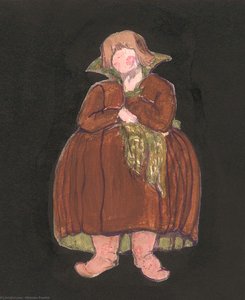
Higher Than the Mountains – A Celestial Meditation
Nicholas Roerich’s “Higher Than the Mountains,” completed in 1924, transcends mere landscape depiction; it embodies a profound spiritual quest rendered in the evocative language of Symbolism. This artwork isn't simply observed—it invites contemplation, transporting viewers to an ethereal realm where earthly concerns dissolve into the grandeur of cosmic harmony. The painting’s dominant palette – swirling shades of lavender and amethyst punctuated by muted blues – immediately establishes an atmosphere of serenity and mystery, mirroring Roerich’s lifelong fascination with shamanic traditions and Eastern mysticism.Composition & Style: Impressionistic Echoes
The horizontal orientation emphasizes the expansive sky, a canvas upon which Roerich skillfully employs impressionistic techniques despite adhering to Symbolist principles. Soft, diffused brushstrokes create an illusion of movement, capturing the subtle shifts in light and air currents as if witnessing a sunrise over towering peaks. Simplified forms—stylized mountains and clouds—are rendered with deliberate abstraction, prioritizing mood and suggestion over photographic accuracy. This stylistic choice reflects Roerich’s belief that art should communicate deeper truths than visual representation alone. The artist deliberately avoids sharp contours, favoring blended colors and hazy textures to convey a sense of timelessness and spiritual resonance.Technique: Wet-on-Wet Mastery
Roerich's masterful execution relies heavily on the wet-on-wet painting method—a technique favored by Impressionists like Monet and Renoir—allowing for seamless color transitions and an unparalleled luminosity. Layers upon layers of pigment are applied simultaneously, blending together to produce a velvety surface that captures the ethereal quality of the scene. Careful attention is paid to tonal gradations, subtly modulating light and shadow to sculpt the mountainous forms and imbue the sky with depth. The artist’s meticulous layering contributes significantly to the painting's hazy atmosphere and reinforces its symbolic intent—representing the interconnectedness between earthly existence and divine consciousness.Symbolism & Narrative Depth
“Higher Than the Mountains” speaks volumes about Roerich’s spiritual worldview. The solitary figure, positioned centrally amidst the celestial expanse, symbolizes ascension – a striving towards enlightenment and transcendence. The towering mountains represent challenges to overcome, mirroring the arduous journey toward self-discovery. Purple hues dominate the composition, traditionally associated with royalty, spirituality, and intuition—underscoring Roerich’s conviction that beauty holds transformative power. Furthermore, the artwork's overarching theme aligns with Roerich’s exploration of shamanic rituals and his belief in a universal cosmic consciousness.Emotional Resonance & Artistic Legacy
Ultimately, “Higher Than the Mountains” succeeds in capturing an emotional state—a yearning for connection to something greater than oneself—that continues to resonate with audiences today. Its tranquil beauty invites introspection and contemplation, prompting viewers to consider their place within the vastness of existence. Roerich’s enduring influence on contemporary art is undeniable; his pioneering use of Symbolism paved the way for artists seeking to express spiritual ideas through visual mediums. A reproduction of this masterpiece offers not only aesthetic pleasure but also a glimpse into the artist's profound philosophical convictions—a testament to the transformative power of art as a conduit for inner exploration and cosmic understanding.Questions & Answers
Can I preview "Higher Than the Mountains" by Nicholas Roerich before ordering?
The Preview page of "Higher Than the Mountains" lets you preview the artwork before ordering.
What print size of "Higher Than the Mountains" by Nicholas Roerich fits the recommended room?
For a living room, the recommended print size of "Higher Than the Mountains" by Nicholas Roerich is large.
Who is the artist behind "Higher Than the Mountains"?
"Higher Than the Mountains" was created by Nicholas Roerich. The information on this page describes Nicholas Roerich's original work.
Artist Biography
Early Life, Family and Training
Nicholas Roerich was born on October 9, 1874, in Saint Petersburg, Russia. His lineage combined a Baltic German father with a Russian mother, a background that provided a specific intellectual and cultural framework for his later pursuits. This dual heritage did not lead to a singular focus; instead, it fueled a multifaceted career that spanned law, archaeology, and philosophy alongside his visual output. He was a man of structured discipline from the start.
His formal education was characterized by a simultaneous pursuit of disparate disciplines. In 1893, he enrolled at both St. Petersburg University and the Imperial Academy of Arts. This dual track allowed him to develop a legal mind alongside an artistic one. He earned his artist designation in 1897 and completed his law degree the following year. This combination of legal training and artistic study provided the foundation for his later, more complex roles as a public figure and an advocate for cultural preservation.
Patrons, Workshop and Commissions
Roerich’s influence on the early twentieth-century stage was cemented through his involvement with the "World of Art" society. He did not merely participate in this circle; he led it, serving as the society's president from 1910 to 1916. This leadership position placed him at the center of a network of innovators who were actively dismantling traditional Russian artistic structures. His work during this period moved beyond the canvas and into the physical space of the theater, where he translated complex historical and mythological themes into visual environments.
His most significant contributions to the stage came through high-profile collaborations that redefined theatrical design. He provided the sets and costumes for the 1913 premiere of Igor Stravinsky’s modernist ballet, The Rite of Spring. This production was a radical departure from the era's norms. His designs for Alexander Borodin's Prince Igor, both in 1909 and in subsequent productions, remain his most recognized theatrical achievements. These commissions required a precise blend of historical research and imaginative construction to support the music and movement of the performers.
Technique and Style
Roerich’s visual language relies on a tension between intricate detail and a deliberate simplification of form. His work often employs an illustrative quality, utilizing flat planes of color rather than traditional realistic modeling. This approach creates a graphic aesthetic where lines function primarily to define outlines. He avoids the heavy shadows of classical realism, opting instead for a style that emphasizes the structural essence of his subjects. This clarity makes his compositions direct and readable, even when dealing with complex spiritual themes.
The use of color is central to his impact. He utilized vibrant color palettes to define his landscapes and figures, often creating a sharp contrast between the subject and the environment. In works like Agni Yoga, created about 1929, he utilized tempera on panel to achieve specific textures and hues. This medium allowed for a controlled application of pigment, supporting his preference for luminous, layered tones. His ability to balance these intense colors with simplified, almost geometric shapes prevents the compositions from becoming cluttered, maintaining a sense of order and purpose.
- Agni Yoga (about 1929)
Key Works
Roerich’s output is defined by a shift from the historical to the metaphysical. His 1929 painting, Agni Yoga, remains a primary example of this transition, blending Eastern spirituality with Western enlightenment. The composition centers on a solitary female figure positioned on a rocky outcrop. She overlooks a vast landscape of mountains and water, a scene that emphasizes spiritual contemplation. The sky above is iridescent, utilizing shades of blue and yellow to create a sense of cosmic scale. In the distance, figures appear, suggesting the presence of unseen forces or guides.
His earlier period focused heavily on the architectural and historical identity of Russia. These works often utilized meticulous research to depict fortresses and monasteries. This interest in the physical remnants of the past provided a necessary foundation for his later, more abstract explorations of the spiritual realm. His stage designs for the Ballets Russes, specifically for The Rite of Spring (1913) and Prince Igor (1909), also demonstrate his ability to use visual environments to amplify the emotional weight of a performance.
- The Rite of Spring (1913)
- Prince Igor (1909)
- Agni Yoga (1929)
Legacy and Influence
Roerich’s impact extends far beyond the canvas, rooted in his practical efforts to protect human creativity from the devastation of war. In 1935, he spearheaded the creation of the Roerich Pact, an international treaty designed to safeguard cultural objects. To support this mission, he proposed the Banner of Peace, a universal emblem intended to signify protected cultural sites. His humanitarian focus on preserving history and art earned him multiple nominations for the Nobel Peace Prize. These actions moved his influence from the realm of aesthetics into the sphere of international law and diplomacy.
His connection to the East resulted in significant recognition from the Indian government, which named him a Navaratna. This designation identifies him as one of India's nine great artists. His work remains a point of study for those interested in the intersection of spiritual philosophy and visual representation. His legacy is defined by this dual identity as both a creator of imagery and a defender of the institutions that house it.
Where to See the Works Today
To encounter the physical reality of Roerich’s vision, one must look to specific institutional collections that preserve his output. In the United States, the Nicholas Roerich Museum in New York City remains a primary destination. It is housed within a brownstone on Manhattan’s Upper West Side, a setting that maintains the specific atmosphere of his later years. This museum holds a significant portion of his output, including many of his Himalayan landscapes and the Agni Yoga archives.
The reach of his work extends back to Russia and into Central Asia. The Russian State Museum in Saint Petersburg holds pieces that reflect his early training and development. Additionally, the Astrakhan State Picture Gallery maintains works that contribute to the understanding of his diverse subject matter. These collections ensure that his transition from Russian Symbolism to his later mystical landscapes remains documented in their original cultural contexts.
- Agni Yoga (1929)
- And we continue fishing (1922)
- Sacred Himalayas (1934)

Nicholas Roerich
1874 - 1947 , Russia
Quick Facts
- Artistic Movement Or Style: Symbolism, Modernism
- Full Name: Nikolai Konstantinovich Rerikh
- Nationality: Russian
- Notable Artworks:
- Visitors from over the sea
- Rostov the Great
- Varangian way
- Vernicle
- Gegstad manor
- Good nest
- The Last Angel
- Fairest City
- Vaydelots
- St. Olga of Kiev
- Lord of the Night
- Martyr Mercurius of Smolensk
- Linnasaari, Ladoga lake
- And we continue fishing
- And we bring the light
- Book of Wisdom
- Fire Blossom
- Chalice of Christ
- Great rider. Rigden Jyepo
- Agni Yoga
- Bhagavan
- St. Francis
- Saint Sophia the Almighty Wisdom
- Ashram
- Harrowing of Hell
- Light Conquers Darkness
- Sacred Himalayas
- Armageddon
- Kuluta
- Mother of the World
- Song of Shambhala
- Messenger
- Place Of Birth: Saint Petersburg, Russia
- Date Of Birth: 1874
- Date Of Death: 1947
Related Articles

Masterpieces of Nature: The Top 25 John Constable Artworks
Explore John Constable's iconic landscapes and Romantic masterpieces. Discover the full collection online at OriginalUniqueArt.com.

Nicholas Roerich: Mysticism, Mountains & the Search for Ageless Wisdom in Art
Explore the captivating art of Nicholas Roerich – a visionary painter whose Himalayan landscapes blend spiritual mysticism with cultural preservation. Discover his legacy & symbolism.
Majestic Peaks: Curating Exquisite Mountain Oil Paintings & Masterpiece Reproductions for Luxury Interiors
Elevate luxury interiors with exquisite mountain oil painting reproductions. From Romanticism to the Hudson River School, OriginalUniqueArt offers bespoke, hand-painted masterpieces and large-scale murals tailored for hotel designers and elite collectors worldwide.

Romantic Landscapes: 10 Masterpieces for Your Home | OriginalUniqueArt
Journey through 10 Romantic landscape masterpieces by Friedrich, Turner & Cole. Explore emotional art, sublime nature scenes & iconic 19th-century paintings. Find museum-quality reproductions for your home at OriginalUniqueArt.com – discover the full collection online!

Evocations of Place: A Historical Journey Through Landscape Art
Explore the rich history of landscape art with OriginalUniqueArt. Discover renowned artists, movements like Impressionism & Romanticism, and expert guidance for collecting timeless pieces. Find your perfect serene escape today!