Preview
 Send
Send Share
Share
 Details
 Guide
Guide

 Download
 Similars
 X-Ray
X-Ray Diaporama
 Q&A
Q&A Stats
StatsMood

- 40.0 x 27.0 cm


 Read More
The artwork displayed on this page is protected by copyright law, which means we cannot legally create or sell an identical reproduction. This protection is enforced under international agreements such as the Berne Convention and by national laws, including those outlined by the U.S. Copyright Law - Title 17.
This method fully complies with copyright regulations because it does not involve copying or duplicating the protected artwork. Instead, it is a creative reinterpretation - a new painting that is influenced by the original but not identical to it.
Giclée / Art Print
Museum-quality giclée or canvas print with fast production and flexible finish options. ( Buy Hand Made Painting Switch to Digital Image)




P118B $10

P118H $10

P118W $10

P438Z $10

P508JH $12

P508YH $12

P805H $10

P805Z $10

P919BZ $10

P919G $10

P919XJ $10

P959ZH $10

P968JZ $12

W106C $8

W218G $10

W218JH $8

W218Y $10

W307PJ $10

W316G $10

W316PJ $8

W316Y $10

W398PJ $8

W4111J $10

W500HY $15

W500JH $15

W692G $12

W849H $8

W940BG $15

W953PJ $8




Pick from our preset sizes that match the artwork's original proportions.

Type the width and the height you need, to fit your frame or your wall. A print can only be cut, never made bigger than the picture, so a size with a different shape loses a part of the image. We send you a digital mockup to approve before we print anything. The picture shown on this page does not show the real cut — only the mockup does.
Worldwide Delivery () in 2 weeks instead of standard 4/5 weeks. (1 November)

Free Worldwide Express Shipping

High-Quality Linen Canvas

Full Shipping Insurance

Customs Tax Refund Guarantee

True Color Matching Guarantee

100-Day Return Policy (Defects Only)

100% Money-Back Guarantee

Bulk Discount Offer
 Glass option is only available in size under 110 CM

Mood
Giclée / Art Print
Reproduction Size
-


Total Price
$ 81
A Pastoral Symphony: The Soul of Rural Life in 'Mood'
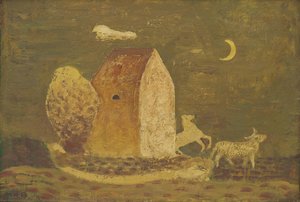
In the quiet corners of art history, few works capture the rhythmic heartbeat of the countryside as tenderly as Miloš Alexander Bazovský’s Mood. This evocative painting serves as a window into a bygone era, inviting the viewer to step into a landscape where time seems to slow to the pace of grazing livestock and drifting clouds. The composition centers on a weathered barn, its doorway acting as a silent portal to the mysteries of farm life. Surrounding this architectural anchor, a collection of cows and a solitary horse are scattered across the terrain, their presence lending a sense of profound peace and continuity to the scene. Above, the delicate silhouettes of birds in flight break the stillness of the sky, adding a layer of dynamic grace to an otherwise tranquil tableau.
The technique employed by Bazovský reflects his deep-seated connection to the Slovak landscape, utilizing a style that balances representational clarity with an atmospheric, almost poetic, softness. Through careful brushwork, the artist achieves a remarkable sense of depth; the animals in the foreground possess a tactile presence, while those receding toward the horizon melt into the hazy warmth of the rural afternoon. This mastery of light and shadow does more than just define shapes—it creates a palpable atmosphere, or as the title suggests, a specific mood that resonates with the nostalgia of pastoral existence. For the discerning collector or interior designer, this piece offers a sophisticated way to introduce organic warmth and a sense of historical groundedness into a modern living space.
The Legacy of a Slovak Master
To understand the emotional weight of Mood, one must look toward the life of its creator. Miloš Alexander Bazovský was not merely an observer of nature; he was a voice for the very essence of Slovak heritage. Growing up in Turán nad Váhom, his artistic identity was forged in the fertile soil of tradition and the rhythms of the land. His work often transcends simple landscape painting to become a form of cultural preservation, capturing the dignity of folk life and the enduring beauty of the regional landscape. In this particular piece, we see the culmination of that lifelong devotion—a painting that does not just depict animals and structures, but celebrates the symbiotic relationship between humanity, fauna, and the earth.
For those seeking to adorn their homes with art that tells a story, a reproduction of Mood provides more than just visual decoration. It brings into a room a sense of serenity and a connection to the timeless cycles of nature. Whether placed in a sunlit study or as a focal point in a contemporary gallery-style living room, the painting acts as an emotional anchor, offering a moment of reflection and a quiet escape from the frenetic pace of modern life. It is a testament to Bazovský’s ability to find the extraordinary within the ordinary, turning a simple farmyard scene into a lasting masterpiece of emotive storytelling.
Questions & Answers
How do movement and era meet in "Mood" by Miloš Alexander Bazovský?
"Mood" by Miloš Alexander Bazovský is placed in the Contemporary Realism movement, within the Modern era of its creator.
Do the colors of "Mood" appear strong or soft?
The colors in "Mood" by Miloš Alexander Bazovský have a vivid intensity.
Where can I buy a hand-painted reproduction of "Mood" by Miloš Alexander Bazovský?
Hand-painted copies of "Mood" by Miloš Alexander Bazovský are sold on this website: a hand-painted oil reproduction on linen canvas, ordered from its Hand-Painted Reproduction page.
Artist Biography
Miloš Alexander Bazovský: A Voice of Slovak Rural Life
Miloš Alexander Bazovský (1899-1968) stands as a towering figure in 20th-century Slovak art, a painter deeply rooted in the traditions and landscapes of his homeland. Often ranked among the most prominent voices of his era, Bazovský’s work transcends mere representation; he captured the essence of Slovak rural life with an unparalleled sensitivity and evocative power. Born in Turán nad Váhom, Slovakia, on January 11, 1899, into a family connected to education and culture, Bazovský's artistic journey was shaped by his intimate connection to the land and its people. His legacy endures not only through his captivating paintings but also as a vital link to Slovak heritage.Early Life and Artistic Formation
Bazovský’s early life instilled in him a profound appreciation for the natural world and the rhythms of rural existence. He began his artistic training in Pešť, later refining his skills in Prague, a city renowned during this period as a vibrant hub of European art and intellectual discourse. This exposure to diverse artistic movements – from Expressionism to Cubism – undoubtedly influenced his evolving style, though he ultimately forged a unique path rooted firmly in Slovak identity. Crucially, Bazovský’s travels throughout Slovakia itself proved transformative. He immersed himself in the lives of villagers, meticulously observing their customs, professions, and daily routines. These experiences became the bedrock of his artistic vision, informing his choice of subjects and shaping his distinctive approach to depicting rural life.A Distinctive Artistic Style: Folk Life and Regionalism
Bazovský’s artistic style is immediately recognizable for its deeply rooted regionalism. He eschewed grand narratives or idealized landscapes in favor of portraying the everyday lives of Slovak peasants, farmers, and artisans. His paintings are populated by figures engaged in familiar tasks – tending to livestock, working in fields, preparing meals, celebrating festivals – rendered with a remarkable degree of realism and empathy. His palette is typically earthy—ochres, browns, greens, and blues—reflecting the colors of the Slovak countryside. A key element of his style is his use of *impasto*, applying thick layers of paint to create textured surfaces that seem to pulse with life. This technique adds a tactile quality to his work, inviting viewers to almost feel the rough texture of the soil or the warmth of the hearth. Bazovský’s compositions often feature simple, uncluttered arrangements, emphasizing the dignity and resilience of his subjects.Notable Works and Recognition
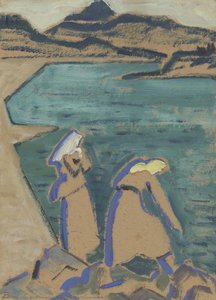
Among Bazovský's most celebrated works are “Cottages” (1949-1953), a captivating depiction of a small coastal village bathed in golden light; "The Washerwomen" (1935), which captures the quiet dignity of women engaged in their daily routines by the river; and “Still Life with a Candlestick and a Green Pitcher,” a deceptively simple composition that reveals his keen eye for detail and his ability to imbue ordinary objects with symbolic meaning. His paintings are not merely representations of scenes but windows into a specific cultural context, offering insights into the values, beliefs, and traditions of Slovak rural communities. His work received significant recognition during his lifetime, including solo exhibitions at the Slovak National Gallery in Bratislava (1960 and 1999), as well as retrospectives at the Turiec Gallery in Martin and the Jan Koniarek Gallery in Trnava. He was also featured in international biennales such as the IV Bienal Do Museu De Arte Moderna De São Paulo (1957) and the 33rd Venice Biennale (1966).Legacy and Historical Significance
Miloš Alexander Bazovský’s contribution to Slovak art is profound. He served as a crucial link between traditional folk culture and modern artistic expression, preserving and celebrating the rich heritage of his nation. His work offers a poignant reflection on themes of identity, community, and the enduring connection between people and their land. His paintings are now housed in prominent collections across Slovakia, including the Slovak National Gallery, the Gallery of M. A. Bazovsky in Trenčín, and the Jan Koniarek Gallery in Trnava. His legacy continues to inspire artists and scholars alike, ensuring that his voice—the voice of rural Slovakia—will resonate for generations to come. Further research can be found on OriginalUniqueArt.com and Wikipedia.
Miloš Alexander Bazovský
1899 - 1968 , Slovakia
Quick Facts
- Full Name: Miloš Alexander Bazovský
- Nationality: Slovak
- Date Of Birth: 1899
- Date Of Death: 1968
- Place Of Birth: Turán nad Váhom, Slovakia
- Notable Artworks:
- Cottages
- Demänová village
- Still Life with a candlestick
- Artistic Movement Or Style: Folk life painting, Realism
Related Articles

Romantic Landscapes: 10 Masterpieces for Your Home | OriginalUniqueArt
Journey through 10 Romantic landscape masterpieces by Friedrich, Turner & Cole. Explore emotional art, sublime nature scenes & iconic 19th-century paintings. Find museum-quality reproductions for your home at OriginalUniqueArt.com – discover the full collection online!
Evoking Arcadia: A Historical & Aesthetic Exploration of Rural Landscape Art
Explore the rich history of pastoral landscape art, from classical Arcadia to Impressionism & beyond. Discover key artists, movements, and how to collect serene rural scenes for your home. Expert insights at OriginalUniqueArt.

Cultivating Visions: A Historical Journey Through Rural Landscapes in Art
Explore the rich history of rural landscape painting with OriginalUniqueArt. Discover Impressionist masterpieces, key artists & movements. Find your perfect serene artwork and bring nature's beauty home.

Mastering the English Landscape: The Top 25 John Constable Artworks
Experience the soul of English landscapes through John Constable's top 25 works. Explore the full collection online at OriginalUniqueArt.com.

Evocations of Place: A Historical Journey Through Landscape Art
Explore the rich history of landscape art with OriginalUniqueArt. Discover renowned artists, movements like Impressionism & Romanticism, and expert guidance for collecting timeless pieces. Find your perfect serene escape today!