Preview
 Send
Send Share
Share
 Details
 Guide
Guide

 Download
 Similars
 X-Ray
X-Ray Diaporama
 Stats
StatsTomb of Julius II


 Read More
Hand Made Oil Reproduction
Hand-painted oil on canvas in your size and frame, made to order by our artists. ( Switch to Print Switch to Digital Image)




P118B $10

P118H $10

P118W $10

P438Z $10

P508JH $12

P508YH $12

P805H $10

P805Z $10

P919BZ $10

P919G $10

P919XJ $10

P959ZH $10

P968JZ $12

W106C $8

W218G $10

W218JH $8

W218Y $10

W307PJ $10

W316G $10

W316PJ $8

W316Y $10

W398PJ $8

W4111J $10

W500HY $15

W500JH $15

W692G $12

W849H $8

W940BG $15

W953PJ $8




Pick from our preset sizes that match the artwork's original proportions.

Type the width and the height you need, to fit your frame or your wall. This is hand-painted, so for a size with a different shape the artist can paint a bit more around the picture, or cut a bit — you choose. We send you a digital mockup to approve before the painting starts. The picture shown on this page does not show the real result — only the mockup does.
After order, OriginalUniqueArt.com team will email client for instructions and provide a mockup preview
Worldwide Delivery () in 3/4 weeks instead of standard 5 weeks. (27 October). No compromise on quality.

Free Worldwide Express Shipping

High-Quality Linen Canvas

Full Shipping Insurance

Customs Tax Refund Guarantee

True Color Matching Guarantee

100-Day Return Policy (Defects Only)

100% Money-Back Guarantee

Bulk Discount Offer
 Glass option is only available in size under 110 CM

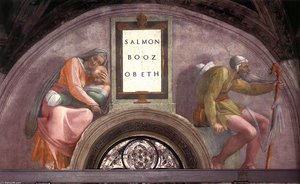
Tomb of Julius II
Reproduction Medium
Reproduction Size
-


Total Price
$ 300
Tomb of Julius II: A Monumental Vision of Faith and Mortality
The Tomb of Pope Julius II stands as one of Michelangelo Buonarroti’s most ambitious projects—a testament to the artistic fervor of the High Renaissance and a poignant reflection on papal authority and spiritual contemplation. Commissioned in 1505 by Pope Julius II Della Rovere, it represents more than just a funerary monument; it embodies Michelangelo's profound engagement with humanist ideals and his masterful command of sculptural technique. The project began as an attempt to honor the deceased pope’s legacy and solidify papal prestige—a task that ultimately consumed Michelangelo’s energies for decades and resulted in a masterpiece that continues to inspire awe.- Historical Context: The tomb was conceived during a period of intense artistic innovation in Rome, fueled by papal patronage and driven by the rediscovery of Classical art and philosophy. Julius II's reign coincided with a dramatic expansion of St Peter’s Basilica under Bramante—a project that Michelangelo himself would later oversee—demonstrating the pope’s commitment to elevating Christendom’s spiritual center.
- Michelangelo’s Artistic Vision: Michelangelo approached the tomb with an unwavering belief in the power of sculpture to convey profound theological ideas. Inspired by ancient Roman funerary monuments, he envisioned a complex sculptural ensemble that would depict the biblical narrative from Genesis through Judgement Day—a monumental undertaking designed to glorify God and commemorate Julius II's life as a devout Christian leader.
- Sculptural Technique: Michelangelo’s mastery of marble carving is evident throughout the tomb’s execution. He utilized techniques honed during his apprenticeship under Ghirlandaio, combining meticulous anatomical observation with expressive dynamism—a hallmark of Renaissance sculpture. The colossal figures are sculpted from Carrara marble, painstakingly carved to achieve unparalleled realism and conveying a palpable sense of movement and emotion.
- Iconography and Symbolism: Each statue within the tomb carries symbolic significance, reflecting key themes of Christian theology. Moses, central to the composition, represents divine law and leadership—a deliberate allusion to Julius II’s role as pope and his unwavering adherence to religious dogma. The reclining figures embody humility and contemplation, symbolizing the soul's journey toward salvation.
- Legacy: Despite facing setbacks due to papal interference and budgetary constraints, Michelangelo persevered in realizing his vision—resulting in a tomb that remains unsurpassed for its grandeur, artistry, and spiritual depth. It stands as an enduring symbol of Renaissance artistic achievement and continues to captivate viewers with its breathtaking beauty and profound contemplation of mortality.
The Genesis Sequence: Narrative Sculpture at Its Finest
Michelangelo’s depiction of the biblical narrative—specifically the story of Adam and Eve—is arguably the tomb's most celebrated achievement. The sculptures portray the expulsion from Paradise, capturing the anguish and despair of Adam and Eve as they flee God’s wrath. Michelangelo’s meticulous attention to detail—from the musculature of Adam’s body to the expressive faces of the figures—demonstrates his unparalleled skill in conveying human emotion through sculpture. The dynamic poses and dramatic gestures contribute to a palpable sense of urgency and convey the profound moral implications of the biblical tale.The Central Figure: Moses – A Testament to Divine Law
The statue of Moses dominates the tomb’s central register—a monumental depiction of the prophet embodying divine law and leadership. Michelangelo skillfully captures Moses's muscular physique and intense gaze, conveying a sense of unwavering conviction and moral authority. The sculptor’s masterful use of marble carving ensures that every detail contributes to the statue’s expressive power—reflecting Michelangelo’s belief in the transformative potential of art to communicate spiritual truths.A Monumental Achievement: Challenges and Triumph
The Tomb of Julius II represents a remarkable feat of artistic endeavor—a testament to Michelangelo's unwavering dedication and perseverance despite numerous obstacles. Despite initial setbacks due to papal interference and budgetary constraints, Michelangelo remained steadfast in his commitment to realizing his ambitious vision—resulting in a tomb that stands as an enduring symbol of Renaissance artistic excellence and continues to inspire admiration for its breathtaking beauty and profound contemplation of faith and mortality.Questions & Answers
What is the emotional tone of "Tomb of Julius II" by Michelangelo Buonarroti?
"Tomb of Julius II" is associated with a powerful feeling. The emotional tone describes the impression the work gives.
What emotion does the Renaissance work "Tomb of Julius II" convey?
"Tomb of Julius II" carries a powerful emotional tone within the Renaissance movement.
How do medium and movement combine in "Tomb of Julius II"?
"Tomb of Julius II" is made in acrylic on canvas, in the Renaissance style.
Artist Biography
The Hands of Caprese
In the hills of Caprese, a boy learned the weight of stone and the grit of marble dust. Born in 1475, Michelangelo di Lodovico Buonarroti Simoni spent his early years near Settignano, where his father owned a quarry. The smell of damp earth and the sound of hammers against rock were part of his childhood. He did not start with brushes but with the chisel. His apprenticeship under Domenico Ghirlandaio in Florence brought him into contact with the city's growing interest in the human form, yet it was the Medici gardens that truly shaped his eyes. There, among the ancient Greek and Roman fragments, he studied how light falls across muscle and bone.
His work began to take shape through a deep study of anatomy. He looked at the way a limb carries weight and how skin stretches over a joint. This focus on the physical reality of the body became his primary language. By the time he reached Rome in 1496, he was already carving figures that possessed a heavy, palpable presence. The Pietà, completed in 1499, shows this early ability to make marble appear as soft as flesh, even as it carries the weight of a dead man.
The Weight of the Sistine Ceiling
The task of the Sistine Chapel ceiling was not something he sought. He saw himself as a sculptor, someone who pulls life out of stone rather than spreading pigment on plaster. Yet, for four years, he worked in the high reaches of the chapel, painting over 300 figures from the Book of Genesis. The physical toll was visible in his daily life. He spent hours in difficult positions, his body strained by the reach and the heavy application of fresco technique. In panels like The Creation of Adam, the tension is found in the small gap between two fingers, a moment of near-contact that holds the viewer's attention through pure composition.
As time passed, his style moved away from the balanced ideals of the High Renaissance toward something more restless. His later works, such as The Last Judgment on the altar wall, show a shift toward Mannerism. The figures became more elongated and the compositions more crowded and dramatic. This change reflected a shifting spiritual climate in Rome. He continued to work with an intensity that many found overwhelming, often leaving projects unfinished as his mind moved toward new architectural or sculptural problems.
Architecture and Final Years
In his later decades, Michelangelo turned much of his attention to the structure of buildings. At age 71, he took over the work on St. Peter's Basilica, altering the plans to create a more massive, imposing design. He also designed the Laurentian Library, where his use of architectural elements broke from tradition, creating a sense of movement within the stone itself. His work on the Piazza del Campidoglio in Rome showed how he could organize a public space using symmetry and classical motifs to guide the eye through the square.
He died in Rome in 1564, leaving behind a legacy written in marble, fresco, and stone. His life was defined by several key roles:
- Sculptor: Carving works like David from single blocks of Carrara marble.
- Painter: Executing the vast narrative cycles of the Sistine Chapel.
- Architect: Redesigning the foundations of St. Peter's Basilica and the Laurentian Library.
- Poet: Expressing his inner thoughts through verse.

Michelangelo Buonarroti
1475 - 1564 , Italy
Quick Facts
- Artistic Movement Or Style:
- High Renaissance
- Mannerism
- Artists Or Movements Influenced By This Artist: ['Mannerism']
- Artists Who Influenced This Artist:
- Domenico Ghirlandaio
- Donatello
- Masaccio
- Full Name: Michelangelo di Lodovico Buonarroti Simoni
- Nationality: Italian
- Notable Artworks:
- Pietà
- David
- The Creation of Adam
- The Last Judgment
- Moses
- Place Of Birth: Caprese Michelangelo, Italy
- Date Of Birth: 1475
- Date Of Death: 1564
Related Articles

Bronze Sculptures That Defined Art History | OriginalUniqueArt
Journey through art history with our Top 10 bronze sculptures! Explore masterpieces by Rodin, Michelangelo & more. Discover stories behind iconic statues and find museum-quality reproductions for your home decor at OriginalUniqueArt.com.

The Enduring Form: Sculpture Across History, Technique & Emotional Resonance
Explore the rich history of sculpture with OriginalUniqueArt. Discover key techniques, influential artists & investment potential for discerning collectors. Expert insights into valuing and collecting timeless masterpieces.

The Enduring Form: Exploring Themes & Techniques in Sculpture Across Historical Periods
Explore the rich history of sculpture from ancient masterpieces to contemporary innovations. Discover key techniques, influential artists & investment potential for discerning art collectors.

Bronze Age to Modern Masters: 10 Sculptures That Redefined Art | OriginalUniqueArt
Journey through art history with 10 legendary bronze sculptures – from Michelangelo's David to Rodin’s Thinker. Explore the stories, techniques & timeless beauty of these masterpieces. Find museum-quality reproductions & elevate your home decor on OriginalUniqueArt.com.

Michelangelo's Masterpieces: Explore 25 Iconic Artworks for Your Home | OriginalUniqueArt
Journey through Michelangelo's 25 greatest artworks – from David’s strength to the Sistine Chapel’s beauty. Explore Renaissance masterpieces, art history & find museum-quality reproductions for your home at OriginalUniqueArt.com.