Preview
 Send
Send Share
Share
 Details
 Guide
Guide

 Download
 Similars
 X-Ray
X-Ray Diaporama
 Stats
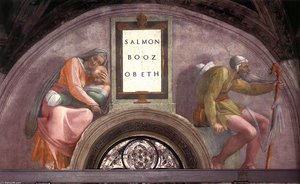
StatsStudy for Adam
 Acrylic
- WallArt
- Renaissance
 1510
1510- Renaissance
 193.0 x 259.0 cm
 British Museum
 Read More
Hand Made Oil Reproduction
Hand-painted oil on canvas in your size and frame, made to order by our artists. ( Switch to Print Switch to Digital Image)




P118B $10

P118H $10

P118W $10

P438Z $10

P508JH $12

P508YH $12

P805H $10

P805Z $10

P919BZ $10

P919G $10

P919XJ $10

P959ZH $10

P968JZ $12

W106C $8

W218G $10

W218JH $8

W218Y $10

W307PJ $10

W316G $10

W316PJ $8

W316Y $10

W398PJ $8

W4111J $10

W500HY $15

W500JH $15

W692G $12

W849H $8

W940BG $15

W953PJ $8




Pick from our preset sizes that match the artwork's original proportions.

Type the width and the height you need, to fit your frame or your wall. This is hand-painted, so for a size with a different shape the artist can paint a bit more around the picture, or cut a bit — you choose. We send you a digital mockup to approve before the painting starts. The picture shown on this page does not show the real result — only the mockup does.
After order, OriginalUniqueArt.com team will email client for instructions and provide a mockup preview
Worldwide Delivery () in 3/4 weeks instead of standard 5 weeks. (24 October). No compromise on quality.

Free Worldwide Express Shipping

High-Quality Linen Canvas

Full Shipping Insurance

Customs Tax Refund Guarantee

True Color Matching Guarantee

100-Day Return Policy (Defects Only)

100% Money-Back Guarantee

Bulk Discount Offer
 Glass option is only available in size under 110 CM

Study for Adam
Reproduction Medium
Reproduction Size
-


Total Price
$ 300
A Glimpse into Creation: Michelangelo’s “Study for Adam”
Michelangelo Buonarroti, a titan of the Renaissance, possessed an unparalleled ability to capture the essence of humanity and divine power. Among his vast oeuvre, "Study for Adam," created in 1510 using chalk on paper, offers a remarkably intimate window into the creative process behind one of art history’s most iconic frescoes – the ceiling of the Sistine Chapel. This preparatory study, now housed at the British Museum, isn't merely a sketch; it’s a profound meditation on form, movement, and the very act of creation itself. Measuring 193 x 259 cm, the piece immediately draws the eye with its stark simplicity – a nude male figure in various dynamic poses, hinting at the monumental work to come.
The study’s significance lies not just in its artistic merit but also in what it reveals about Michelangelo's working methods. The chalk medium, chosen for its versatility and ability to capture subtle tonal variations, allows us to witness the artist wrestling with his design, experimenting with different arrangements of muscle and limb before committing them to the grand fresco. Notice how he meticulously renders the musculature, a testament to his deep anatomical knowledge – a pursuit driven by his own experiences as a sculptor, constantly studying human anatomy in marble.
Anatomical Precision and Dynamic Movement
What immediately strikes the viewer is Michelangelo’s mastery of human anatomy. The figure of Adam isn't simply depicted; he *exists* on the page, imbued with a palpable sense of vitality. The artist’s attention to detail is breathtaking – every sinew, every tendon, every subtle curve of muscle is rendered with astonishing accuracy. Yet, this anatomical precision isn’t merely about realism; it serves to heighten the figure's dynamism. The multiple poses—lying down, stretching, reaching—capture a sense of movement and flexibility that feels remarkably contemporary. Michelangelo wasn’t simply illustrating a biblical narrative; he was exploring the very nature of human form in motion.
The study showcases his ability to convey movement through static forms. The lines are not rigid or defined, but rather flow organically across the paper, suggesting a continuous state of transformation. Observe how the artist uses varying line weights – bold strokes for emphasis and delicate lines for shading – to create depth and dimensionality. This expressive use of chalk elevates the study beyond a simple preparatory drawing; it’s a miniature masterpiece in its own right.
Symbolism and Context within the Sistine Chapel
“Study for Adam” is inextricably linked to Michelangelo's monumental fresco on the ceiling of the Sistine Chapel. The scene depicts God creating Adam from the dust of the earth, a pivotal moment in Genesis. This study provides invaluable insight into how Michelangelo conceived of this complex narrative – the arrangement of figures, the flow of movement, and the emotional weight of the event. The pose of Adam, with his outstretched arms, mirrors that of God in the final fresco, emphasizing the divine gift of life.
Beyond its biblical context, “Study for Adam” embodies the humanist ideals of the Renaissance. It celebrates the beauty and perfection of the human form, reflecting a renewed interest in classical art and philosophy. The study stands as a powerful testament to Michelangelo’s genius – a glimpse into the mind of an artist who fundamentally reshaped Western art history. For those seeking to understand the genesis of one of the world's most celebrated artworks, this intimate study offers a unique and compelling perspective.
To explore more of Michelangelo’s extraordinary works, including the complete Sistine Chapel fresco and his sculptures like David and the Pietà, visit Study for Adam and other pieces at OriginalUniqueArt. Furthermore, delve deeper into the world of art with Discovering the Artworks of Fulham Public Library, United Kingdom on OriginalUniqueArt.
Questions & Answers
How old was Michelangelo Buonarroti when creating "Study for Adam" in 1510?
Michelangelo Buonarroti was 35 years old when creating "Study for Adam" in 1510. The age is computed from the artist's birth year, 1475.
How does "Study for Adam" fit into Michelangelo Buonarroti's themes and style?
"Study for Adam" shares with Michelangelo Buonarroti's other works its Renaissance style and the recorded themes: classical antiquity, renaissance humanism, anatomical study, chalk medium detail, sistine chapel prep, early michelangelo study, exploring adam figure, foundation for masterpiece.
Who created "Study for Adam" and in what year?
"Study for Adam" was created by Michelangelo Buonarroti in 1510.
Artist Biography
The Hands of Caprese
In the hills of Caprese, a boy learned the weight of stone and the grit of marble dust. Born in 1475, Michelangelo di Lodovico Buonarroti Simoni spent his early years near Settignano, where his father owned a quarry. The smell of damp earth and the sound of hammers against rock were part of his childhood. He did not start with brushes but with the chisel. His apprenticeship under Domenico Ghirlandaio in Florence brought him into contact with the city's growing interest in the human form, yet it was the Medici gardens that truly shaped his eyes. There, among the ancient Greek and Roman fragments, he studied how light falls across muscle and bone.
His work began to take shape through a deep study of anatomy. He looked at the way a limb carries weight and how skin stretches over a joint. This focus on the physical reality of the body became his primary language. By the time he reached Rome in 1496, he was already carving figures that possessed a heavy, palpable presence. The Pietà, completed in 1499, shows this early ability to make marble appear as soft as flesh, even as it carries the weight of a dead man.
The Weight of the Sistine Ceiling
The task of the Sistine Chapel ceiling was not something he sought. He saw himself as a sculptor, someone who pulls life out of stone rather than spreading pigment on plaster. Yet, for four years, he worked in the high reaches of the chapel, painting over 300 figures from the Book of Genesis. The physical toll was visible in his daily life. He spent hours in difficult positions, his body strained by the reach and the heavy application of fresco technique. In panels like The Creation of Adam, the tension is found in the small gap between two fingers, a moment of near-contact that holds the viewer's attention through pure composition.
As time passed, his style moved away from the balanced ideals of the High Renaissance toward something more restless. His later works, such as The Last Judgment on the altar wall, show a shift toward Mannerism. The figures became more elongated and the compositions more crowded and dramatic. This change reflected a shifting spiritual climate in Rome. He continued to work with an intensity that many found overwhelming, often leaving projects unfinished as his mind moved toward new architectural or sculptural problems.
Architecture and Final Years
In his later decades, Michelangelo turned much of his attention to the structure of buildings. At age 71, he took over the work on St. Peter's Basilica, altering the plans to create a more massive, imposing design. He also designed the Laurentian Library, where his use of architectural elements broke from tradition, creating a sense of movement within the stone itself. His work on the Piazza del Campidoglio in Rome showed how he could organize a public space using symmetry and classical motifs to guide the eye through the square.
He died in Rome in 1564, leaving behind a legacy written in marble, fresco, and stone. His life was defined by several key roles:
- Sculptor: Carving works like David from single blocks of Carrara marble.
- Painter: Executing the vast narrative cycles of the Sistine Chapel.
- Architect: Redesigning the foundations of St. Peter's Basilica and the Laurentian Library.
- Poet: Expressing his inner thoughts through verse.

Michelangelo Buonarroti
1475 - 1564 , Italy
Quick Facts
- Artistic Movement Or Style:
- High Renaissance
- Mannerism
- Artists Or Movements Influenced By This Artist: ['Mannerism']
- Artists Who Influenced This Artist:
- Domenico Ghirlandaio
- Donatello
- Masaccio
- Full Name: Michelangelo di Lodovico Buonarroti Simoni
- Nationality: Italian
- Notable Artworks:
- Pietà
- David
- The Creation of Adam
- The Last Judgment
- Moses
- Place Of Birth: Caprese Michelangelo, Italy
- Date Of Birth: 1475
- Date Of Death: 1564
Related Articles
Leonardo da Vinci's Masterpieces: Explore 25 Iconic Artworks for Your Home | OriginalUniqueArt
Journey through Leonardo da Vinci's genius with our curated selection of 25 iconic artworks. Explore the stories behind Mona Lisa, The Last Supper & more Renaissance masterpieces. Find museum-quality art reproductions for your home at OriginalUniqueArt.com.
British Museum Masterpieces: Explore 25 Iconic Artworks & Decor Inspiration
Journey through 25 iconic artworks at the British Museum, London! Explore masterpieces from Egyptian sculptures to Renaissance paintings & uncover their stories. Find museum-quality art reproductions and curated decor ideas on OriginalUniqueArt.com.

Michelangelo's Masterpieces: Explore 25 Iconic Artworks for Your Home | OriginalUniqueArt
Journey through Michelangelo's 25 greatest artworks – from David’s strength to the Sistine Chapel’s beauty. Explore Renaissance masterpieces, art history & find museum-quality reproductions for your home at OriginalUniqueArt.com.
Michelangelo Buonarroti: A Renaissance Titan – Life, Works & Enduring Legacy
Explore the life, works & enduring legacy of Michelangelo Buonarroti, a Renaissance titan. Discover his iconic sculptures, frescoes, and architectural achievements. Expert art consultation & high-quality reproductions at OriginalUniqueArt.

Mastering the Heavens: A Definitive Guide to the Sistine Chapel's Renaissance Masterpieces
Embark on a sophisticated journey through the Sistine Chapel. Discover the profound artistry of Michelangelo’s frescoes, from the iconic ceiling to the altar wall, through an expert exploration of Renaissance mastery and theological depth.